

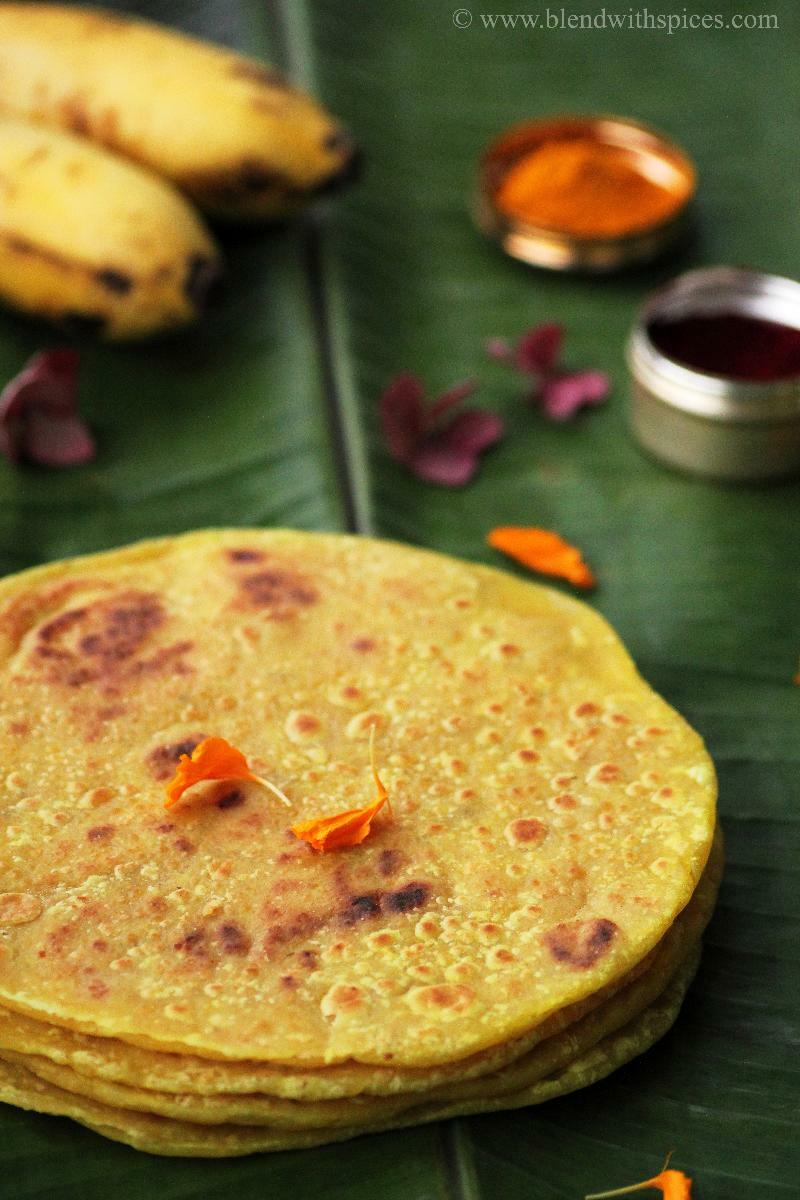
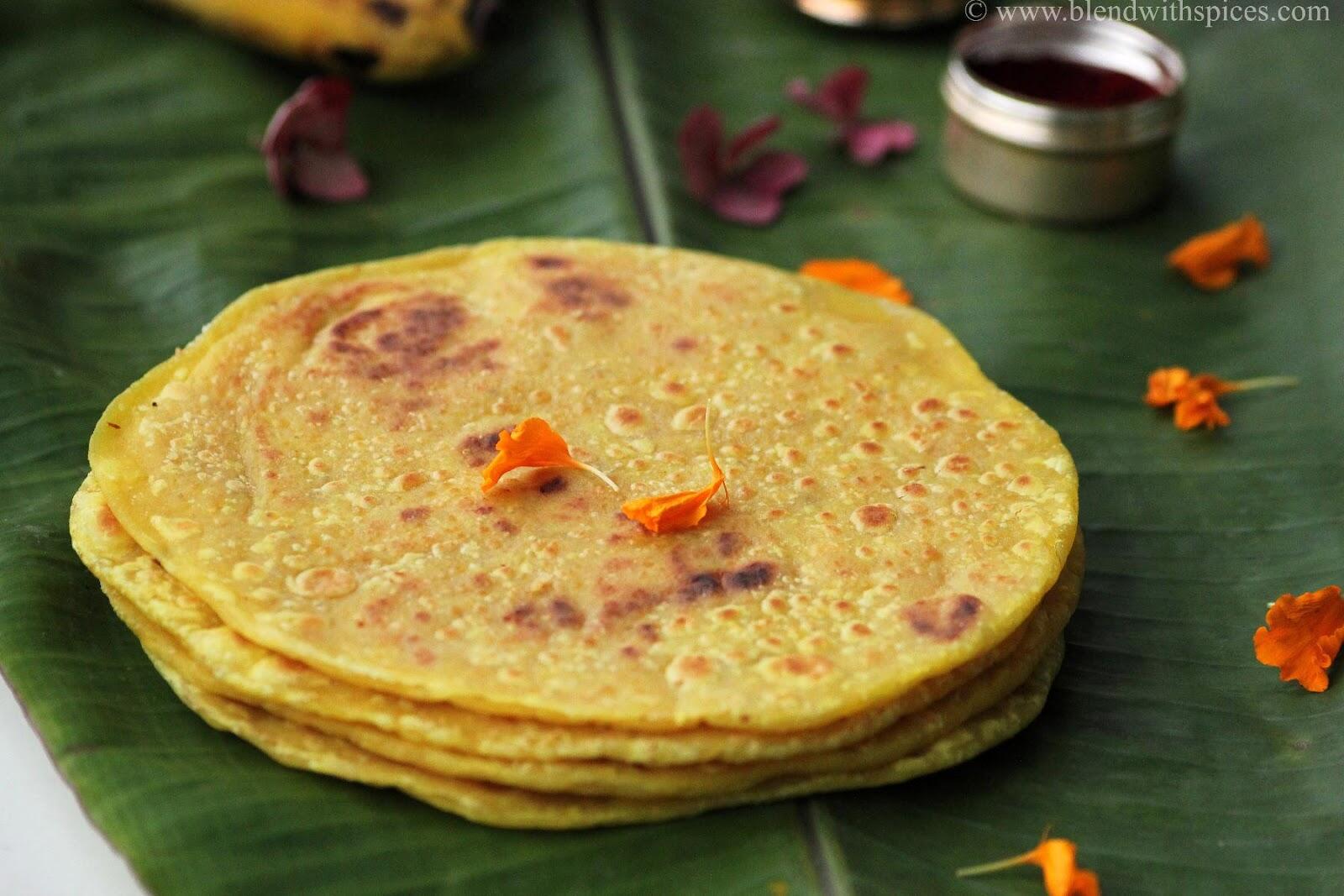
Kayi Holige, also known as Coconut Poli is a Traditional South Indian sweet bread stuffed with coconut-jaggery filling. It is soft, delicious and is a popular choice during festivals and family celebrations.
If you love Indian festive sweets, you might also enjoy my Pala Munjalu, Kova Kajjikayalu, and Javvarisi Payasam.
Quick Look: Kayi Holige Recipe
- Prep Time: 20 Minutes
- Cook Time: 30 Minutes
- Total Time: 50 Minutes
- Servings: 10
- Difficulty: Easy, perfect for festive celebrations.
- Dietary info: Vegetarian, egg-free and nut-free.
SUMMARIZE & SAVE THIS CONTENT ON
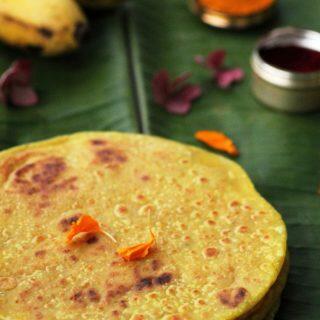
Kayi Holige is a traditional South Indian flatbread with a sweet coconut filling. The sweet filling is made with fresh coconut, jaggery and cardamom powder, and gently cooked together until aromatic and thick. The sweet coconut filling is then stuffed into a soft dough, rolled carefully, and cooked on a griddle with a little bit of ghee until golden brown.
This dish is known by many names across different regions of India. In Karnataka, it's called Kayi Holige or Kayi Obbattu. In Tamil Nadu, it is known as Thengai Poli or Coconut Poli, while in Andhra Pradesh and Telangana, it is called as Kobbari Bobbatlu or Kobbari Bakshalu. In North India, it is commonly referred to as Nariyal Poli.
Traditional Puran Poli or Holige is usually made with a stuffing of cooked chana dal and jaggery, which gives it a dense and rich texture. Coconut poli, on the other hand, uses fresh grated coconut and jaggery instead of lentils. This gives it a lighter texture and delicate flavor. It's also quicker to prepare, as the coconut filling doesn't require much time to cook, unlike chana dal.
What makes coconut poli special is its balance of textures and flavors. The outer layer of poli is soft and tender, while the coconut stuffing is lightly sweet and fragrant. Kayi holige is one of the gentle and comforting traditional sweet recipes and is commonly prepared during festivals like Ugadi, Makar Sankranti, Ganesh Chaturthi and other celebrations.
If you are looking for easy, traditional South Indian dessert recipes, try my Rava Appalu, Semiya Payasam, and Nuvvula Laddu.
Why you'll love this recipe:
- Perfect for parties, festivals and any occasion.
- This kayi holige has a soft outer layer and lightly sweetened coconut filling that feels comforting and light.
- It's a traditional festive recipe that is easier to make compared to dal-based holige or puran poli.
Ingredients & Substitutions
Flour - All-purpose flour / plain flour (maida) is used to make the outer layer dough. It gives the kayi holige its soft texture. You can also swap some of the flour with whole wheat flour. If you substitute the entire flour with whole wheat flour, the texture of the holige will be different.
Coconut - Freshly grated coconut is best for the filling. You can also use frozen coconut when you don't have fresh coconut on hand. Make sure you thaw the frozen coconut first before using. If you love Indian sweets with coconut, try my Mango coconut ladoo, coconut modak, and coconut halwa.
Jaggery - Jaggery sweetens the coconut filling and adds a wonderful flavor. Use a good-quality jaggery for the best results.
Cardamom - Freshly ground cardamom adds a wonderful aroma to the coconut stuffing. It is a must to get that classic festive flavor.
Oil & Ghee - I have added oil to the dough to make it soft. It also helps rolling the coconut poli thin. I have used ghee to roast the coconut poli on a griddle, it adds a rich and festive aroma.
A full ingredient list with exact amounts can be found in the recipe card below.
How to make Kayi Holige
Prepare the dough
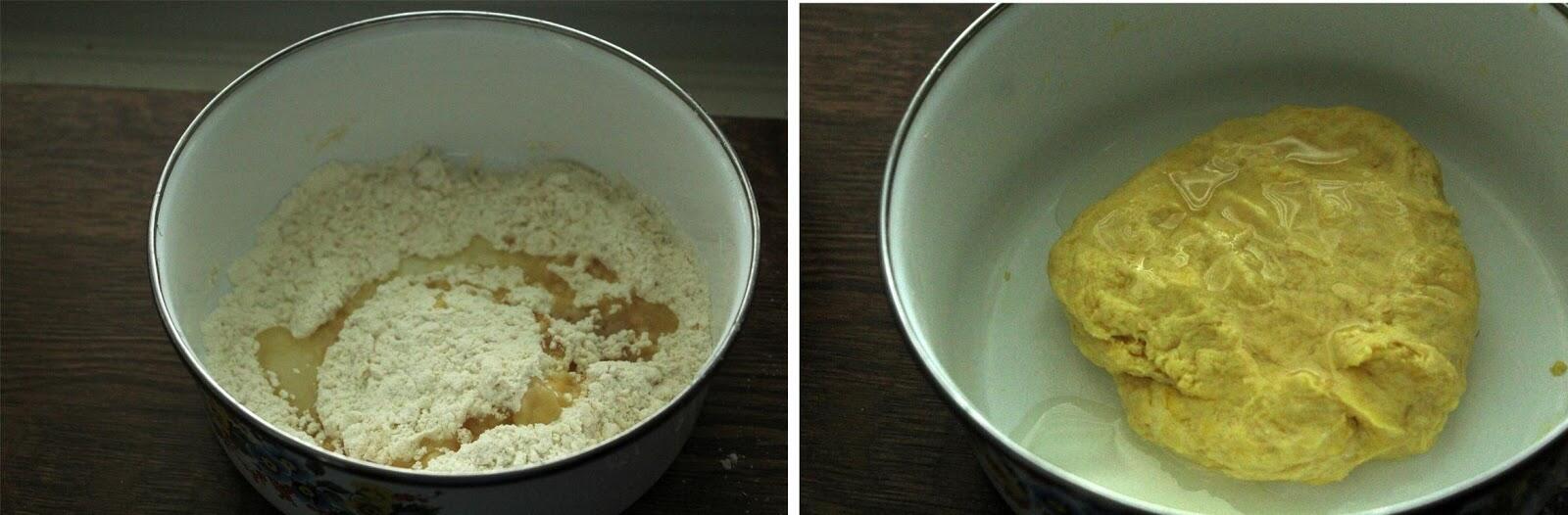
In a mixing bowl, add all-purpose flour, salt, turmeric powder and 2 tablespoons of warm oil. Mix well.
Add water little by little and make a soft and smooth dough. The dough should be loose and pliable, not tight. Pour remaining oil over the top of the dough. Cover and rest it for 1-2 hours.
Make the coconut stuffing
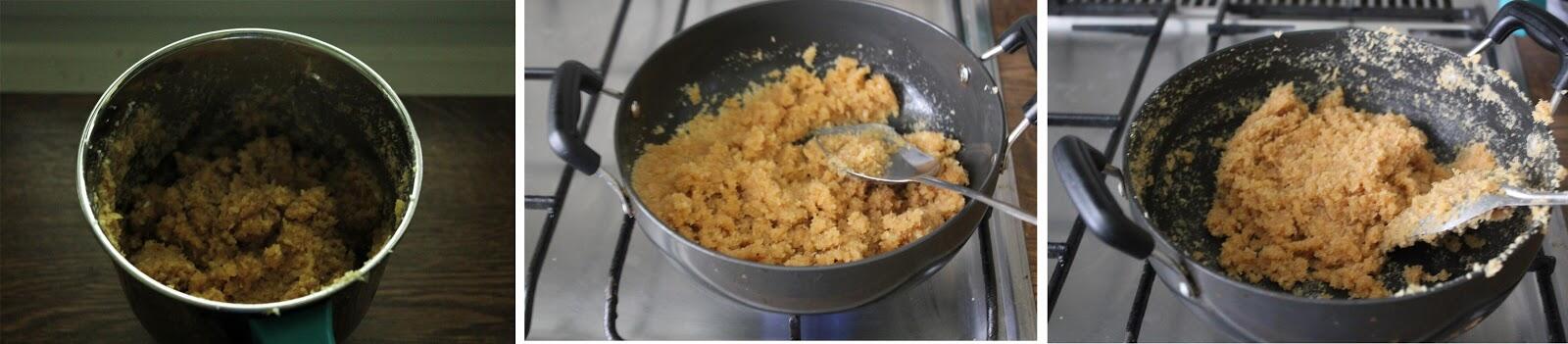
Grind the grated coconut and jaggery together in a blender or mixie.
Cook the ground mixture for a few minutes over a medium flame. Add cardamom powder and stir continuously until you get a thick mixture.
Turn off the flame and let it cool down completely.
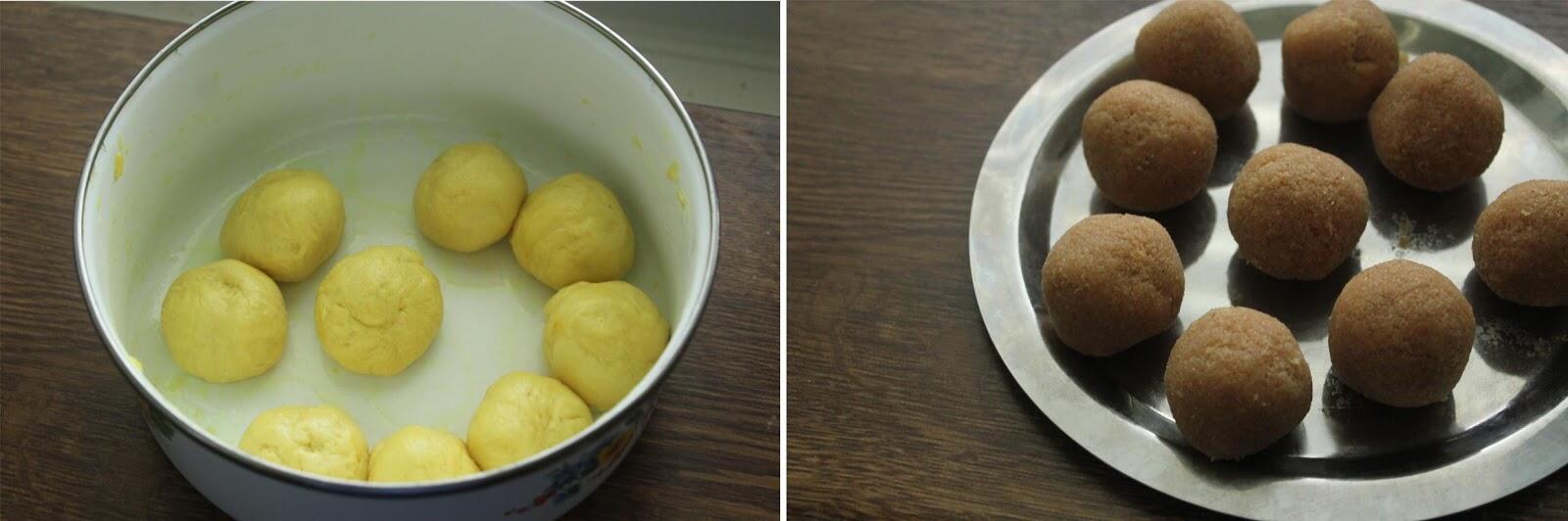
Shape the filling
Divide the dough and coconut filling into 9-10 portions and shape into round balls.
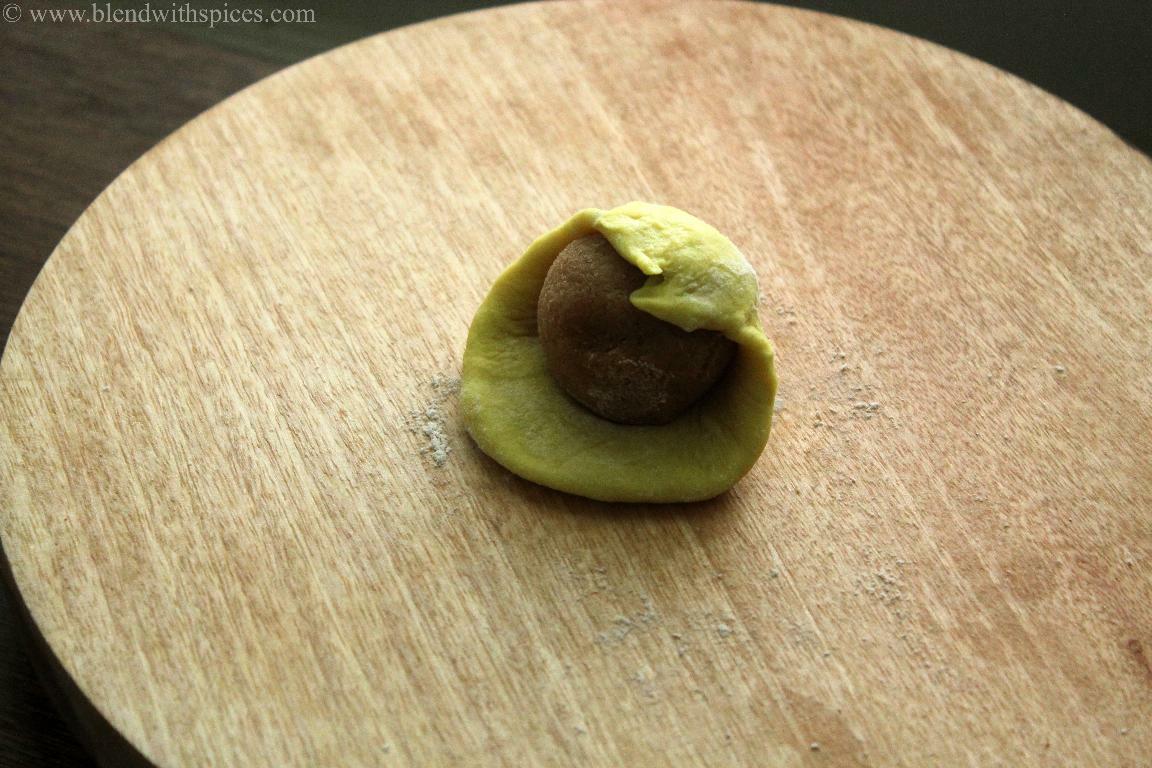
Stuff the dough
Flatten the dough ball using your fingers to make a small circle. Place a coconut jaggery filling ball in the middle, and carefully bring the edges together to seal.
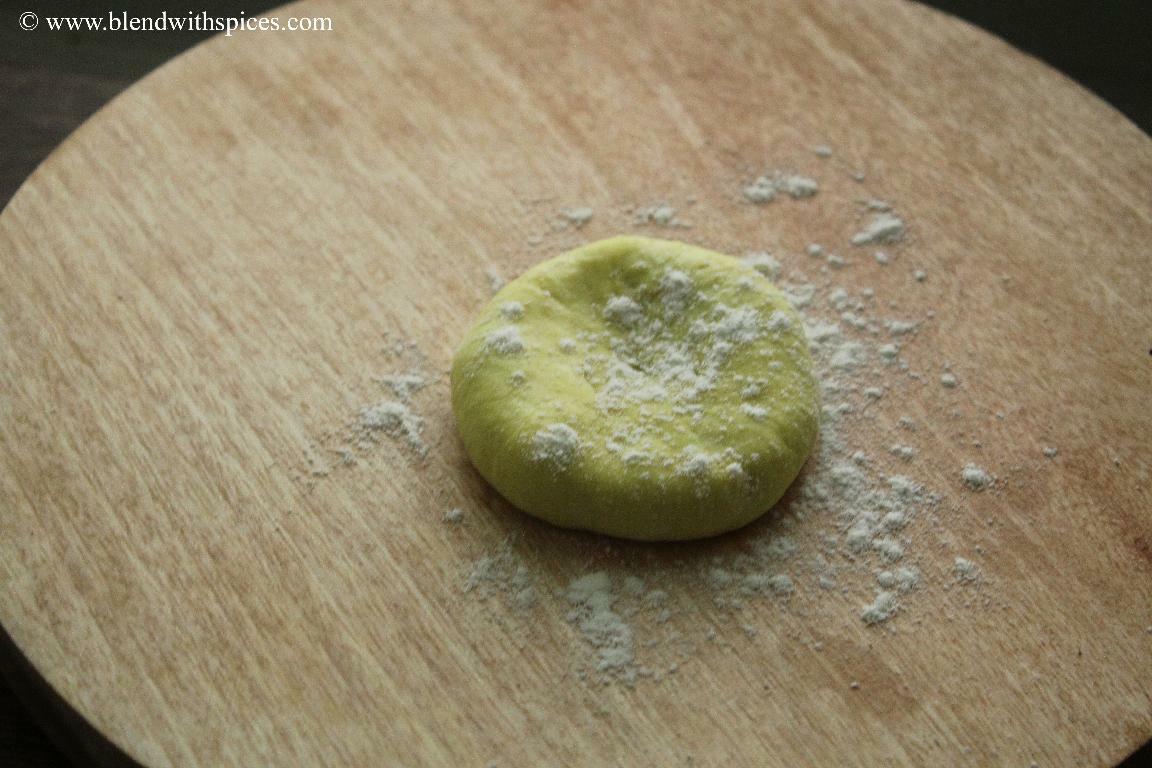
Roll the holige
Dust lightly with flour and roll gently into a thin or slightly thick circle.
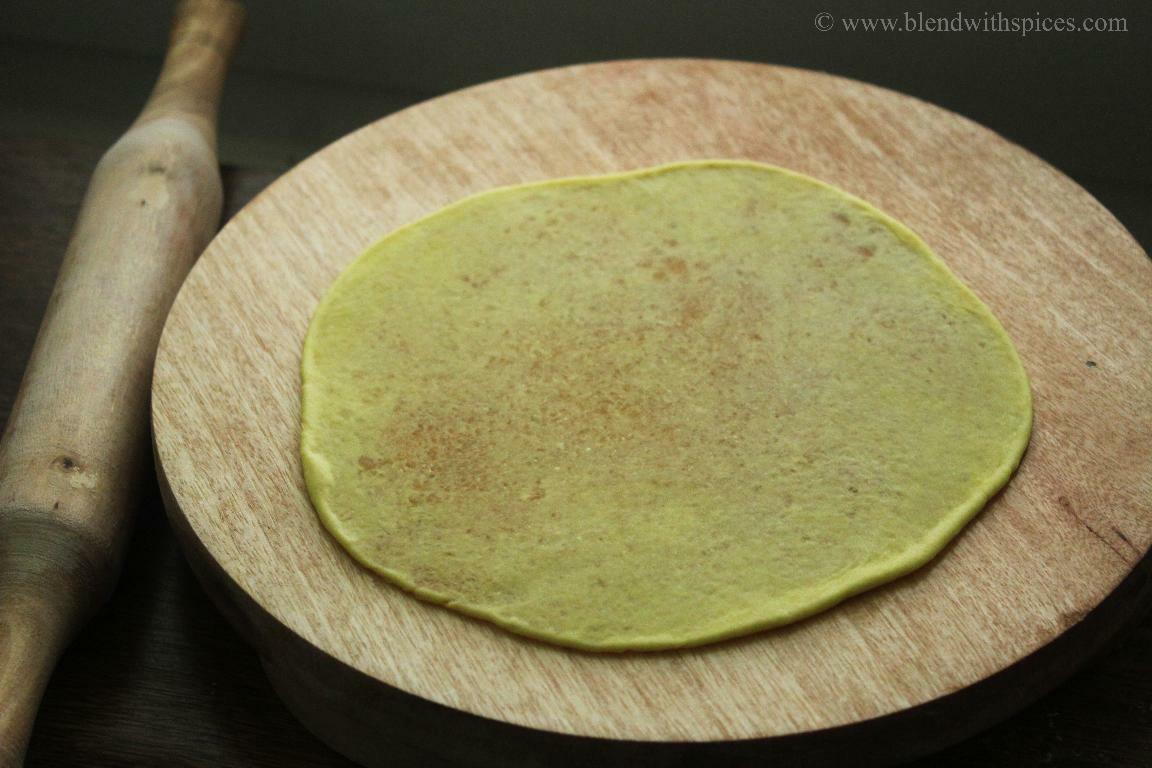
Roll slowly and evenly so the filling spreads without breaking through.
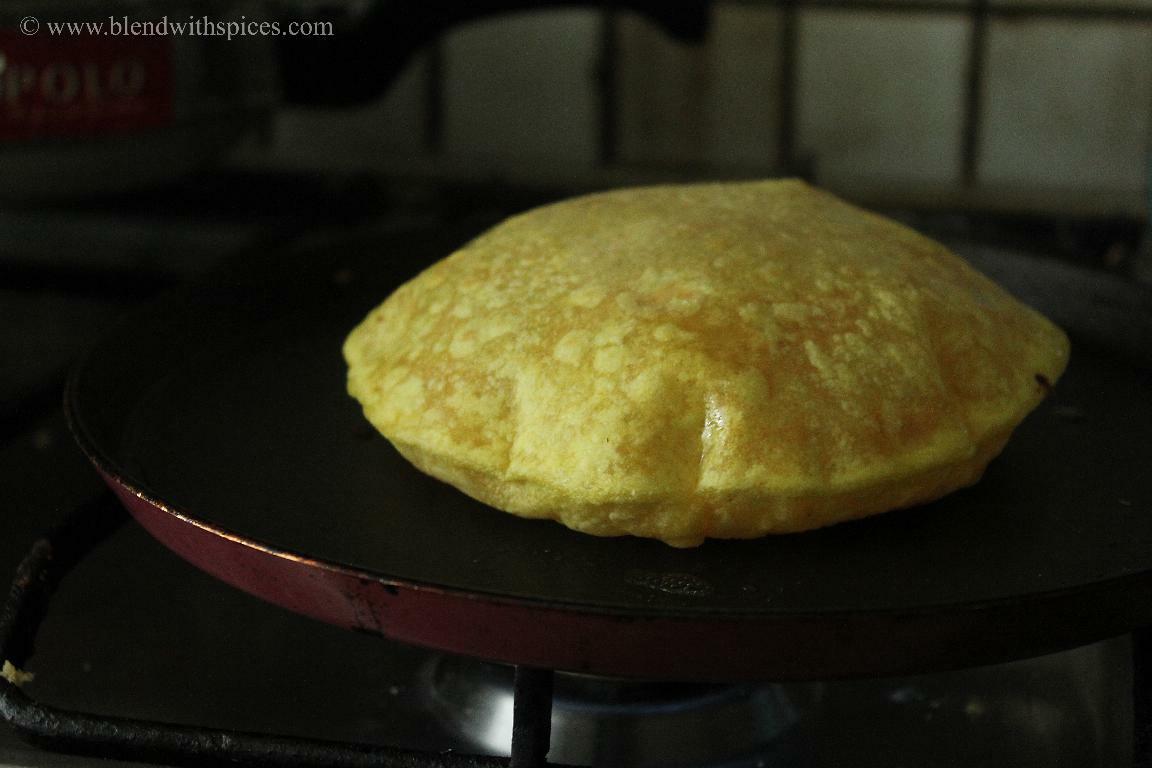
Cook the holige
Heat a tawa or pan on a medium heat. Add a little bit of ghee to the pan. Place the rolled coconut holige on the hot pan.
Drizzle some ghee and cook until light brown spots appear on one side. Gently flip and cook the other side. Drizzle more ghee if desired.
Repeat with the remaining dough and filling. Serve kayi obbattu warm.
Tips & Notes:
- Use fresh and high quality ingredients for the best results.
- The dough should be very soft, loose and elastic. Add a little more water if you feel the dough is tight. Add a little more flour if you feel the dough is sticky.
- Do not skip resting the dough. Rest it for at least an hour for the best results.
- The coconut filling should be thick but still soft. If it's too loose, it may leak while rolling.
- Make sure the filling is cooled completely before stuffing. If it is warm, it may soften the dough too much, which makes it difficult to roll.
- Make sure edges are sealed well before rolling, so the filling doesn't come out.
- Roll gently and slowly, turning the holige as you go. If it sticks to the surface, sprinkle a little bit of dry flour.
- You can also roll them using your hands without a rolling pin. Grease a banana leaf or parchment paper with oil, place the dough on it and gently pat it into a thin circle.
- Always cook on a medium flame, so it cooks evenly.
Serving suggestions
Coconut poli is best when served warm with a little drizzle of ghee on top. It can be served as a tea-time snack or as a dessert after a meal.
It is usually served as a part of a festive meal during Ugadi, Sankranti or Ganesh Chaturthi along with other festival dishes like Ava pettina pulihora, Bellam paramannam and Rava pulihora.
Storage suggestions
Kayi obbattu tastes best when it is freshly made, but it can be stored if needed. Once the cooked kobbari bobbatlu are cooled, store them in an airtight container at room temperature for a day. If you want to store them longer, I would suggest you keep them refrigerated for up to 3-4 days. When you want to serve, gently reheat on a hot pan.
If you are making coconut poli ahead of a festival or party, you can also prepare the dough and stuffing a day before and store them separately in the refrigerator. Assemble and cook the obbattu fresh for the best taste and texture.
If you want to freeze the cooked thengai poli, place them in a single layer on a tray and freeze until firm. Transfer the frozen polis to an airtight container or ziplock bags and store in the freezer for up to a month or two.
You can also freeze the coconut-jaggery filling for up to 3 months. Arrange the stuffing balls on a tray and freeze until they are firm. Once they are frozen, transfer them to a ziplock bag and store them in the freezer. Thaw the frozen stuffing balls before rolling.
More Indian Festival Recipes:
- Vermicelli Coconut Milk Payasam Recipe - Semiya Payasam with Jaggery & Coconut Milk - Ugadi Special Recipes
- Pesara Garelu Recipe ~ Traditional Andhra Moong Dal Vada ~ Sankranti Recipes
- Godhuma Rava Halwa Recipe - How to Make Wheat Rava Kesari - Varalakshmi Vratham Recipes
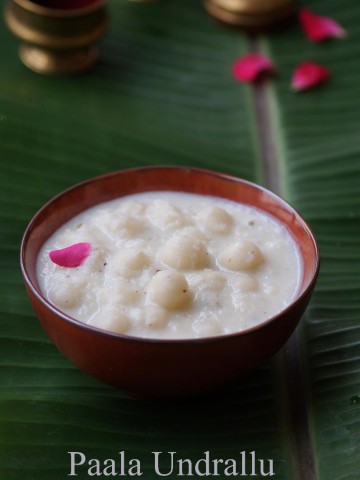
- Pala Undrallu Recipe - How to make Undralla Payasam - Vinayaka Chavithi Recipes
Kayi Holige (Coconut Poli)

Ingredients
- 3 Tablespoons Ghee
For the outer layer
- 1 Cup All Purpose Flour
- 3.5 Tablespoons Oil
- ¼ Teaspoon Turmeric Powder
- A Pinch of Salt
For the stuffing
- 2 Cups Grated Fresh Coconut
- 1 Cup Jaggery powdered
- ¼ Teaspoon Cardamom Powder
Instructions
- In a mixing bowl, add all-purpose flour, salt, turmeric powder and 2 tablespoons of warm oil. Mix well.
- Add water little by little and make a soft and smooth dough. The dough should be loose and pliable, not tight. Pour remaining oil over the top of the dough. Cover and rest it for 1-2 hours.
- Grind the grated coconut and jaggery together in a blender or mixie. Cook the ground mixture for a few minutes over a medium flame. Add cardamom powder and stir continuously until you get a thick mixture.
- Turn off the flame and let it cool down completely.
- Divide the dough and coconut filling into 9-10 portions and shape into round balls.
- Flatten the dough ball using your fingers to make a small circle. Place a coconut jaggery filling ball in the middle, and carefully bring the edges together to seal.
- Dust lightly with flour and roll gently into a thin or slightly thick circle.
- Roll slowly and evenly so the filling spreads without breaking through.
- Heat a tawa or pan on a medium heat. Add a little bit of ghee to the pan. Place the rolled coconut holige on the hot pan.
- Drizzle some ghee and cook until light brown spots appear on one side. Gently flip and cook the other side. Drizzle more ghee if desired.
- Serve warm.
Notes
- The dough should be very soft, loose and elastic. Add a little more water if you feel the dough is tight. Add a little more flour if you feel the dough is sticky.
- The coconut filling should be thick but still soft. If it's too loose, it may leak while rolling.
- Always cook on a medium flame, so it cooks evenly.
Nutrition
Nutrition values are estimates only.

Kousikasa g says
we shall try this for makara sankranthi in particular
kobbari bobbatlu as per directions