

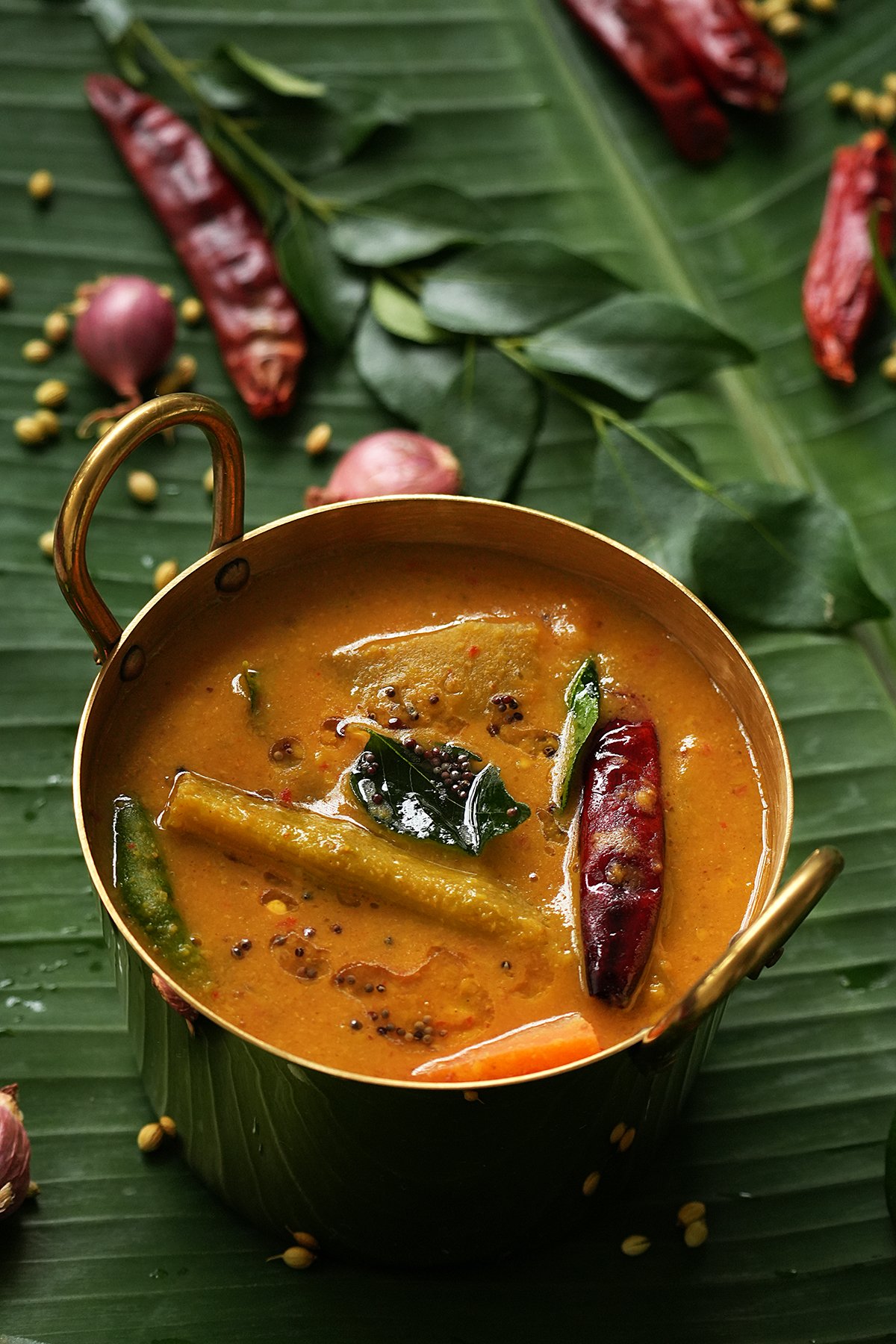
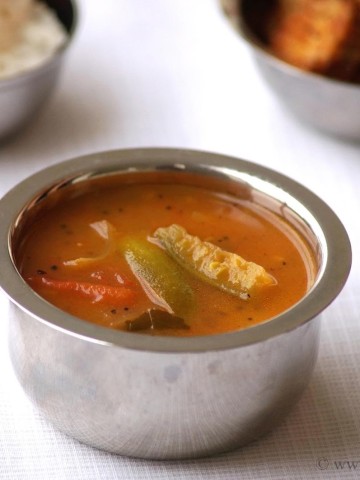
Varutharacha Sambar is a classic Kerala-style lentil dish made with a freshly roasted coconut-spice paste and a mix of vegetables. It is hearty, wholesome, and full of flavor, and a star dish in the Onam Sadya.
Jump to:
What is Varutharacha Sambar?
Varutharacha Sambar is a traditional Kerala lentil-based side dish made with a freshly roasted and ground spice-coconut paste and loads of mixed vegetables. The word "Varutharacha" literally means "roasted and ground". which perfectly describes the dish. This Kerala-style sambar is different from our regular sambar that uses sambar powder, this version gets its flavor from spices and coconut that are roasted until golden and ground into an aromatic paste.
This sambar is a must-have dish in many Onam Sadya feasts and special occasions in Kerala. It is typically made with a mix of vegetables like drumstick, ask gourd, carrot, potato, beans, tomato and shallots. The roasted coconut paste is stirred in at the end, which gives it its signature thick texture and bold flavor. The consistency of the sambar will be thicker than the regular sambars, such as Raw Mango Sambar, Keerai Sambar, and Kathirikai Sambar.
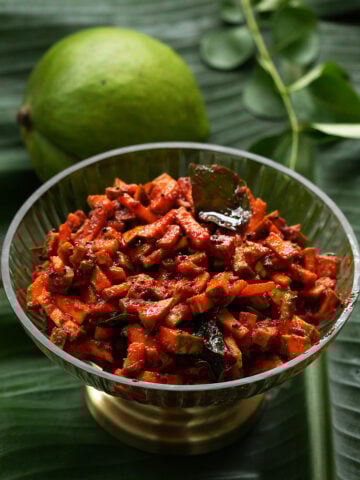
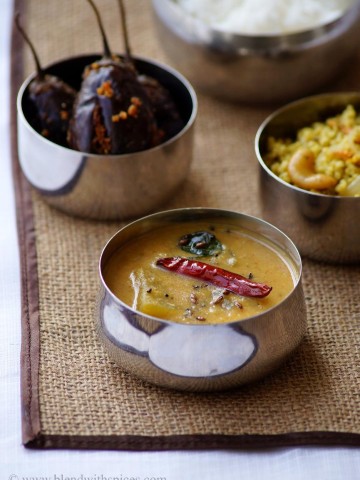
In a traditional Kerala Sadya (vegetarian feast), Varutharacha Sambar is served on the banana leaf alongside rice and other classics like olan, kalan, avial, inji puli, instant mango pickle, and moru curry.
Ingredients & Substitutions
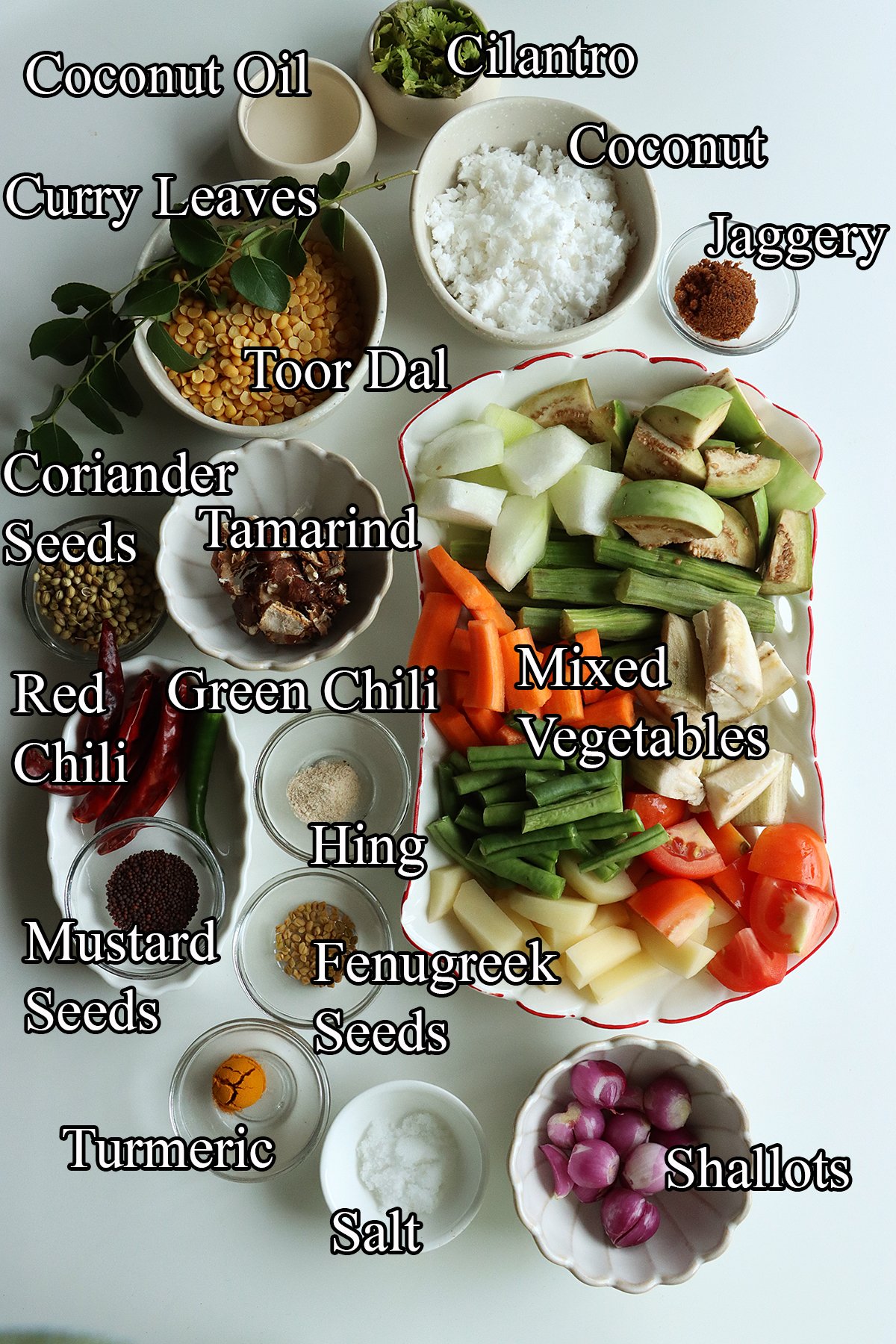
Toor Dal - Also known as pigeon pea lentils. Toor dal is the base of most sambar recipes. It gives the sambar its thickness and protein. You can substitute it with masoor dal or moong dal, but the flavor won't be the same.
Mixed Vegetables - Traditionally, a mix of vegetables is used to make this sambar. I have used ash gourd (white pumpkin), carrot, potato, raw banana, shallots, green beans, tomato, drumstick and brinjal. You can also use yam, cucumber, okra or any of your favorite mix of vegetables to make it wholesome.
Tamarind - It adds the sourness to the sambar. You can also use tamarind paste.
Coconut - Use fresh coconut for the best results. You can also use frozen coconut if you don't have fresh one, thaw it before roasting.
Spices - You will need coriander seeds and fenugreek seeds for the masala paste and mustard seeds for the seasoning. All are essential.
Red Chilies - They add the heat to the sambar. If you don't have red chillies, try replacing them by adding some chilli powder in the sambar.
Curry Leaves - Adds a wonderful South Indian touch. You can also use frozen or dried curry leaves. Do not skip them.
Coconut Oil - Coconut oil is used for the best, authentic flavor. You can also use any neutral oil if you don't have coconut oil handy.
Variations:
Varutharacha Sambar usually uses a mix of many vegetables, especially when making during festivals like Onam or Vishu. You can also try it with a single vegetable instead of mixed vegetables.
Roast few shallots along with spices and coconut for a different taste.

How to Make Varutharacha Sambar
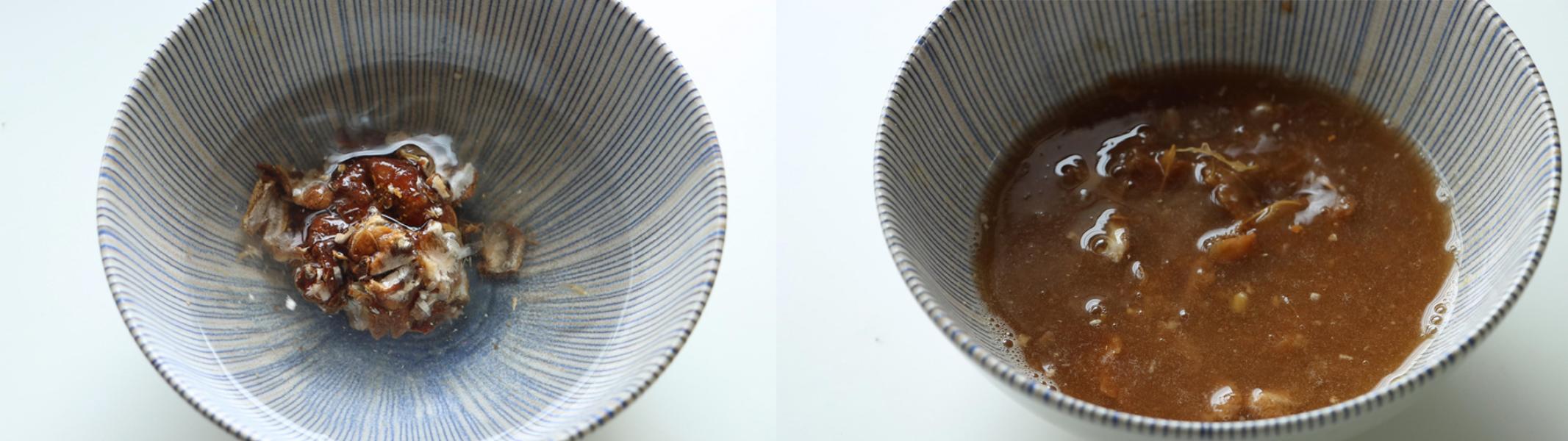
Soak tamarind in hot water for about 15 minutes. Once it is soft and soaked, squeeze well to extract. Keep it aside until use.
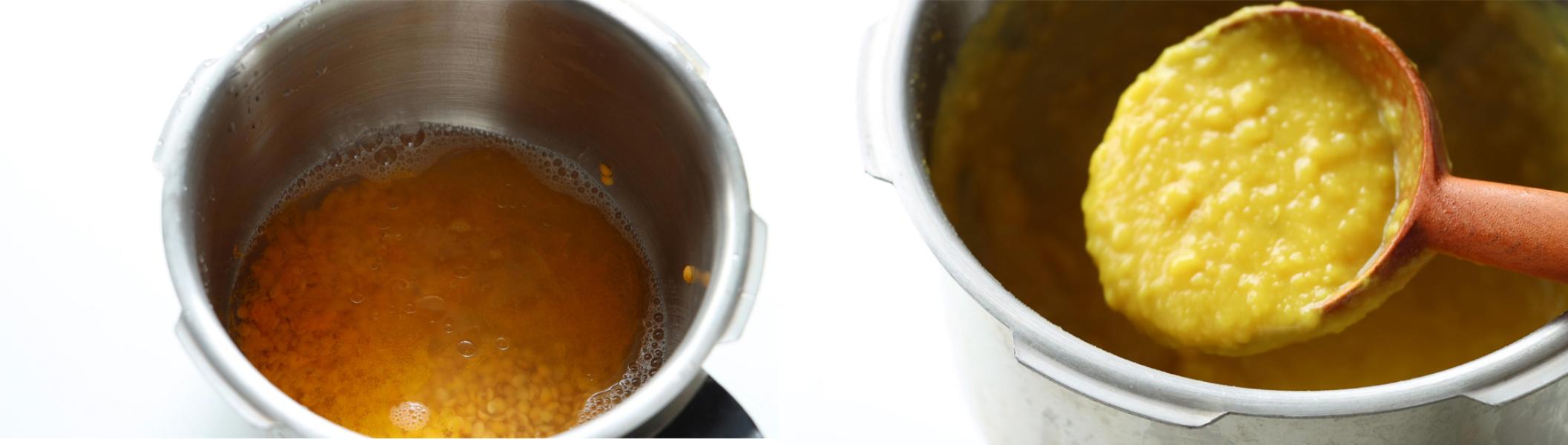
Wash ½ cup of toor dal with plenty of water and rinse. Add 1.5 cups of water, turmeric powder and ½ teaspoon of coconut to the washed lentils. Pressure cook it for 3-4 whistles. When the pressure is released naturally, open the lid and mash the dal until smooth. Keep it aside.
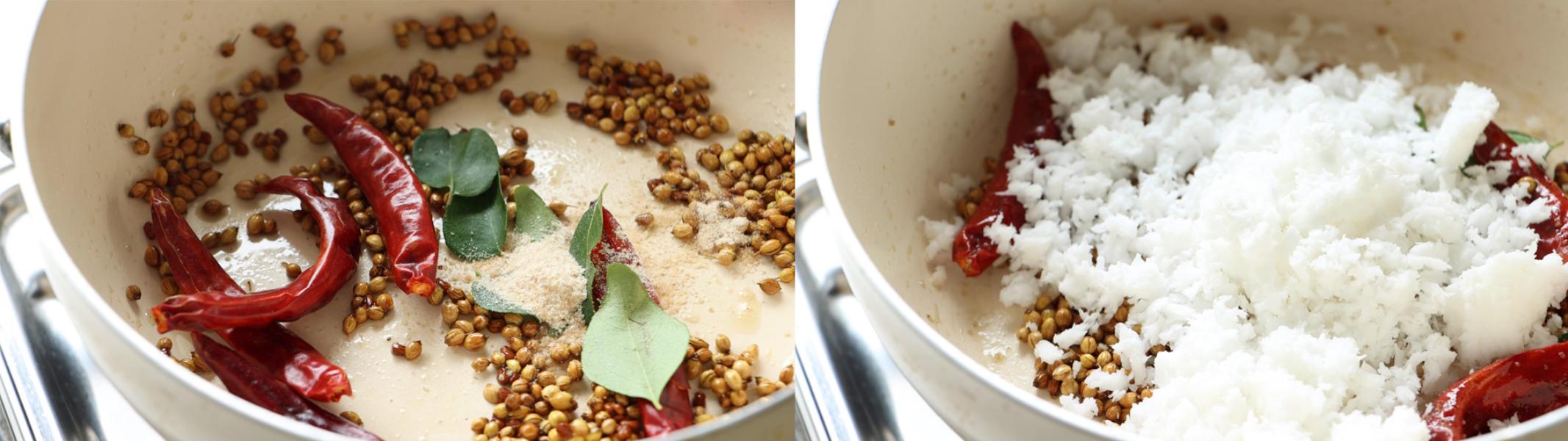
To prepare the masala paste, heat a pan with ½ tablespoon of coconut oil. Add coriander seeds and fenugreek seeds and roast them until they are browned. Add dry red chillies, few curry leaves and hing to the roasted spices and give it a mix. Add grated fresh coconut.
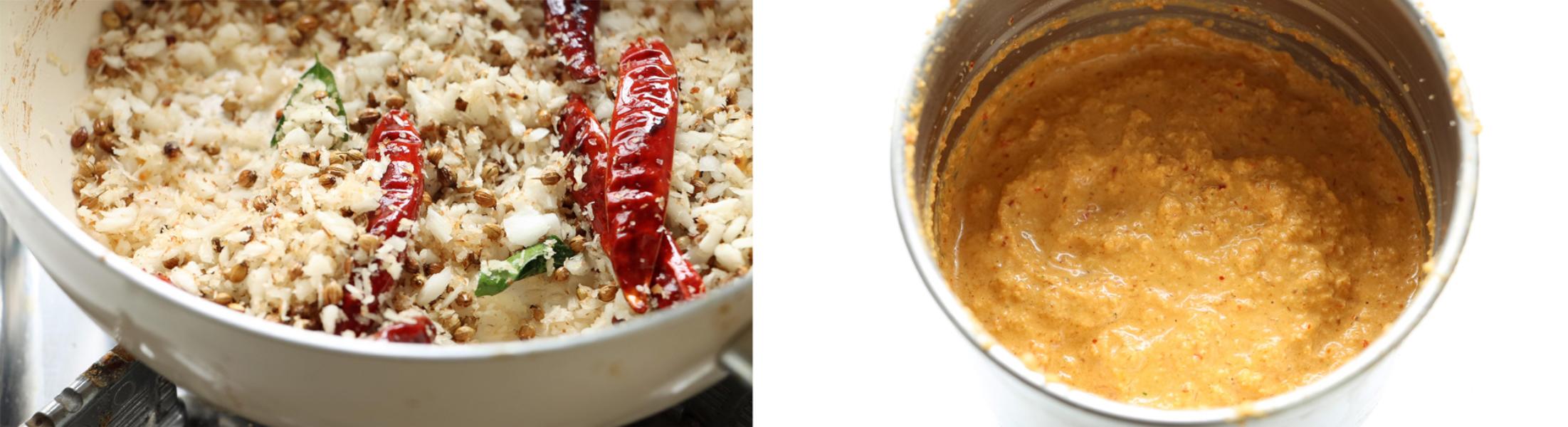
Roast the coconut with other spices over a low heat until it is golden brown. Remove it from the flame and let it cool down a bit. Transfer the roasted spices-coconut mixture to a blender jar or mixie and grind it to a smooth paste using a little bit of water. Keep it aside until use.
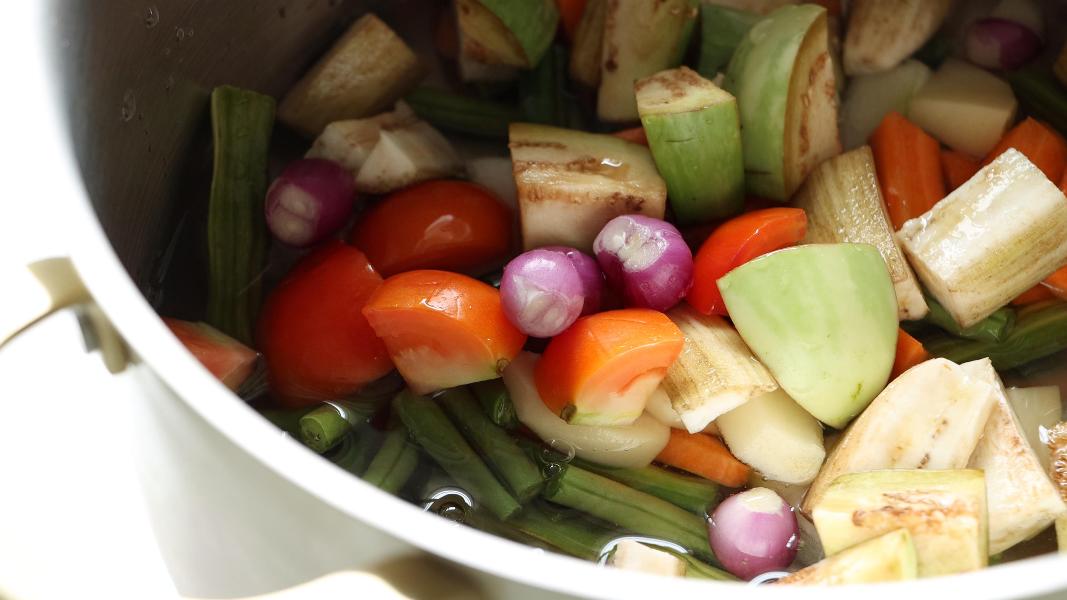
Add all the chopped vegetables to a large vessel. Add enough water to cover the vegetables. Add salt and turmeric powder and mix well. Cover the pot with a lid and let it cook until the vegetables are soft.

Make sure the vegetables are cooked and fork-tender.
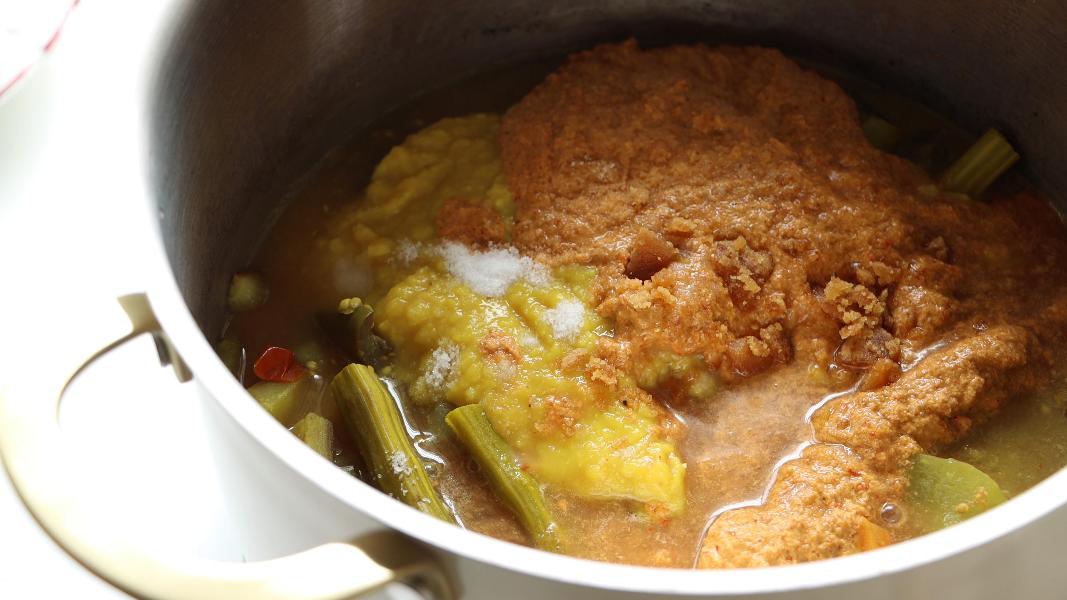
Once the vegetables are cooked, add the cooked dal, ground coconut paste, tamarind extract, salt and jaggery to the pot. Mix well.
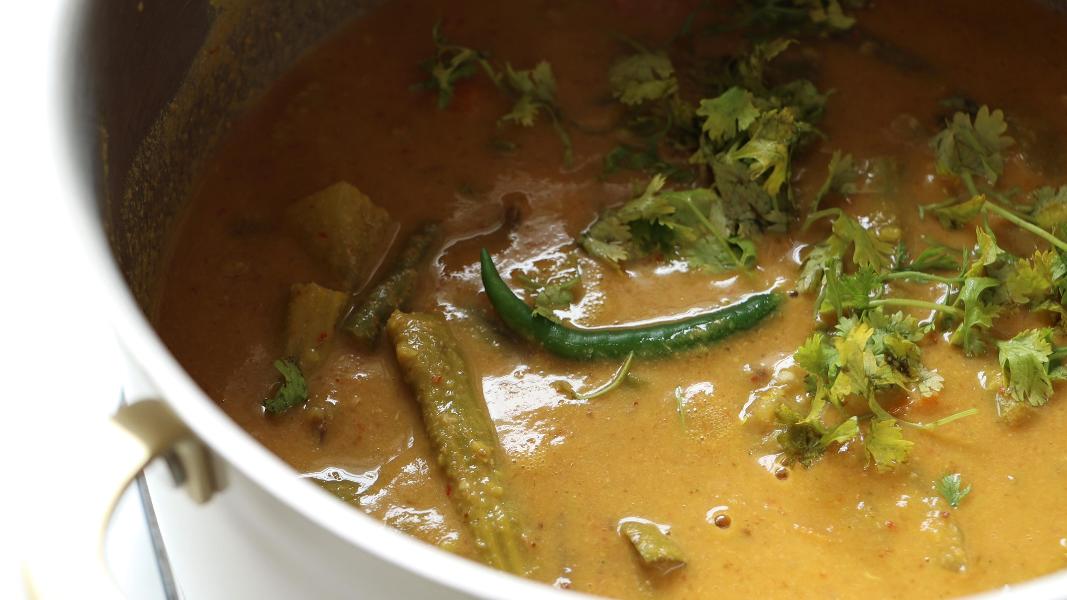
Adjust the consistency by adding more water. Add green chili and cilantro/coriander leaves and mix well.
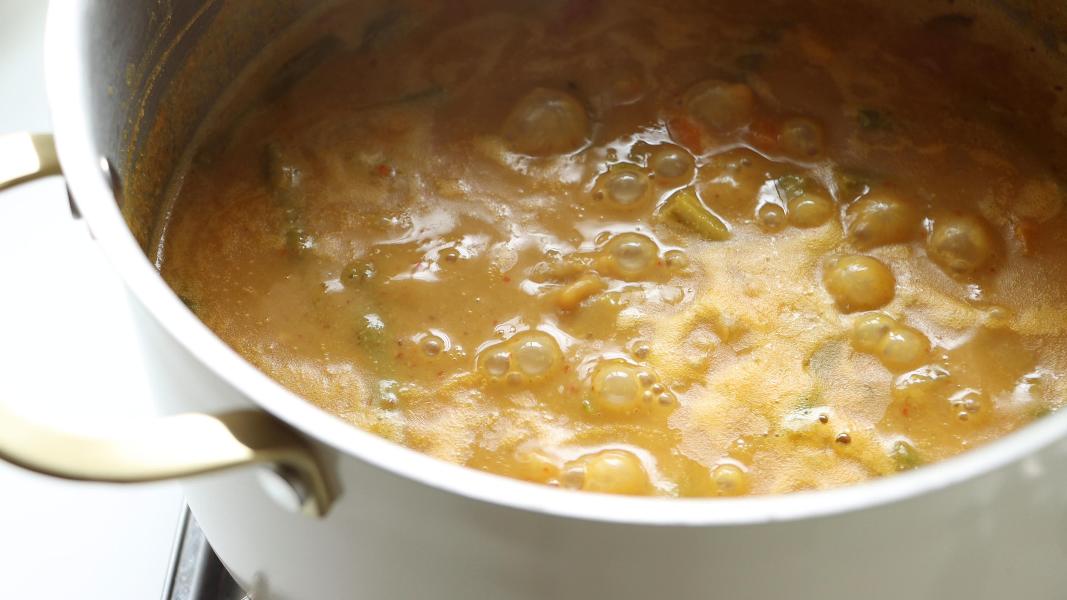
Let the sambar boil for 5-10 minutes and remove it from the flame.

For the seasoning, heat a tablespoon of coconut oil in a small pan. Add mustard seeds, red chili and curry leaves. Let them splutter. Pour it over the simmered sambar and mix until combined. Serve hot with rice.
Tips & Notes:
- Roast the spices on a medium-low flame and make sure not to burn them.
- Fresh coconut gives the best taste. Frozen coconut can be used if fresh coconut is not available, but thaw it completely before roasting.
- If you are unsure about the tamarind quantity, start with a little and adjust accordingly.
- Avoid using vegetables like cabbage and beetroot.
- Mash the cooked dal well before adding it to the sambar for a smooth texture.
- Varutharacha sambar is usually a little thicker than regular sambars. Adjust water to get the right consistency.
Storage suggestions:
Consume it within the same day. If you want to store it for longer, transfer it to an airtight container and keep it in the refrigerator for 2 days.
Serving suggestions:
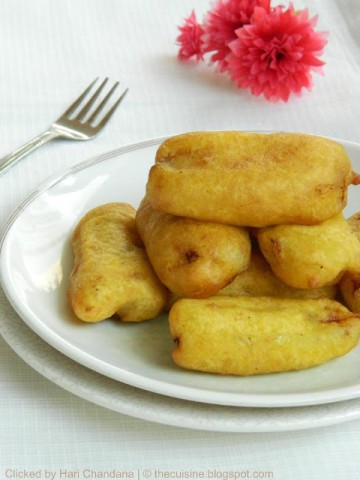
Varutharacha Sambar tastes best when served hot. Serve it with hot steamed rice with a side of your favorite curry like Vazhakkai Podimas, Mathanga Thoran, and Chama Dumpa Fry. A drizzle of ghee on top makes it extra delicious and hearty.
This Kerala sambar with coconut can also be served with idli, dosa, pongal or uthappam.
More Kerala Recipes:

If you tried this Varutharacha Sambar Recipe or any other recipe on my blog please leave a 🌟 star rating and let me know how it went in the 📝 comments. Thanks for visiting my blog today!

Varutharacha Sambar

Ingredients
- ½ Cup Toor Dal
- 4 Cups Mixed Vegetables (1 Carrot, 1 Tomato, 1 small Potato, 2 small Eggplants, 1 Drumstick, ½ Raw Banana, 10 Shallots, White Pumpkin, Green Beans)
- Lemon Sized Tamarind Ball
- 1 Green Chili
- ½ Teaspoon Turmeric Powder Divided
- 1-2 Teaspoons Jaggery
- 2 Tablespoons Coriander Leaves
- ½ Teaspoon Coconut Oil
- Salt to Taste
For Masala Paste
- 1.5 Tablespoons Coriander Seeds
- ¼ Teaspoon Fenugreek Seeds
- ½ Cup Fresh Grated Coconut
- 4-5 Dry Red Chillies
- ¼ Teaspoon Hing
- ½ Tablespoon Coconut Oil
- Few Curry Leaves
For Seasoning
- 1 Tablespoon Coconut Oil
- ½ Teaspoon Mustard Seeds
- 1 Dry Red Chili
- 1-2 Sprig Curry Leaves
Instructions
- Soak tamarind in hot water for about 15 minutes. Once it is soft and soaked, squeeze well to extract. Keep it aside until use.
- Wash ½ cup of toor dal with plenty of water and rinse. Add 1.5 cups of water, turmeric powder and ½ teaspoon of coconut to the washed lentils. Pressure cook it for 3-4 whistles. When the pressure is released naturally, open the lid and mash the dal until smooth. Keep it aside.
- To prepare the masala paste, heat a pan with ½ tablespoon of coconut oil. Add coriander seeds and fenugreek seeds and roast them until they are browned. Add dry red chillies, a few curry leaves and hing to the roasted spices and give it a mix. Add grated fresh coconut.
- Roast the coconut with other spices over a low heat until it is golden brown. Remove it from the flame and let it cool down a bit. Transfer the roasted spices-coconut mixture to a blender jar or mixie and grind it to a smooth paste using a little bit of water. Keep it aside until use.
- Add all the chopped vegetables to a large vessel. Add enough water to cover the vegetables. Add salt and turmeric powder and mix well. Cover the pot with a lid and let it cook until the vegetables are soft.
- Make sure the vegetables are cooked and fork-tender.
- Once the vegetables are cooked, add the cooked dal, ground coconut paste, tamarind extract, salt and jaggery to the pot. Mix well.
- Adjust the consistency by adding more water. Add green chili and cilantro/coriander leaves and mix well.
- Let the sambar boil for 5-10 minutes and remove it from the flame.
- For the seasoning, heat a tablespoon of coconut oil in a small pan. Add mustard seeds, red chili and curry leaves. Let them splutter. Pour it over the simmered sambar and mix until combined. Serve hot with rice.
Video
Notes
Nutrition
Nutrition values are estimates only.
Leave a Reply