

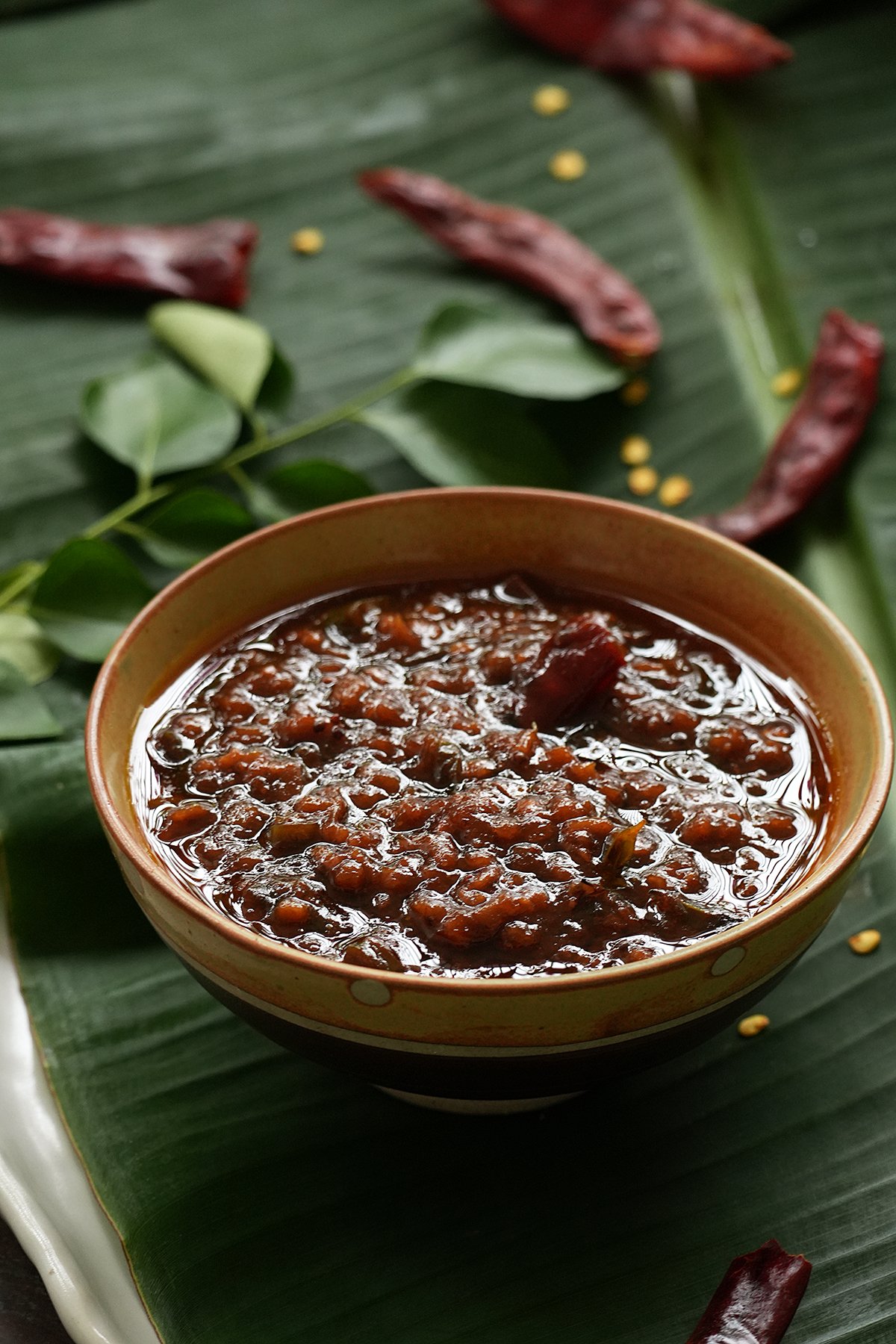
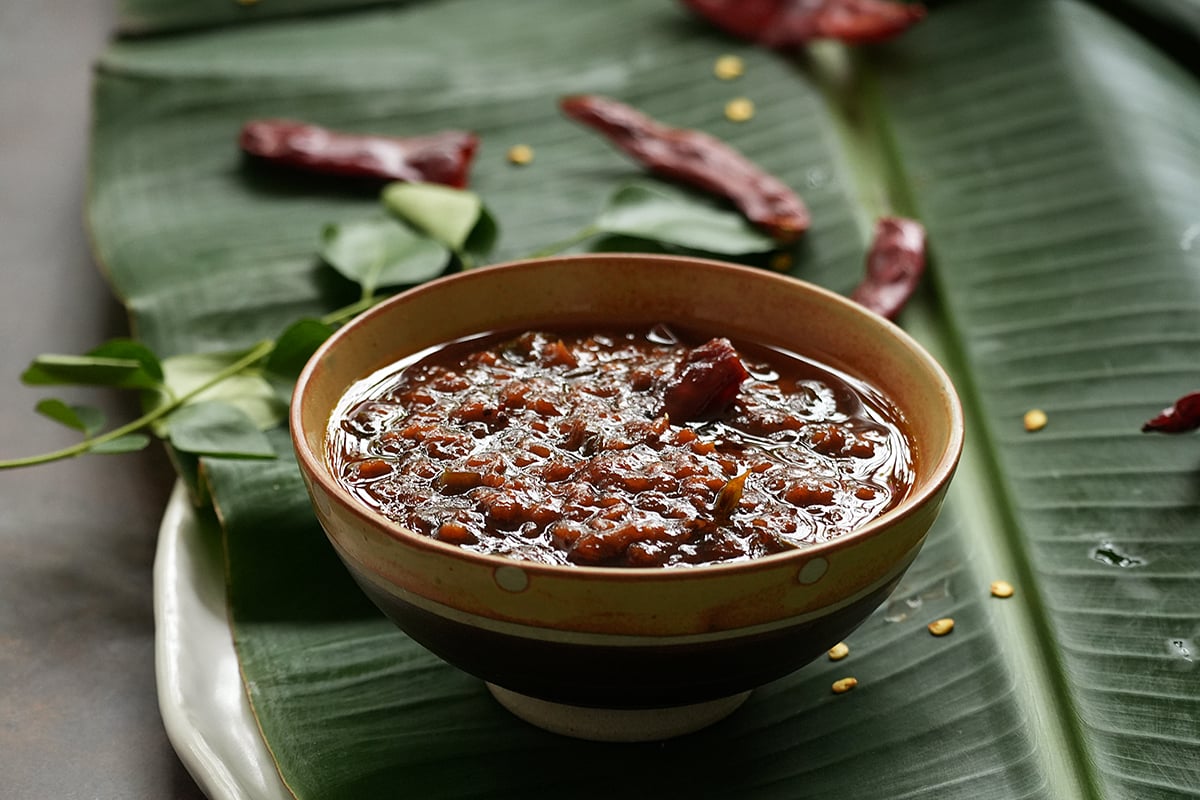
Inji Puli is a traditional Kerala condiment made with ginger, tamarind, chillies, jaggery and spices. This sweet, tangy and spicy pickle is a must-have dish on the festive feast menu. No Onam Sadya feels complete without Inji Puli.
Jump to:
What is inji puli?
Inji Puli (also known as Puli Inji or Inji Curry) is a traditional Kerala condiment made with fresh ginger, tamarind, jaggery, spices, and coconut oil. The name translates to Inji (ginger) and Puli (tamarind), which are the two important ingredients that give it its distinct, tangy-sweet-spicy flavor. It's not like a curry or a pickle that we usually make at our Andhra homes, it is somewhere in between. It is a thick, glossy, and delicious condiment that is packed with a wonderful flavor.
Inji Puli is an essential part of the Kerala Sadya menu, a vegetarian feast served on banana leaves during festivals such as Onam and Vishu. Though it's served in small quantities, inji puli plays a big role in balancing the meal. It is served along with other Onam sadya dishes such as Mambazha Pulissery, Mango Rasam, Avial, Okra Thoran, Curd Rice and Parippu Curry.
Ingredients & Substitutions:
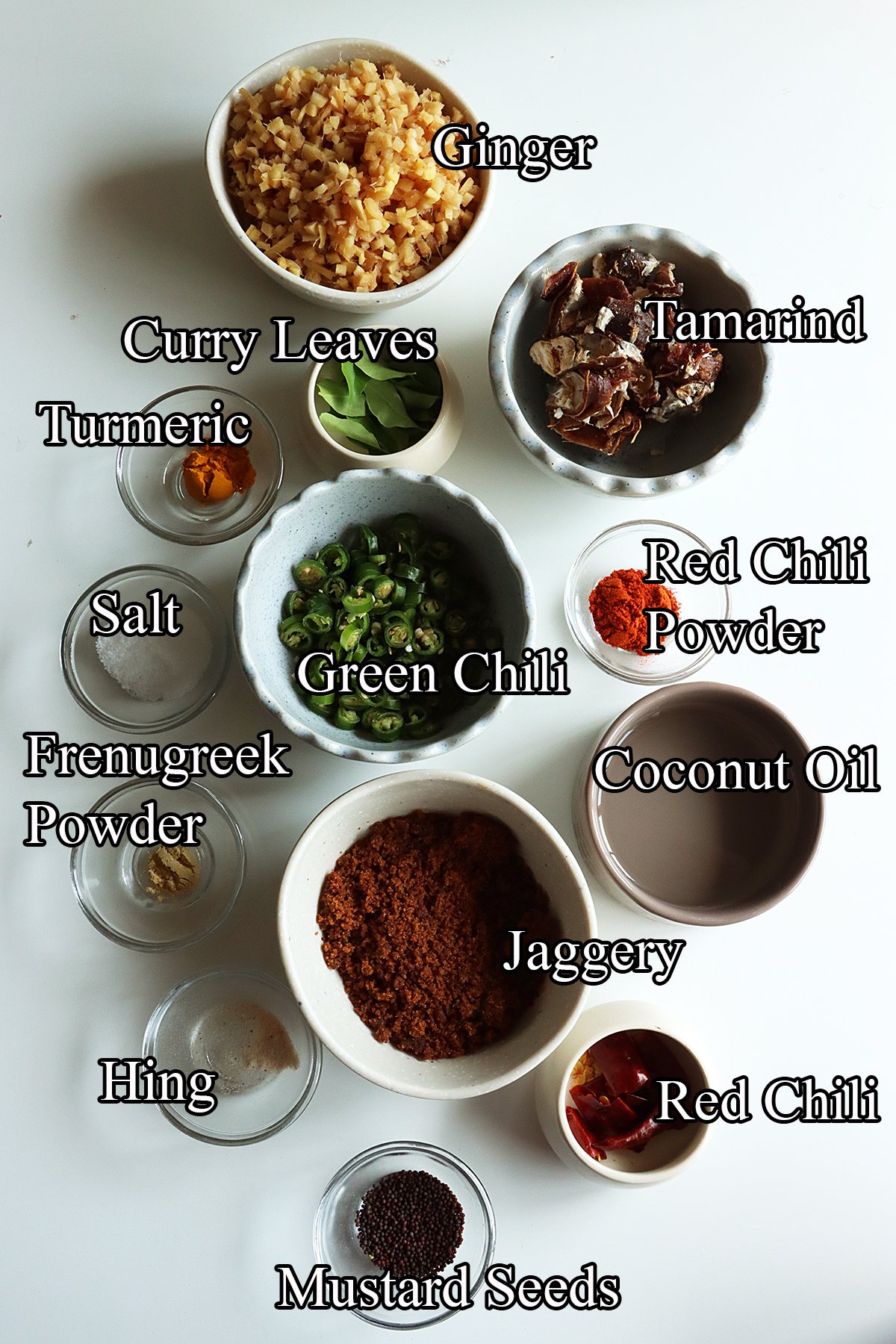
Ginger - This is the star of this dish. Use fresh and tender ginger for sharp and spicy flavor. Avoid old fibrous ginger.
Tamarind - This is another star of this dish. It adds the signature tangy, sour taste. Try to use old and black tamarind if possible for the authentic flavor. You can also use tamarind paste.
Jaggery - Do not skip adding jaggery, it balances the sharpness of ginger and the sourness of tamarind. You can substitute it with brown sugar if you don't have jaggery handy.
Chilies - You will need both fresh green chillies and dried red chillies here. We need to roast the finely chopped green chilies along with ginger. You can skip red chilies, they are for tempering.
Spices - I have used turmeric powder, red chili powder, hing and mustard seeds. You can also add a little bit of roasted fenugreek powder at the end.
Curry Leaves - They add a fresh aroma and true Kerala touch. Do not skip them.
Oil - Coconut oil is traditionally used to make Inji curry. It gives a rich, nutty flavor and enhances aroma. You could substitute it with sesame oil (gingelly oil). Do not use neutral oils or olive oil if you want the authentic taste and flavor.

How to Make Inji Puli

Measure and soak tamarind in 2 cups of hot water for about 15-30 minutes or until it is soft enough to extract the pulp.
Wash, peel and finely chop the fresh ginger and green chillies. Keep them aside until use.
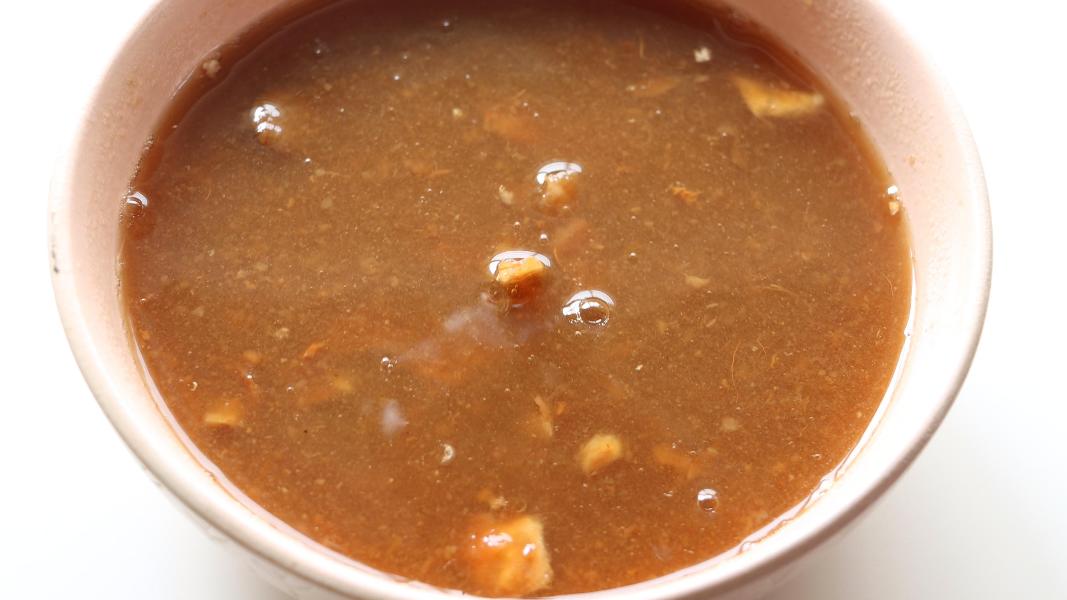
Once the tamarind is well-soaked, squeeze the tamarind pulp. Filter the tamarind water and keep it aside.
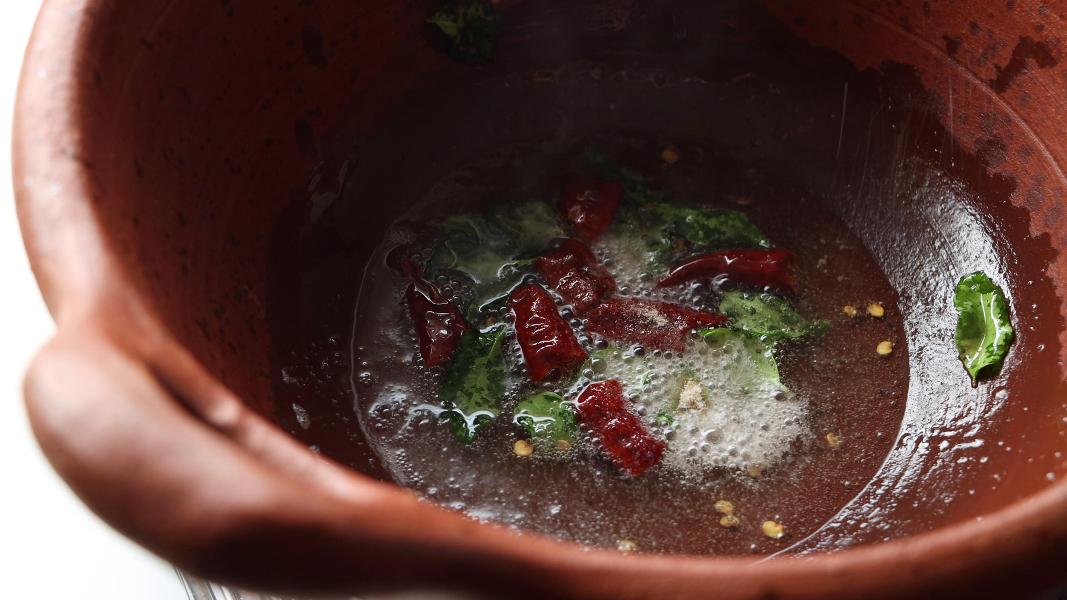
Heat a pan or claypot with coconut oil. Add mustard seeds, broken red chillies and let them splutter. Add curry leaves and hing and give it a mix.
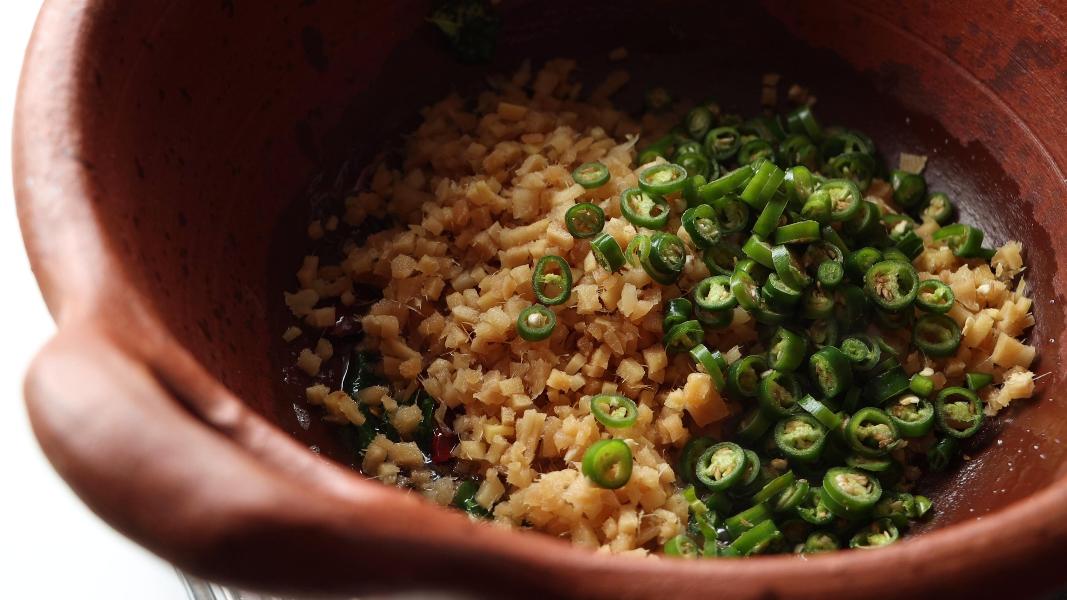
Add the finely chopped ginger and green chillies to the seasoned ingredients and sauté well on a medium flame.
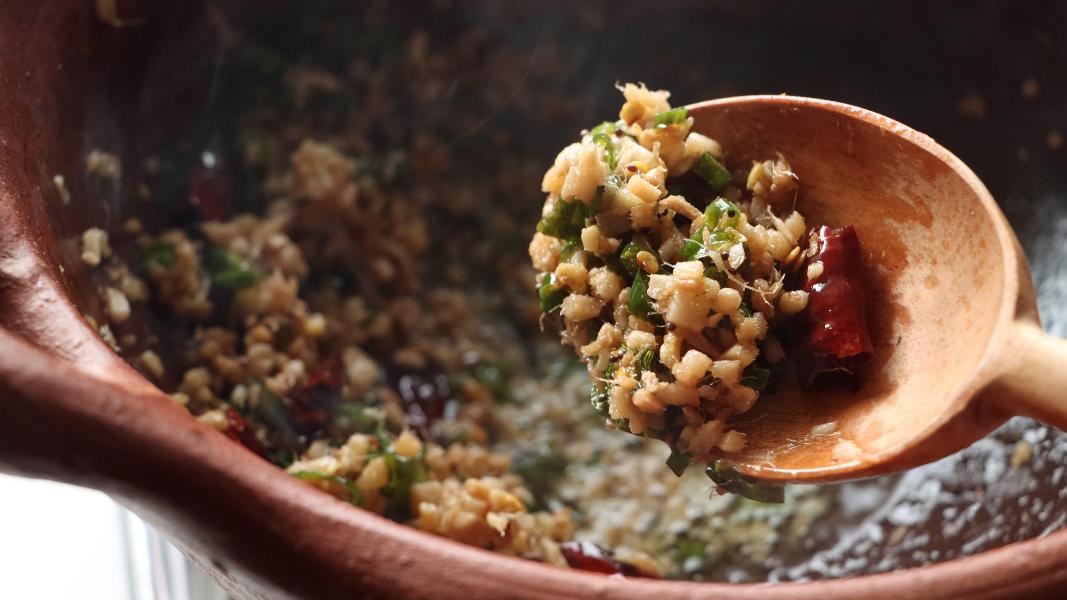
Keep frying the ginger occasionally until it is well roasted and golden brown color.

Pour the tamarind extract into the pan. Add turmeric powder and red chilli powder and mix everything.
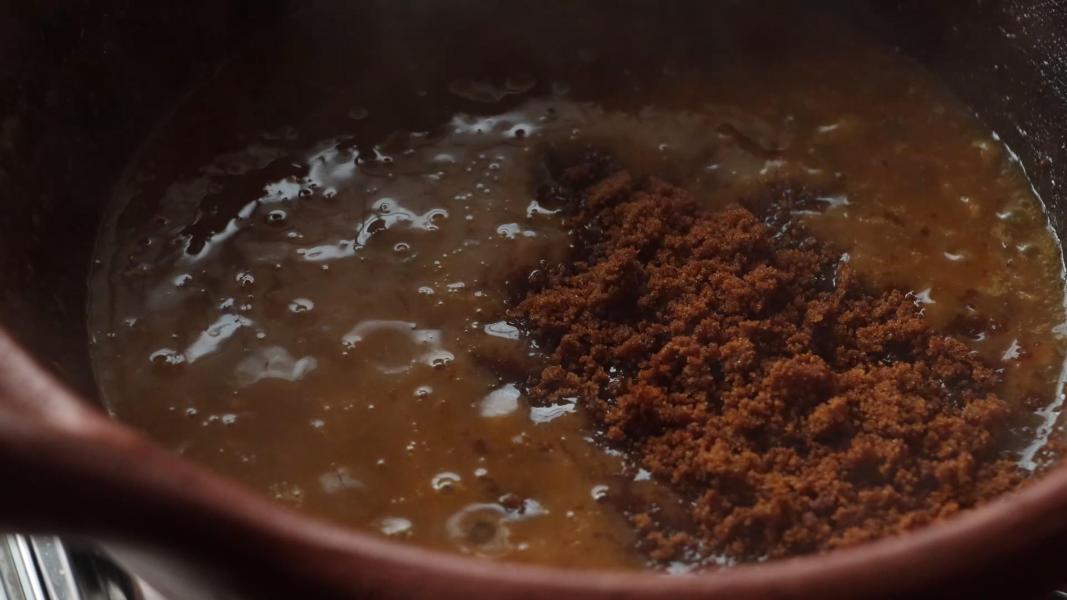
Bring it to a boil and let it cook until the ginger tamarind mixture is thick. Now add jaggery and salt and mix well. If you are using fenugreek powder, add it at this stage.

Let it cook until the oil separates. Remove it from the flame and let it cool completely before storing it.
Tips & Notes:
The color of the Kerala ginger pickle depends on the color of tamarind and jaggery you are using.
Make sure you are using fresh and tender ginger for the best results. Peel and chop ginger into very fine pieces. To speed up the chopping process, feel free to use a food processor. Since the ginger is the star ingredients, fry it until the raw smell disappears and it turns golden brown. This step is very important for the deep flavor.
Adjust the tamarind, jaggery and chillies according to your taste.
Do not undercook or overcook the pickle. It thickens more as it cools.
A little bit of fenugreek powder adds a wonderful bitter note, but too much can overpower the dish. Skip it, if you are not sure.
Avoid using iron cookware for this inji puli recipe. You can use stone cookware, clay cookware or any other cookware.
Storage suggestions:
Once the cooked inji curry is cooled down, transfer it to a clean jar and store it in the refrigerator. It can stay fresh for about 2-3 weeks in the fridge. If the weather is not too hot, it can stay good for about 4-5 days at room temperature.
If you've used coconut oil, the Inji Puli will solidify after refrigeration and it is absolutely normal. Just take it out the refrigerator sometime before serving and let it come to room temperature. Alternatively, you can place the pickle jar in a bowl of warm water for a few minutes to soften it back. If you're in a hurry, microwave it for a few seconds to make it soft. The taste remains just as good.
Always use a dry and clean spoon to prevent it from spoiling.
Serving suggestions:
Traditionally, puli inji is served on a banana leaf along with other sadya dishes. A small spoonful of puli inji is served at the top corner of the leaf since it acts a palate cleanser.
It can also be served as a side dish with rice, oats idli, dosa, upma, oats pongal, vada, curd rice or beerakaya bajji to add a burst of flavor.
Make ahead for Sadya
Since Onam Sadya requires many dishes to be prepared on the same day, inji puli is usually made a few days in advance, along with Nendran Chips and Sharkara Varatti. Doing so not only saves time on the busy festival day, but also enhances the flavor as it rests.
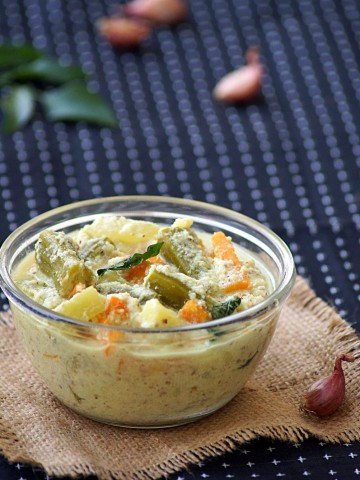
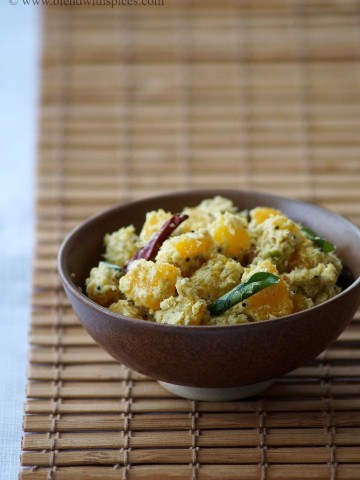
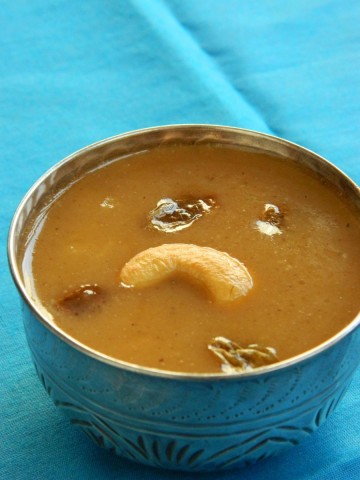
More Onam Sadya Recipes:

If you tried this Puli Inji Recipe or any other recipe on my blog please leave a 🌟 star rating and let me know how it went in the 📝 comments. Thanks for visiting my blog today!

Inji Puli

Ingredients
- 1 Cup Ginger, chopped
- ¼ Cup Tamarind Lemon sized ball
- 4 Tablespoons Coconut Oil
- ½ Teaspoon Mustard Seeds
- 2 Dried Red Chilies
- 6 Green Chilies finely chopped
- ¼ Cup Jaggery
- ¼ Teaspoon Turmeric Powder
- ½ Teaspoon Red Chili Powder
Instructions
- Measure and soak tamarind in 2 cups of hot water for about 15-30 minutes or until it is soft enough to extract the pulp.
- Wash, peel and finely chop the fresh ginger and green chillies. Keep them aside until use.
- Once the tamarind is well-soaked, squeeze the tamarind pulp. Filter the tamarind water and keep it aside.
- Heat a pan or claypot with coconut oil. Add mustard seeds, broken red chillies and let them splutter. Add curry leaves and hing and give it a mix.
- Add the finely chopped ginger and green chillies to the seasoned ingredients and sauté well on a medium flame.
- Keep frying the ginger occasionally until it is well roasted and golden brown color.
- Pour the tamarind extract into the pan. Add turmeric powder and red chilli powder and mix everything.
- Bring it to a boil and let it cook until the ginger tamarind mixture is thick. Now add jaggery and salt and mix well. If you are using fenugreek powder, add it at this stage.
- Let it cook until the oil separates. Remove it from the flame and let it cool completely before storing it.
- Serve & enjoy!
Video
Nutrition
Nutrition values are estimates only.

Leave a Reply