

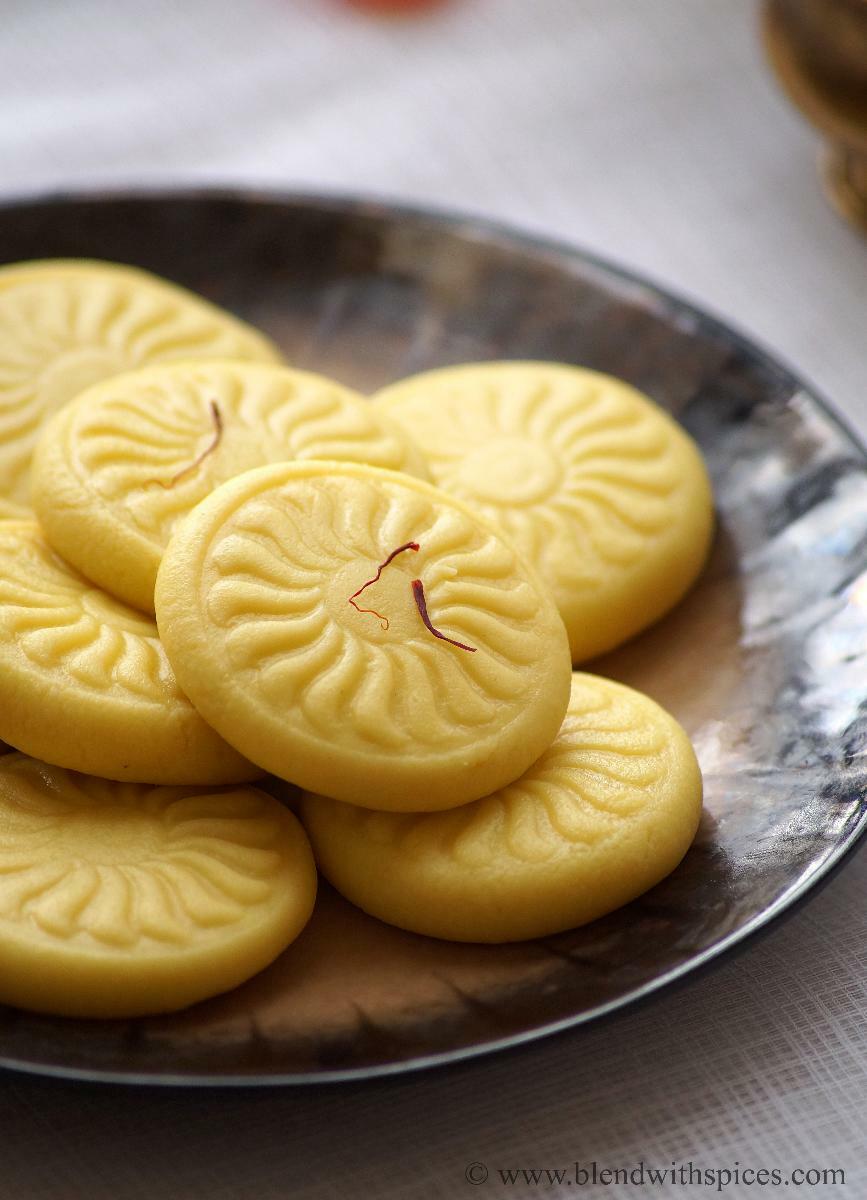
Kesar Peda is a classic Indian sweet made with khoya, sugar, saffron and cardamom. It's soft, delicious, rich and lightly flavored, and easy to make at home.
If you enjoy making traditional Indian sweets at home, try my Moong Dal Ladoo, Mawa Modak, and Walnut Halwa.
Quick Look: Kesar Peda Recipe
- Prep Time: 5 Minutes
- Cook Time: 10 Minutes
- Total Time: 15 Minutes
- Servings: 10
- Difficulty: Easy, perfect for festive celebrations.
- Dietary info: Vegetarian, egg-free and nut-free.
SUMMARIZE & SAVE THIS CONTENT ON
What is Kesar Peda?
Kesar Peda or Saffron Peda is a traditional Indian sweet made using unsweetened khoya / mawa (dried milk solids), sugar, saffron, and cardamom powder. It is one of the commonly prepared and most popular sweets during festivals like Diwali and other special occasions.
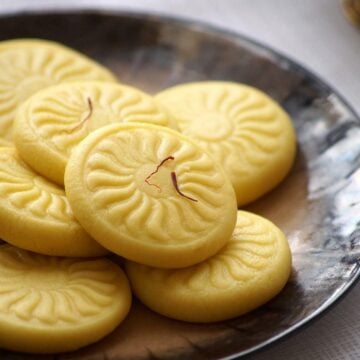
The base of the peda is khoya, which is reduced milk solids. Khoya is gently cooked with sugar until it softens and thickens enough to hold its shape, then allowed to cool slightly. Once warm, it is kneaded into a soft dough and shaped into small discs. A peda mould is often used to give a traditional design, but shaping by hand works just as well.
It is soft, slightly dense and smooth. It is not chewy or hard, but firm enough to hold its shape. There are many traditional and fusion variations of peda, kesar peda is one of the easiest and most popular among them all. Saffron is soaked in hot milk and crushed before adding. This step helps release its color and flavor properly.
If you are looking for more recipes using Khoya, try my Khoya Gulab Jamun, Mawa Besan ladoo, Makkan Peda, and Mango Modak.
Why you'll love this recipe:
- This recipe is incredibly convenient and time-saving.
- Perfect for parties, festivals and any occasion.
- Made with basic ingredients like mawa, sugar, saffron and cardamom.
- Can be made in under 30 minutes.
- Tastes fresh and better than store-bought.

Ingredients & Substitutions
Khoya - Also known as Mawa. This is the base of the recipe and gives the peda its rich and milky flavor. Use fresh and good-quality khoya for the best texture and taste. Make sure you are using unsweetened mawa in this recipe. You can use homemade mawa or store-bought mawa. If using frozen mawa, thaw completely before use.
Sugar - I have used regular white sugar. This adds sweetness and helps bind the mixture. You can also use brown sugar but the flavor and color will be a little different.
Saffron - It gives the peda a lovely yellow color and mild saffron flavor. The quantity of saffron is usually kept minimal so it doesn't overpower the taste. Soak it in hot milk and crush before adding for the best results. You can also skip saffron and stick to cardamom to make elaichi-flavored pedas. If you love fusion Indian sweets, check out my Chocolate Peda.
Cardamom - Adds a mild, warm and traditional flavor that complements the saffron and khoya. Use fresh and high-quality cardamom powder.
Milk - You will need a little hot milk to soak the saffron. You can also replace it with water.
A full ingredient list with exact amounts can be found in the recipe card below.
How to Make Kesar Peda
Soak the saffron in hot milk for about 5 minutes. Crush it lightly and set aside.
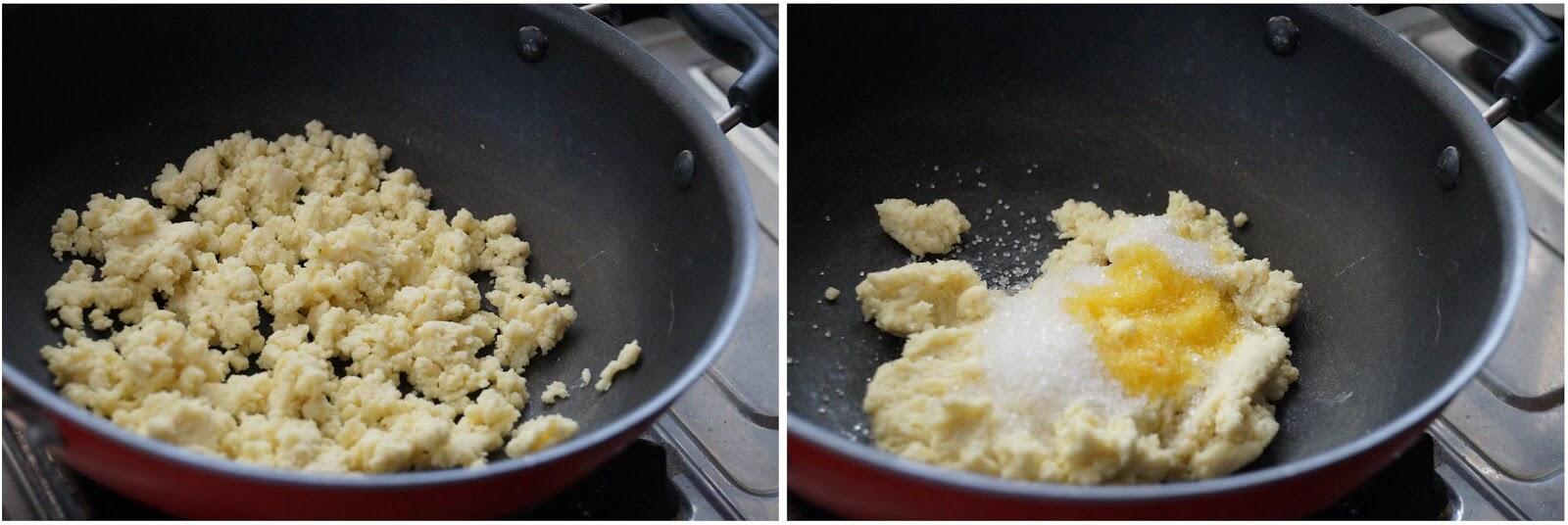
Crumble the khoya lightly and add it to a pan. Let it cook for a minute on a low flame.
Add the saffron-infused milk, sugar and cardamom powder to the pan and mix well.
Cook until the sugar melts completely and blends with the khoya.
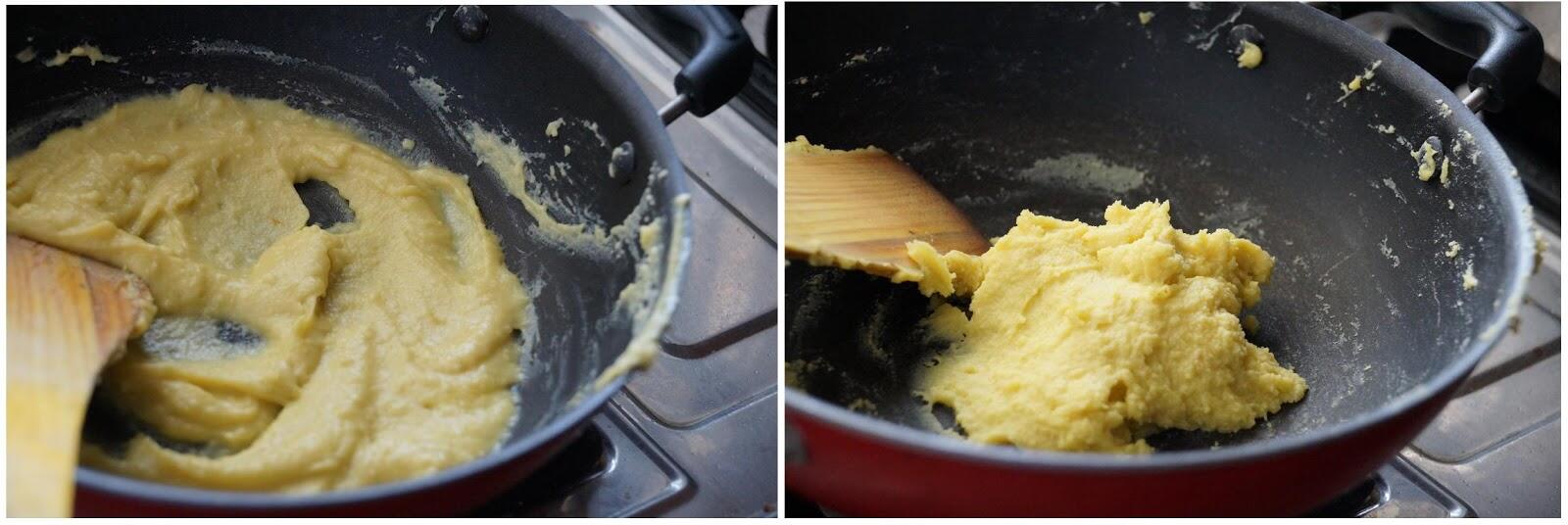
Continue cooking on medium-low flame, stirring continuously until the mixture thickens and comes together.
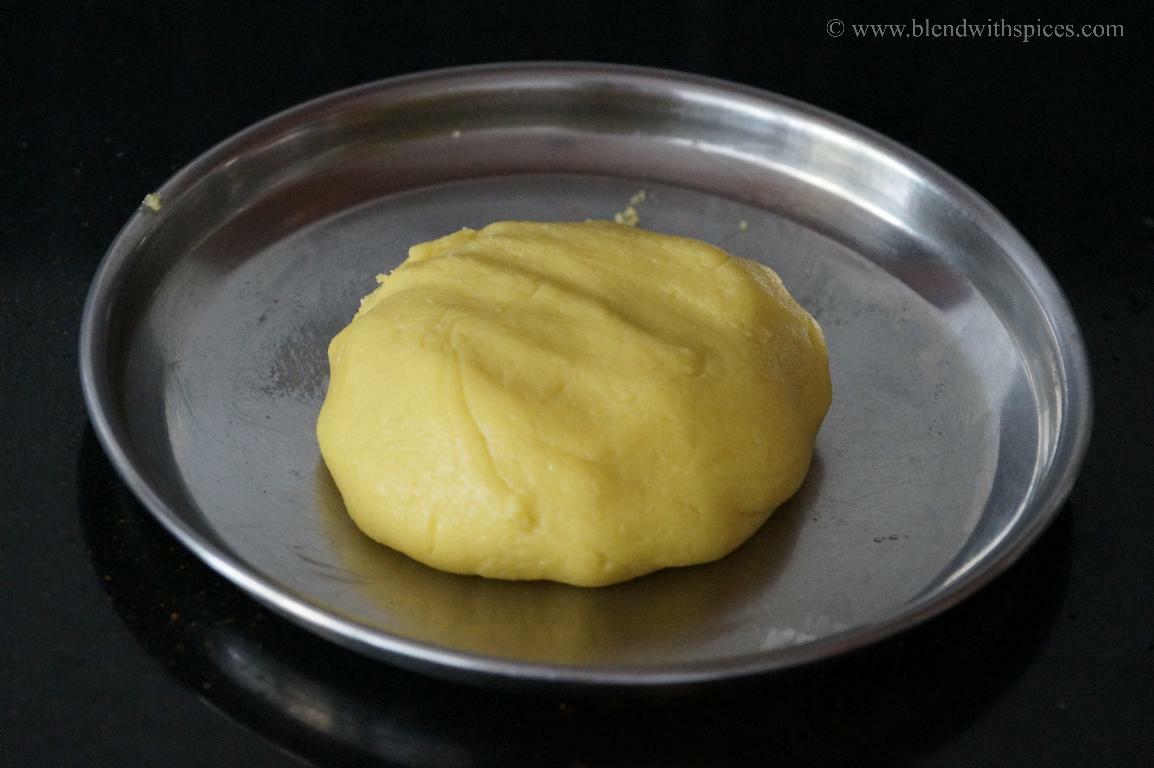
Remove it from the flame and let it cool down until warm.
When the mixture is warm enough to handle, knead it into a smooth dough. Grease your hands with a little ghee if needed.
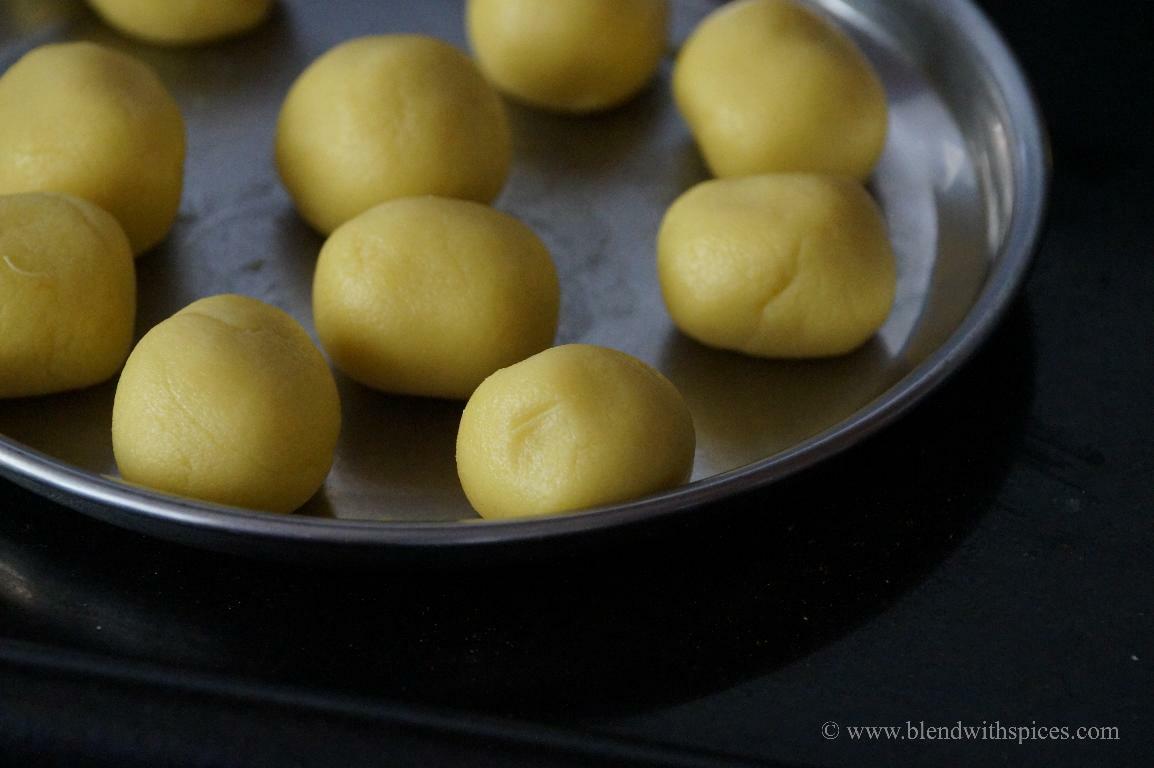
Divide the dough into 10 equal portions.
Roll each portion into a round ball, then flatten gently into discs.
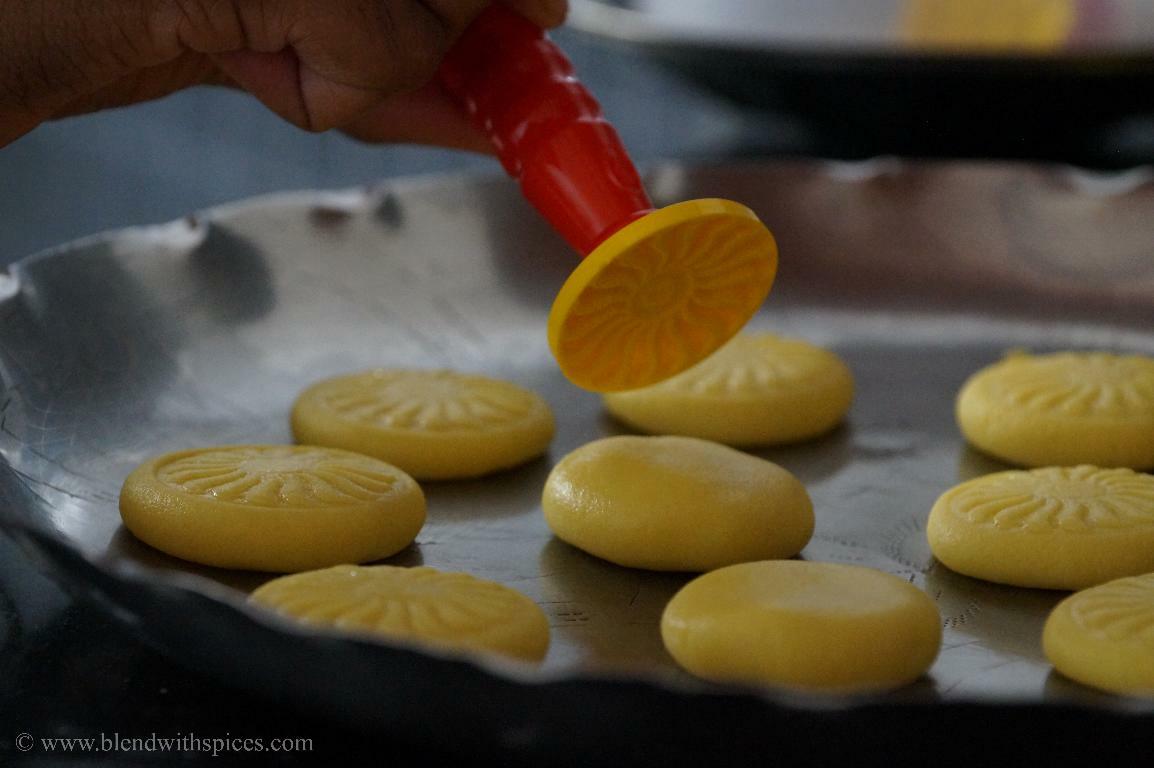
Gently press with a peda mold/stamp to get the traditional design.
Let them cool and set completely before serving.
Tips & Notes:
- Use fresh and high-quality ingredients for the best results.
- Use a heavy-bottomed wide pan to prevent burning.
- Keep stirring continuously.
- Make sure you are cooking on a low-medium flame. High heat can burn the mixture and make it dry too quickly.
- The mixture should be thick but still soft. Overcooking the mixture will make the peda hard and chewy after cooling.
- Do not skip soaking saffron.
Serving suggestions
Serve the kesar peda at room temperature once it is set.
They are perfect for festivals like Diwali, Holi, Rakhi, or any special occasion.
They are perfect for Diwali parties or gatherings. You can arrange them on a sweet platter along with other Indian desserts like Tutti Frutti Kesar Burfi, Rava Khoya Ladoo, Mango Kesari, and Rasmalai.
They also work well as homemade gifts when packed in boxes.
If you want a simple finish, top the pedas with a few strands of saffron or chopped pistachios. You can also decorate them with silver varq/ edible silver foil.
Storage suggestions
Store the kesar pedas in an airtight container for 2 days at room temperature. Avoid keeping them at room temperature for long, especially in warm weather.
Store them in the refrigerator for up to a week.
If you want to store them for longer, freeze them for 3 months.
Before serving, bring them to room temperature for a softer texture.
More Indian Sweet Recipes


If you tried this Kesar Peda Recipe or any other recipe on my blog please leave a 🌟 star rating and let me know how it went in the 📝 comments. Thanks for visiting my blog today!
Kesar Peda Recipe

Ingredients
- 1 Cup Unsweetened Khoya / Mawa crumbled
- ¼ Cup Sugar
- A pinch of Saffron
- 1-2 Tablespoons Milk
- ⅛ Teaspoon Cardamom Powder
Instructions
- Soak the saffron in hot milk for about 5 minutes. Crush it lightly and set aside.
- Crumble the khoya lightly and add it to a pan. Let it cook for a minute on a low flame.
- Add the saffron-infused milk, sugar and cardamom powder to the pan and mix well.
- Cook until the sugar melts completely and blends with the khoya.
- Continue cooking on medium-low flame, stirring continuously until the mixture thickens and comes together.
- Remove it from the flame and let it cool down until warm.
- When the mixture is warm enough to handle, knead it into a smooth dough. Grease your hands with a little ghee if needed.
- Divide the dough into 10 equal portions.
- Roll each portion into a round ball, then flatten gently into discs.
- Gently press with a peda mold/stamp to get the traditional design.
- Let them cool and set completely before serving.
Notes
- Use fresh and high-quality ingredients for the best results.
- Use a heavy-bottomed wide pan to prevent burning.
- Keep stirring continuously.
- Make sure you are cooking on a low-medium flame. High heat can burn the mixture and make it dry too quickly.
- The mixture should be thick but still soft. Overcooking the mixture will make the peda hard and chewy after cooling.
Nutrition
Nutrition values are estimates only.
Ramya Venkateswaran says
looks so yumm,will try this for sure
Meena Kumar says
OMG the peda looks gorgeous!
Sweta Biswal says
that looks easy and delicious too!! Where do we buy that kind of mold ??
Hari Chandana P says
Thanks, Sweta.. I bought it on Amazon.
Hamaree Rasoi says
Awesome looking pedas. What a coincidence! I too posted a similar kind of sweet called Nolen Gurer Sandesh.
Deepa
Amrita Roy says
perfect sweet treat for janmastami...visit my space too
VidyaLakshmi Chandrahas says
Wow! lovely pedas..looks inviting.
Chitra Ganapathy says
Wow, it looks percfect. Will try soon 🙂
Vijayalakshmi Dharmaraj says
Wow... my most favorite peda.. Looks amazing and inviting Chandana... 🙂
Kalpana Sareesh says
tat mould is jus sooperbb..
María de la Cruz Rojo says
HMMMM!!!! And what about Chaturti? It´s coming soon...
Hari Chandana P says
Yeah. I will post some chaturthi special recipes soon! 🙂