

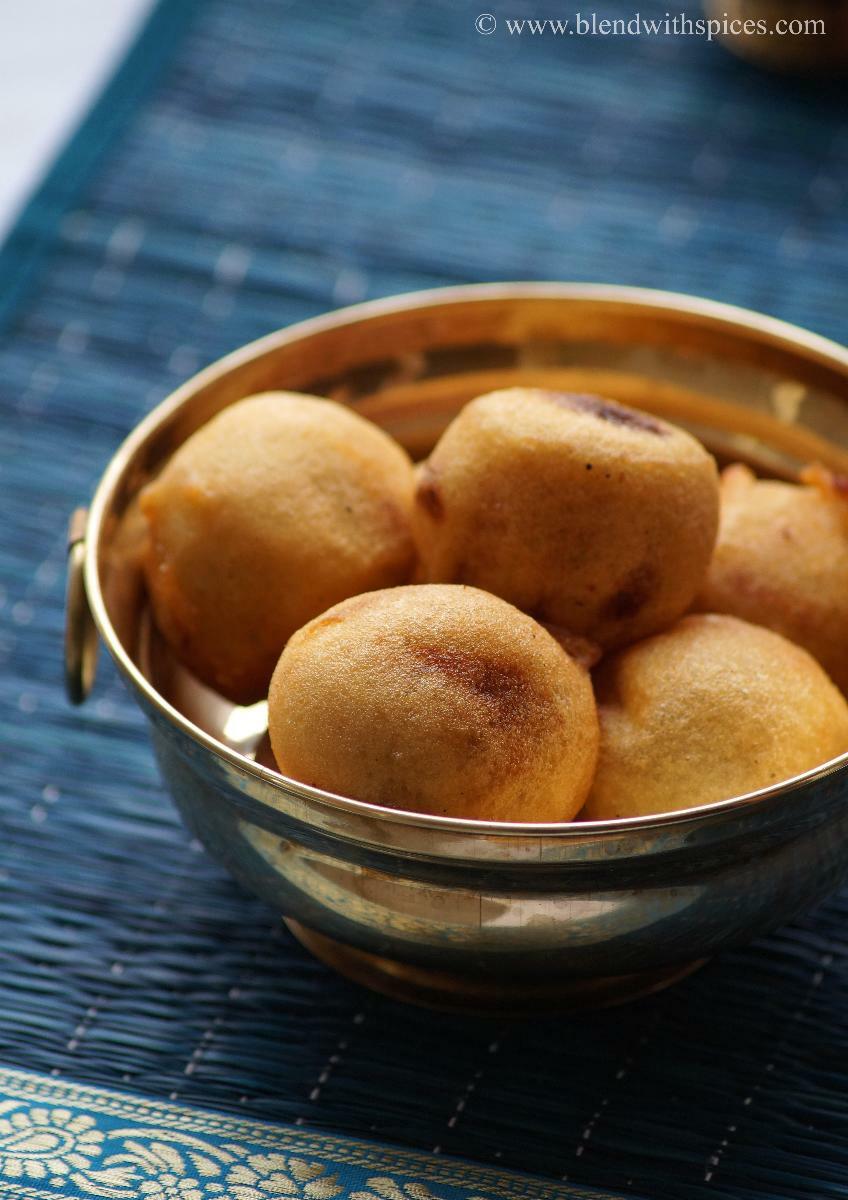
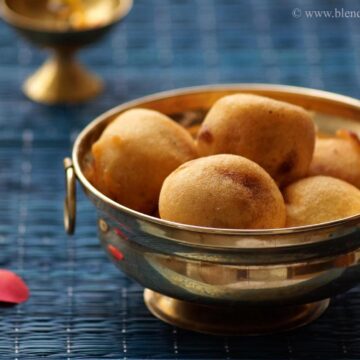
Poornam Boorelu are classic Andhra-style fried sweet dumplings with a soft lentil-jaggery filling. A traditional festival sweet that is popular during festivals and celebrations.
Enjoy making Andhra festive sweets? Try my Bobbatlu, Senagapappu Payasam, Bellam Paramannam and Rava Appalu.

Quick Look: Poornam Boorelu Recipe
- Prep Time: 15 Minutes
- Cook Time: 45 Minutes
- Total Time: 60 Minutes
- Servings: 30
- Difficulty: Moderate, ideal for festive celebrations.
- Dietary info: Vegetarian, egg-free.
SUMMARIZE & SAVE THIS CONTENT ON
Jump to:
What are Poornam Boorelu?
Poornam Boorelu or Poornalu are traditional sweet dumplings popular in Andhra Pradesh and Telangana. These are made with a soft sweet lentil filling covered in a rice and urad dal batter, then deep fried until golden and crisp.
These are known by different names across South India. In Andhra, Telangana and Rayalaseema, they are called Poornam Boorelu, Poornalu or Sugeelu. Similar versions are known as Suzhiyan, Seeyam, Sugiyan, Sukkinunde, Sukrunde, Sugunde, or Susiyam in Tamil Nadu, Karnataka and Kerala. While the idea of making this classic sweet is similar, the filling and outer layer batter can vary from region to region and even from one home to another.
Poornalu are very popular during festivals like Varalakshmi Vratham, Sankranti, Ugadi, Diwali and other special occasions. These are part of festive meals, wedding meals and family celebrations in many Telugu households.
The filling is usually made with cooked chana dal and jaggery, flavored with a little bit of ground cardamom. Some people prepare them using only chana dal, while others also add coconut. In this version, freshly grated coconut is mixed into the stuffing along with chana dal. The coconut adds a little texture and extra flavor to the stuffing. This is more of a personal choice.
The outer coating is made by soaking rice and urad dal and grinding them into a medium-thick batter. This batter coats the sweet lentil filling and forms the crisp layer outside once fried in oil. The combination of the crisp outer layer and soft sweet filling inside is what makes poornam boorelu or suzhiyam so satisfying to eat.
Why you'll love this recipe:
- The filling is soft, sweet, aromatic and rich in protein.
- The coconut adds extra texture and flavor.
- A traditional festive sweet that feels homemade and authentic.
- Can be prepped ahead and fried fresh before serving.
- Perfect for family gatherings, festive meals, and celebrations.
Ingredients & Substitutions
For the batter
Urad Dal & Raw Rice - I have used a 1:2 ratio of urad dal and raw rice in this recipe. The crispiness will depend on the amount of rice you use. If you want to make them with less rice, feel free to use a 1:1 ratio of urad dal and rice. It still tastes good.
Use whole or split urad dal without skin. I have used sona masoori rice in this recipe. Avoid sticky rice varieties as they can change the texture of the batter.
For the filling
Chana Dal - Also known as split bengal gram. This is the base of the sweet filling. It gives a creamy texture and body to the poornam (filling). There is another variety of traditional poornalu using moong dal filling. We call them Pesara Poornalu. If you want to replace chana dal, you can follow my Pesara Pooralu Recipe. The cooking process of moong dal poornam is different from chana dal poornam though. You can also skip chana dal entirely and make Kobbari Poornam Boorelu with only coconut-jaggery filling.
Coconut - I love adding coconut to boorelu. It adds texture and richness to the filling.
Jaggery - Adds sweetness and gives the traditional flavor to the filling.
Cardamom - Adds a lovely and authentic flavor. Try to use freshly ground cardamom powder if possible.
Oil - Any neutral-flavored oil is suitable for deep frying the boorelu.
A full ingredient list with exact amounts can be found in the recipe card below.
Variations
You can find many variations of poornam boorelu across South India, and even within Andhra households.
Most of the traditional versions use only chana dal and jaggery, while others add fresh coconut for extra texture and flavor. This recipe uses coconut, but you can skip it.
Some versions are made with moong dal for a smoother and lighter filling. Check my Pesara Boorelu Recipe for moong dal variation.
If you find this recipe complicated or are looking for a simpler variation, try my Pala Munjalu.
If you do not have time to soak urad dal and rice, you can make a simple batter by mixing wheat flour and rice flour with water.
Instead of using cardamom, add a tiny pinch of edible camphor (pacha karpoornam) for a different and temple-style prasadam flavor.
How to Make Poornalu
Wash the rice and urad dal thoroughly and soak them for at least 6 hours or overnight.
Once they are soaked, drain the water and grind the soaked rice and urad dal into a smooth batter by adding little water as needed.
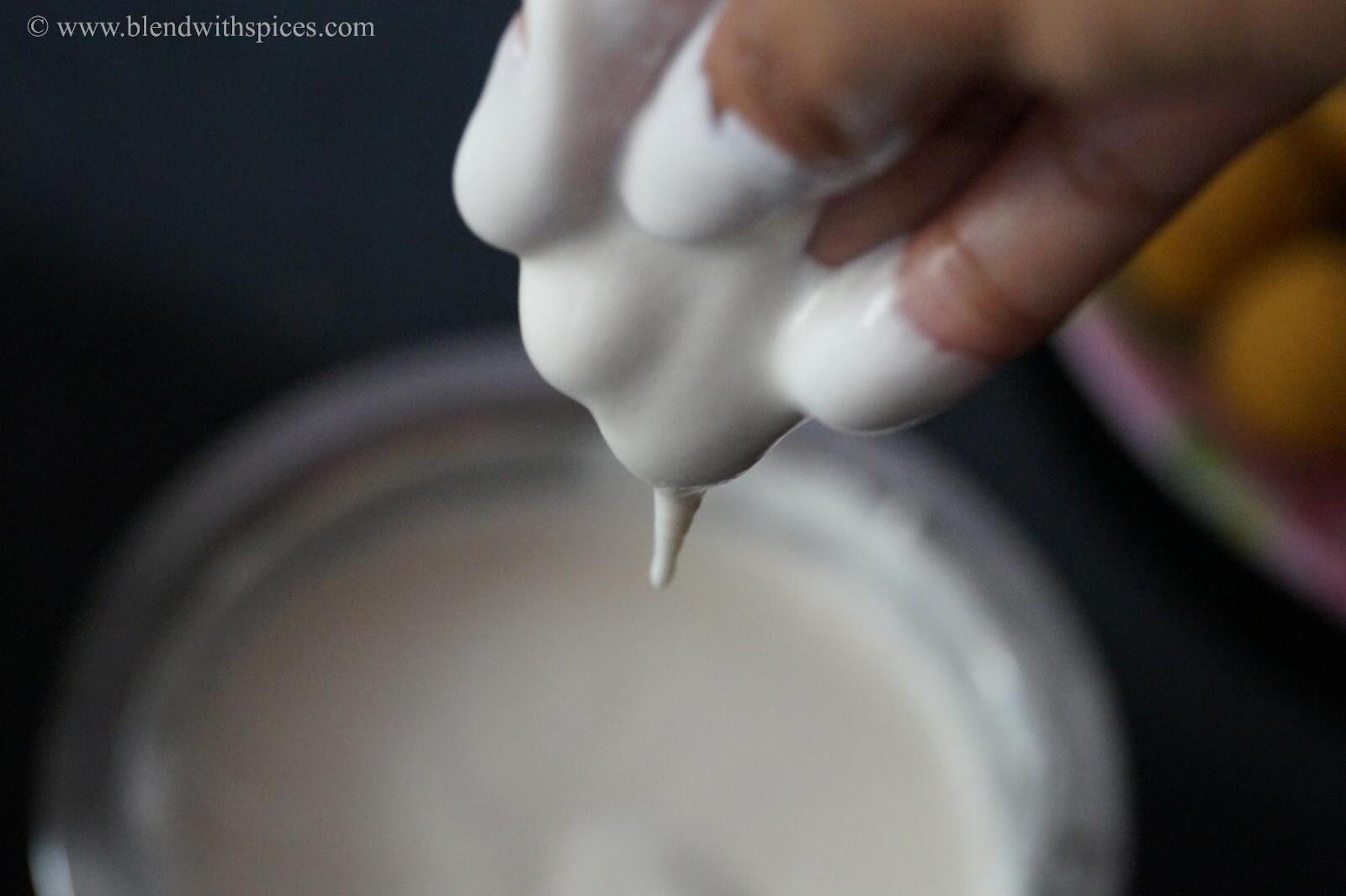
The batter consistency should be thick, similar to thick dosa batter. Add a pinch of salt and mix well. Keep it aside.
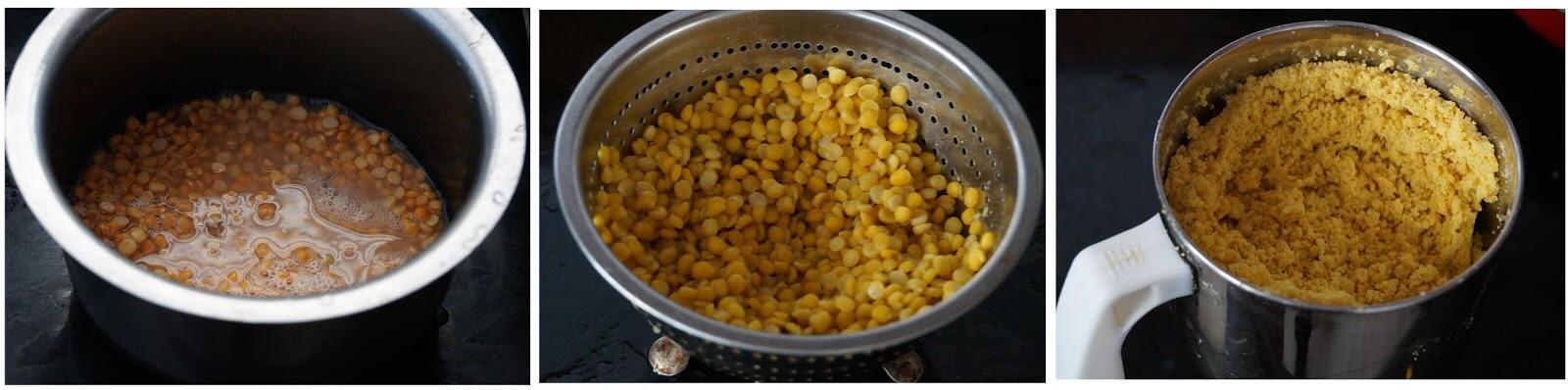
Wash the chana dal and pressure cook for 3 whistles with just enough water to cover the lentils. The dal should be cooked but still hold its shape.
Drain all the water completely and let the dal cool.
Grind the cooked chana dal into a coarse powder and keep it aside.
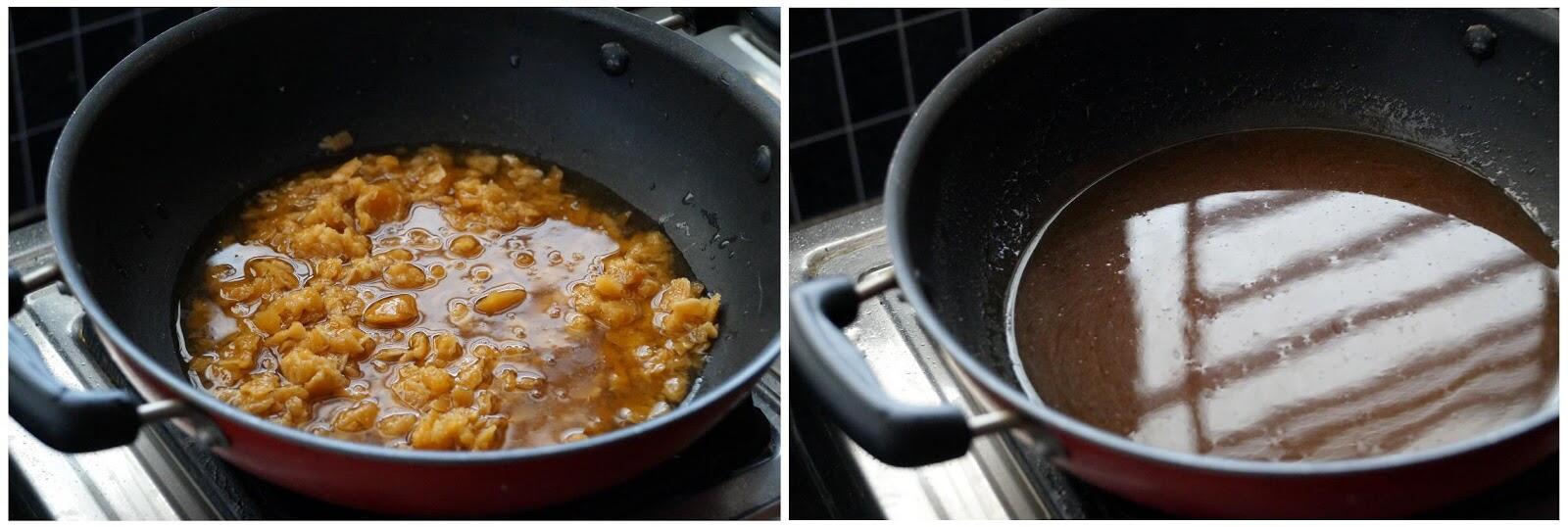
Add jaggery and a little water to a pan. Heat until the jaggery dissolves completely. Strain the jaggery water at this stage if there are any impurities.
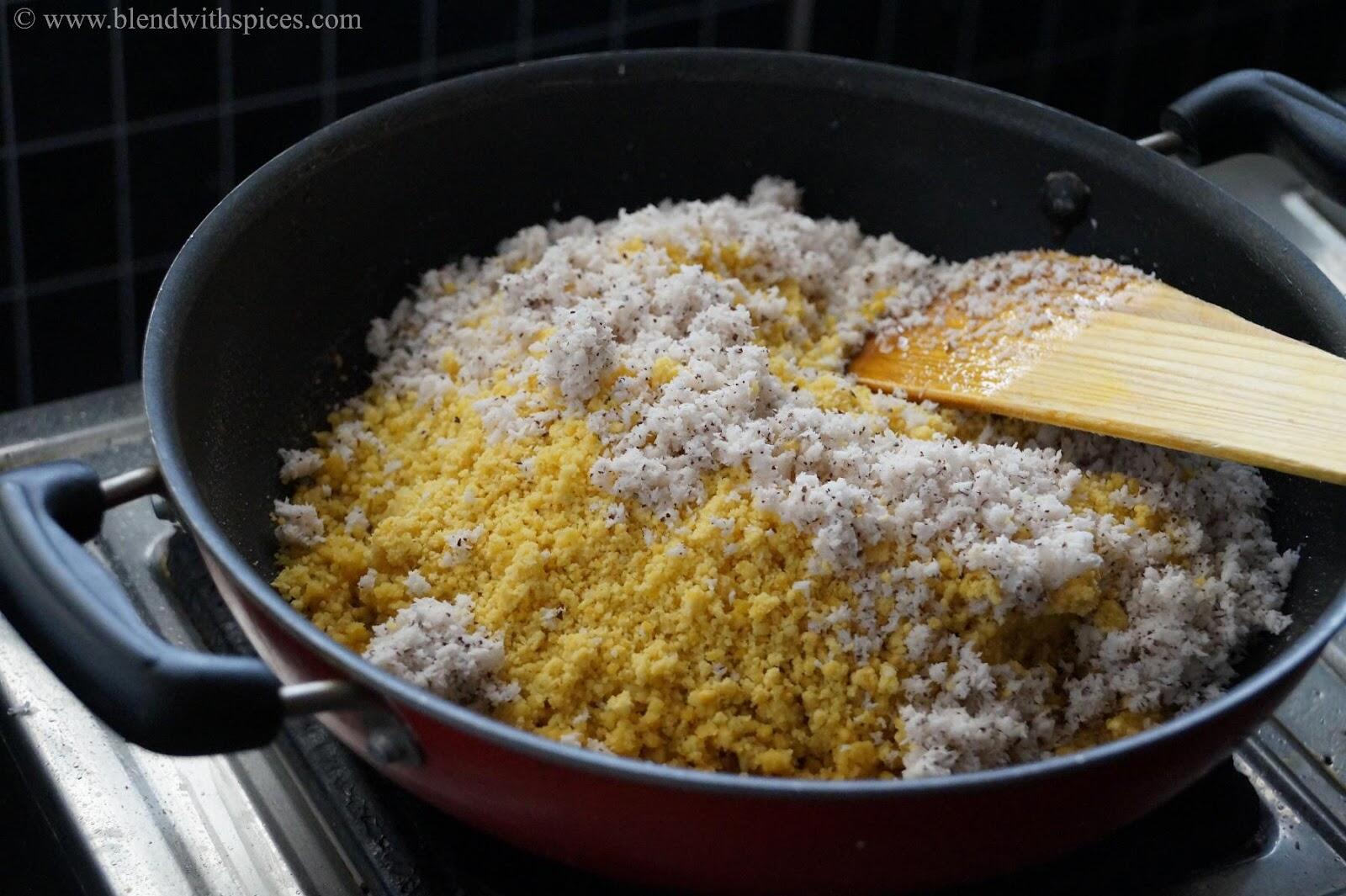
Add the ground chana dal, grated coconut and cardamom powder to the jaggery water.
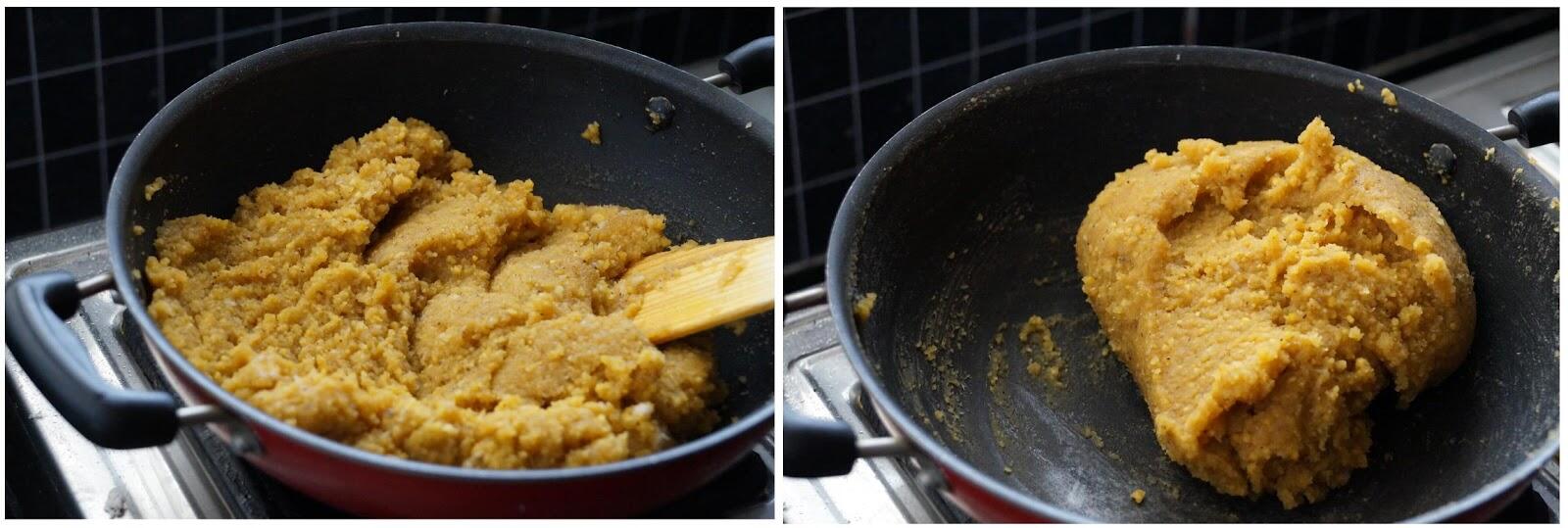
Mix continuously until everything combines and the mixture thickens into a soft dough-like consistency.
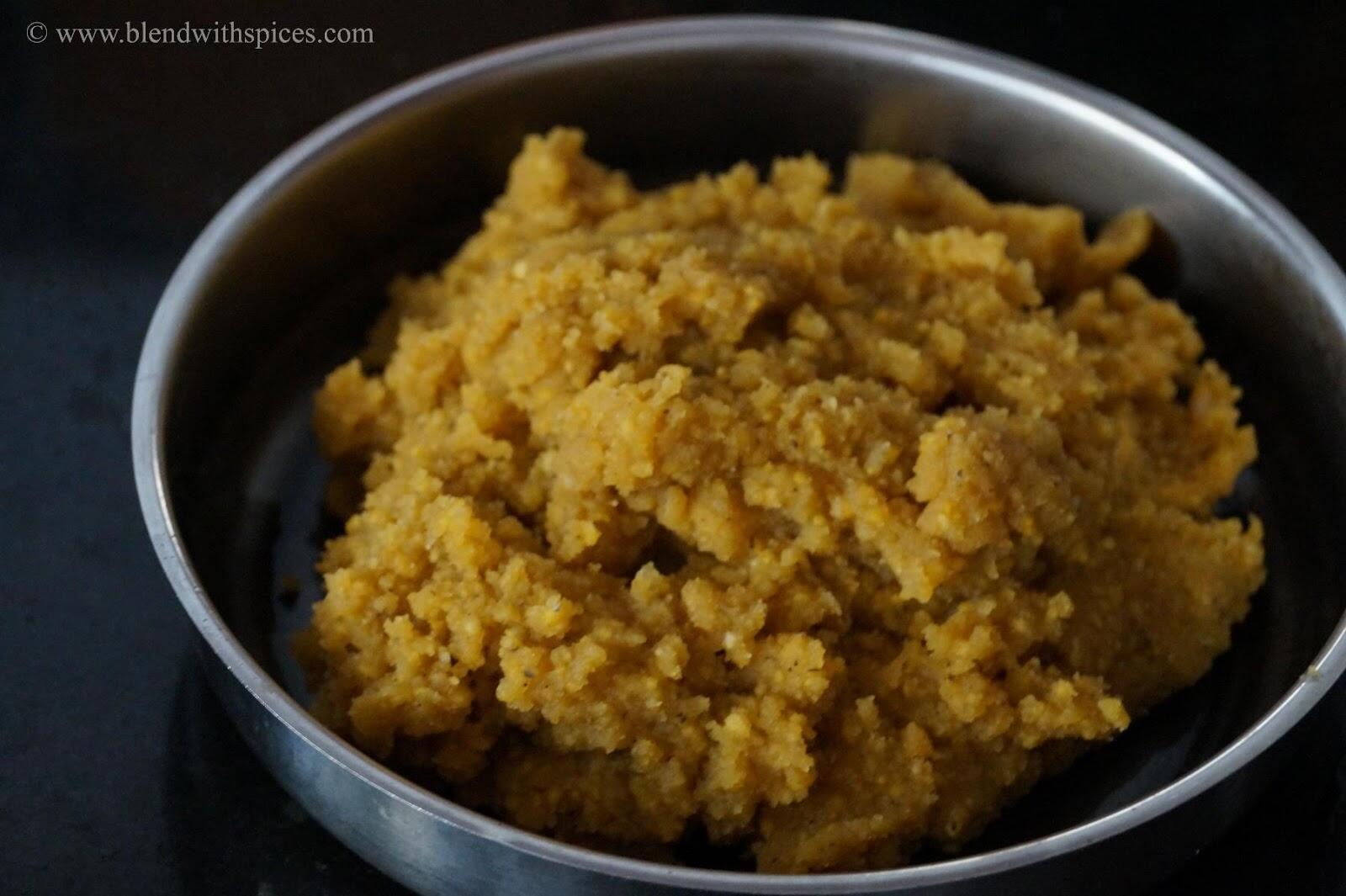
Remove it from the flame and let it cool completely.
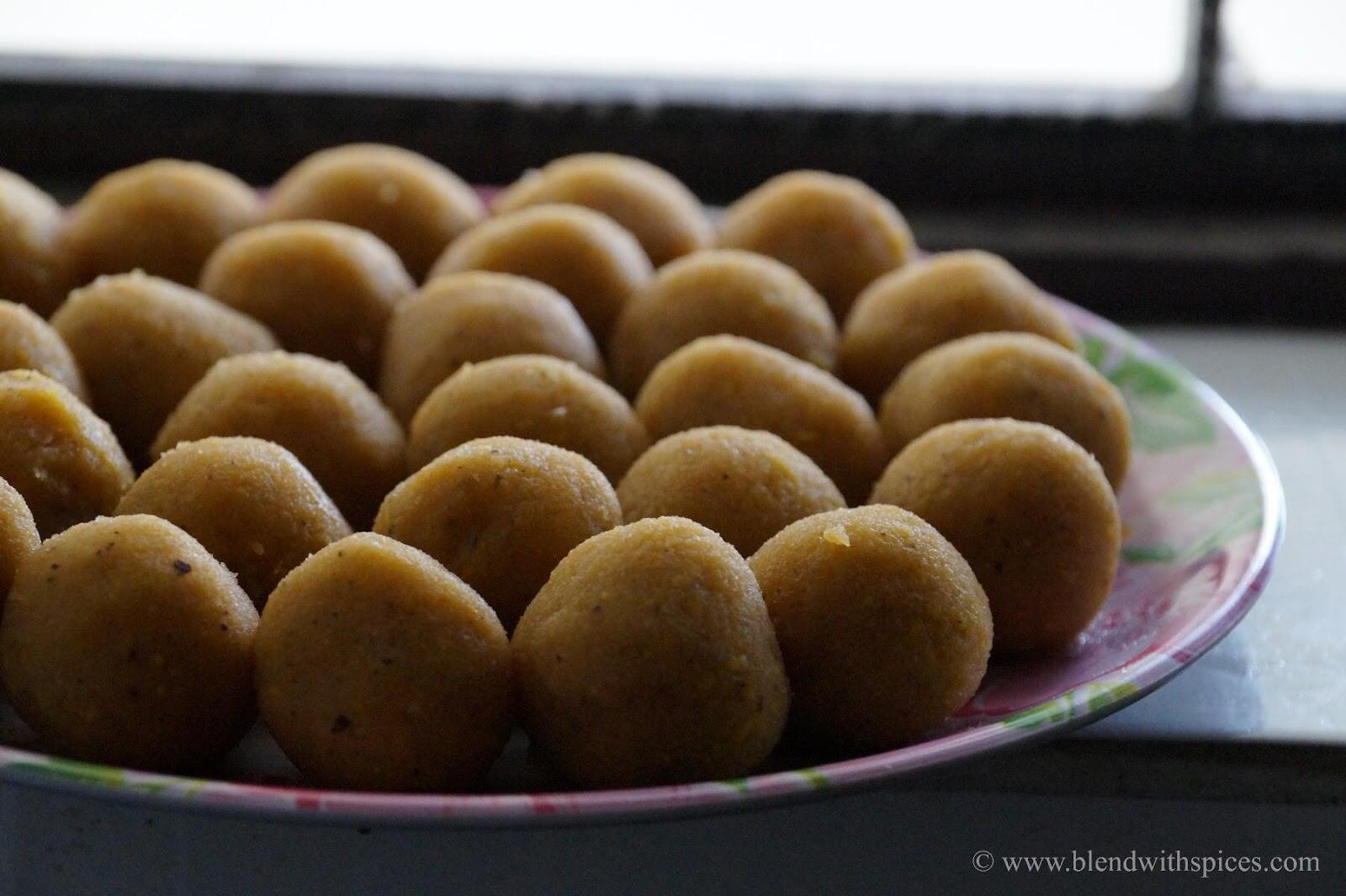
Divide the cooled dal-jaggery mixture into 28-30 small round balls and keep them ready.
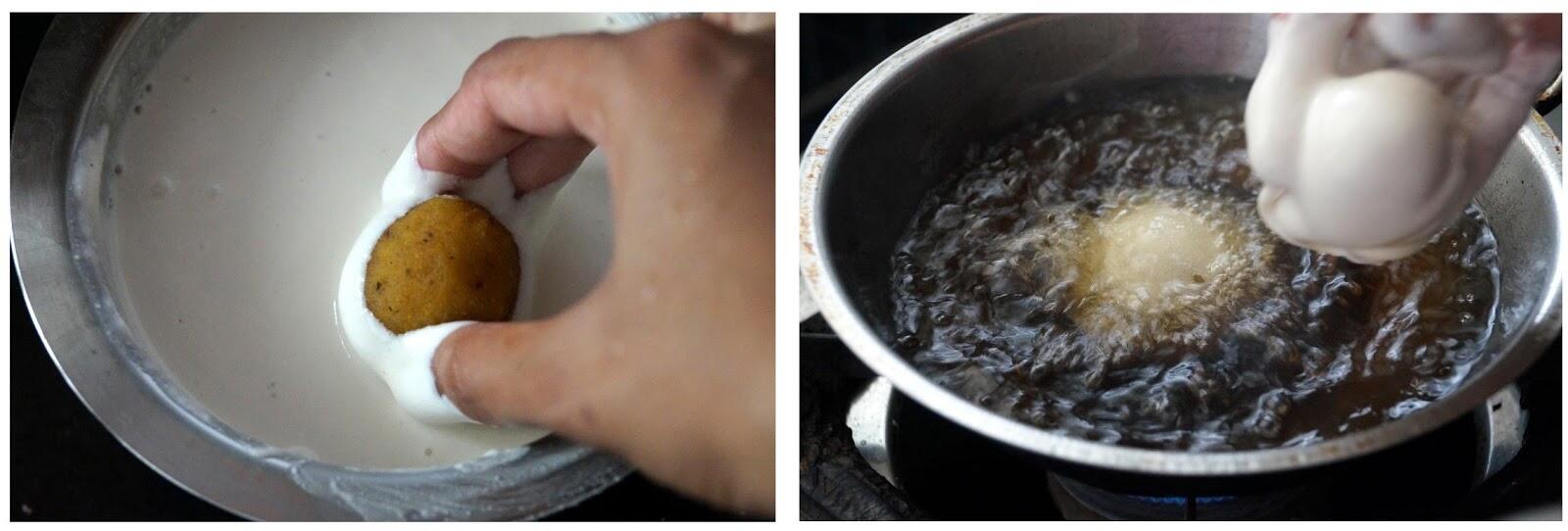
Heat enough oil for deep frying over a medium flame.
Dip each prepared stuffing ball into the prepared batter and coat evenly on all sides.
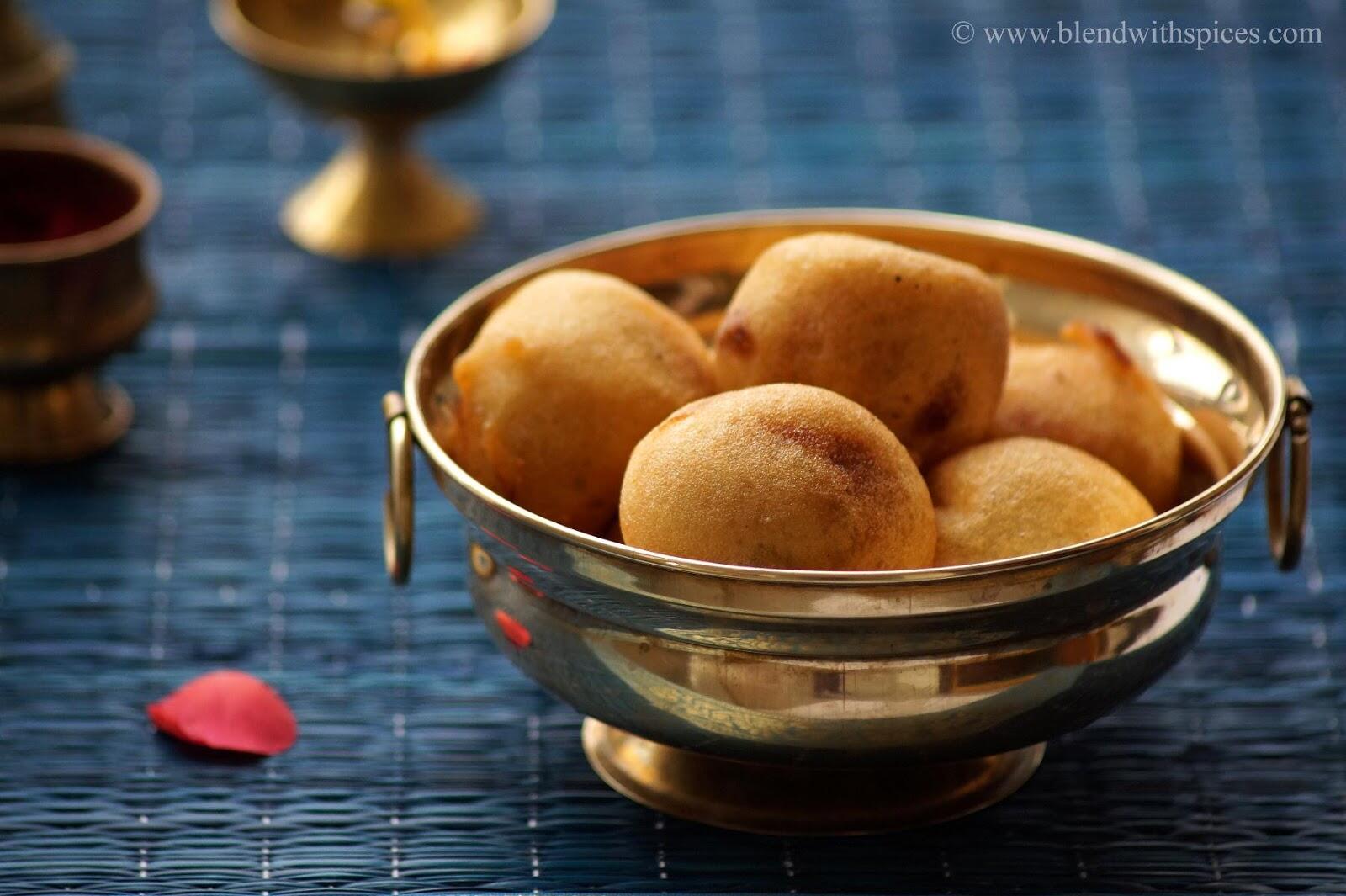
Carefully drop them into the hot oil and fry until golden brown and crisp.
Remove and drain on paper towels. Serve!
Tips & Notes:
- Use fresh and high-quality ingredients for the best taste and flavor.
- The batter consistency is very important to make the best poornalu. The batter should be thick enough to coat the stuffing ball properly to prevent any leakage. If it is too thin, the boorelu may break or absorb excess oil while frying.
- Do not overcook the chana dal. The dal should be cooked until soft but still hold its shape. The mushy dal can make the filling too loose.
- Make sure to drain the cooked dal completely. Any excess moisture in the filling can cause the boorelu to crack and leak while frying.
- If you feel the poornam filling mixture is not thick enough, cook until it comes together like a soft dough.
- Always fry on medium flame. Very hot oil can brown the outside too quickly and low heat can make them absorb oil.
- Do not overcrowd the pan. Fry in batches for even cooking and a better shape.
- Do not cover the fried boorelu while still hot, as the outer layer can become soft.
Serving suggestions
Poornam boorelu taste best when they are served hot or warm when the outer layer is slightly crisp and the filling is soft. You can also serve them at room temperature.
Traditionally, these are served with a dollop of ghee. Make a small hole using your finger and pour a little bit of melted ghee into it for the best and most authentic flavor.
These are commonly served during festivals like Varalakshmi Vratham, Ugadi, Makar Sankranti, Dasara and Ganesh Chaturthi. Poornam boore is a must for special occasions and wedding celebrations as part of a traditional Andhra meal along with other traditional Andhra desserts like Semiya Payasam, Saggubiyam Payasam, and Bellam Pongali.
They pair well with evening tea or coffee.
Storage suggestions
Store them in an airtight container for up to a day at room temperature.
For longer storage, refrigerate them for 2 days and reheat before serving.
You can reheat them in an air fryer, microwave or oven before serving.
FAQs
They are vegan if not using ghee when serving.
This usually happens if the filling has excess moisture or if the batter is too thin. Make sure the batter completely covers the stuffing ball before dropping it into the hot oil to fry.
Thin batter or low oil temperature can cause this. Fry on medium heat and avoid watery batter.
Yes, the filling can be made in advance and refrigerated. Bring it to room temperature before frying. You can also freeze the stuffing balls in the freezer for up to 3 months. Thaw them before frying.
Absolutely! Many traditional versions use only chana dal and jaggery.
The jaggery and chana dal mixture may need more cooking time. If you are not able to shape the mixture into balls, cook it for a few more minutes.
The batter should be thick enough to coat the stuffing balls evenly without dripping off too quickly. If it is too thin, the coating will not form properly while frying. To check the consistency, dip a spoon or finger into the batter and it should coat the spoon nicely and evenly.
This usually happens when the mixture is overcooked or contains too little jaggery. The filling should be moist enough to hold together when rolled into balls.
Absolutely! Thaw the frozen coconut before using.
Any excess moisture in the filling or batter can cause the boorelu to crack and leak while frying.
Jaggery gives the traditional flavor and taste. Brown sugar can work in an emergency, but the taste will be different.
More Traditional Andhra Recipes
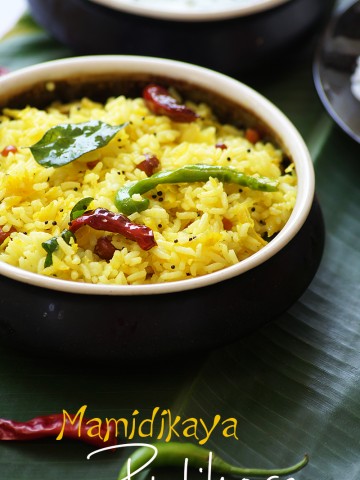
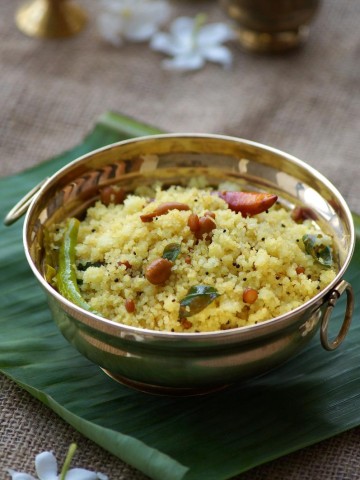
If you tried this Poornam Boorelu Recipe or any other recipe on my blog please leave a 🌟 star rating and let me know how it went in the 📝 comments. Thanks for visiting my blog today!
Poornam Boorelu (Poornalu)

Ingredients
- ½ Cup Urad Dal
- 1 Cup Raw Rice
- 1.5 Cups Chana Dal
- 2 Cups Jaggery
- ½ Cup Grated Fresh Coconut
- ½ Teaspoon Cardamom Powder
- A Pinch of Salt
- Oil for Deep Frying
Instructions
- Wash the rice and urad dal thoroughly and soak them for at least 6 hours or overnight.
- Once they are soaked, drain the water and grind the soaked rice and urad dal into a smooth batter by adding little water as needed.
- The batter consistency should be thick, similar to thick dosa batter. Add a pinch of salt and mix well. Keep it aside.
- Wash the chana dal and pressure cook for 3 whistles with just enough water to cover the lentils. The dal should be cooked but still hold its shape.
- Drain all the water completely and let the dal cool.
- Grind the cooked chana dal into a coarse powder and keep it aside.
- Add jaggery and a little water to a pan. Heat until the jaggery dissolves completely. Strain the jaggery water at this stage if there are any impurities.
- Add the ground chana dal, grated coconut and cardamom powder to the jaggery water.
- Mix continuously until everything combines and the mixture thickens into a soft dough-like consistency.
- Remove it from the flame and let it cool completely.
- Divide the cooled dal-jaggery mixture into 28-30 small round balls and keep them ready.
- Heat enough oil for deep frying over a medium flame.
- Dip each prepared stuffing ball into the prepared batter and coat evenly on all sides.
- Carefully drop them into the hot oil and fry until golden brown and crisp.
- Remove and drain on paper towels. Serve!
Notes
- The batter consistency is very important to make the best poornalu. The batter should be thick enough to coat the stuffing ball properly to prevent any leakage. If it is too thin, the boorelu may break or absorb excess oil while frying.
- Do not overcook the chana dal. The dal should be cooked until soft but still hold its shape. The mushy dal can make the filling too loose.
- Make sure to drain the cooked dal completely. Any excess moisture in the filling can cause the boorelu to crack and leak while frying.
- If you feel the poornam filling mixture is not thick enough, cook until it comes together like a soft dough.
- Do not cover the fried boorelu while still hot, as the outer layer can become soft.
Nutrition
Nutrition values are estimates only.

Alok Vats says
Wow, simply delicious and Yummi 🙂 Awesome...
Sireesha Puppala says
Hey Chandana..
Poornalu are my favourite since childhood and a must in our house for every festival.I used to sit along with my nanamma(granma) near katley poyyi(outdoor mud stove) and snatch the channa dal balls while she sits busy frying the poornalu..your post made my childhood memories unfolded now...
Btw the step by step illustration is too goo and I will try this in my kitchen...
srimukhi says
very good receipe