
• Skip to main content
  • Skip to primary sidebar

Blend with Spices logo

menu icon
go to homepage
  • Home
  • About Me
  • Recipe Index
  • Festival Recipes
  • Eggless Baking
    • Facebook
    • Instagram
    • Pinterest
    • Twitter
    • YouTube
  • search icon
    Homepage link
    • Home
    • About Me
    • Recipe Index
    • Festival Recipes
    • Eggless Baking
    • Facebook
    • Instagram
    • Pinterest
    • Twitter
    • YouTube
  • ×
    Home » Recipes

    Saggubiyyam Vadiyalu ~ How to Make Sabudana Fryums Recipe ~ Sago Papads

    Saggubiyyam Vadiyalu ~ How to Make Sabudana Fryums Recipe ~ Sago Papads

    June 2, 2010

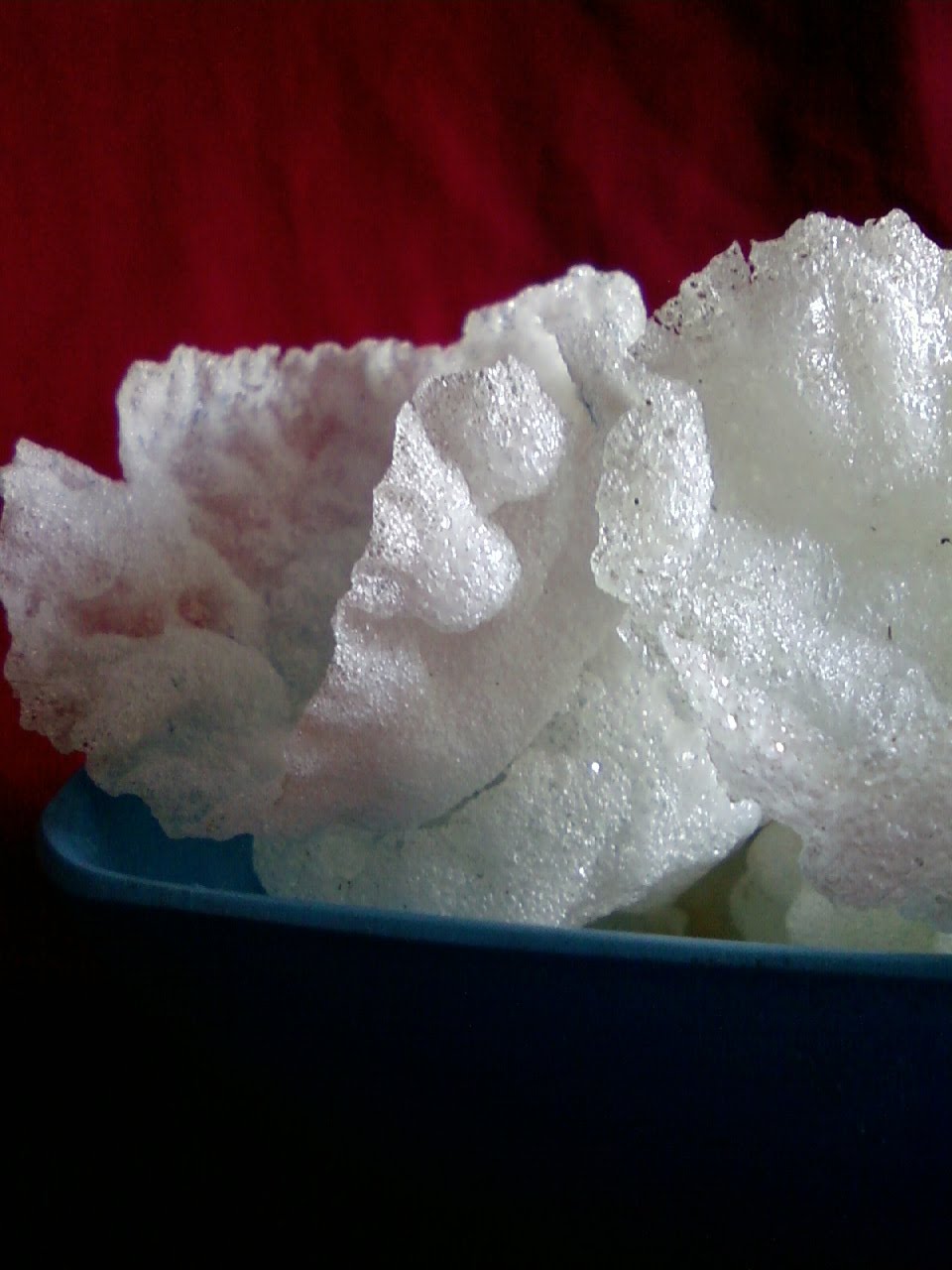
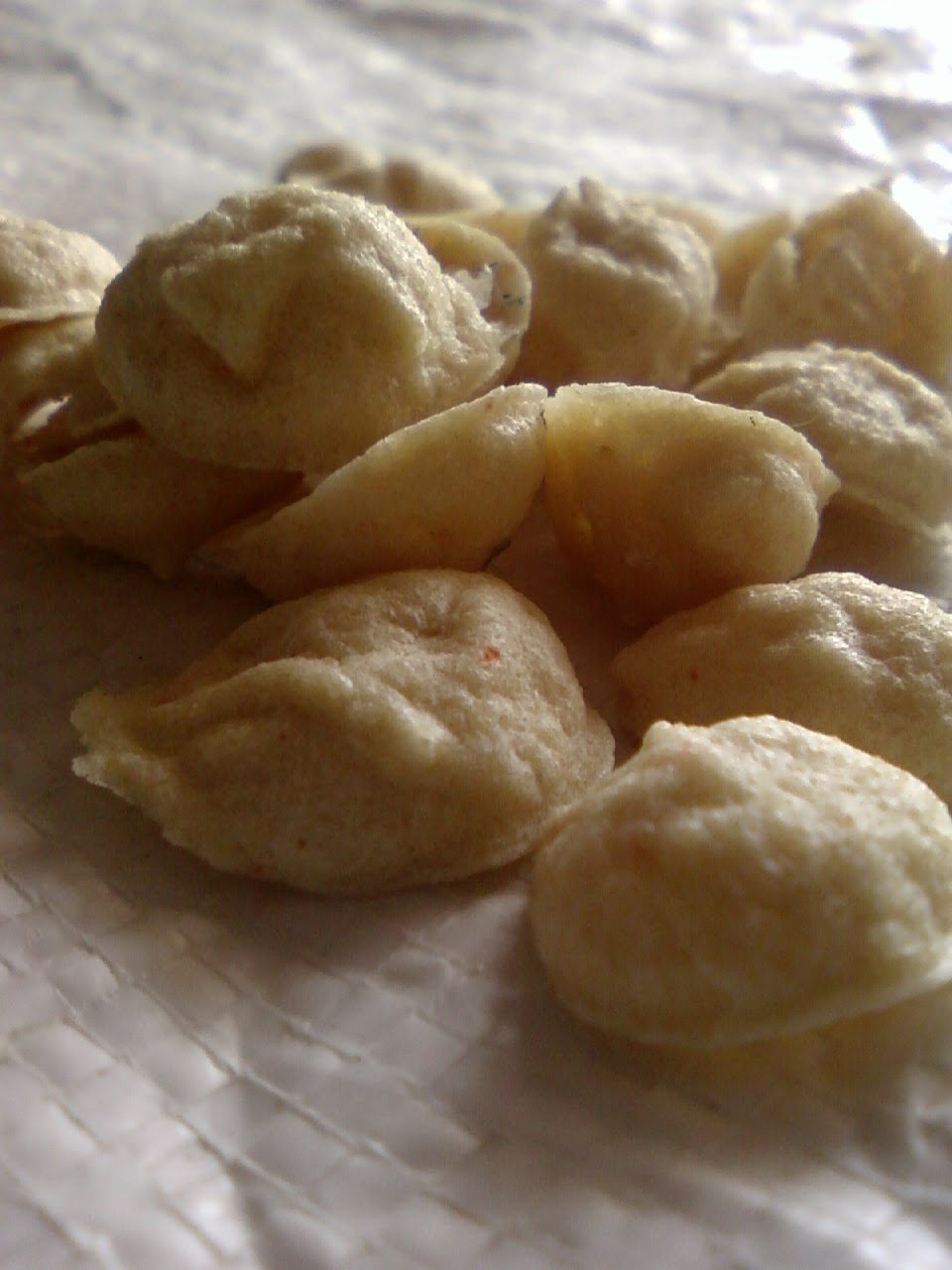
    Deep Fried Saggubiyyam Vadiyalu ~ Sabudana papad
    Ingredients :
    Sago / Sabudana : 1 cup
    Water: 6 cups
    Green Chillies: 5
    Salt to taste

    Papads drying under sunlight

    Method:

    1. Soak the sago in water for 5 to 10 minutes and drain all the water.
    2. Put the soaked sago and 6 cups of water in a pressure cooker and cook till 3 whistles.
    3. Turn off the heat and wait until the pressure goes off. Now remove the cooked sago from the cooker and let it cool completely.

    4. When it cools down, add salt and green chilli paste. Mix very well.
    5. Make round papads with a spoon on a plastic sheet and let it dry in the hot sunlight.
    6. When dried well, store in an airtight container.
    7. Deep fry the sago papad in hot oil before serving.

    Chitti Vadiyalu ~ Sun Dried Urad Dal Papads

    June 1, 2010

    Chitti Vadiyalu ~ Small Urad dal PapadsIngredients :Urad Dal : 1 cup
    Red Chilli Powder : 1 tsp
    Salt to taste
    A pinch of hing ( optional )
    Method :

    1. Wash and soak the urad dal for 6 hours.
    2. Wash, drain and grind the soaked urad dal into a smooth and thick batter with very little water.
    3. Add salt, red chilli powder and a pinch of hing to it and beat well.

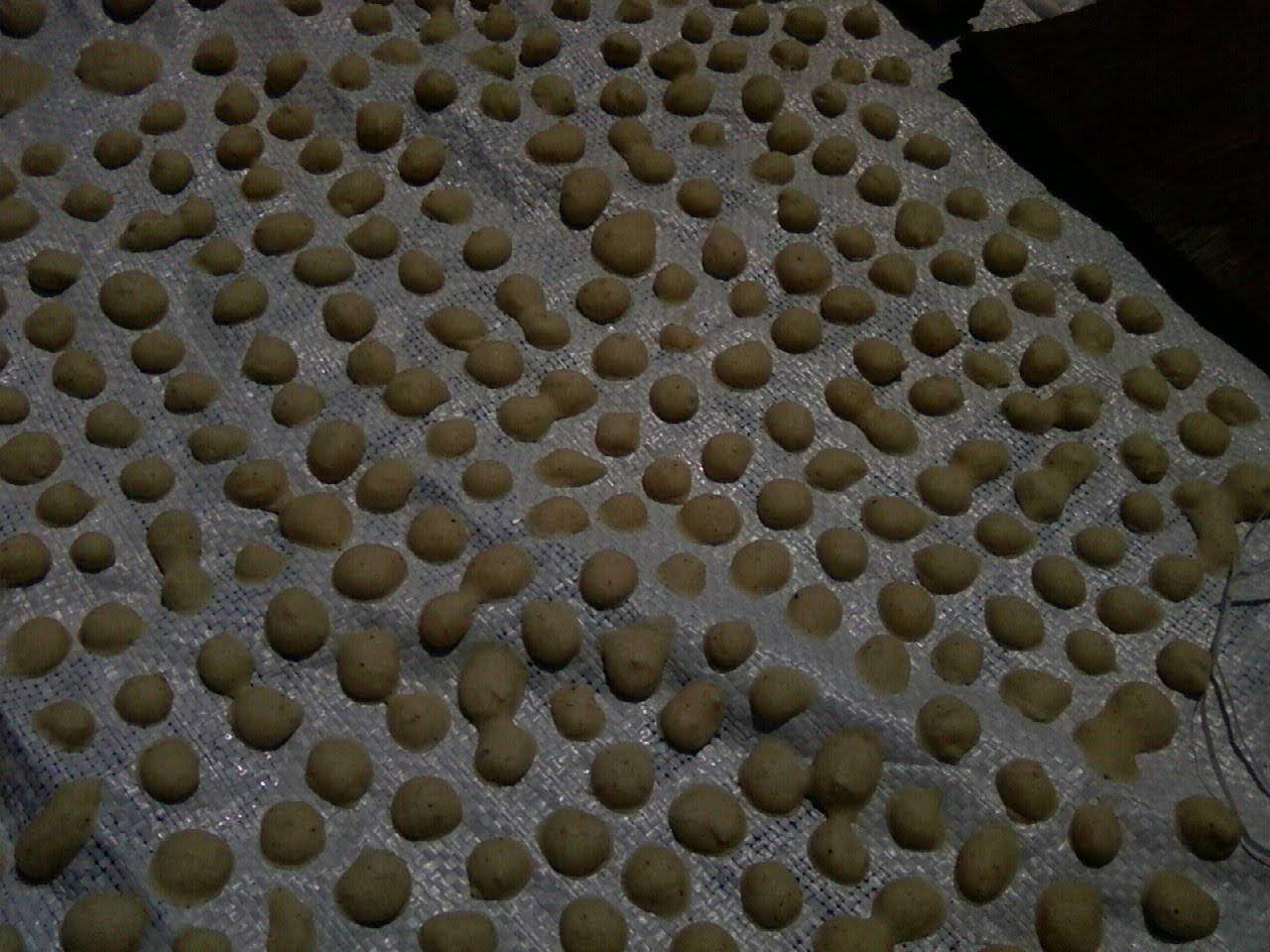
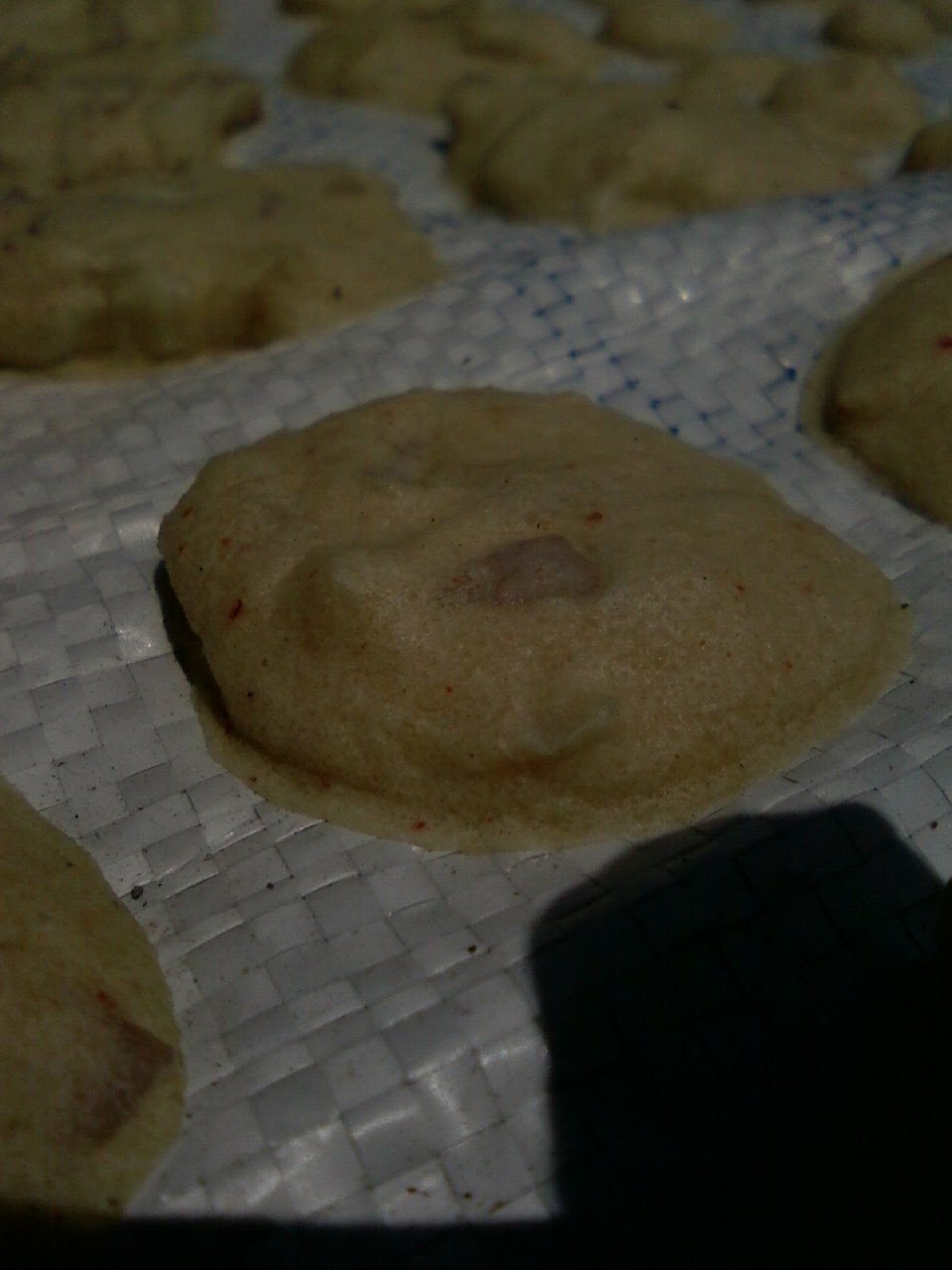
    Vadiams Drying Under Hot Sun
    4. Make very small rounds on a plastic sheet and let it dry in the sun light.

    Sun dried Vadiyams
    5. Once they are dried remove from the sheet and store in a air tight container.

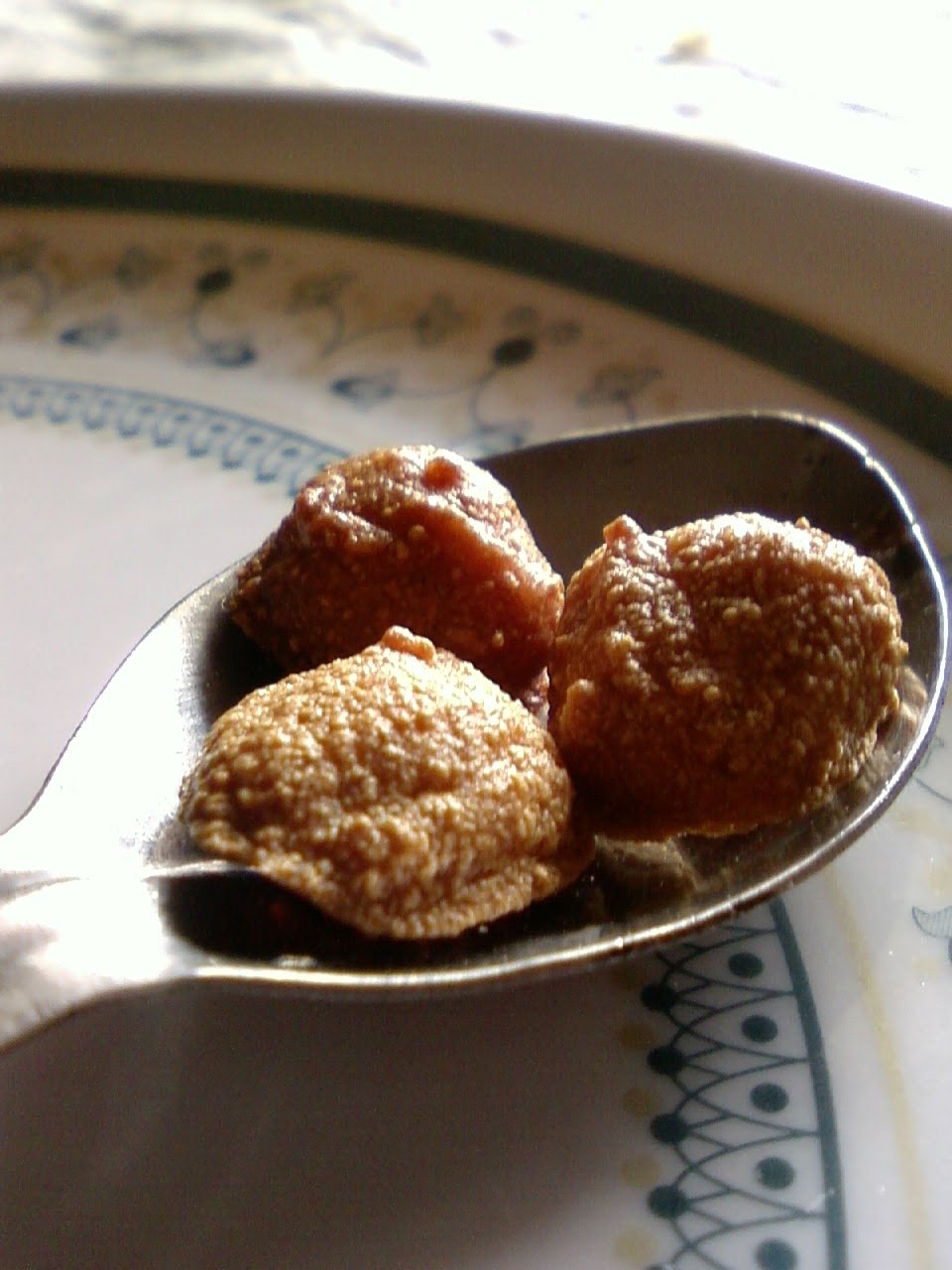
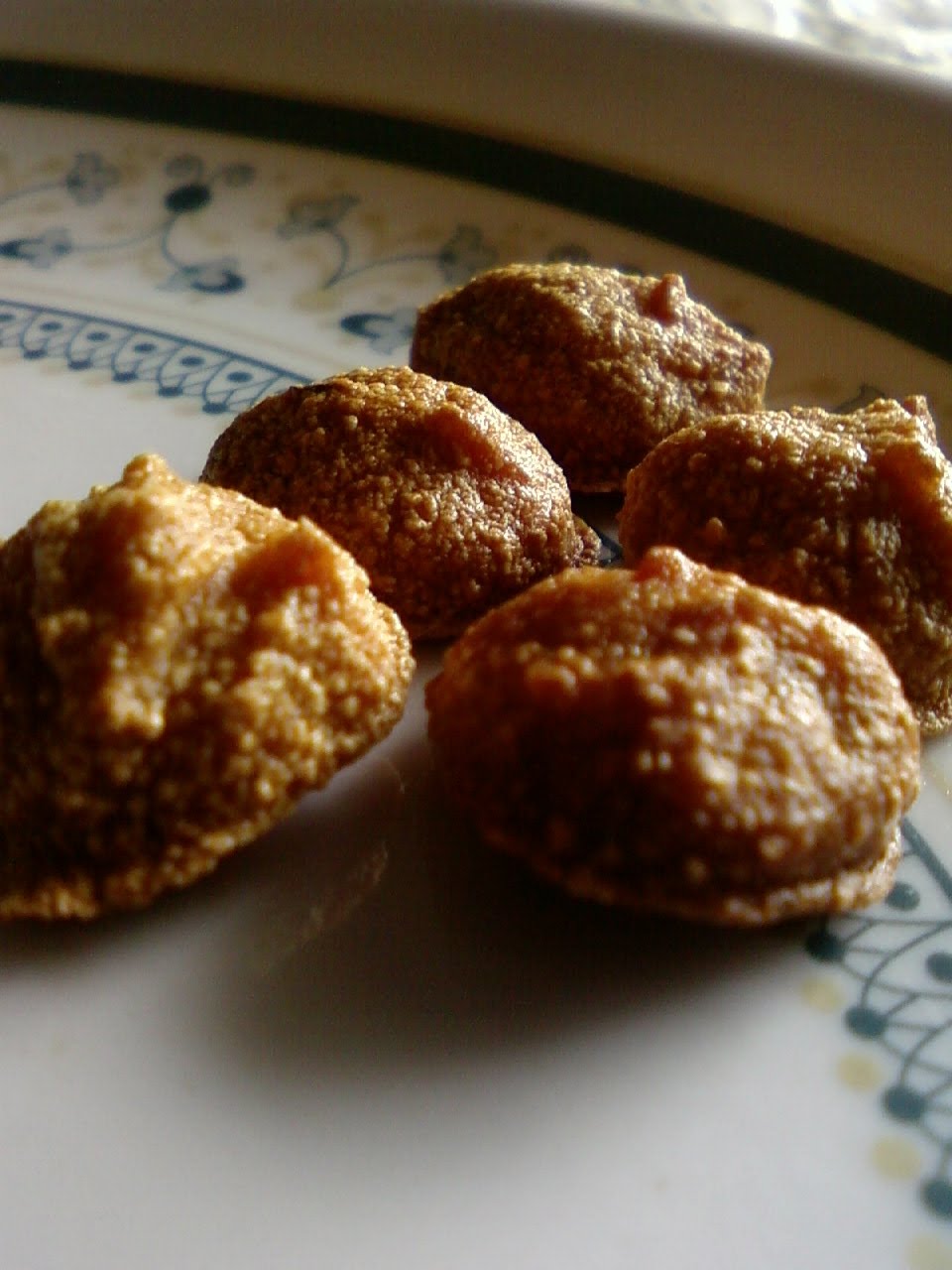
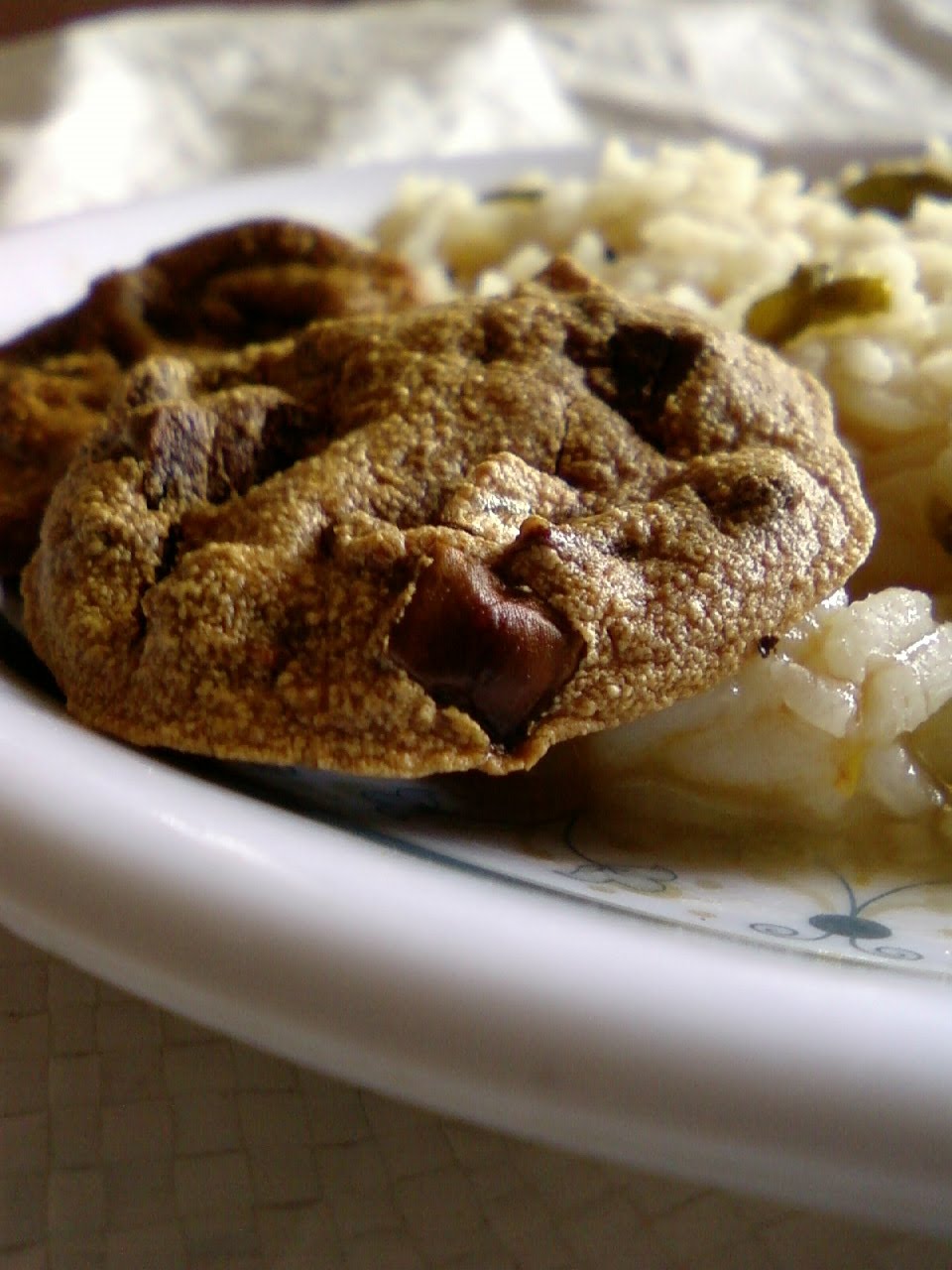
    Deep Fried Chitti Minapa Vadiyalu
    6. Deep fry the dried vadiyalu in hot oil before serving. Serve the vadiyalu with rice, dal and sambar. You can store it for a year.

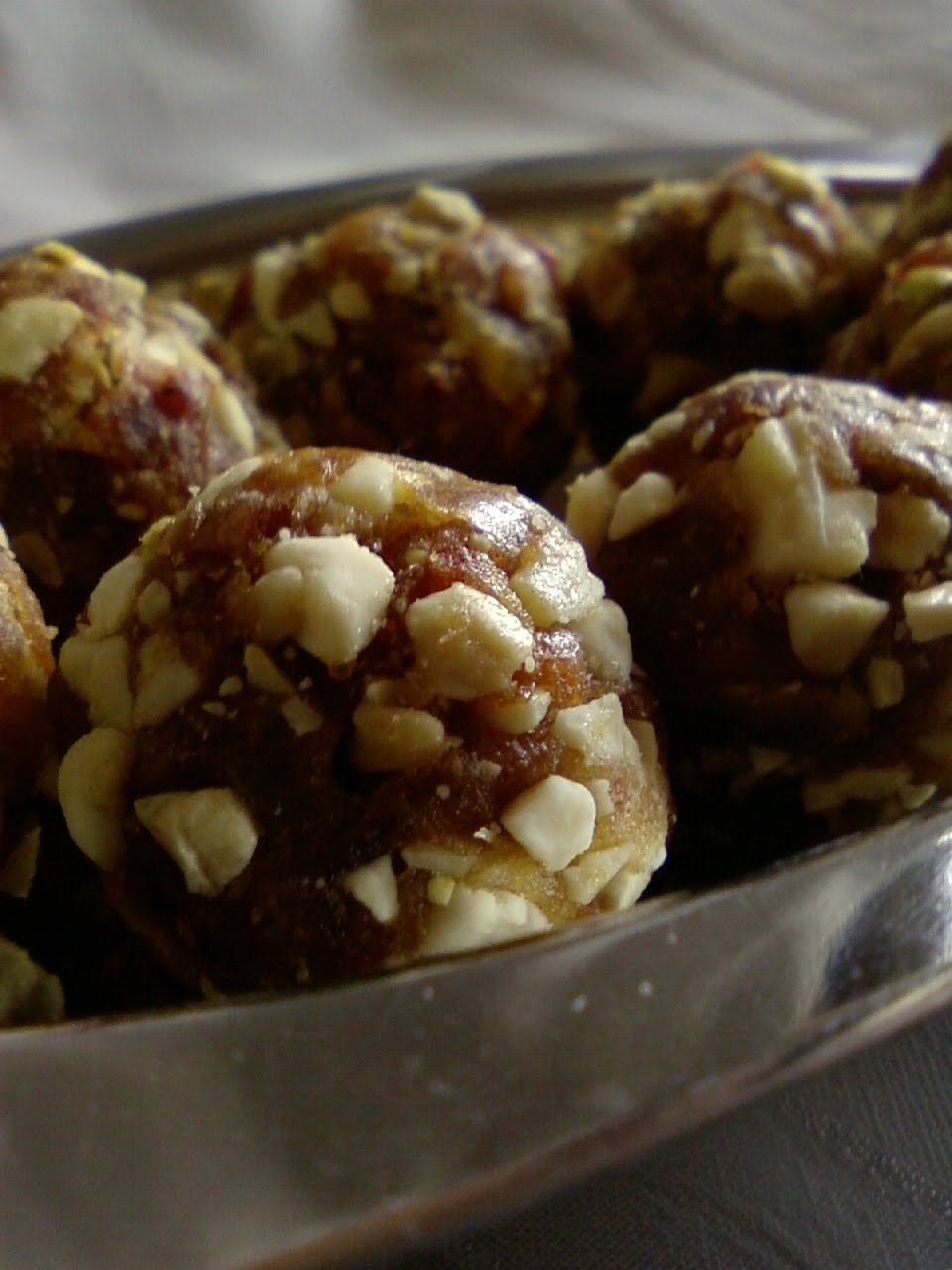
    Dry Fruits Laddu ( Dry Fruits Balls )

    May 31, 2010

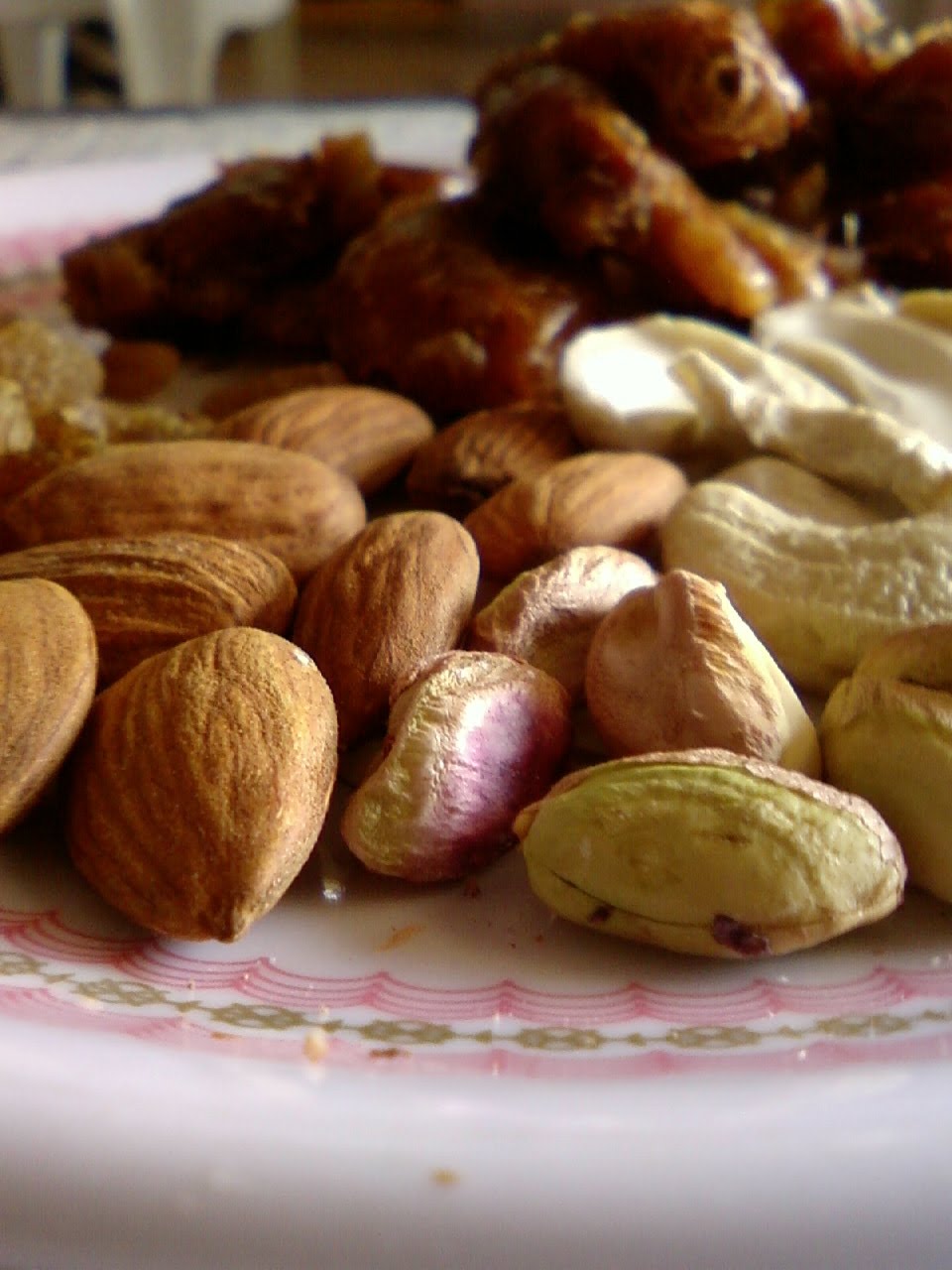
    Ingredients for dry fruits ladoo
    Ingredients :Seedless Dates : 10
    Almonds : 10
    Cashew nuts : 10
    Raisins : 10
    Pistachios : 10

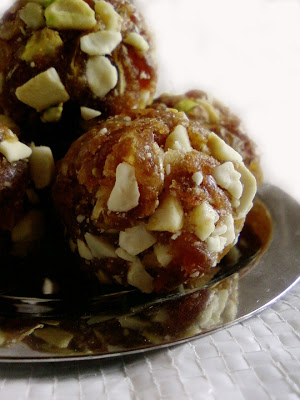
    Method :Chop the dates and raisins into small pieces and keep it aside. Chop the cashew nuts and pistachios into small pieces. Soak the almonds in water for 5 minutes. Take out the almonds and remove the skin and let it dry completely. Chop the almonds into small pieces. Dry roast the chopped almonds, chopped cashews and chopped pistachios for a few minutes. Take out the roasted nuts and cool them. Combine the roasted nuts, raisins and dates and mix very well. Then shape into round balls. Store in a air tight container. Dry Fruits Laddoo / Dry Fruits Balls


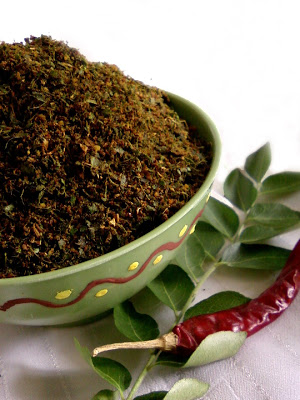
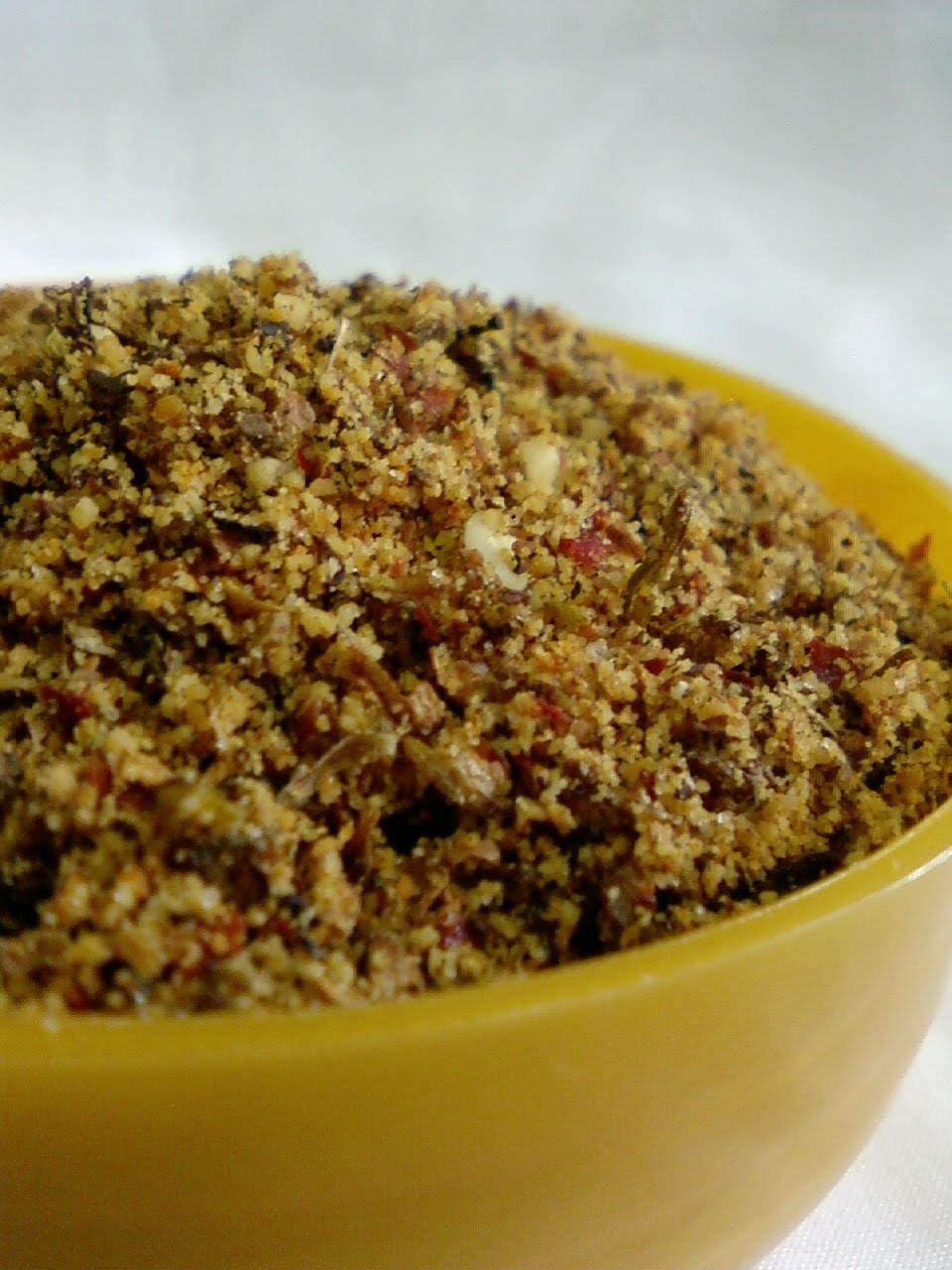
    Karivepaku Podi ~ Spicy Curry Leaves Powder

    May 27, 2010

    Karivepaku Podi or Karivepaku KaramIngredients :

    Curry leaves : 2 cup
    Coriander seeds : 3 tbsp
    Chana dal : 3 tbsp
    Urad dal : 2 tbsp
    Red chillies : 8
    Tamarind : small lime sized
    Salt to taste
    Oil : 4 tsp

    Method :

    Remove the stems from the curry leaves and wash them. Let it dry completely. Heat oil in a pan and add coriander seeds, chana dal, urad dal and finally red chillies to light golden color. Remove from the flame and allow it to cool. In the same add one tea spoon of oil and put curry leaves. Roast them for a few minutes. Remove from the heat and let it cool down. Grind the roasted spices, salt and tamarind to a coarse powder. Finally add the roasted curry leaves to the spices powder and blenderise it again. Serve with dosa, idli or hot steamed rice and ghee.

    Raw Mango Rasam

    May 25, 2010

    Raw Mango Rasam is a light, tangy and delicious South Indian soup made with green mangoes, spices and herbs. It's an easy and comforting dish that pairs perfectly with hot steamed rice. A must-try summer recipe when raw mangoes are in season.

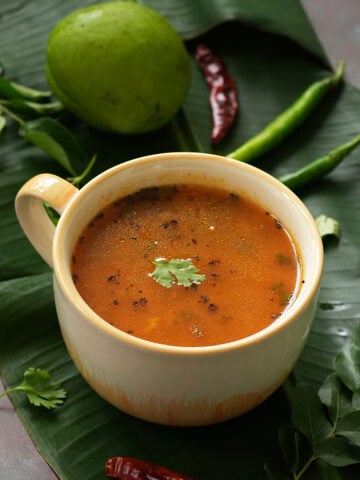
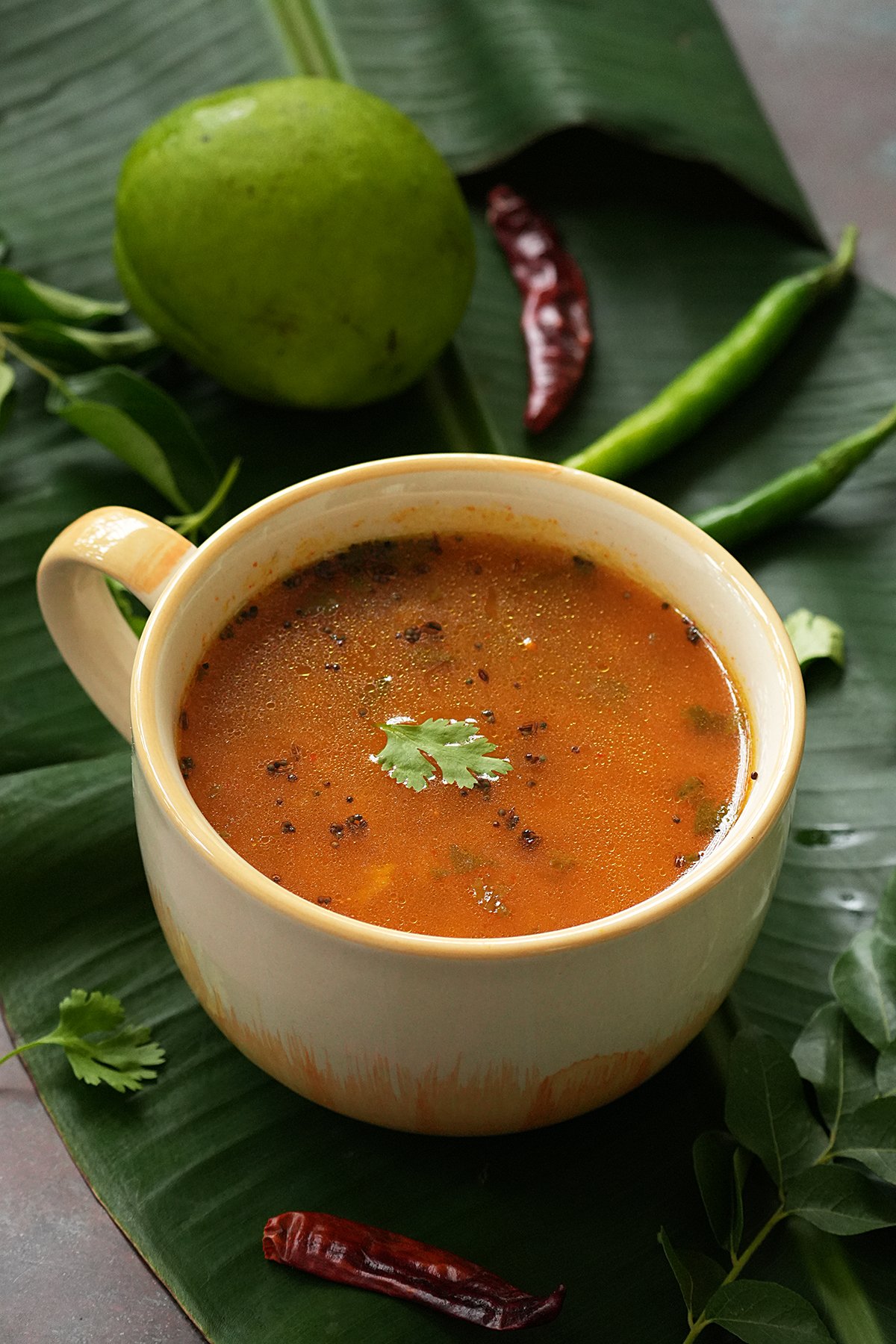
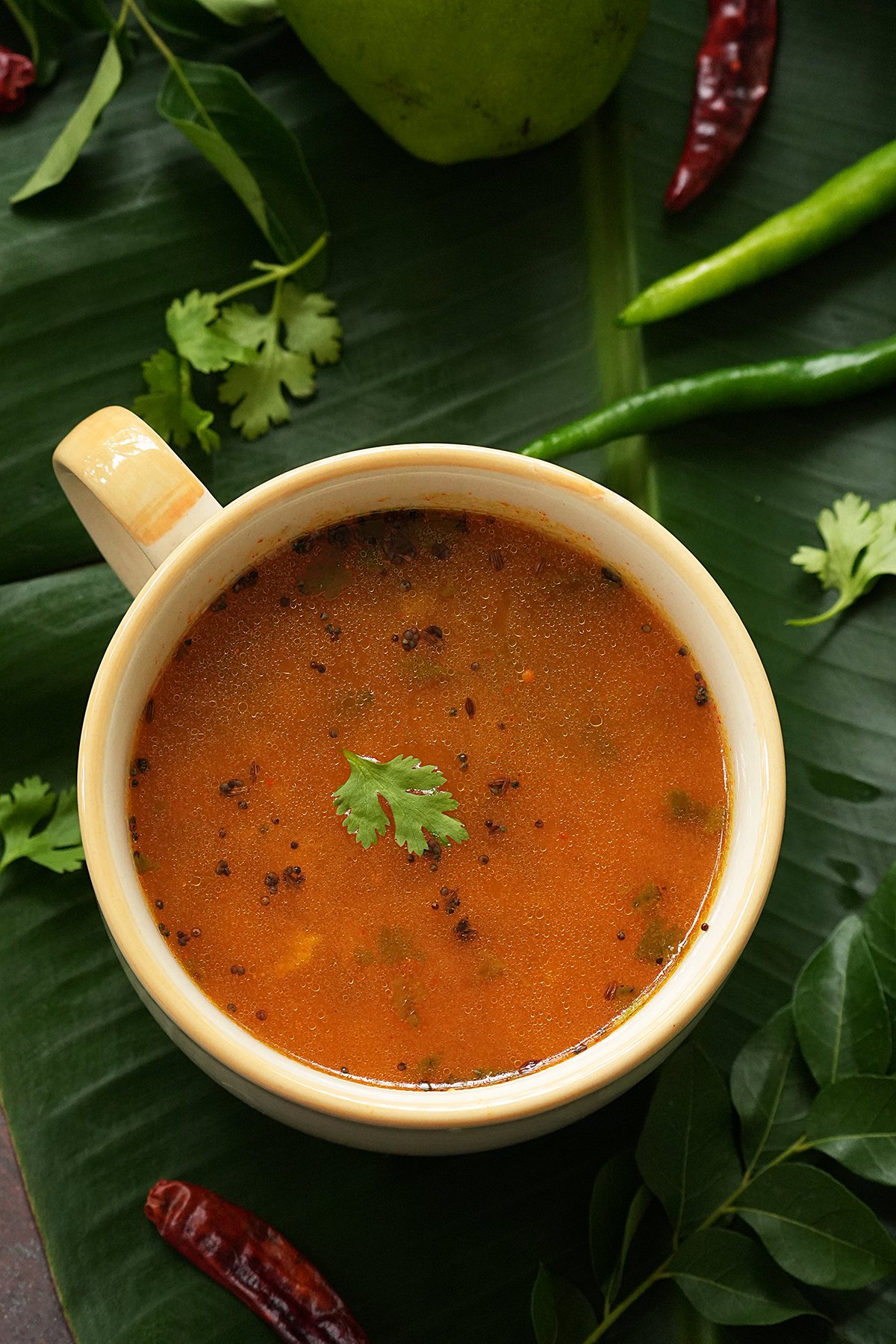
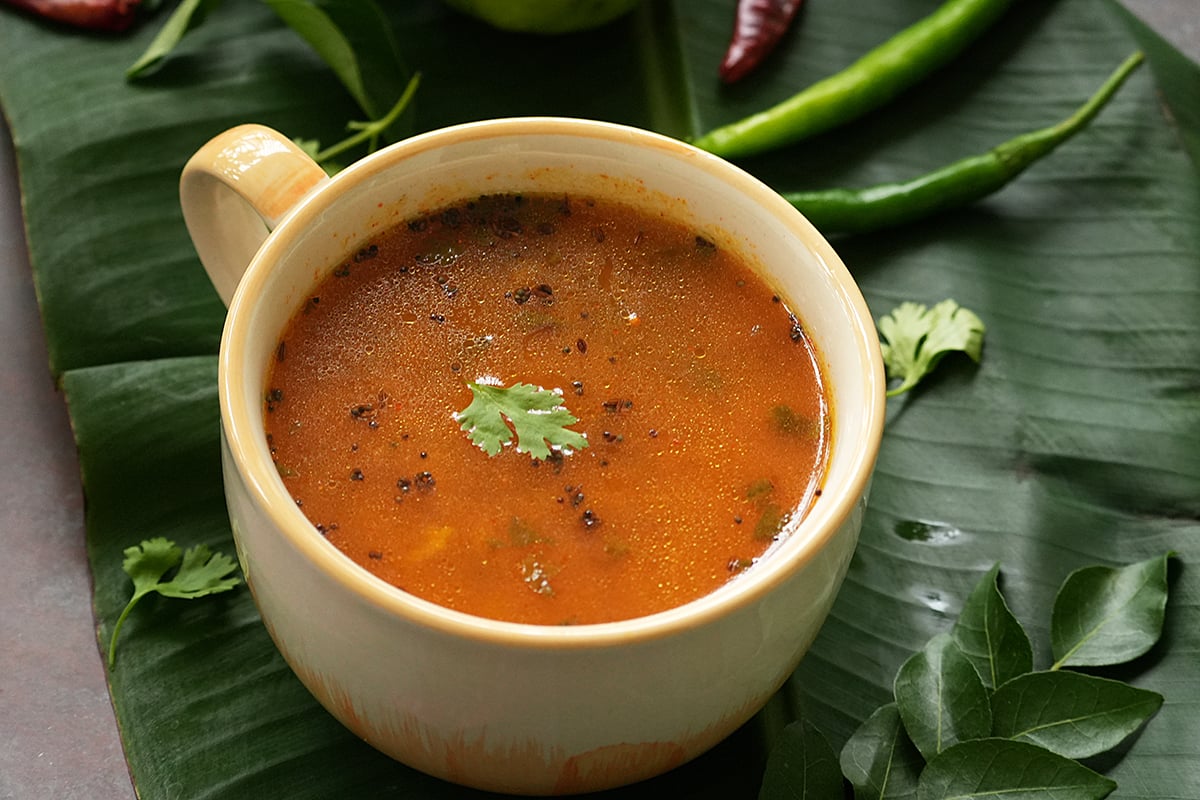
    A pot of raw mango rasam topped with a cilantro leaf and placed on a banana leaf
    [feast_advanced_jump_to]

    What is mango rasam?

    Mango rasam is a light, tangy and flavorful South Indian dish made with raw green mangoes, spices, and herbs. It is also known as manga rasam, mangai rasam, mavinakayi saaru and mamidikaya charu. If you've never had rasam before, think of it as a lightly spiced broth or soup typically served with white rice. It can also be enjoyed on its own like a warm and comforting soup.

    There are many varieties of traditional rasam recipes such as drumstick rasam, tomato rasam, and lemon rasam. Traditionally, rasam is made with tamarind extract for sourness, but we are using raw mango in this variation. In many South indian homes, rasam is a staple because it is light, easy to digest, and pairs wonderfully with rice and a simple vegetable stir-fry such as Vazhakkai Podimas, Jackfruit Seeds Stir Fry, Aratikaya Vepudu, Dondakaya Kobbari Karam, and Seppankizhangu Varuval.

    Ingredients & Substitutions

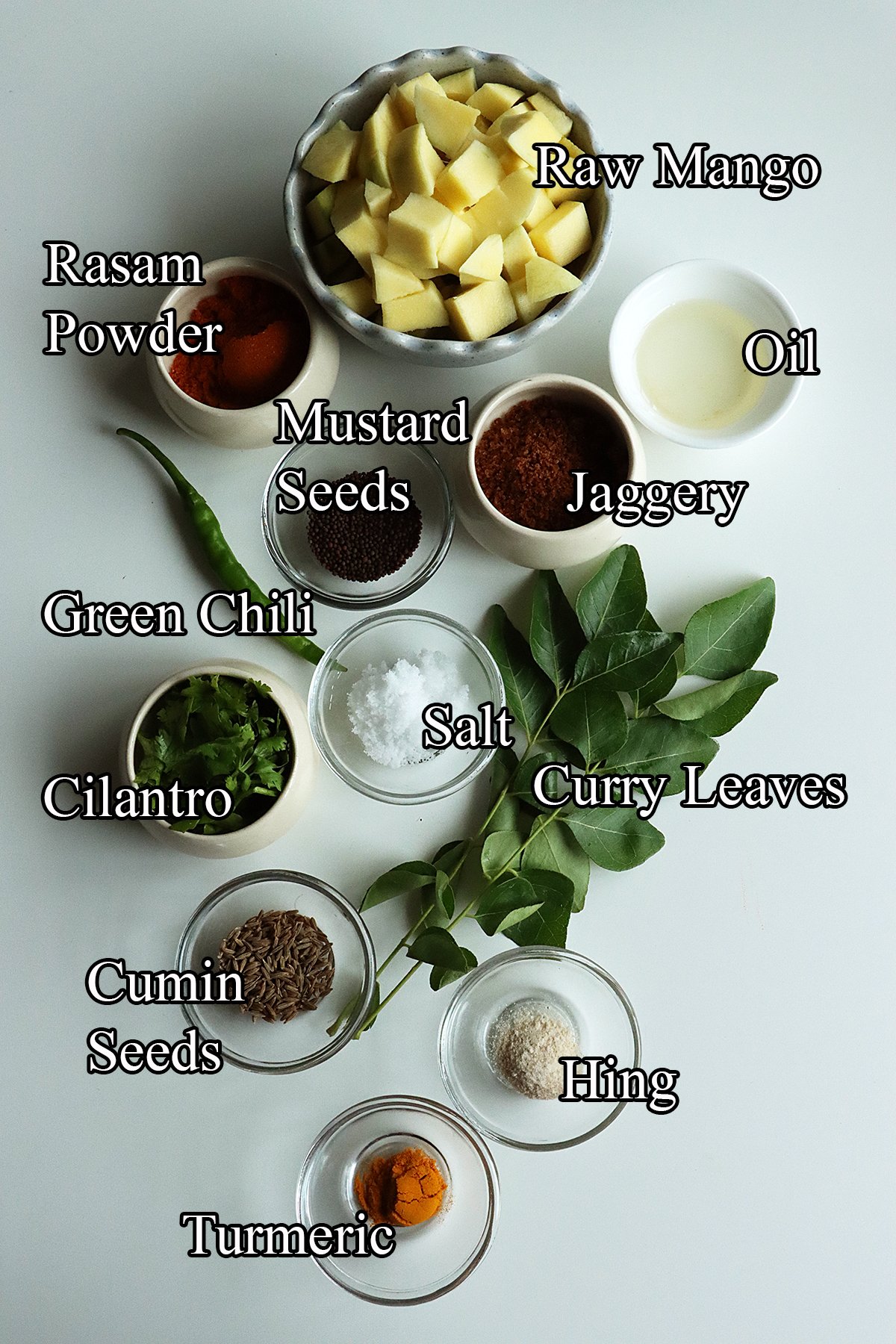
    Ingredients needed to make South Indian mango rasam recipe

    Raw Mango - Use unripe green mangoes for the best tangy flavor. Do not use ripe or semi-ripe mangoes that are sweet. If you don't have raw mangoes or are looking for a similar flavor, you can swap them with dried green mango pieces or amchur powder.
    Rasam Powder - It's a South Indian spice blend made with roasted spices like coriander seeds, red chilies, cumin and black pepper. You can use homemade or store-bought rasam powder. If you don't have it, replace it with freshly ground cumin-black pepper powder for a similar flavor.

    Spices - You will need some mustard seeds and cumin seeds for tempering. They will add an authentic aroma and depth. Do not skip mustard and cumin seeds.

    You will also need a small amount of turmeric powder, which adds a lovely color and earthy flavor.

    Herbs - Fresh curry leaves and cilantro (coriander leaves) are essential to make any variety of South Indian rasam. You can skip one of them, though the flavor won't be the same.

    Top angle of mango rasam in a yellow pot on a banana leaf.

    Variations:

    With dal - Add a little cooked and mashed toor dal (pigeon peas) to make the rasam healthy and filling. It also makes it slightly thicker.

    Without rasam powder - If you don't have rasam powder handy, just grind black pepper, cumin seeds and dried red chili into a quick spice mix.
    With tomato - If you are a lover of classic tomato rasam, feel free to add a finely chopped tomato while boiling.

    How to make Mango Rasam

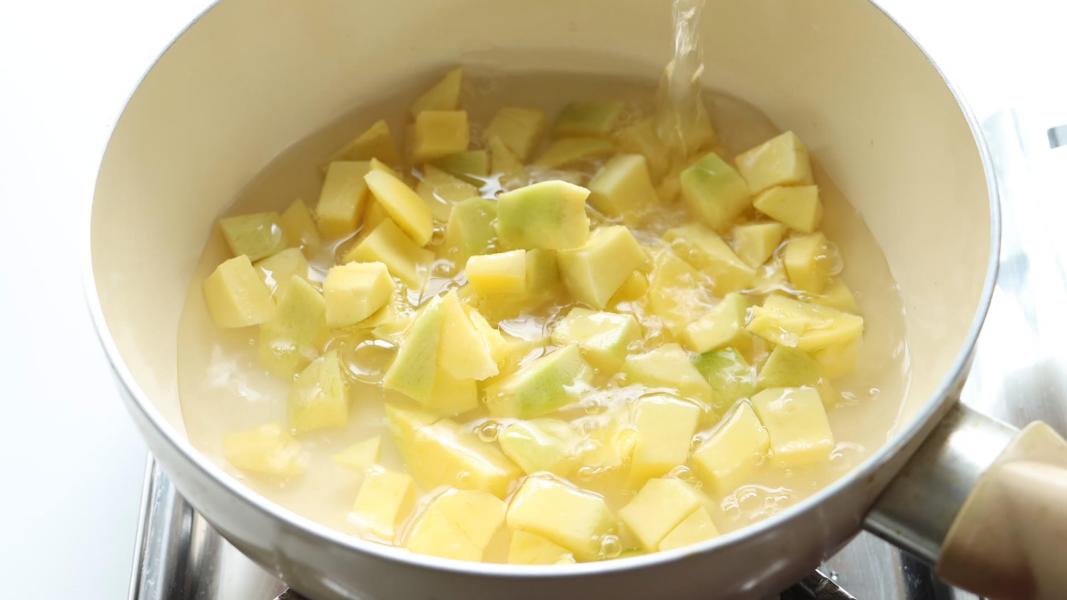
    cooking mango pieces with water in a sauce pan.

    Wash, peel and chop the raw mango into cubes. Add enough water to cover the pieces and cook covered until they turn soft.

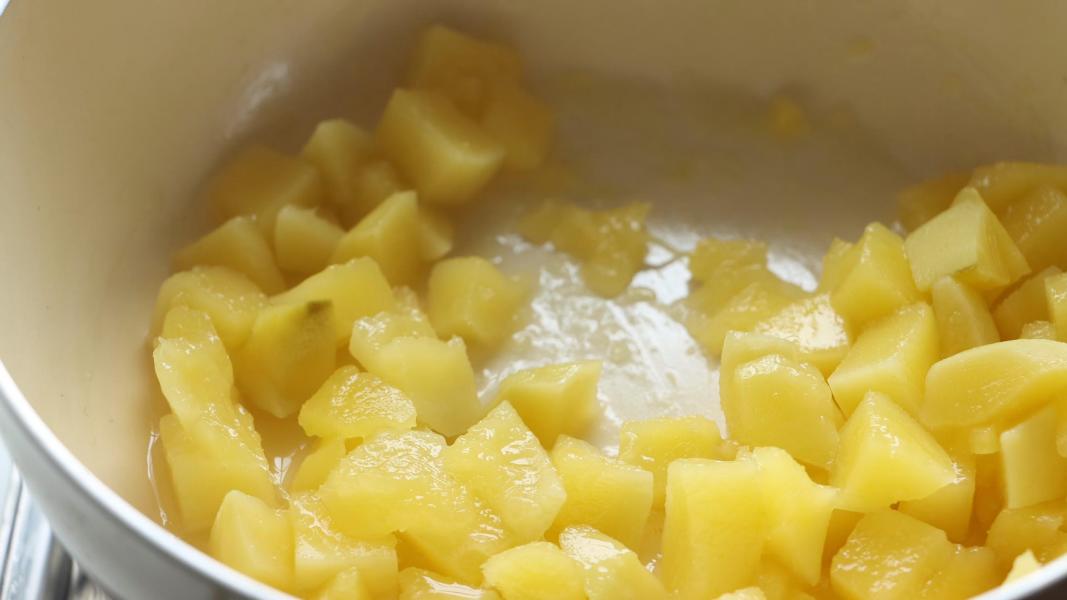
    cooked mango pieces in a sauce pan

    Once they are cooked well, turn off the heat.

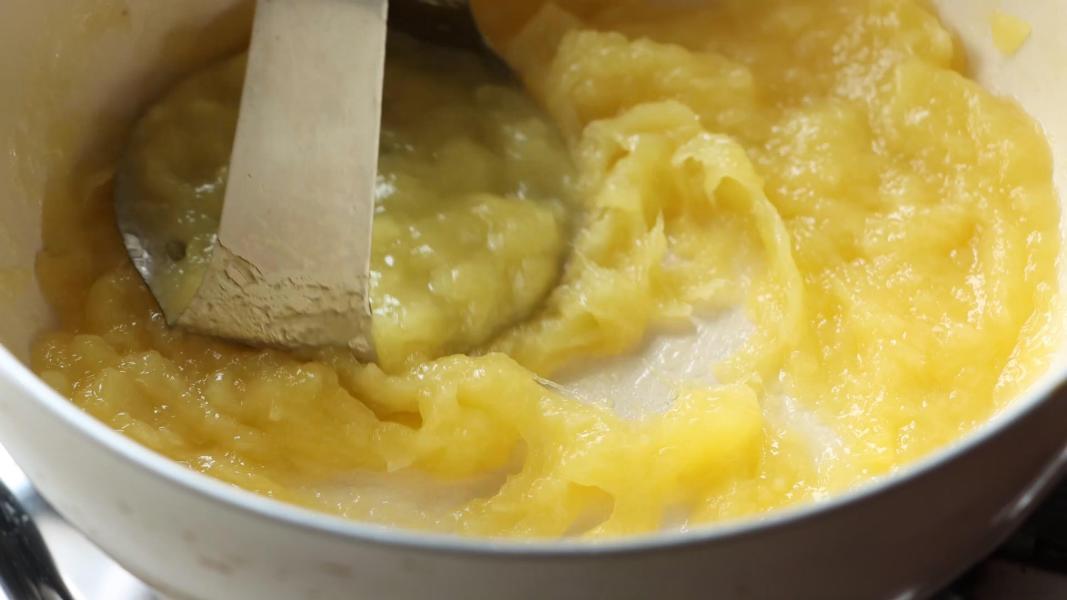
    mashing cooked mango using a potato masher

    Mash it using a potato masher until smooth or chunky. You can also grind it to a smooth paste using a blender.
    spices, herbs and water added to the mashed green mangoes in a sauce pan

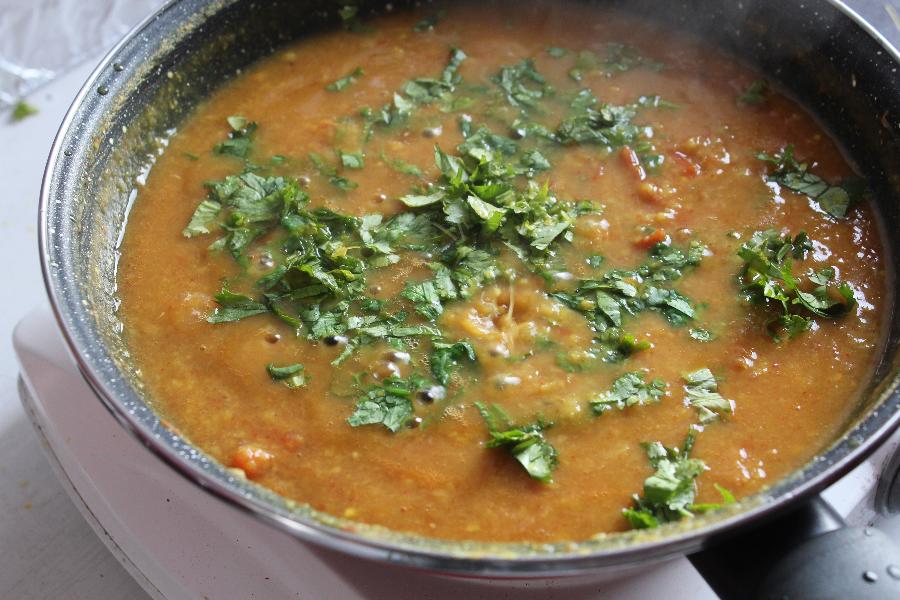
    Add 3 cups of water, salt, jaggery, cilantro, curry leaves, green chili, turmeric powder and rasam powder.

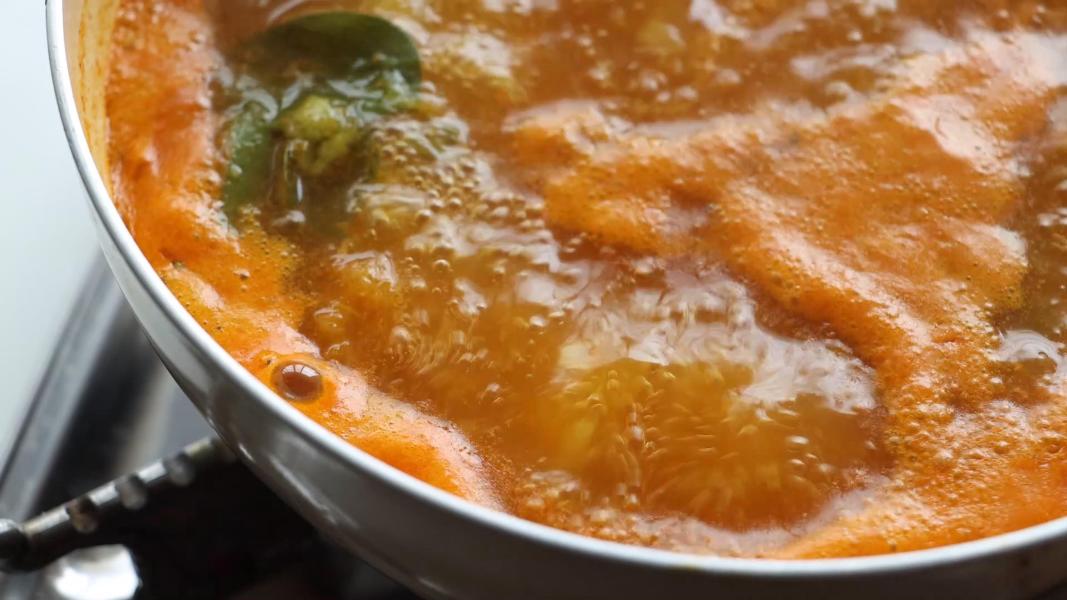
    boiling all the ingredients

    Mix everything well and bring it to a rolling boil.

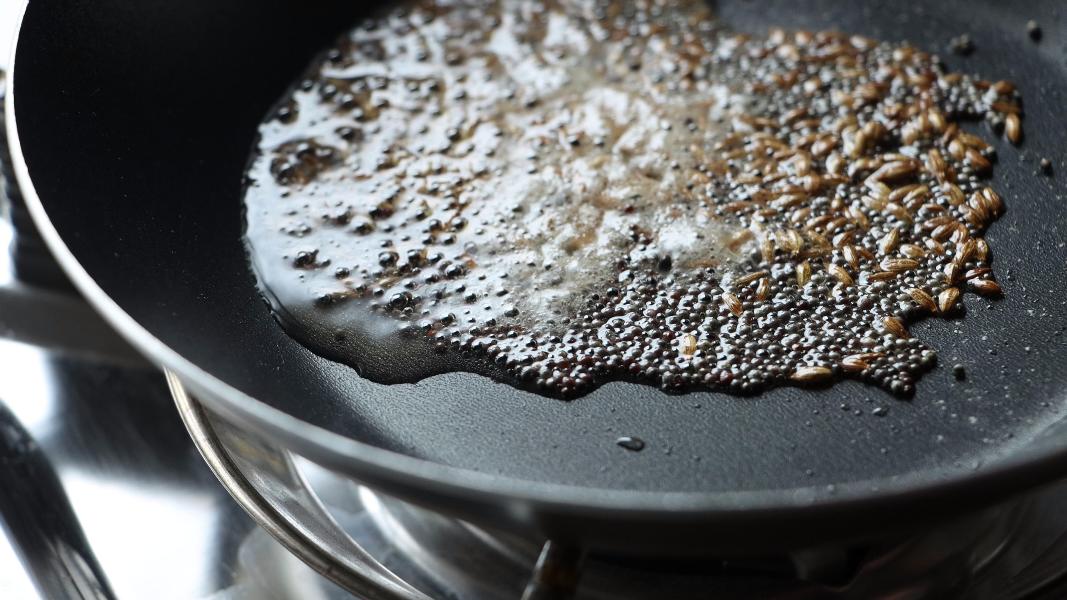
    Tempering mustard seeds and cumin seeds in a small fry pan

    Heat oil in a small frying pan or tadka pan. Add mustard seeds and cumin seeds and let them splutter. Add a pinch of hing and turn off the flame.

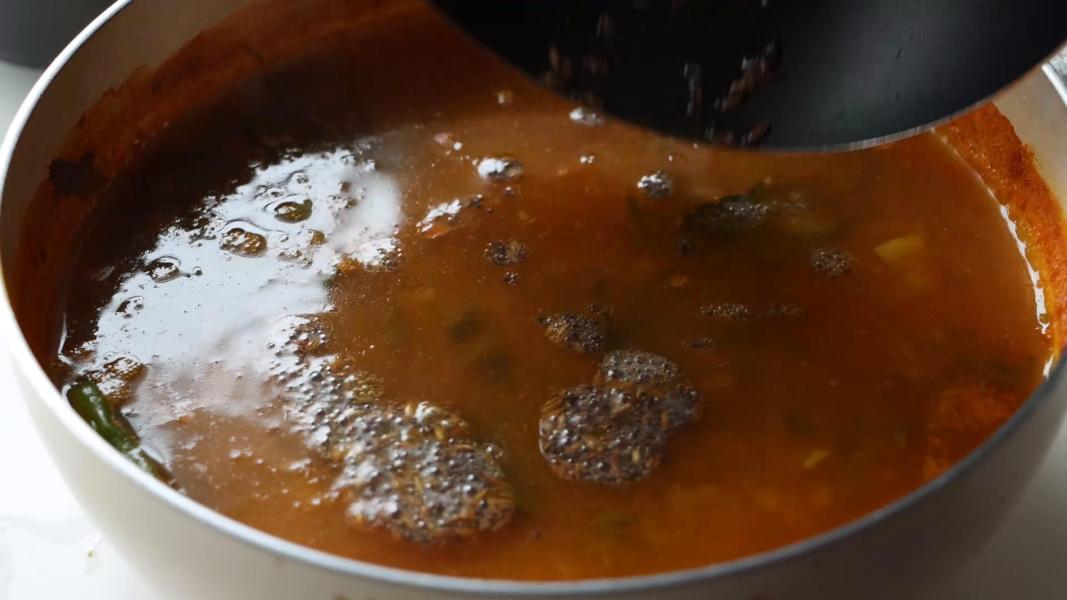
    pouring the tempered mustard seeds and cumin seeds into the green mango rasam

    Pour the tempered ingredients over the boiled rasam and combine well. Serve hot with rice.

    Tips & Notes:

    Choose a firm and raw (unripe) mango for the best flavor. It should be tangy but not too fibrous. You may need to add more or less depending on the sourness of the mangoes.

    You can also cook the mangoes in a pressure cooker for 2-3 whistles.

    Mash the cooked mango either smooth or chunky, depending on your preference. If you want it very smooth, grind it using a blender.

    Adjust the spiciness and sweetness by adding more jaggery and green chilies.

    Avoid boiling too long for the best flavor.

    green mango rasam in a large yellow soup mug on a banana leaf

    Storage suggestions:

    It stays fresh for 2 days if stored in the refrigerator. Store it in an airtight container and keep it in the refrigerator.

    Reheat it gently on the stovetop whenever you want to serve.

    Serving suggestions:

    The classic way to enjoy rasam is by pouring it over hot steamed rice with a little bit of ghee. It also tastes great with a side of papad, potato fry or potato chips.

    It can also be served as a warm soup.

    More South Indian recipes:

    • Raw Mango Sambar - South Indian Mango Sambar Recipe
    • Nellikai Sadam (South Indian Amla Rice)
    • Mamidikaya Pulihora - Mangai Sadam - Raw Mango Rice Recipe {Video}
    • Kathirikai Rasavangi - Tamil Style Eggplant Lentil Stew

    If you tried this Mango Rasam Recipe or any other recipe on my blog please leave a 🌟 star rating and let me know how it went in the 📝 comments. Thanks for visiting my blog today!

    Print Recipe

    Raw Mango Rasam

    Raw Mango Rasam is a light, tangy and delicious South Indian soup made with green mangoes, spices and herbs. It's an easy and comforting dish that pairs perfectly with hot steamed rice. A must-try summer recipe when raw mangoes are in season.
    Prep Time5 minutes mins
    Cook Time15 minutes mins
    Total Time20 minutes mins
    Course: Side Dish, Soup
    Cuisine: South Indian
    Keyword: mango rasam recipe, South Indian Food
    Servings: 4
    Calories: 53kcal
    Author: Hari Chandana Ponnaluri

    Ingredients

    • 1 Cup Raw Mango Cubes 1 medium green mango
    • ½ Teaspoon Mustard Seeds
    • ½ Teaspoon Cumin Seeds
    • A Pinch of Hing
    • 1-2 Sprigs Curry Leaves
    • 2 Teaspoons Rasam Powder
    • 1 Tablespoon Jaggery or as needed
    • 1 Teaspoon Oil
    • ¼ Teaspoon Turmeric Powder
    • 1 Green Chili
    • 3-4 Cups Water
    • 2 Tablespoons Cilantro
    • Salt to taste

    Instructions

    • Wash, peel, and chop the raw mango into small cubes. Add just enough water to cover the pieces and cook covered until the mango turns soft.
    • Once cooked, mash the pieces well using a potato masher or blend them into a smooth pulp using a blender.
    • Add 3-4 cups of water, turmeric powder, salt, jaggery, rasam powder, green chili, cilantro and curry leaves to the mashed mangoes.
    • Mix everything well together and bring it to a rolling boil.
    • Heat a small pan or tadka pan with oil. Add cumin seeds and mustard seeds and let them crackle. Add a pinch of hing and remove it from the flame.
    • Pour this tempering over the rasam and mix well.
    • Serve with rice.

    Video

    Notes

    Choose a firm and unripe green mango for the best results.
    Adjust the green chilies and jaggery according to your taste.
    Add more or less water to get the desired consistency. 

    Nutrition

    Calories: 53kcal | Carbohydrates: 10g | Protein: 1g | Fat: 1g | Saturated Fat: 0.2g | Polyunsaturated Fat: 0.1g | Monounsaturated Fat: 1g | Sodium: 47mg | Potassium: 81mg | Fiber: 1g | Sugar: 9g | Vitamin A: 482IU | Vitamin C: 27mg | Calcium: 17mg | Iron: 0.4mg

    Tomato Pappu Recipe - Andhra Style Tomato Dal Recipe

    May 24, 2010

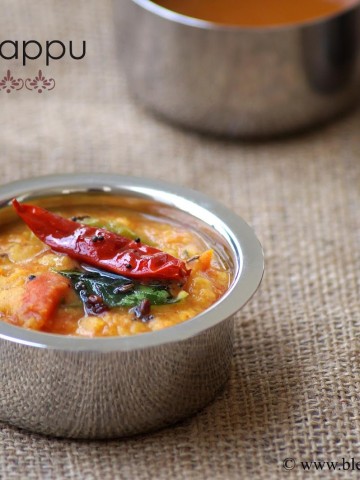
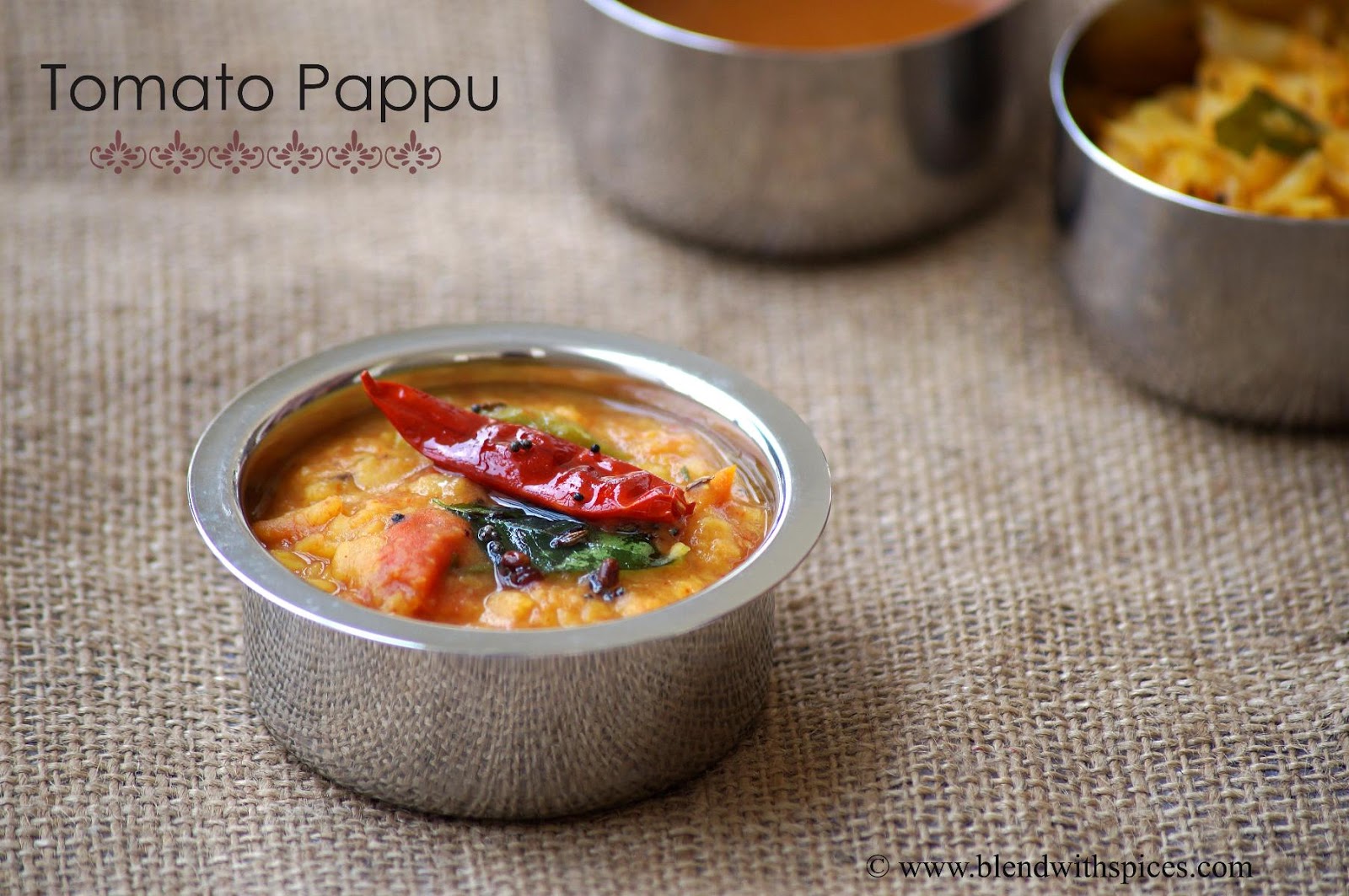
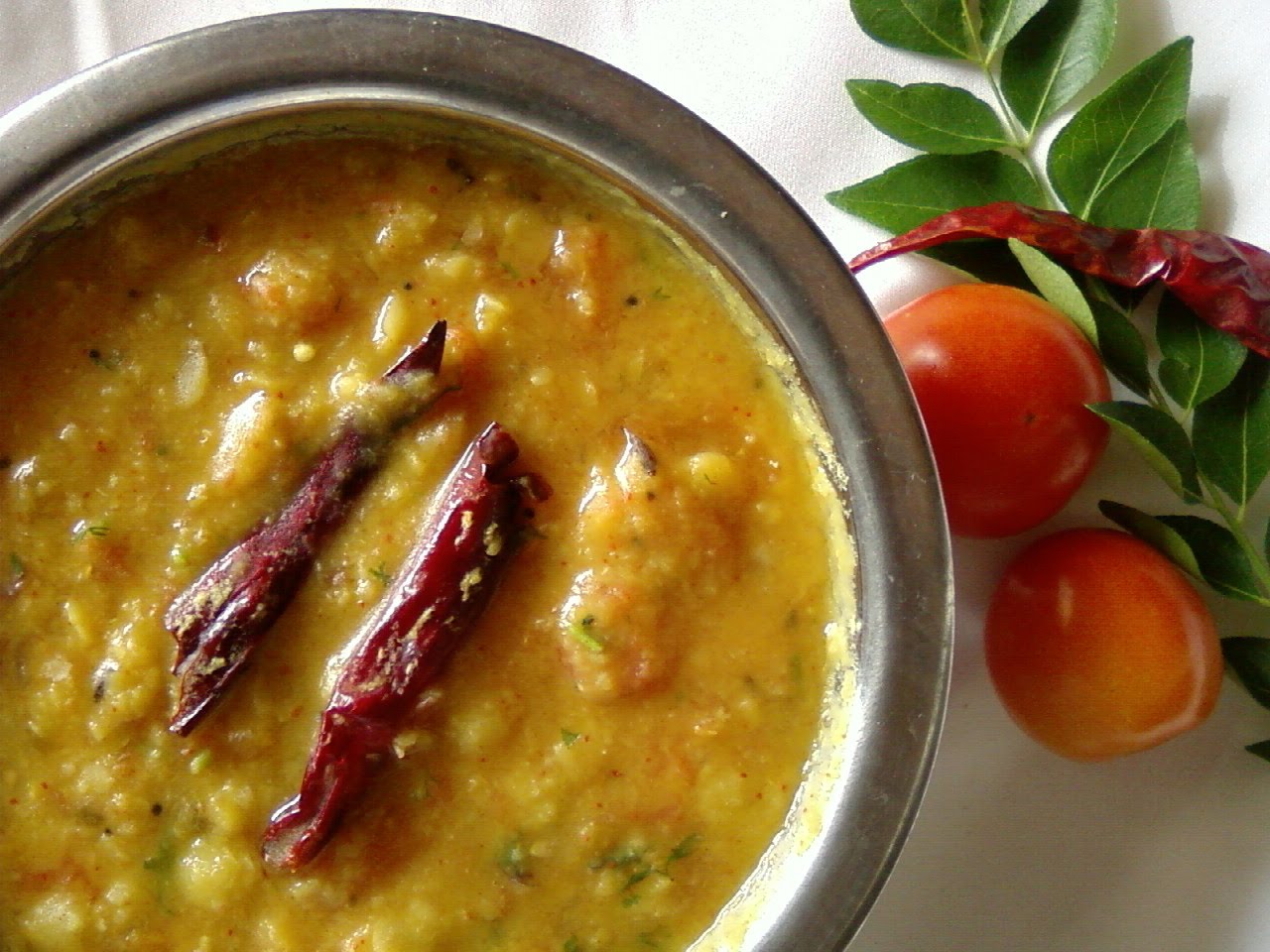
    Tomato Pappu Recipe - Andhra Style Tomato Dal Recipe for roti or rice.

    tomato dal recipe, how to make tomato dal, andhra tomato pappu recipe, tomato pappu andhra style
    Tomato Dal, Cabbage Moong Dal Curry & Drumstick Rasam

    What is Tomato Pappu?

    Tomato Pappu is a traditional lentil-based dish from Andhra Pradesh and it is a staple side dish in every home.  "Pappu" means Dal or lentils in the Telugu language. This recipe is a Telugu brahmin style Pappu that requires no onion and no garlic. We need just a handful of ingredients to prepare this flavorful Andhra pappu.

    Can I add onion and garlic to it?

    You can! just add chopped onion to the pressure cooker and cook it along with lentils and tomatoes or you can saute them with a spoon of oil and add them to the prepared dish.

    If you love garlic flavor, chop or crush 1-2 garlic pods and add them in the seasoning / popu / tadka. Make sure not to burn them.

    Which lentils are best for this recipe?

    Traditionally, we use split pigeon peas also known as toor daal and kandipappu. It is equally delicious with red lentils or masoor dal.

    It is vegan?

    Yes, it is a naturally vegan-friendly dish. Just skip adding ghee or clarified butter on top while serving.

    Serving suggestions:

    This dish is very comforting, tangy and mildly spiced and tastes great with steamed rice with a dollop of ghee (skip ghee if you are vegan).
    Pair it up with some papadam or crispy potato fry for a great meal.

    Tips to make the best Tomato Pappu:

    • Do not use more water than required. The consistency of the Pappu should not be like sambar or soup.
    • If you are using sour tomatoes, you will need less tamarind. Adjust accordingly.
    • Simmer the dal and tamarind extract together at least for 5 minutes to get rid of the rawness of the tamarind.
    • Do not skip adding coriander leaves, curry leaves and hing, they give the real flavor to the dal.
    • Always add hing at the end in the tadka or seasoning to prevent it from burning.
    • Red chilli powder will give a nice color. If you love green chillies, skip chilli powder and add more green chillies.

    Variations:

    with onion and garlic: Adding onion and garlic or only onion will create a completely new dish with different flavors.

    cooking tomatoes separately: I have pressure cooked the tomatoes along with lentils in this recipe. But you can also saute them separately with a little bit of oil until they are mushy and mix it with cooked lentils.

    substituting tamarind: If you don't have tamarind or tamarind paste in hand, you can replace it with 1-2 tablespoons of lemon juice. However, you don't need to cook the lemon juice. Squeeze some lemon juice after turning off the flame. Lemon juice will reduce the shelflife though.

    How long will it keep in the fridge?

    It stays fresh in the fridge for 2 days.

    Can I freeze tomato dal?

    The answer is YES!

    Transfer it to an airtight or freezer-safe container immediately after cooling down the dal. Freeze immediately for a couple of months.

    Step by step preparation:

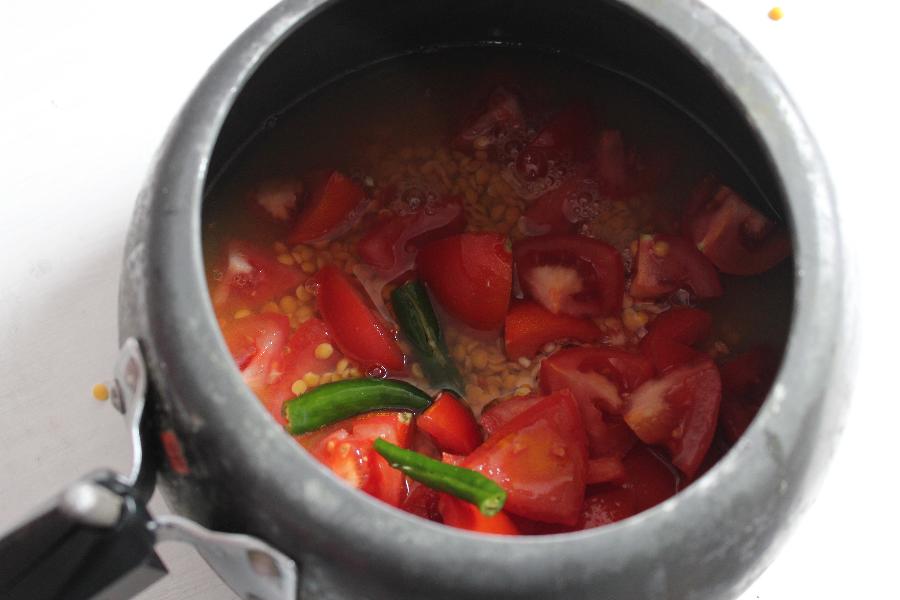
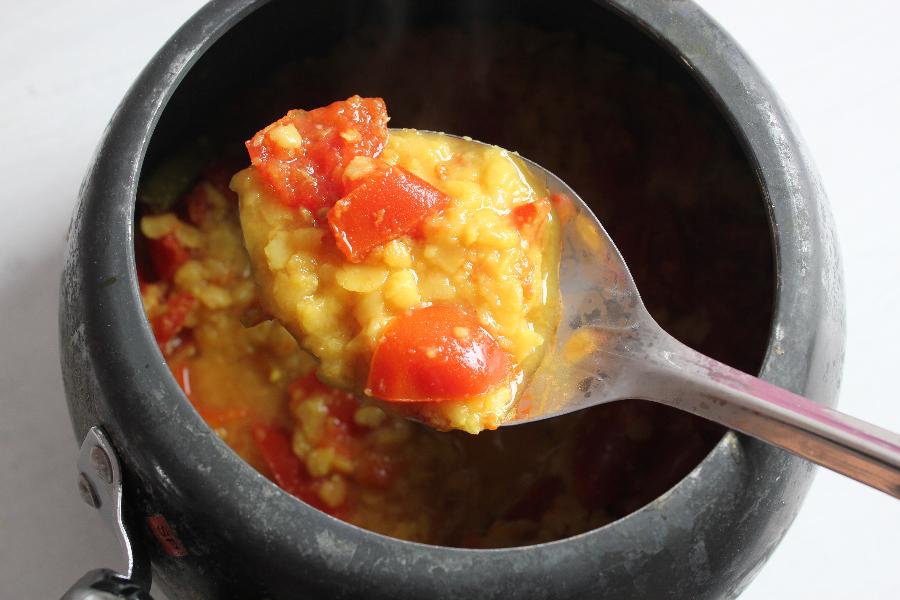
    Cooking dal and tomatoes in a pressure cooker

    • Wash and chop the tomatoes. Rinse the lentils.
    • Combine the chopped tomatoes, lentils, slit green chillies, turmeric powder and one cup water in a pressure cooker. If you want to add onion, you can add it at this stage.

    pressure cooked dal and tomatoes for making tomato pappu

    • Pressure cook for 3 whistles. Remove from the flame and wait until the pressure goes off.
    • Soak the tamarind in water for 10 minutes. Squeeze the extract out of it and set aside.

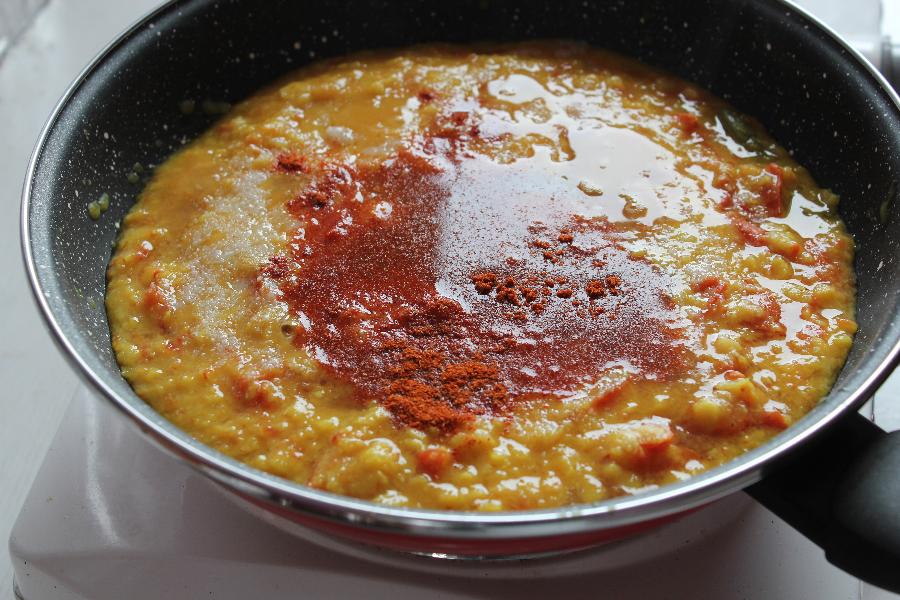
    • Add the tamarind extract, salt and red chilli powder to the cooked lentil-tomato mixture. Add water to adjust the consistency.
    • Mix everything well and simmer for 5 minutes.

    • When it is done, add chopped coriander leaves and mix well.
    • Turn off the flame and keep it aside.

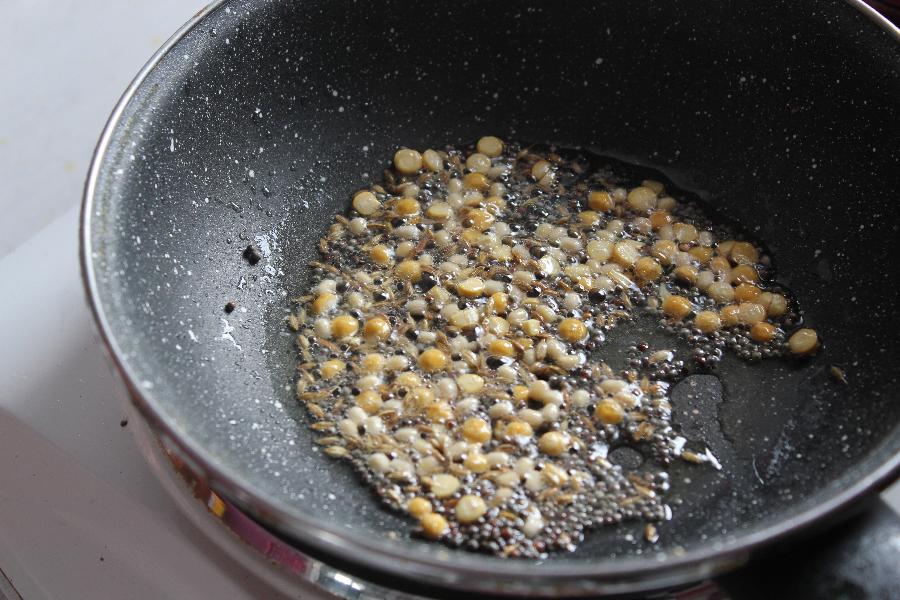
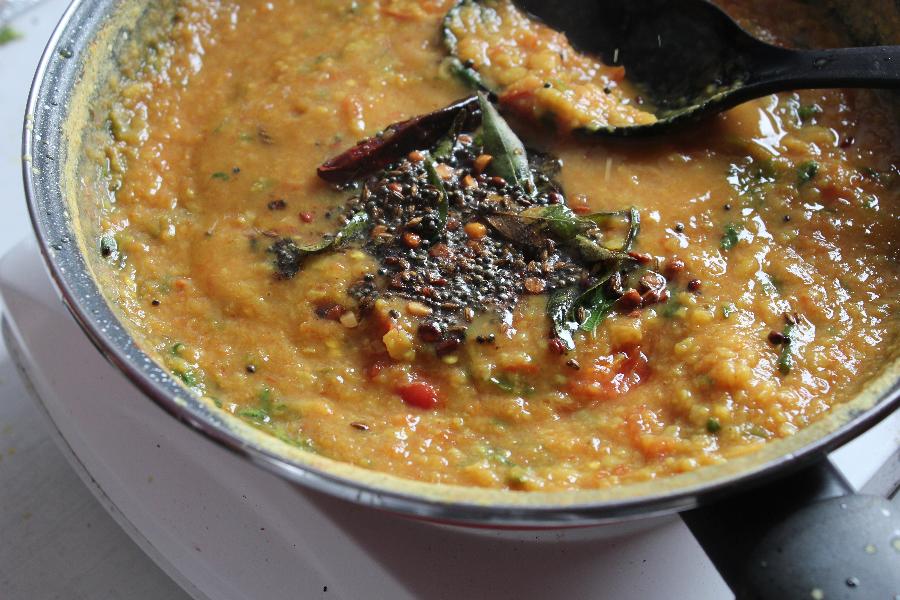
    • Heat oil in a pan for seasoning. Add mustard seeds, urad dal, chana dal and cumin seeds and let them splutter. When they are golden brown, add red chilli, curry leaves and hing and saute for a couple of seconds.
    • Turn off the flame and pour the tempered ingredients over the prepared dal.

    • Combine well and serve hot with rice or roti.

    Few More Dal Recipes on the blog:

    • Chintakaya Pappu
    • Gujarati Dal
    • Moong Dal Tadka
    • Lemon Onion Dal
    • Pumpkin Dal
    • Ash Gourd Dal
    • Cabbage Moong Dal Tadka
    • Dal Chenchki
    • Gongura Pappu
    • Dosakaya Pappu

    How to make Andhra Tomato Pappu recipe video below:

    Print Recipe

    Tomato Pappu Recipe - Andhra Style Tomato Dal Recipe

    How to Make Andhra Style Tomato Dal or Tomato Pappu Recipe with step by step photos and video.
    Prep Time5 minutes mins
    Cook Time20 minutes mins
    Total Time25 minutes mins
    Course: Side Dish
    Cuisine: Andhra, Indian, South Indian
    Keyword: andhra recipes, Dal Recipes, South Indian Food
    Servings: 4
    Calories: 129kcal
    Author: Hari Chandana Ponnaluri

    Ingredients

    • ½ cup Toor Dal / Split Pigeon Peas
    • 1.5 cup Chopped Tomatoes
    • 3 Green Chillies
    • small lemon sized ball Tamarind
    • ½ teaspoon Red Chilli Powder or as needed
    • ½ teaspoon Mustard Seeds
    • ½ teaspoon Chanan Dal
    • ½ teaspoon Urad Dal
    • ¼ teaspoon Cumin Seeds
    • 1 Sprig Curry Leaves
    • 2 Sprig Coriander Leaves finely chopped
    • 1 Dried Red Chilli
    • ¼ teaspoon Turmeric Powder
    • ⅛ teaspoon Hing / Asafoetida
    • 2 teaspoon Oil
    • Salt to taste

    Instructions

    • Put the rinsed toor dal, chopped tomato, turmeric, green chillies and one cup of water in a pressure cooker and cook for 3 whistles.
    • Switch off the flame and wait until the pressure goes off.
    • Soak the tamarind in water for 10 minutes. Squeeze the extract out of it and set aside.
    • Add the red chilli powder, salt, tamarind extract and water (adjust to desired consistency) to the cooked dal and let it simmer for 5 minutes.
    • Add the chopped coriander and combine it well.
    • Turn off the flame.
    • Heat oil in a pan for seasoning. Add the mustard seeds, urad dal, chana dal and cumin seeds and let them splutter.
    • Add the curry leaves, hing, and red chilli and stir for a couple of seconds.
    • Switch off the flame and add the seasoned ingredients to the prepared dal.
    • Mix well and serve hot with rice or roti.

    Video

    YouTube video

    Nutrition

    Calories: 129kcal | Carbohydrates: 20g | Protein: 6g | Fat: 2g | Sodium: 249mg | Potassium: 384mg | Fiber: 9g | Sugar: 3g | Vitamin A: 290IU | Vitamin C: 23.7mg | Calcium: 40mg | Iron: 2.8mg

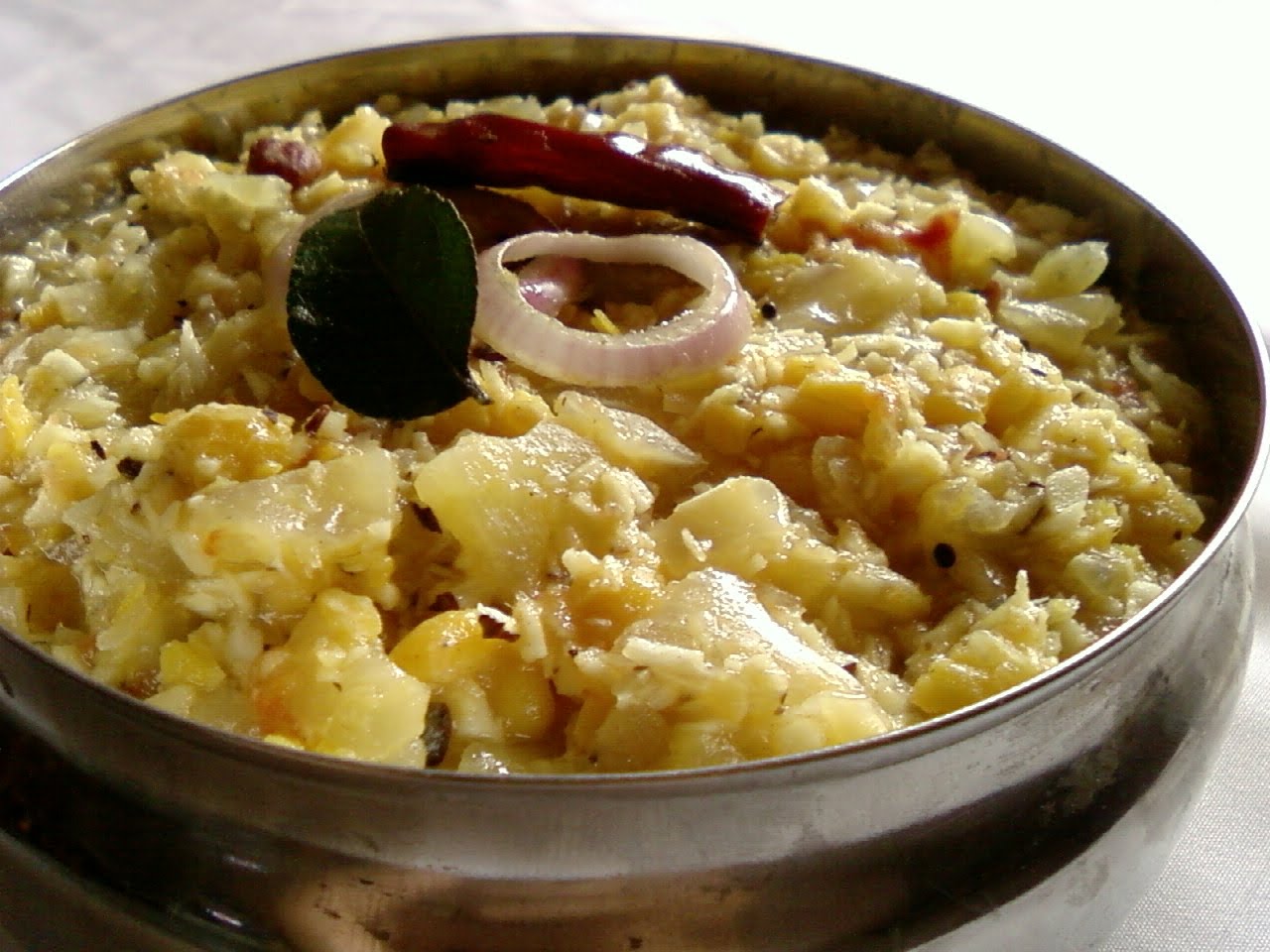
    Cabbage Kootu

    May 23, 2010


    Ingredients :Chopped Cabbage : 1 cup
    Chana dal : ½ cup
    Grated fresh coconut : ½ to 1 cup
    Tomato : 1
    Onion : 1
    Green Chillies : 3
    Red Chilli : 1
    Mustard seeds : ½ tsp
    Cumin seeds : ½ tsp
    Black pepper powder : ½ tsp
    Red chilli powder : ½ tsp
    Oil : ½ tsp
    A pinch of turmeric powder
    A pinch of hing
    Few Curry leaves
    Salt to taste

    Method :Soak the chana dal in water for 15 minutes. Put the chopped cabbage , soaked chana dal, Onion pieces, tomato pieces, turmeric and 2 cups of water in a pressure cooker. Cook till 4 whistles. Turn off the flame and wait until the pressure go off. Then remove the cooked dal from the cooker. Add salt and red chilli powder and let it cook for 10 minutes. Now add grated coconut and pepper powder. And cook for another 2 minutes. Remove from the flame. Heat oil in a pan for seasoning. Add mustard seeds and cumin seeds and let them splutter. When they start to splutter add hing, red chilli & curry leaves and stir for a few seconds. Remove from the heat and pour over the cooked lentil and cabbage mixture. Mix well and serve hot with steamed rice and dollop of ghee.

    • Check out other recipes of Cabbage here
    • Back to Recipe Index

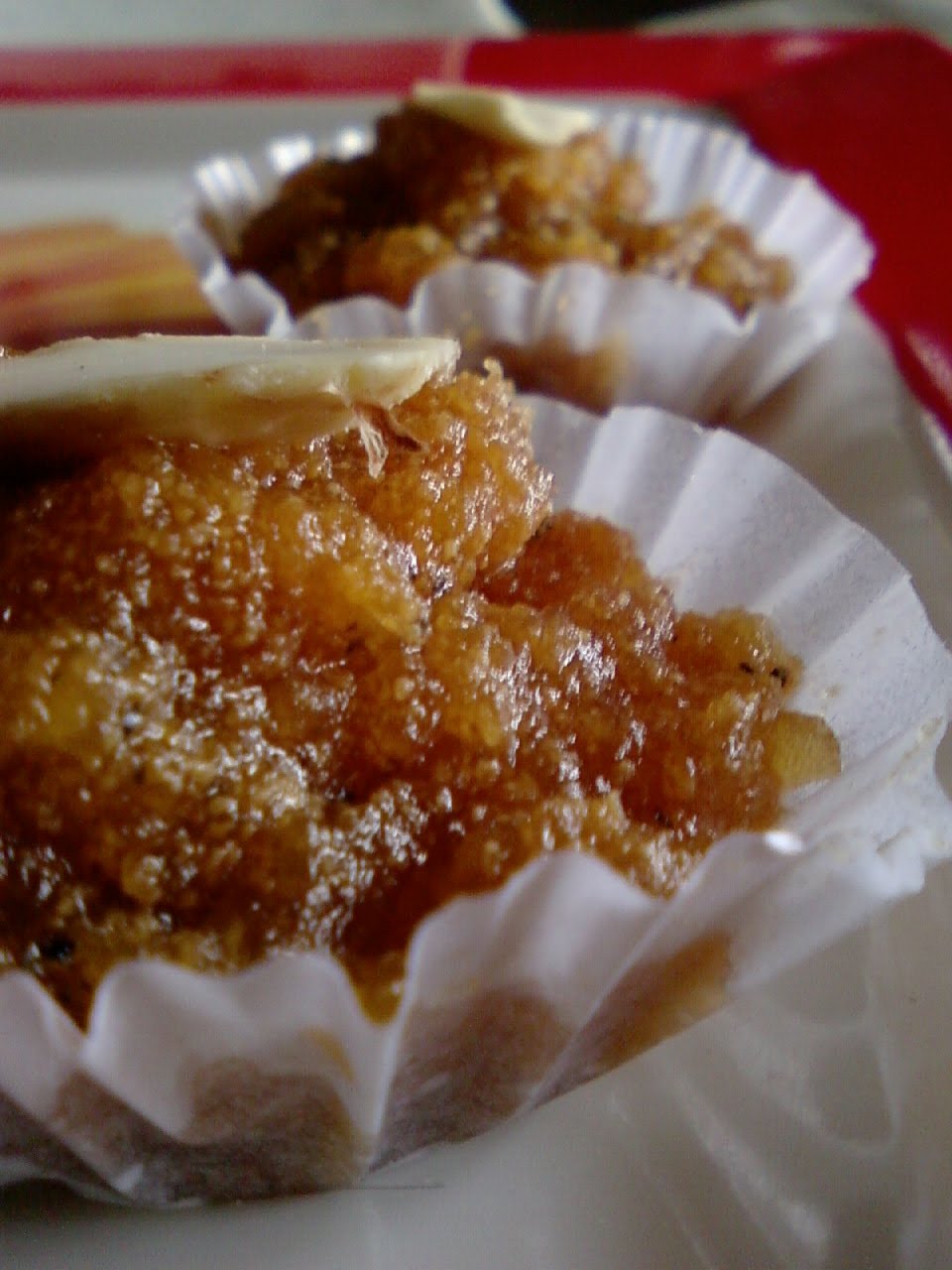
    Apple Halwa

    May 21, 2010

    Seema Regi Pandu Halwa ~ Apple Halva
    Ingredients :Apples : 4
    Milk : 2 cups
    Sugar : 1 cup
    Ghee : 3 to 4 tbsp
    Cardamom powder : ½ tsp
    Cashew nuts

    Method :Wash and peel the apples and cut into pieces. Grind the apple pieces to a smooth paste without adding water. Keep it aside. Melt the ghee in a wide pan. Add and fry cashew nuts to light golden color and keep aside. In the same pan, add 1 table spoon of ghee and put the apple pulp. Let it fry for a few minutes. Add milk and stir properly. When the milk evaporates add sugar, ghee and fried cashew nuts. Cook for sometime till the water from the sugar evaporates. When the pulp thickens add a little ghee and cardamom powder. Mix well. Remove it from the flame and spread in a greased dish.

    Chintha Chiguru Podi ~ Spicy Tender Tamarind Leaves Powder

    May 20, 2010

    Chintha Chiguru Podi ~ Spicy Tender Tamarind Leaves PowderIngredients :

    Tender Tamarind Leaves : 100 gms
    Ground nuts : 4 tsp
    Coriander seeds : 2 tsp
    Chana dal : 2 tsp
    Red Chillies : 8 - 10
    Garlic pods : 2
    Oil : 2 tsp
    Salt to taste

    Method :

    Remove the stems from the tamarind leaves and wash them. Let it dry completely. Heat one teaspoon of oil in a heavy bottomed pan add and fry ground nuts, coriander seeds, next chana dal and finally red chillies to light brown color. Remove from the flame and allow it to cool. In the same pan add one teaspoon of oil and put the tamarind leaves. Roast the tender tamarind leaves until they turn crisp but don't burn them. Remove from the heat and let it cool down. Grind the roasted spices, salt and garlic to a coarse powder. Finally add roasted tamarind leaves to the spices powder and blenderise it again. Serve with steamed rice, dosa or idli.

    Majjiga Mirapakayalu ( Oori Mirapa ) ~ Sun Dried Chillies

    May 19, 2010

    Ingredients :Green Chillies : ¼ kg
    Sour Buttermilk : ¼ kg
    Turmeric powder : ¼ tsp
    Salt : 2 tsp

    Method :

    1. Wash and slit the green chillies and keep it aside.
    2. Pour the sour buttermilk in a wide vessel. Add salt, turmeric powder and slit green chillies to it.
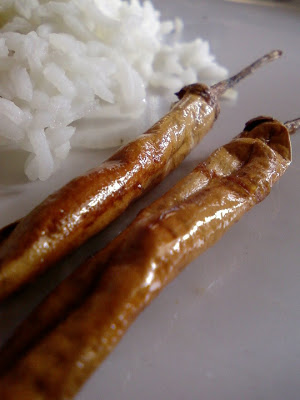
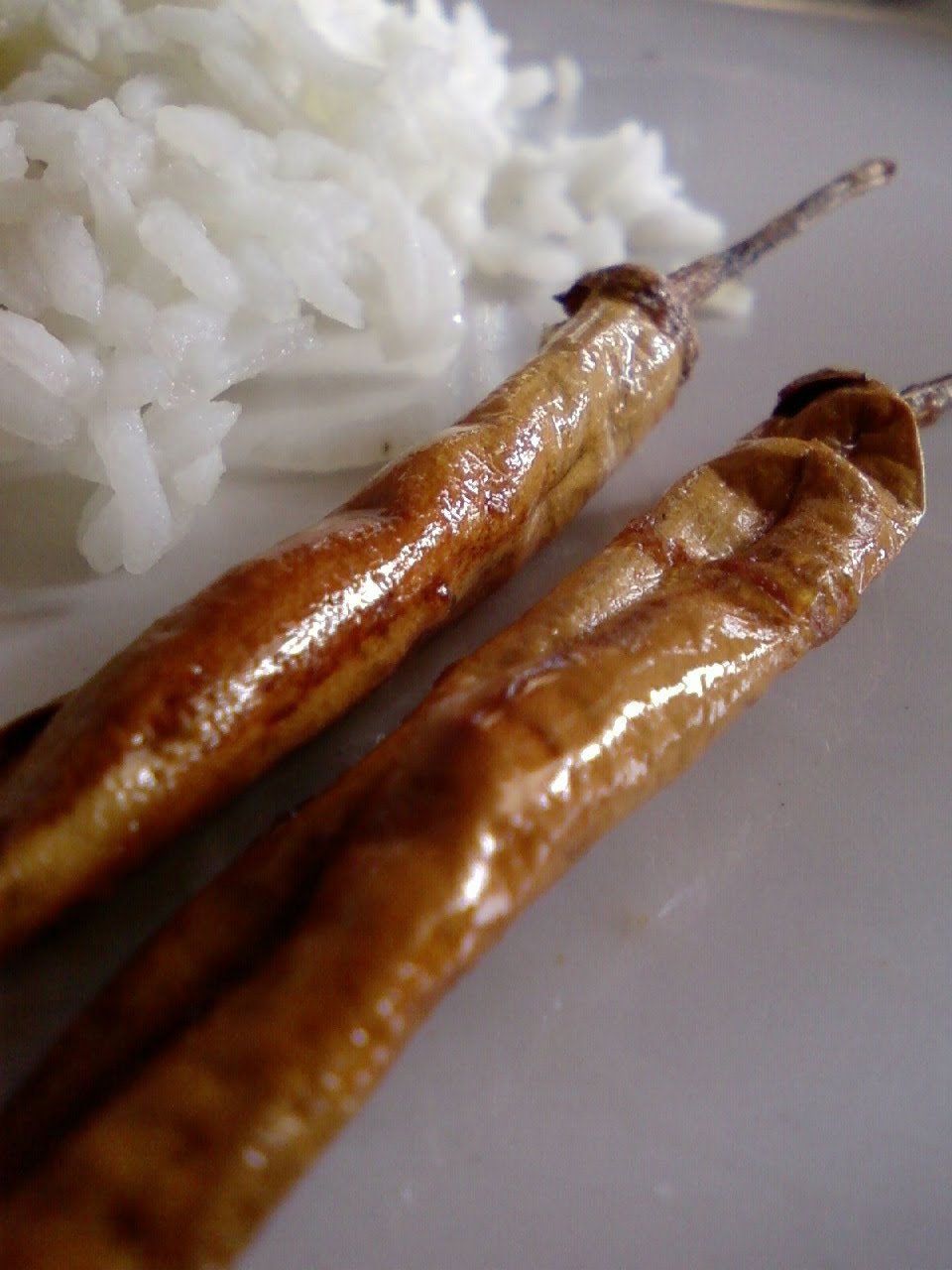
    3. Mix well and soak them for 3 to 4 days. Remove the green chillies from the salted buttermilk. Place on the plastic sheet and let it dry in the sunlight.

    Dahi Mirchi / Vuppu Menasinakayi / Mor Milagai
    4. Once they are dried remove from the sheet and store in the airtight container.

    5. Fry the dried chillies in hot oil before serving. Serve with dal or sambar.

    Vullipaya Senagapindi Kura ~ Onions Curry With Besan

    May 18, 2010

    Ullipaya Senagapindi Koora ~ Onion Curry With Gram Flour
    Ingredients :Onions : ¼ kg
    Gram flour (besan) : 2 tsp
    Green chillies : 3 - 4
    Mustard seeds : ¼ tsp
    Chana dal : ½ tsp
    Urad dal : ½ tsp
    Turmeric powder : ¼ tsp
    Salt to taste
    Few curry leaves
    Oil : 2 tsp

    Method : Peel the onions and cut them into medium pieces. Heat oil in a pan and add the mustard seeds, chana dal, urad dal. When they start to splutter add curry leaves, chopped green chillies, onion pieces, turmeric, salt and little water. Mix well, cover with a lid. Let it cook on a medium flame for 10 to 15 minutes. Dilute the gram flour in the water. Then add this besan mixture to the curry and mix well. Let it cook for another few minutes. Remove from the flame and serve with hot poori or roti.

    Few More Curry Recipes on the blog:

    • Mushroom Matar Butter Masala
    • Soya Chunks Curry
    • Kerala Style Okra Stir Fry
    • Gutti Vankaya Kobbari Karam
    • Vazha Pindi Thoran
    • Aloo Ka Rassawala Shaak
    • Saag Aloo


    Cabbage And Raw Mango Chutney

    May 17, 2010

    Cabbage Mamidikaya PachadiRecipe Courtesy : Mrs. Sowbhagya Lakshmi NandirajuIngredients :

    Chopped Cabbage : 1 cup
    Small size raw mango : 1
    Red Chillies : 5
    Chana dal : 2 tsp
    Urad dal : 1 tsp
    Mustard seeds : ½ tsp
    Few fenugreek seeds
    Oil : 3 tsp
    Salt to taste
    A pinch of hing

    Method :

    Wash and peel the mango and cut into small pieces and keep it aside. Heat one teaspoon of oil in a pan Add and fry chana dal, urad dal, fenugreek seeds, mustard seeds, next red chillies and finally hing to light brown color. Remove from the flame and allow it to cool. In the same pan, add two teaspoons of oil and put the chopped cabbage and fry for a few minutes. Remove from the flame and let it cool completely. Grind the cabbage, mango pieces and roasted spices and salt to a coarse paste adding a little water. Serve with steamed rice, dosa or idli.

    • « Go to Previous Page
    • Page 1
    • Interim pages omitted …
    • Page 87
    • Page 88
    • Page 89
    • Page 90
    • Page 91
    • Interim pages omitted …
    • Page 93
    • Go to Next Page »

    Primary Sidebar

    Welcome!

    I’m Hari Chandana Ponnaluri, the creator, recipe developer, and photographer of Blend with Spices, a food blog where I share flavorful, approachable, and authentic vegetarian recipes from India and beyond..

    More about me

    Popular Recipes

    • Cranberry Orange Snowball Cookies
    • Chocolate Crinkle Cookies (Eggless)
    • kolaczki Cookies (Polish Christmas Jam Cookies)
    • Sugar Plums
    • Peppermint Kiss Cookies
    • Potato Chip Cookies

    Indian Festival Recipes

    • Moru Curry (Kerala Moru Kachiyathu)
    • Palada Payasam (Palada Pradhaman)
    • Instant Pot Avial (Kerala Mixed Vegetable Curry)
    • Mawa Modak
    • Upma Kozhukattai
    • Mambazha Pulissery (Kerala Style Mango Curry)
    See more Festival Recipes →

    Footer

    About

    • Privacy Policy

    Don’t Miss A Recipe!

    Subscribe to our mailing list

    Contact

    • Contact

    Copyright © 2020 Blend with Spices