
• Skip to main content
  • Skip to primary sidebar

Blend with Spices logo

menu icon
go to homepage
  • Home
  • About Me
  • Recipe Index
  • Festival Recipes
  • Eggless Baking
    • Facebook
    • Instagram
    • Pinterest
    • Twitter
    • YouTube
  • search icon
    Homepage link
    • Home
    • About Me
    • Recipe Index
    • Festival Recipes
    • Eggless Baking
    • Facebook
    • Instagram
    • Pinterest
    • Twitter
    • YouTube
  • ×
    Home » Recipes

    Pumpkin Pie Overnight Oats

    Pumpkin Pie Overnight Oats

    September 19, 2025

    Pumpkin Pie Overnight Oats are a creamy, delicious, no-cook breakfast made with rolled oats, pumpkin puree, warm spices, and a touch of sweetness. It is a healthy and easy way to enjoy all the fall flavors for breakfast.

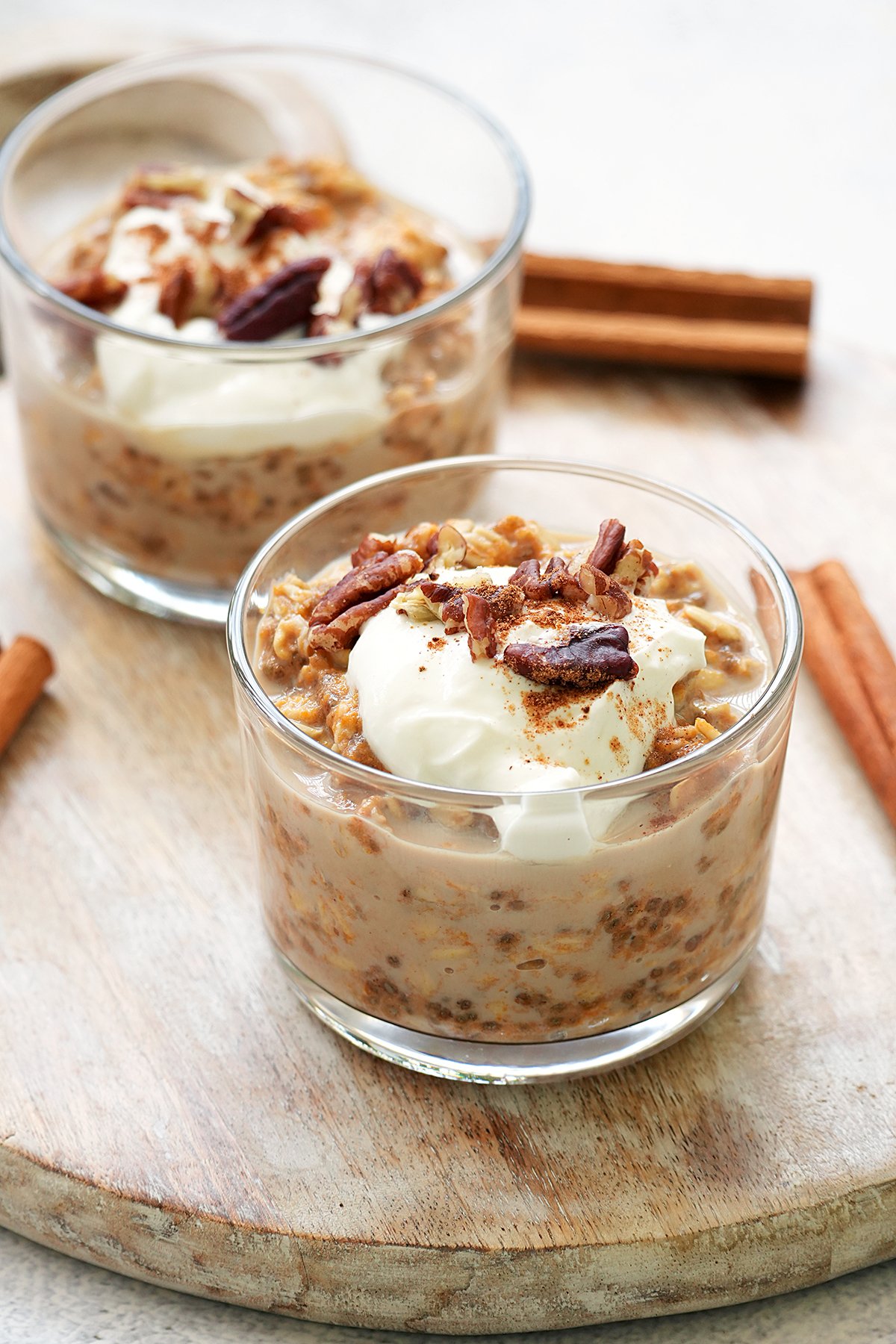
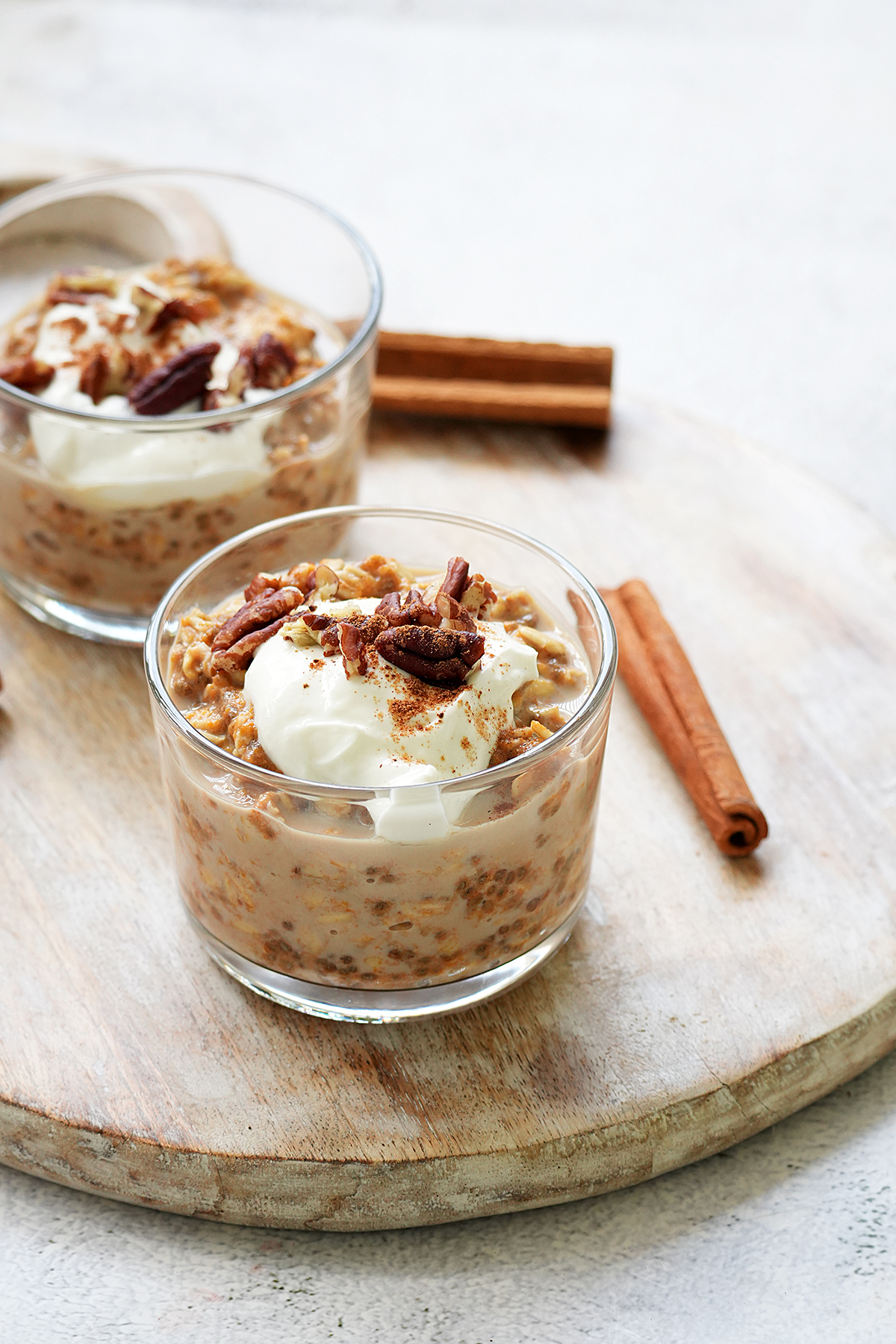
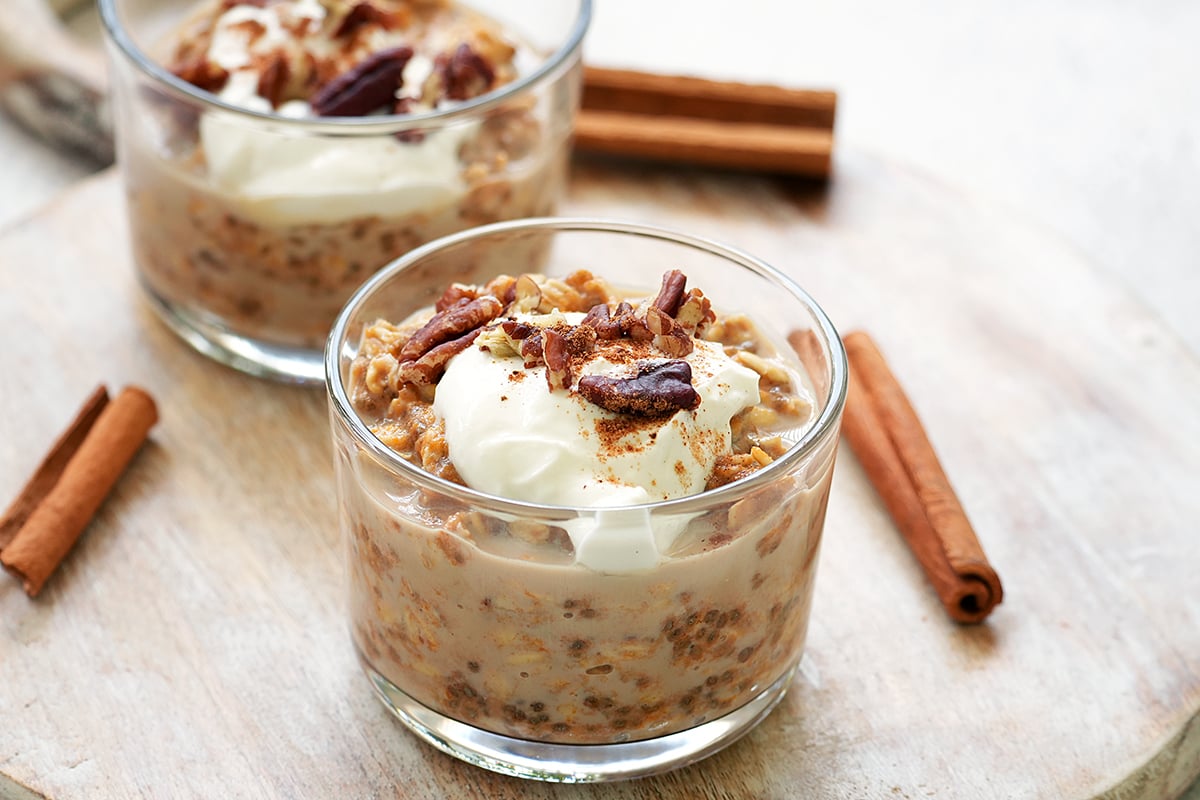
    Pumpkin pie overnight oats served in glass cups, topped with greek yogurt, pecans and pumpkin pie spice
    [feast_advanced_jump_to]

    What are Pumpkin Pie Overnight Oats?

    Overnight oats are one of the easy breakfast recipes made with healthy ingredients. It is one of the quick and no-cook breakfast recipes that can be flavored with various fruits and spices. Pumpkin pie overnight oats are basically a breakfast that feels like dessert, but in the healthiest way. Instead of cooking oats on the stovetop, you just need to mix all the ingredients and let them sit in the refrigerator overnight.

    What makes this recipe so special and perfect for the fall season is the pumpkin pie flavor. The combination of pumpkin puree and pumpkin pie spice blend makes the oatmeal taste just like a slice of pumpkin pie. It is warm, wholesome, and healthy.

    If you love cozy fall flavors, you might also enjoy my Pumpkin Chia Pudding, Sweet Potato Pie Overnight Oats, Roasted Sweet Potato and Apples, Persimmon Kale Salad, Hasselback Butternut Squash and Honey Sriracha Brussels Sprouts.

    Ingredients & Substitutions:

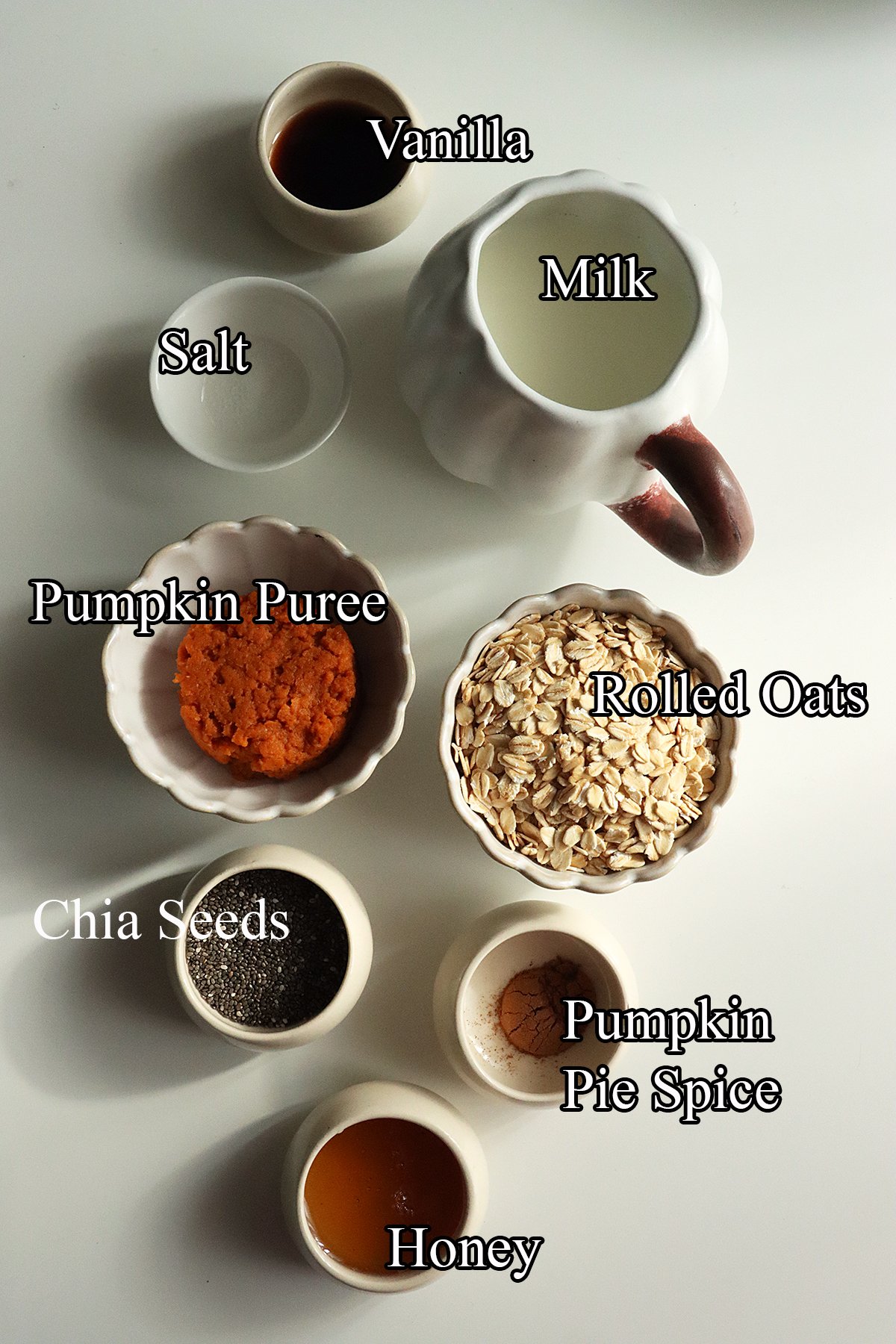
    Ingredients needed for Pumpkin pie overnight oats recipe

    Rolled Oats - Use a high-quality rolled oats for the best texture. They soften overnight but still hold a nice texture. You can also swap them with quick oats or instant oats, but the final oatmeal will have a softer and mushy texture. I haven't tried this recipe with steel-cut oats yet.

    Pumpkin Purée - You will need plain, unsweetened pumpkin purée, not pumpkin pumpkin pie filling. I have used canned puree in this recipe. If you can't find canned pumpkin, you can steam or roast fresh pumpkin and blend it to get a smooth puree.

    Chia Seeds - They add protein and make it filling. Use black or white chia seeds. You can skip it if you want.

    Milk - I have used dairy milk in this recipe. If you want to use non-dairy milk, you can use almond milk, soy milk, cashew oat milk, or coconut milk. Choose what you like. You can also replace it with yogurt to make it creamy.

    Honey - I have used honey to sweeten my overnight oats. You can also use maple syrup, which pairs well with pumpkin and fall flavors. Brown sugar works as well.

    Pumpkin Pie Spice - It is a simple spice blend made with cinnamon, ginger, nutmeg, cloves and allspice. You can use a store-bought pumpkin spice blend or homemade pumpkin pie spice. If you don't have it handy, replace it with ground cinnamon.

    Vanilla Extract - Adds a lovely flavor to the dish. If you are using unsweetened vanilla almond milk, you can skip this.

    Pumpkin pie overnight oats served in small glass cups and placed on a wooden board

    How to Make Pumpkin Overnight Oats

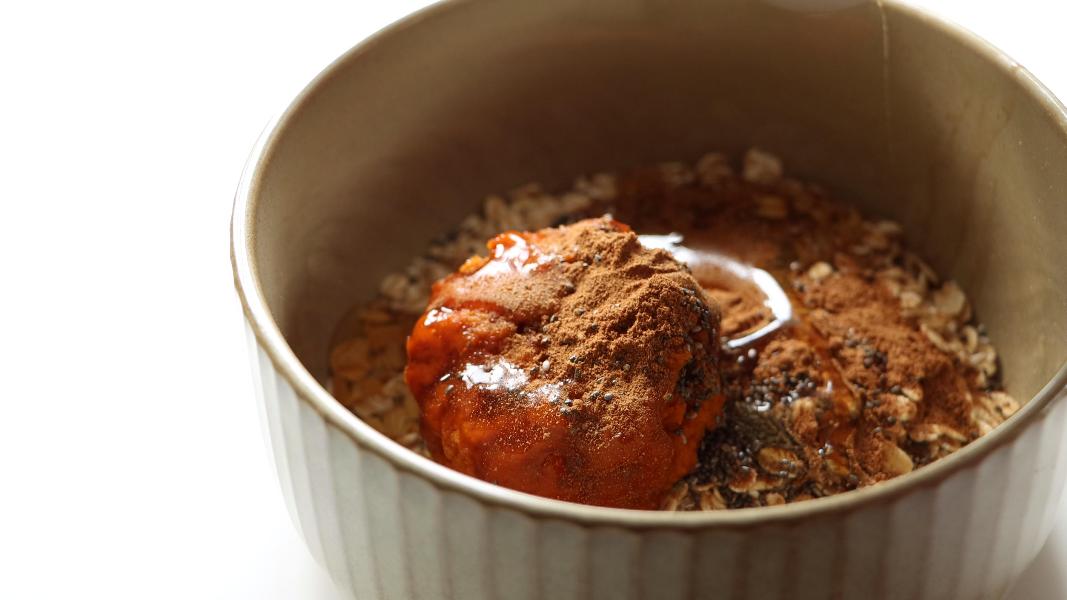
    ingredients are added to a ceramic mixing bowl to make Pumpkin pie overnight oats

    Add old-fashioned rolled oats, pumpkin puree, chia seeds, vanilla, salt, pumpkin pie spice and honey to a mixing bowl.

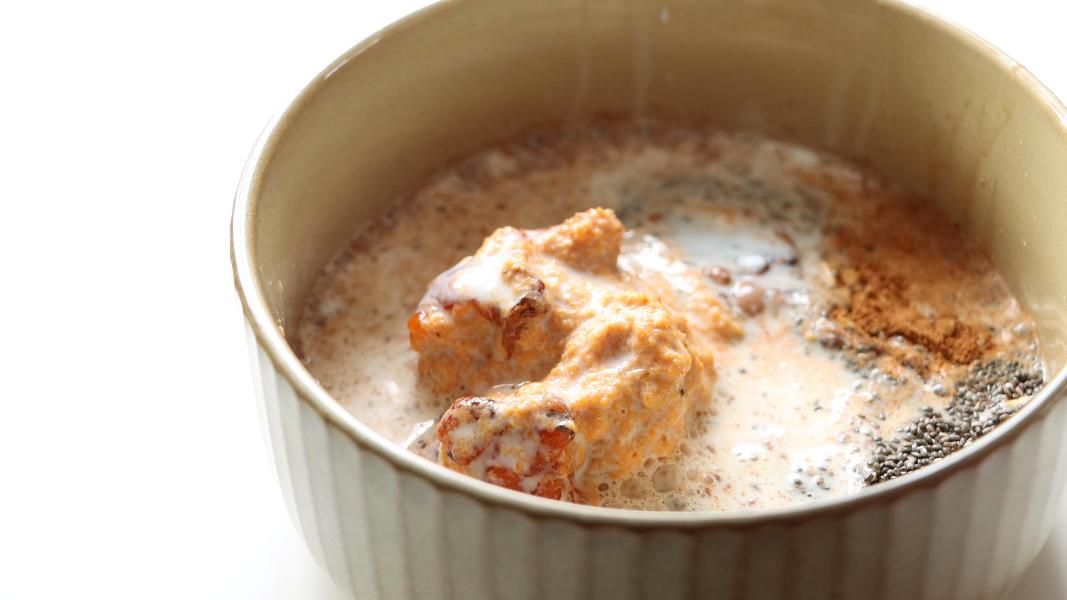
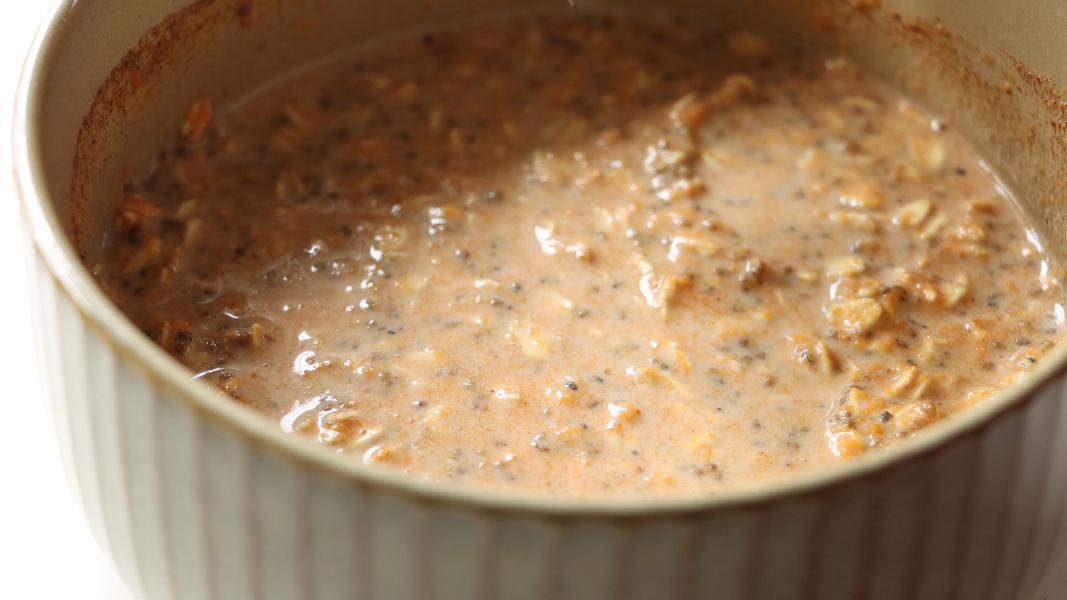
    Milk is added to rolled oats, pumpkin puree, chia seeds, honey and pumpkin spice

    Pour in the choice of milk and mix everything until well combined.

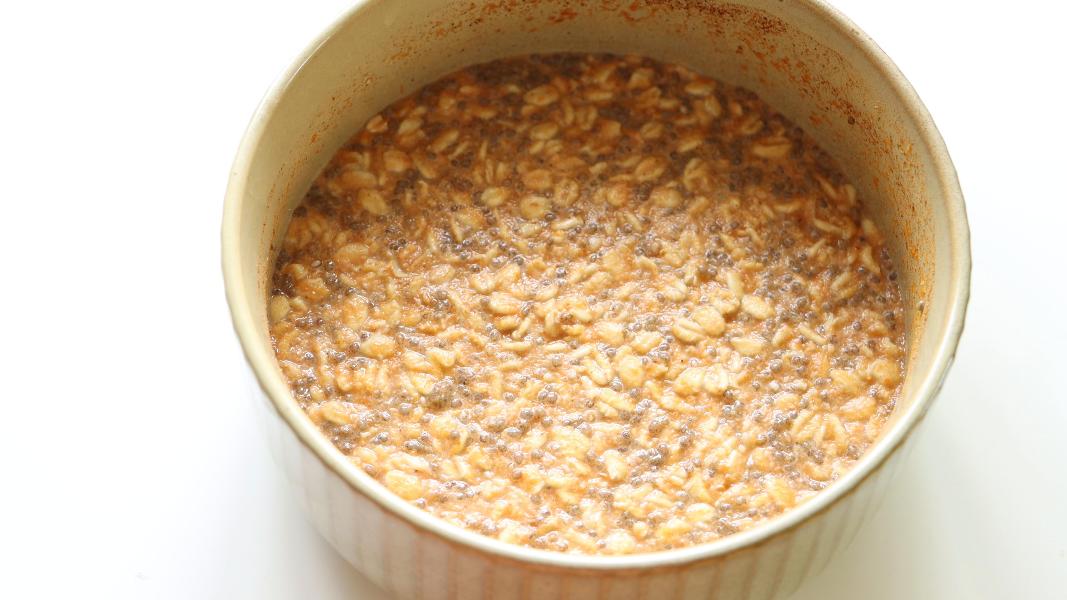
    Pumpkin pie overnight oats mixture is combined in a bowl

    Taste and add more sweetener if needed. Cover the bowl and let it sit in the refrigerator for at least 4 hours, or overnight for the best flavor and texture.

    Pumpkin pie overnight oats are soaked overnight

    In the morning, give the soaked oats a good stir. Add more milk or yogurt if want to make it thinner.

    Transfer to serving bowls or jars and top them with your favorite toppings such as granola, yogurt, whipped cream, nuts, or nut butters.

    Serve and enjoy!

    Tips & Notes:

    Make sure you use rolled oats/old-fashioned oats for the perfect texture.

    Use homemade pumpkin puree or canned pumpkin puree. Do not use the pumpkin pie filling, which has added sugar and spices.

    Taste the mixture before soaking and add more honey or maple syrup according to your taste. You can use any of your favorite sweeteners.

    The overnight oats will thicken as they sit. Stir it and add more milk before serving if needed.

    You can also stir in some yogurt or nut butters like almond butter or peanut butter before refrigerating for extra creaminess.

    Storage suggestions:

    It can be stored in the refrigerator for up to 3 days. Store it in jars or airtight containers for an easy grab-and-go breakfast. This recipe is perfect for meal prep. Freezing is not recommended.

    If you enjoy make-ahead breakfasts, you might also like my Raspberry Chia Pudding, Mango Chia Pudding, Mango Lassi Chia Pudding, and Orange Blueberry Muffins.

    Serving suggestions:

    Let the pumpkin overnight oats sit in the refrigerator overnight and serve it for breakfast the next morning. You can also serve it as a snack.

    I have added some greek yogurt on top for creaminess and extra protein. You can use any of your favorite toppings like crunchy granola, walnuts, pecans, chopped fruits, and berries.

    Sprinkle a little bit of cinnamon powder or pumpkin pie spice to make it more flavorful.

    Pumpkin pie overnight oats topped with yogurt and pecan nuts.

    More Breakfast Recipes:

    • Raspberry White Chocolate Muffins
    • Orange Creamsicle Chia Pudding
    • Persimmon Smoothie (Vegan)
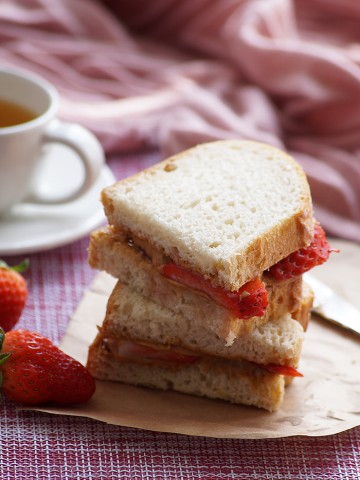
    • Peanut Butter Strawberry Sandwich Recipe + Video

    If you tried this Pumpkin Spice Overnight Oats Recipe or any other recipe on my blog please leave a 🌟 star rating and let me know how it went in the 📝 comments. Thanks for visiting my blog today!

    Print Recipe

    Pumpkin Pie Overnight Oats

    Pumpkin Pie Overnight Oats are a creamy, delicious, no-cook breakfast made with rolled oats, pumpkin puree, warm spices, and a touch of sweetness. It is a healthy and easy way to enjoy all the fall flavors for breakfast.
    Prep Time5 minutes mins
    Cook Time0 minutes mins
    Resting Time4 hours hrs
    Total Time4 hours hrs 5 minutes mins
    Course: Breakfast, Dessert, Snack
    Cuisine: American, International
    Keyword: fall recipes, overnight oats recipes, pumpkin pie overnight oats recipe, Thanksgiving Recipes
    Servings: 2
    Calories: 198kcal
    Author: Hari Chandana Ponnaluri

    Ingredients

    • ½ Cup Rolled Oatss
    • ¼ Cup Pumpkin Puree
    • 1 Tablespoon Chia Seeds
    • ½ Teaspoon Pumpkin Pie Spice
    • A Pinch of Salt
    • ½ Teaspoon Vanilla Extract
    • 1-2 Tablespoons Honey / Maple Syrup
    • ¾ Cup Milk
    • Yogurt for topping (optional)
    • Pecans or Walnuts for topping (optional)

    Instructions

    • Add old-fashioned rolled oats, pumpkin puree, chia seeds, vanilla, salt, pumpkin pie spice and honey to a mixing bowl.
    • Pour in the choice of milk and mix everything until well combined.
    • Taste and add more sweetener if needed. Cover the bowl and let it sit in the refrigerator for at least 4 hours, or overnight for the best flavor and texture.
    • In the morning, give the soaked oats a good stir. Add more milk or yogurt if you want to make it thinner.
    • Transfer to serving bowls or jars and top them with your favorite toppings such as granola, yogurt, whipped cream, nuts, or nut butters.
    • Serve and enjoy!

    Video

    Notes

    Make sure you use rolled oats/old-fashioned oats for the perfect texture.
    Use homemade pumpkin puree or canned pumpkin puree. Do not use the pumpkin pie filling, which has added sugar and spices.
    The overnight oats will thicken as they sit. Stir it and add more milk before serving if needed.

    Nutrition

    Calories: 198kcal | Carbohydrates: 32g | Protein: 7g | Fat: 5g | Saturated Fat: 2g | Polyunsaturated Fat: 2g | Monounsaturated Fat: 1g | Trans Fat: 0.1g | Cholesterol: 7mg | Sodium: 46mg | Potassium: 296mg | Fiber: 5g | Sugar: 14g | Vitamin A: 4861IU | Vitamin C: 2mg | Calcium: 167mg | Iron: 2mg

    Kerala Banana Chips

    August 28, 2025

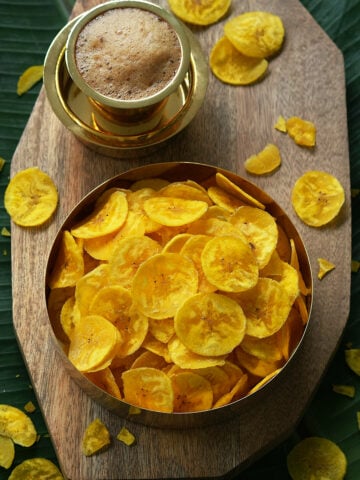
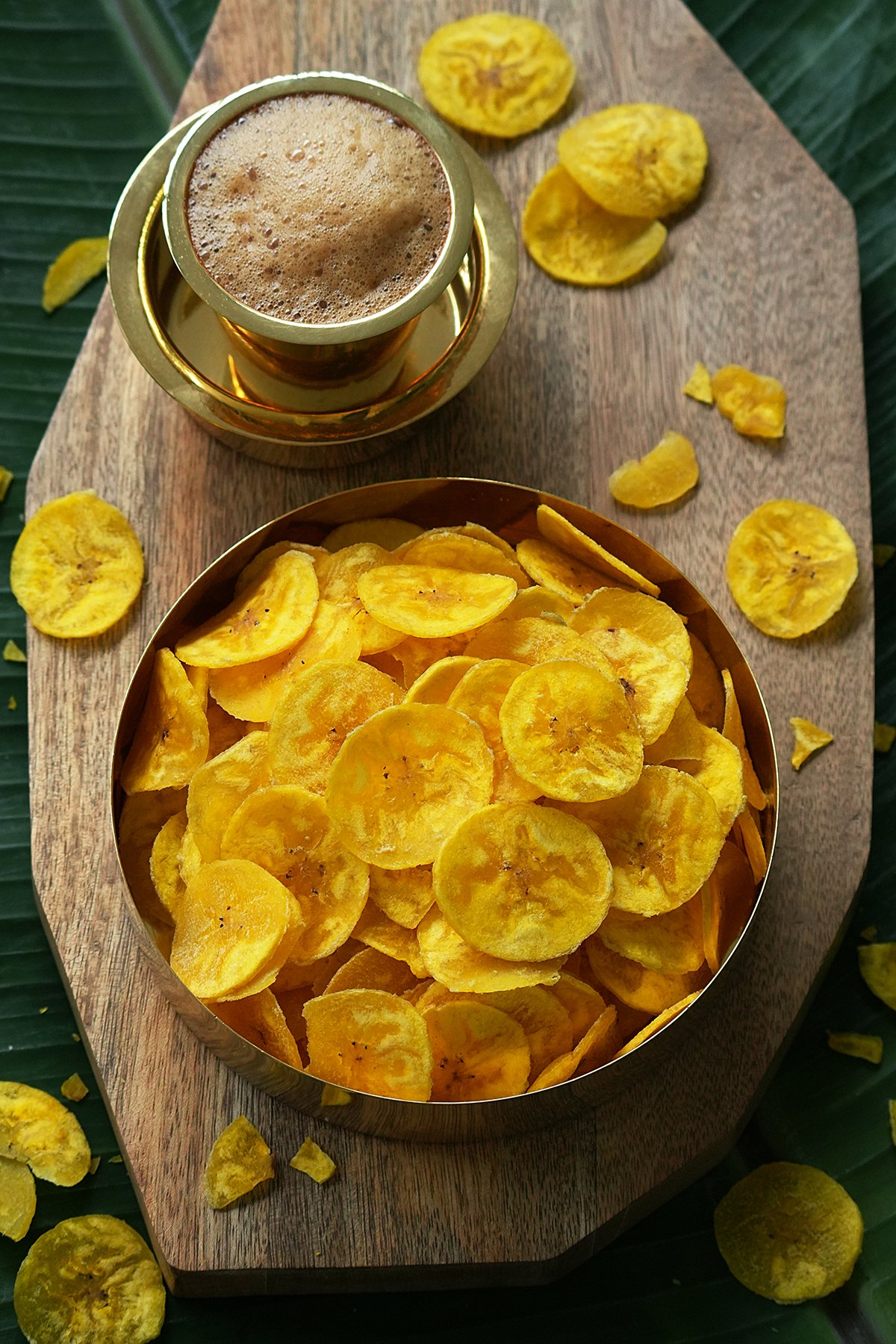
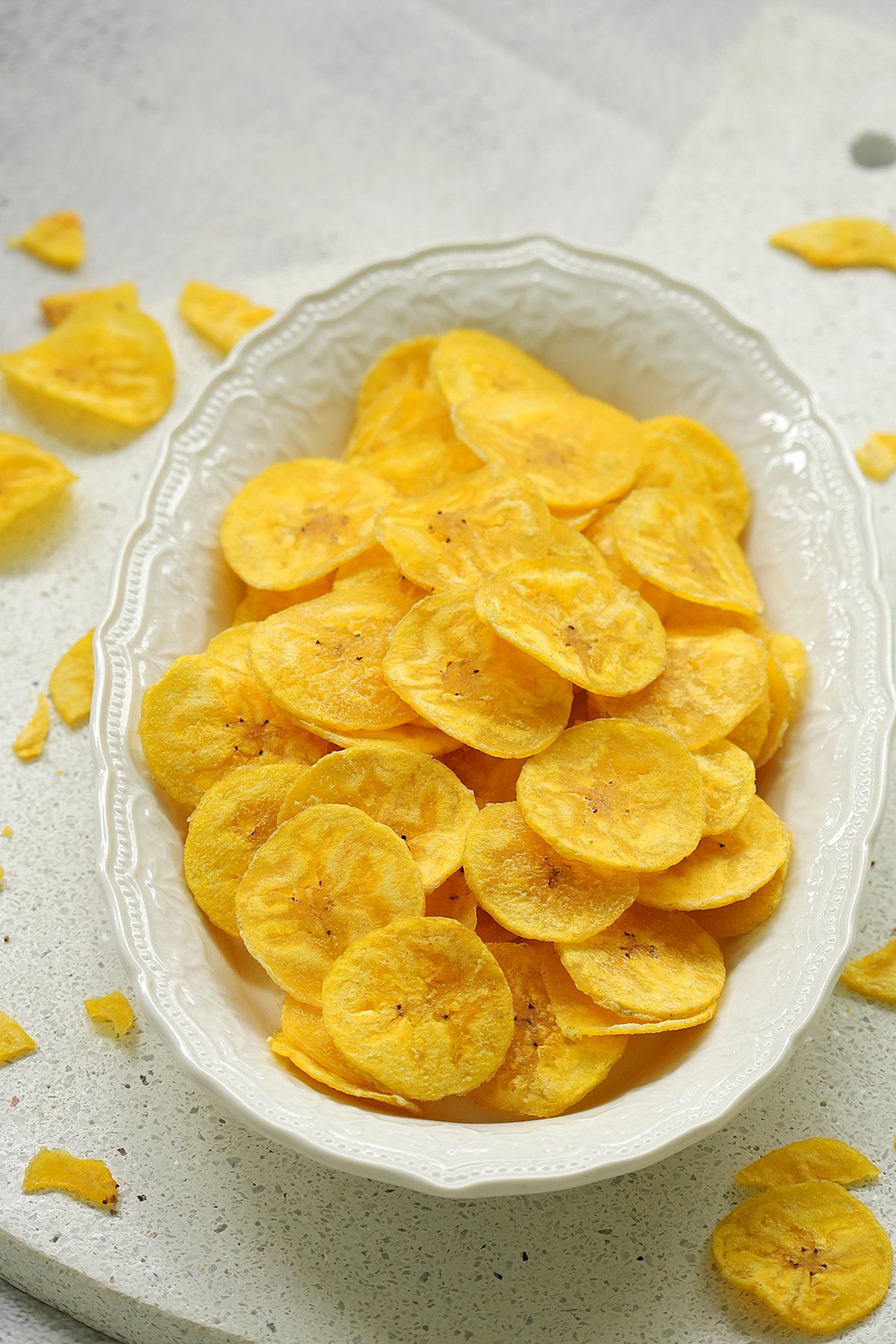
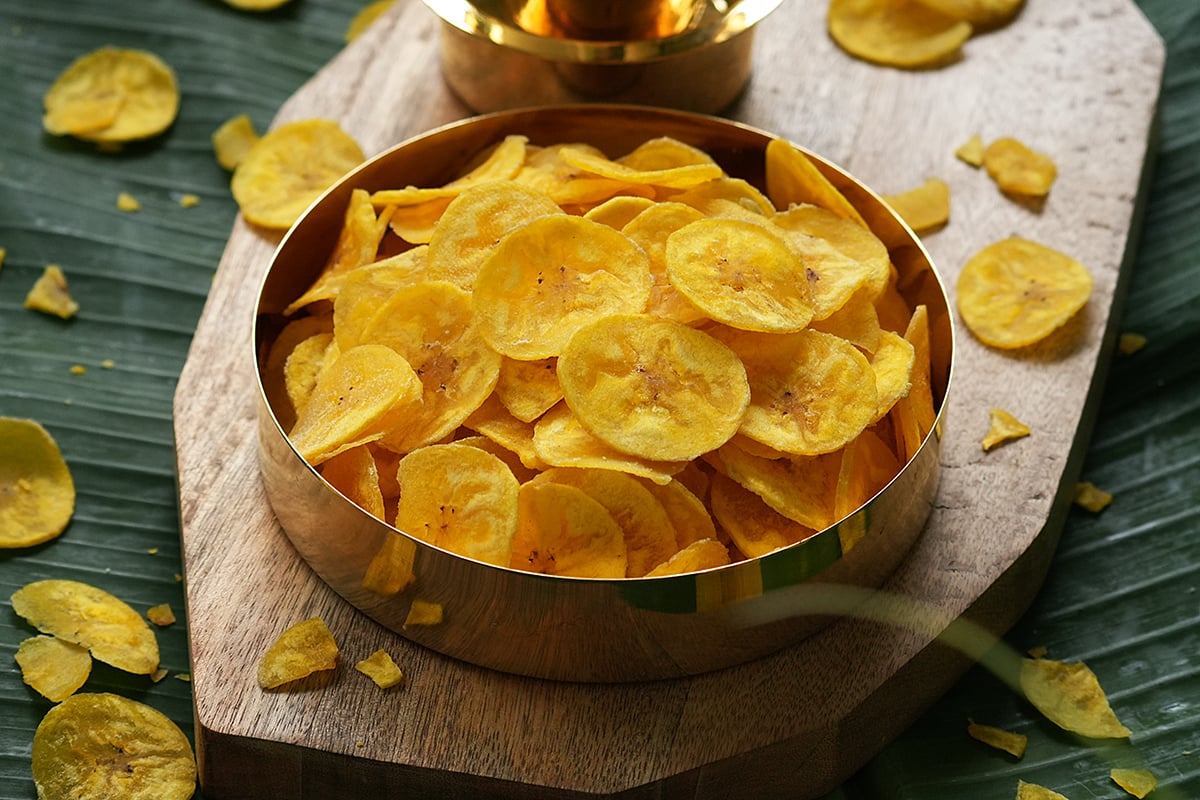
    Kerala Banana Chips (Upperi) are a crunchy, classic savory snack made with raw bananas, turmeric powder and salt. These are simple, addictive, lightly salted, and perfect with a cup of coffee or tea.

    [feast_advanced_jump_to]

    What are Kerala Banana Chips?

    Banana Chips are a classic Kerala savory snack made with raw bananas, salt and turmeric powder. These are also known as Ethakka Upperi or Kaya Varuthathu locally in Kerala. These are made with a special variety of banana called Nendran, a firm, starchy raw banana that holds its shape well when fried. Nendran bananas have a unique texture and flavor, which makes the chips extra crunchy and flavorful.

    These nendran banana chips are a staple in every Kerala household. These are very easy to make at home with minimal ingredients. The raw bananas are peeled, sliced, and fried in oil. A touch of turmeric salt water is sprinkled into the oil while frying to give the chips their lovely golden color and mild saltiness.

    If you are looking for more South Indian fried snacks, you can check Ribbon Pakoda, Butter Murukku, Chegodilu, and Garlic Karasev.

    Ingredients & Substitutions

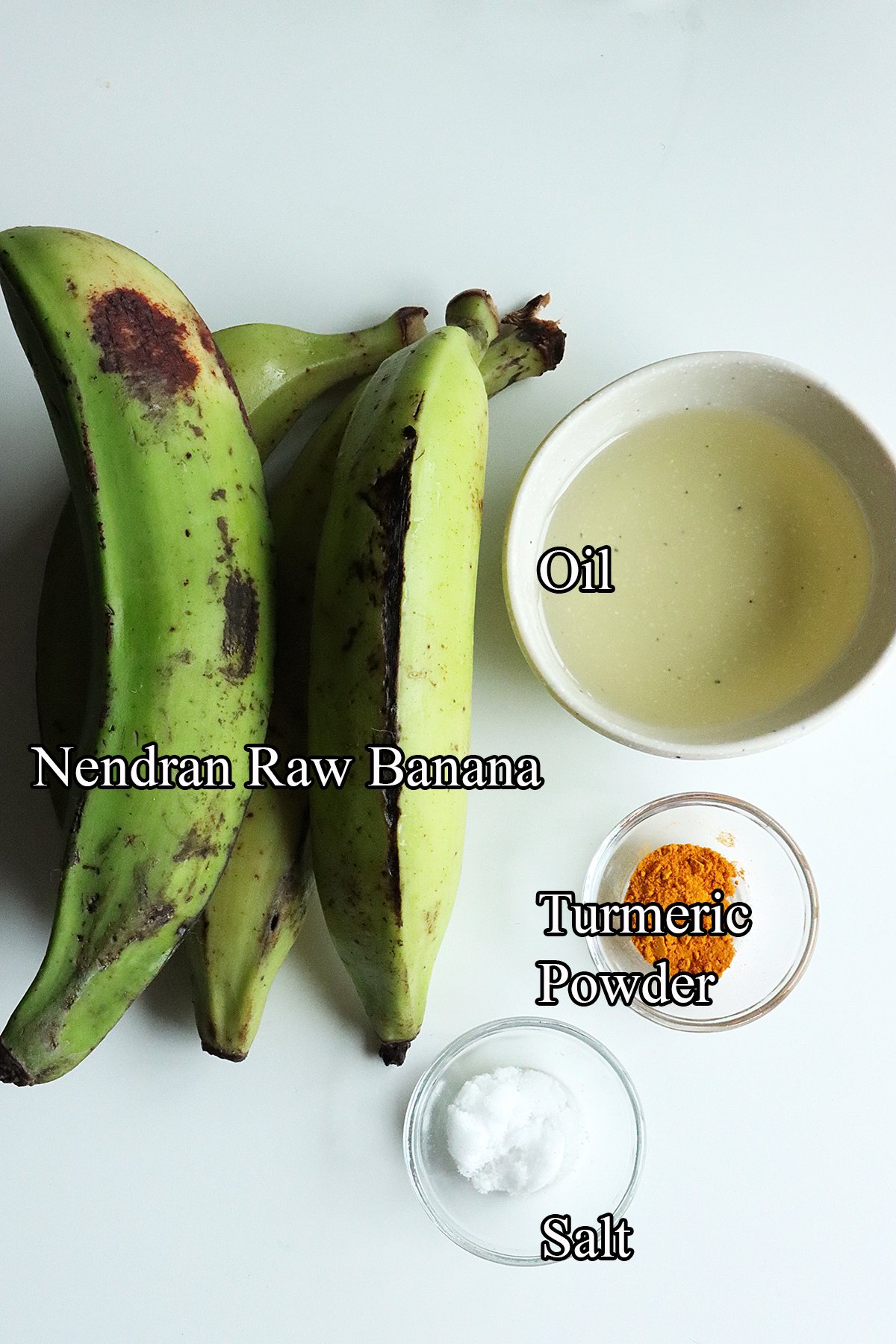
    Raw Bananas - Traditionally, nendran variety raw bananas are used to make the banana chips. These can be replaced with regular raw bananas / raw plantains, but the texture and flavor won't be the same.

    Oil - Use a good quality coconut oil for frying, it gives the chips their authentic flavor. Any neutral oil would work as well.

    Turmeric Powder & Salt - Both are mixed with water and added while frying the chips for the lovely yellow color and saltiness.

    How to Make Kerala Banana Chips

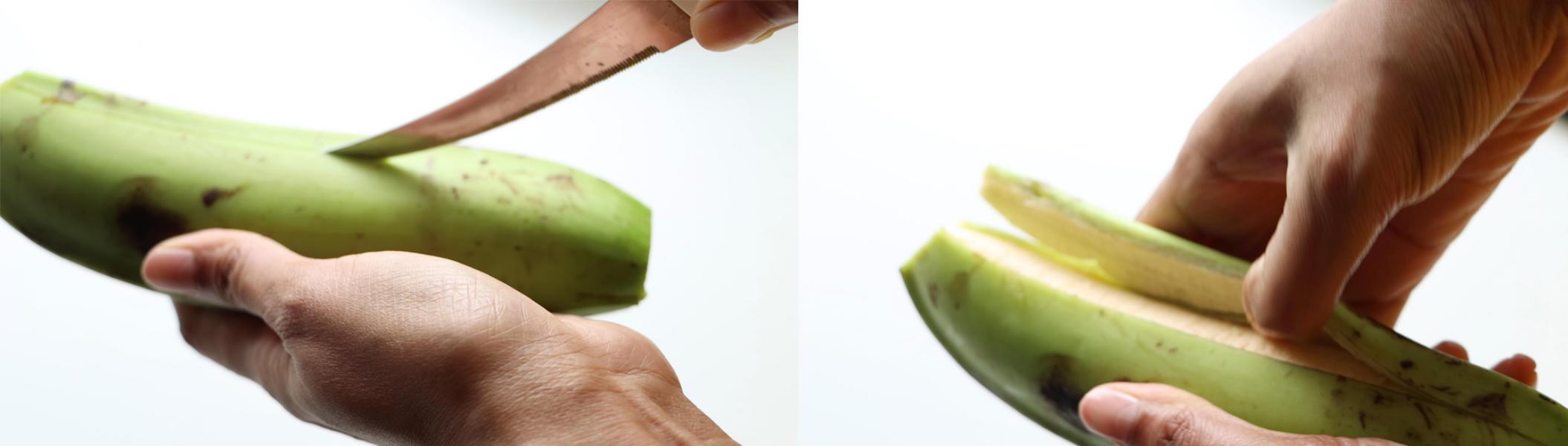
    Wash and trim the ends of the raw bananas. Make light slits on the skin, without cutting too deeply. Remove the peel using your hands. Lightly grease your hands with oil to prevent darkening your hands.

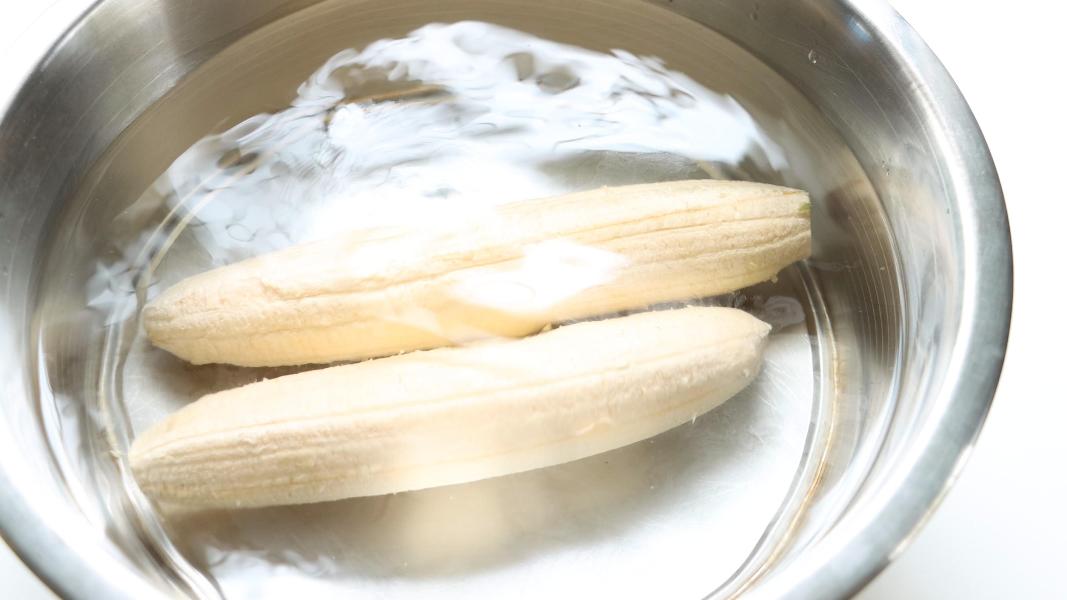
    Soak the peeled bananas in a bowl of water for about 15 minutes.

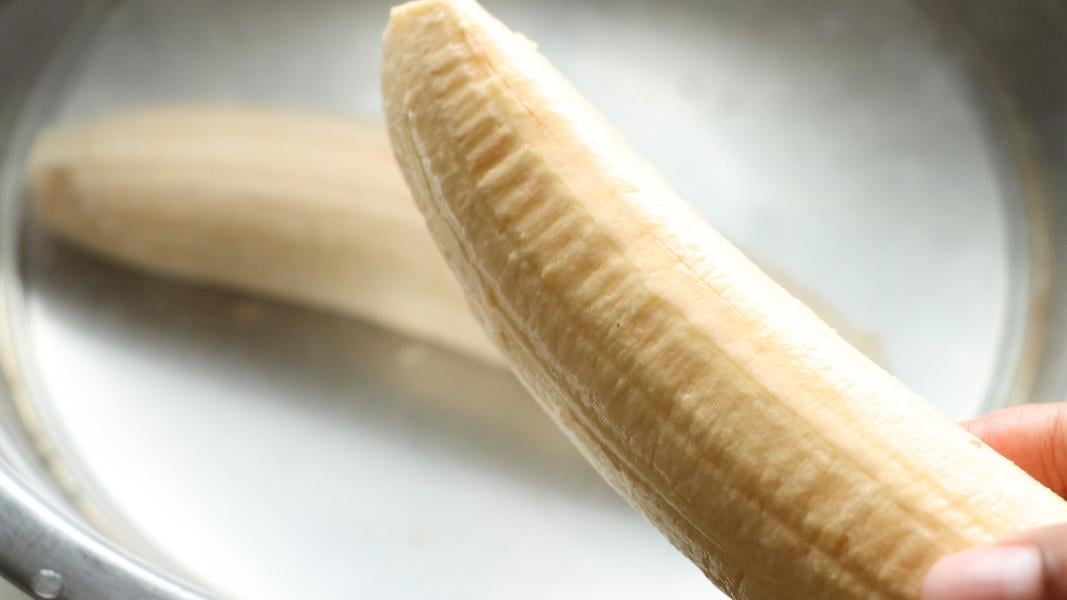
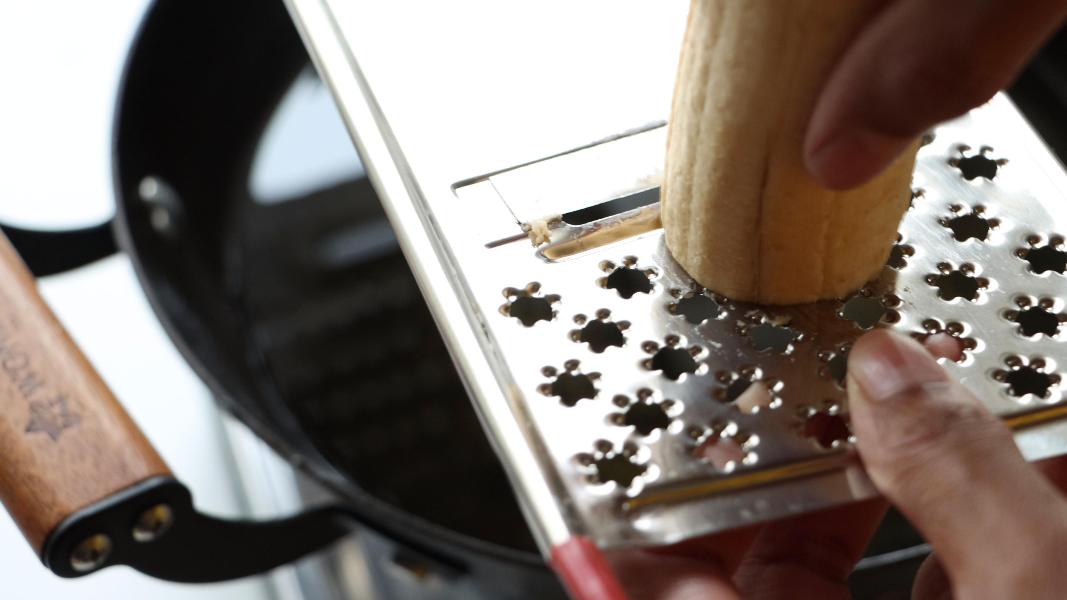
    After 15 minutes, gently scrape the bananas to smooth the surface.

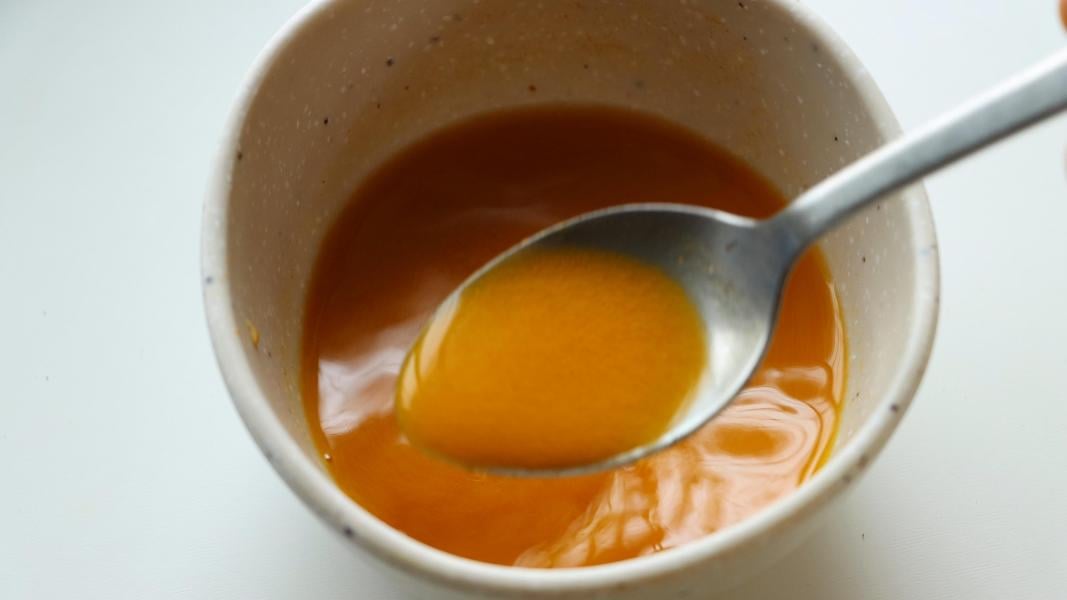
    Mix water, turmeric powder and salt in a small bowl and keep it aside.

    Heat oil in a deep frying pan over medium flame.

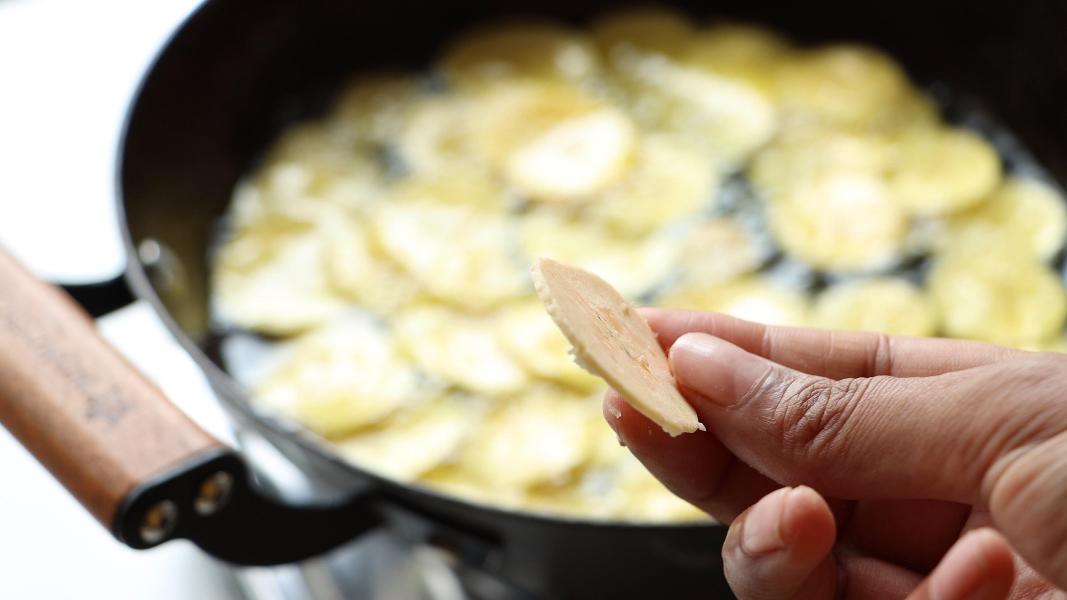
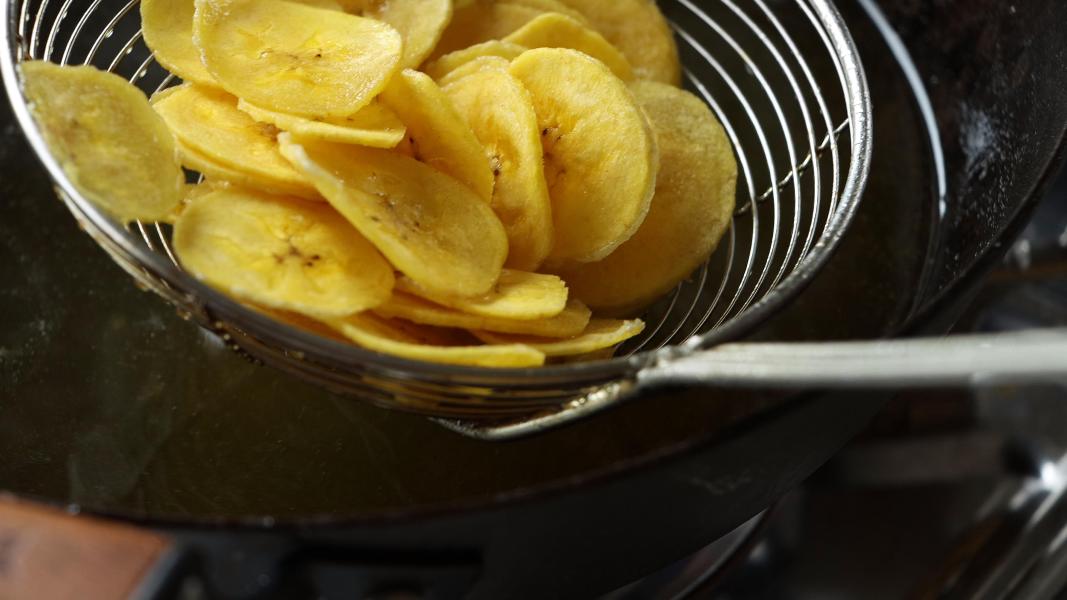
    Slice the raw banana directly into the hot oil using a slicer.

    This is the thickness of the slices.

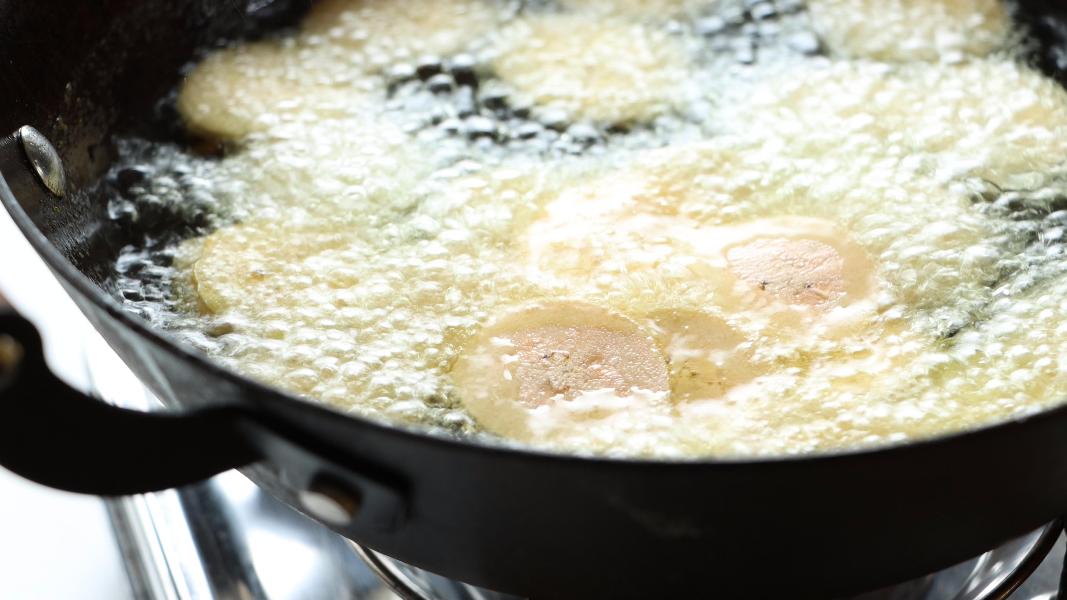
    Fry the chips on a medium flame, stirring occasionally, until they start turning crisp.

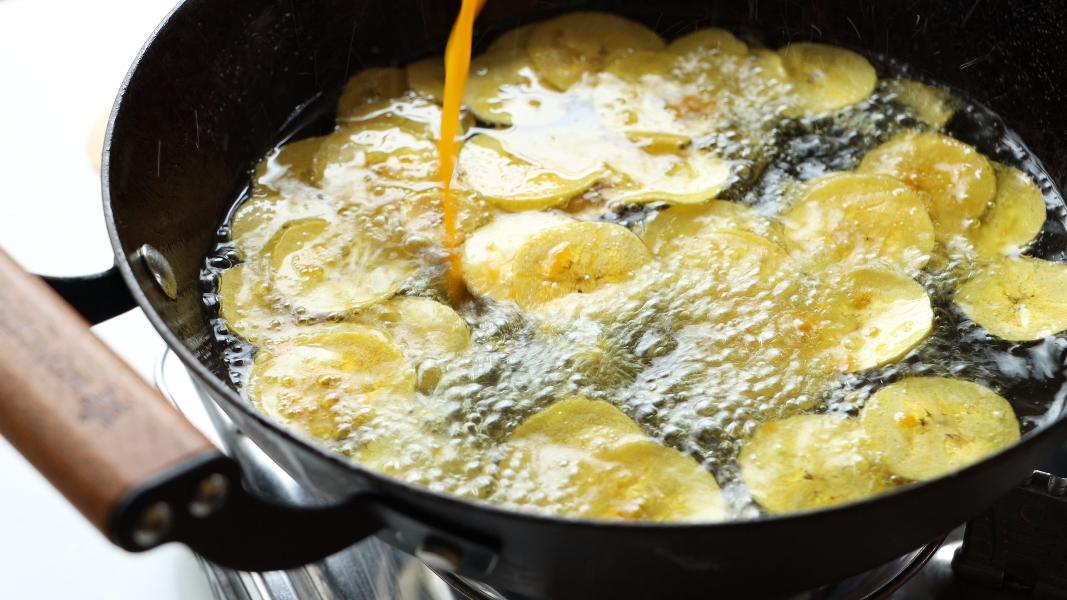
    Carefully add 1-2 teaspoons of turmeric water to the hot oil. I used 1.5 teaspoons of turmeric powder for every half banana.

    Continue frying until the sizzling sound reduces and the chips turn crunchy. Drain on paper towels to remove excess oil.

    Tips & Notes:

    Use firm green raw nendran bananas for the best results. If they are even slightly ripe, the chips won't turn out as crisp.

    Keep the flame on medium. If the oil is too hot, the chips brown quickly but stay soft. If it's not hot enough, they soak up oil.

    Slicing the bananas directly into hot oil helps even frying and prevents the slices from sticking together. If you are a beginner or scared to slice them directly into hot oil, slice them first and drop them into the oil.

    Add the turmeric solution carefully. It will splutter a bit, but it gives the chips their color.

    Do not overcrowd the pan. Fry in small batches for even crispiness. I fry half of the banana each time.

    The sizzling (shh) sound will reduce once the chips are fried well. That is when you have to remove them from the oil.

    Storage suggestions:

    Let the chips cool completely before storing, otherwise they will turn soft.

    Store them in a dry, clean and airtight container for 2-3 weeks.

    Serving suggestions:

    Kerala banana chips are best enjoyed with a hot cup of filter coffee or tea.

    They are an essential part of Onam Sadya, along with other sadya dishes like palada payasam, varutharacha sambar, moru curry and kadumanga achar.

    These nendran chips stay fresh for weeks and are perfect to pack for road trips.

    More Kerala Recipes:

    • Palada Payasam (Palada Pradhaman)
    • kerala style instant kadumanga achar served in a glass bowl and placed on a banana leaf
      Kadumanga Achar (Kerala style Instant Mango Pickle)
    • Instant Pot Avial (Kerala Mixed Vegetable Curry)
    • Pazham Pori / Ethakka Appam ~ Ripe Plantain Fritters Recipe

    If you tried this Kerala Banana Chips Recipe or any other recipe on my blog please leave a 🌟 star rating and let me know how it went in the 📝 comments. Thanks for visiting my blog today!

    Print Recipe

    Kerala Banana Chips Recipe

    Kerala Banana Chips (Upperi) are a crunchy, classic savory snack made with raw bananas, turmeric powder and salt. These are simple, addictive, lightly salted, and perfect with a cup of tea.
    Prep Time15 minutes mins
    Cook Time30 minutes mins
    Total Time45 minutes mins
    Course: Snack
    Cuisine: Indian, Kerala, South Indian
    Keyword: kerala banana chips recipe, kerala sadya recipes, nendran chips recipe, Onam Sadya Recipes
    Servings: 8
    Calories: 197kcal
    Author: Hari Chandana Ponnaluri

    Ingredients

    • ¼ Cup Water
    • ½ Teaspoon Turmeric Powder
    • 1 Teaspoon Salt
    • 4 Nendran Raw Bananas
    • Oil for deep frying

    Instructions

    • Wash and trim the ends of the raw bananas. Make light slits on the skin, without cutting too deeply. Remove the peel using your hands. Lightly grease your hands with oil to prevent darkening your hands.
    • Soak the peeled bananas in a bowl of water for about 15 minutes.
    • After 15 minutes, gently scrape the bananas to smooth the surface.
    • Mix water, turmeric powder and salt in a small bowl and keep it aside.
    • Heat oil in a deep frying pan over medium flame.
    • Slice the raw banana directly into the hot oil using a slicer.
    • Fry the chips on a medium flame, stirring occasionally, until they start turning crisp.
    • Carefully add 1-2 teaspoons of turmeric water to the hot oil. I used 1.5 teaspoons of turmeric powder for every half banana.
    • Continue frying until the sizzling sound reduces and the chips turn crunchy.
    • Drain on paper towels to remove excess oil.

    Video

    Notes

    Use firm green raw nendran bananas for the best results. If they are even slightly ripe, the chips won't turn out as crisp.
    Keep the flame on medium. If the oil is too hot, the chips brown quickly but stay soft. If it’s not hot enough, they soak up oil.

    Nutrition

    Calories: 197kcal | Carbohydrates: 33g | Protein: 1g | Fat: 7g | Saturated Fat: 1g | Polyunsaturated Fat: 0.3g | Monounsaturated Fat: 6g | Sodium: 293mg | Potassium: 389mg | Fiber: 2g | Sugar: 2g | Vitamin C: 18mg | Calcium: 2mg | Iron: 1mg

    Varutharacha Sambar

    August 26, 2025

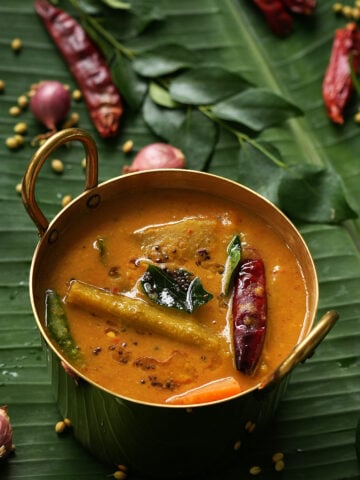
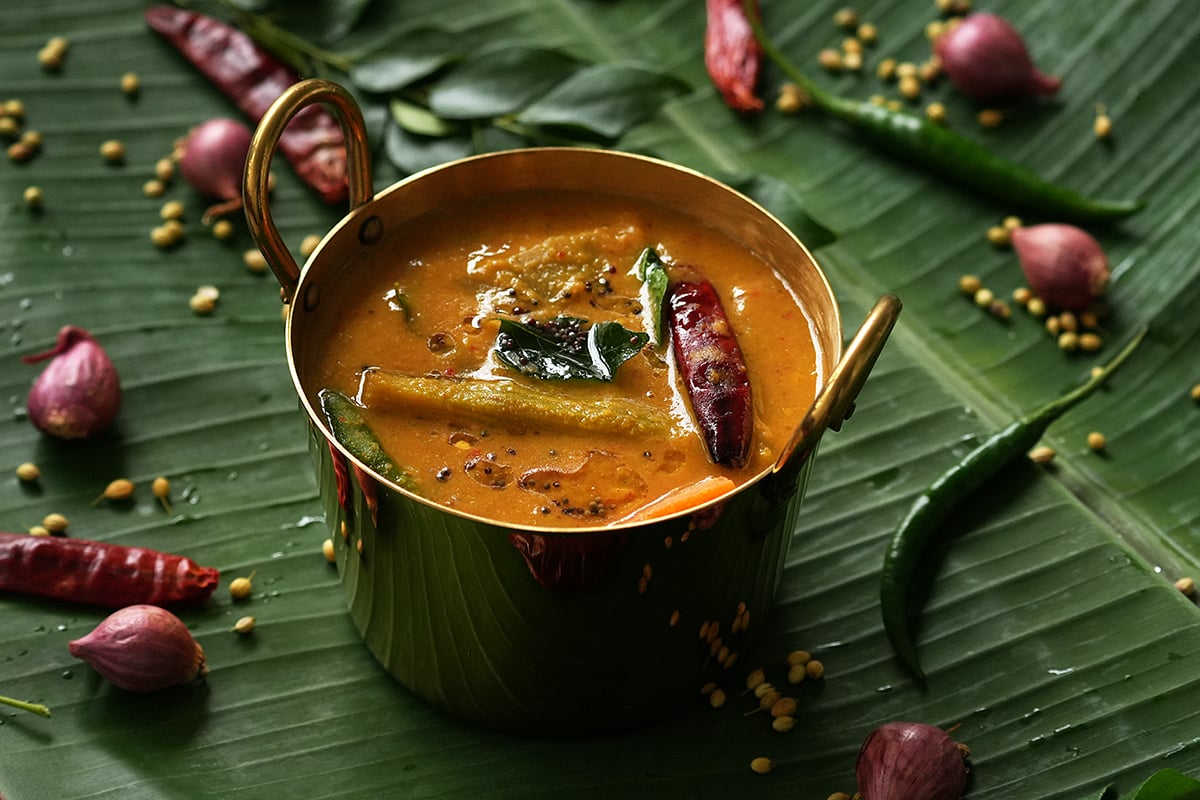
    Varutharacha Sambar is a classic Kerala-style lentil dish made with a freshly roasted coconut-spice paste and a mix of vegetables. It is hearty, wholesome, and full of flavor, and a star dish in the Onam Sadya.

    [feast_advanced_jump_to]

    What is Varutharacha Sambar?

    Varutharacha Sambar is a traditional Kerala lentil-based side dish made with a freshly roasted and ground spice-coconut paste and loads of mixed vegetables. The word "Varutharacha" literally means "roasted and ground". which perfectly describes the dish. This Kerala-style sambar is different from our regular sambar that uses sambar powder, this version gets its flavor from spices and coconut that are roasted until golden and ground into an aromatic paste.

    This sambar is a must-have dish in many Onam Sadya feasts and special occasions in Kerala. It is typically made with a mix of vegetables like drumstick, ask gourd, carrot, potato, beans, tomato and shallots. The roasted coconut paste is stirred in at the end, which gives it its signature thick texture and bold flavor. The consistency of the sambar will be thicker than the regular sambars, such as Raw Mango Sambar, Keerai Sambar, and Kathirikai Sambar.

    In a traditional Kerala Sadya (vegetarian feast), Varutharacha Sambar is served on the banana leaf alongside rice and other classics like olan, kalan, avial, inji puli, instant mango pickle, and moru curry.

    Ingredients & Substitutions

    Toor Dal - Also known as pigeon pea lentils. Toor dal is the base of most sambar recipes. It gives the sambar its thickness and protein. You can substitute it with masoor dal or moong dal, but the flavor won't be the same.

    Mixed Vegetables - Traditionally, a mix of vegetables is used to make this sambar. I have used ash gourd (white pumpkin), carrot, potato, raw banana, shallots, green beans, tomato, drumstick and brinjal. You can also use yam, cucumber, okra or any of your favorite mix of vegetables to make it wholesome.

    Tamarind - It adds the sourness to the sambar. You can also use tamarind paste.

    Coconut - Use fresh coconut for the best results. You can also use frozen coconut if you don't have fresh one, thaw it before roasting.

    Spices - You will need coriander seeds and fenugreek seeds for the masala paste and mustard seeds for the seasoning. All are essential.

    Red Chilies - They add the heat to the sambar. If you don't have red chillies, try replacing them by adding some chilli powder in the sambar.

    Curry Leaves - Adds a wonderful South Indian touch. You can also use frozen or dried curry leaves. Do not skip them.

    Coconut Oil - Coconut oil is used for the best, authentic flavor. You can also use any neutral oil if you don't have coconut oil handy.

    Variations:

    Varutharacha Sambar usually uses a mix of many vegetables, especially when making during festivals like Onam or Vishu. You can also try it with a single vegetable instead of mixed vegetables.

    Roast few shallots along with spices and coconut for a different taste.

    How to Make Varutharacha Sambar

    Soak tamarind in hot water for about 15 minutes. Once it is soft and soaked, squeeze well to extract. Keep it aside until use.

    Wash ½ cup of toor dal with plenty of water and rinse. Add 1.5 cups of water, turmeric powder and ½ teaspoon of coconut to the washed lentils. Pressure cook it for 3-4 whistles. When the pressure is released naturally, open the lid and mash the dal until smooth. Keep it aside.

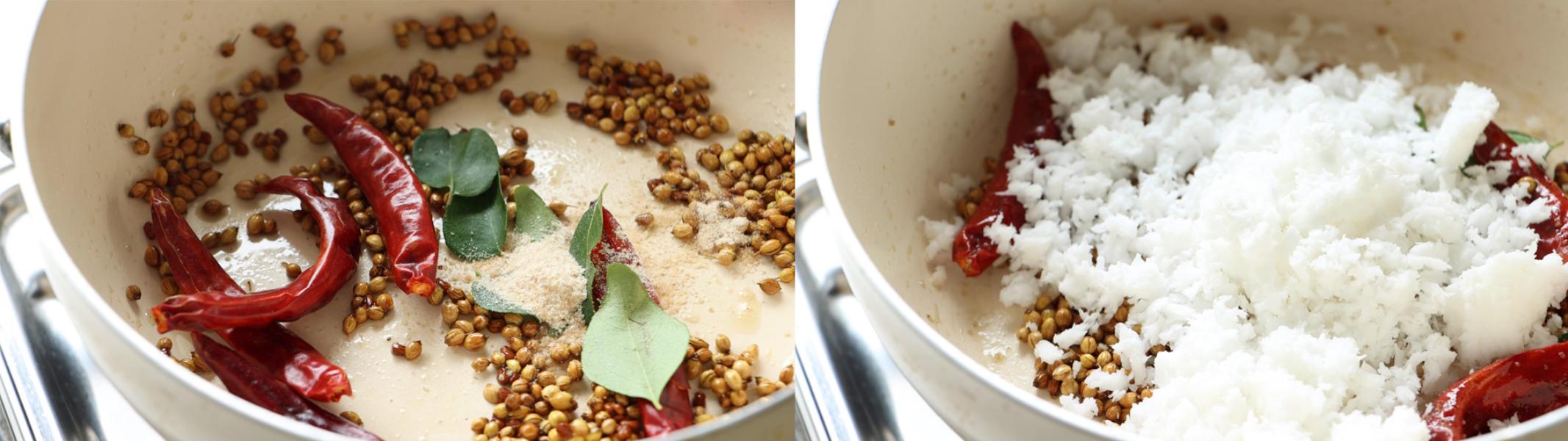
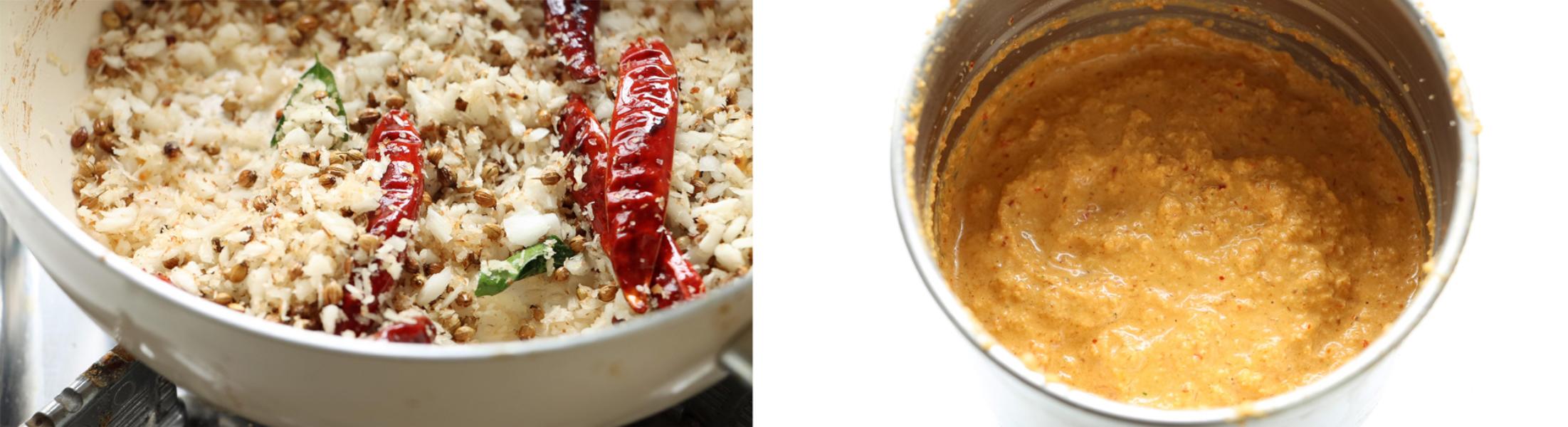
    To prepare the masala paste, heat a pan with ½ tablespoon of coconut oil. Add coriander seeds and fenugreek seeds and roast them until they are browned. Add dry red chillies, few curry leaves and hing to the roasted spices and give it a mix. Add grated fresh coconut.

    Roast the coconut with other spices over a low heat until it is golden brown. Remove it from the flame and let it cool down a bit. Transfer the roasted spices-coconut mixture to a blender jar or mixie and grind it to a smooth paste using a little bit of water. Keep it aside until use.

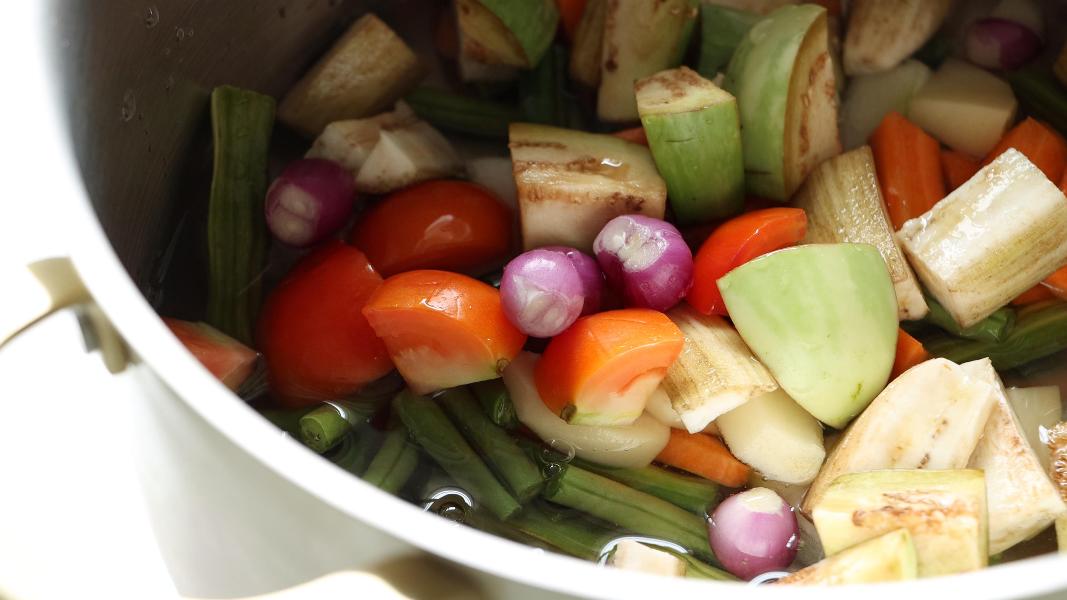
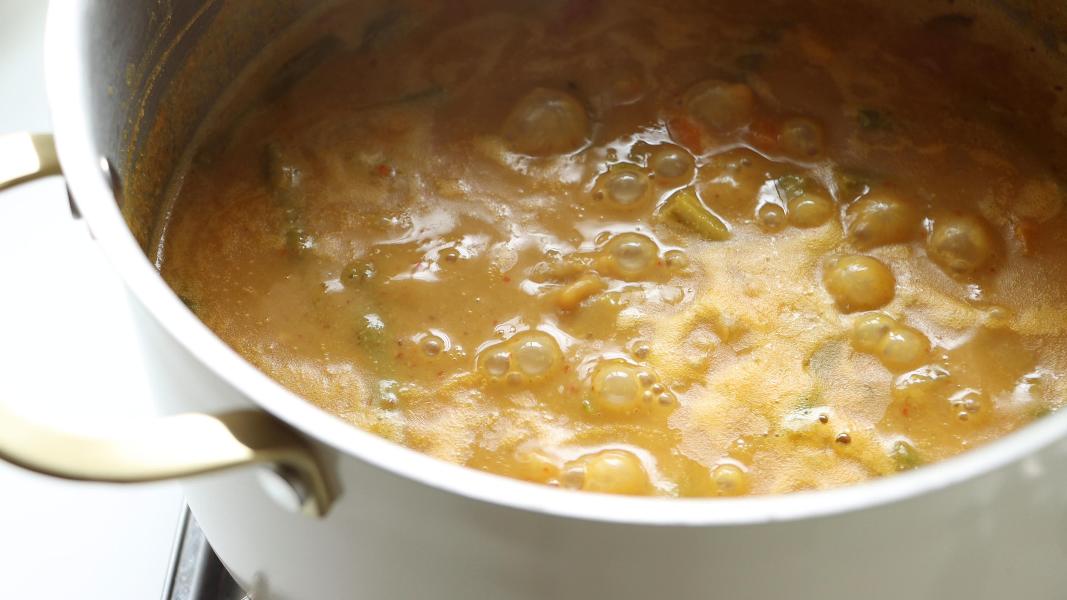
    Add all the chopped vegetables to a large vessel. Add enough water to cover the vegetables. Add salt and turmeric powder and mix well. Cover the pot with a lid and let it cook until the vegetables are soft.

    Make sure the vegetables are cooked and fork-tender.

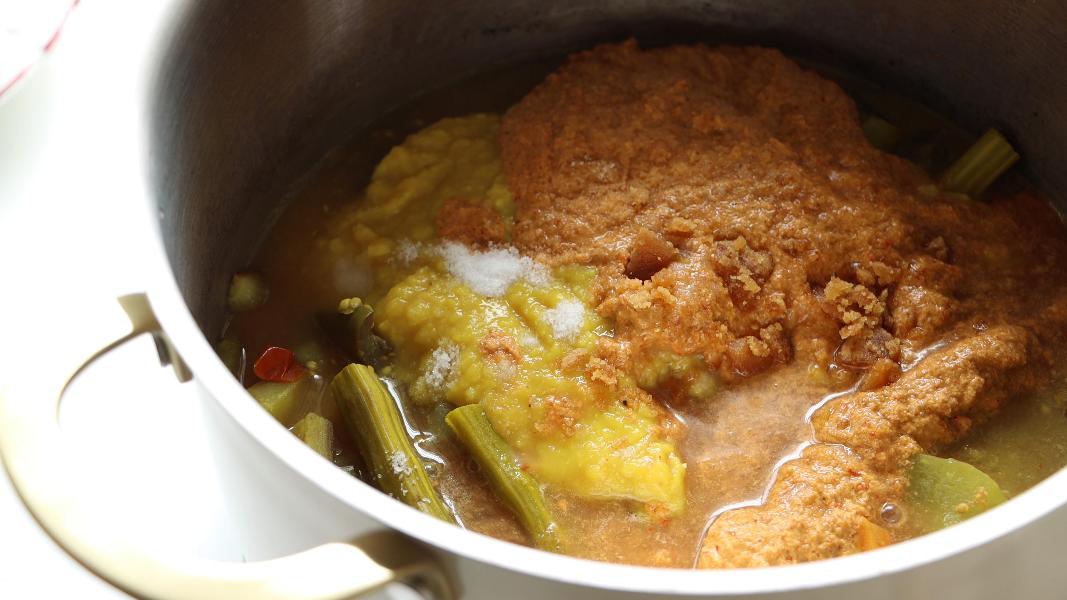
    Once the vegetables are cooked, add the cooked dal, ground coconut paste, tamarind extract, salt and jaggery to the pot. Mix well.

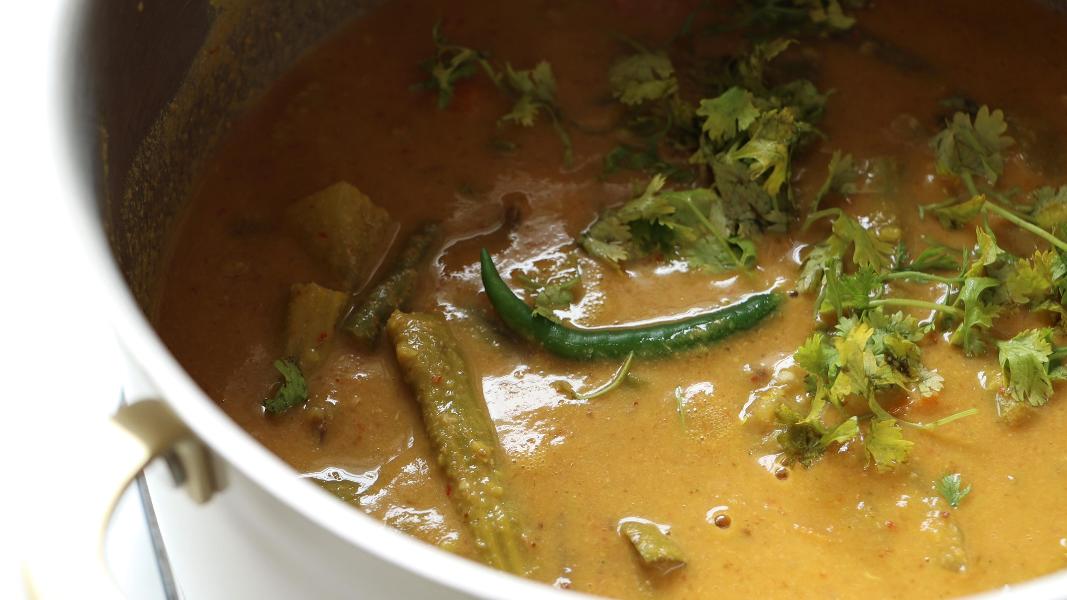
    Adjust the consistency by adding more water. Add green chili and cilantro/coriander leaves and mix well.

    Let the sambar boil for 5-10 minutes and remove it from the flame.

    For the seasoning, heat a tablespoon of coconut oil in a small pan. Add mustard seeds, red chili and curry leaves. Let them splutter. Pour it over the simmered sambar and mix until combined. Serve hot with rice.

    Tips & Notes:

    • Roast the spices on a medium-low flame and make sure not to burn them.
    • Fresh coconut gives the best taste. Frozen coconut can be used if fresh coconut is not available, but thaw it completely before roasting.
    • If you are unsure about the tamarind quantity, start with a little and adjust accordingly.
    • Avoid using vegetables like cabbage and beetroot.
    • Mash the cooked dal well before adding it to the sambar for a smooth texture.
    • Varutharacha sambar is usually a little thicker than regular sambars. Adjust water to get the right consistency.

    Storage suggestions:

    Consume it within the same day. If you want to store it for longer, transfer it to an airtight container and keep it in the refrigerator for 2 days.

    Serving suggestions:

    Varutharacha Sambar tastes best when served hot. Serve it with hot steamed rice with a side of your favorite curry like Vazhakkai Podimas, Mathanga Thoran, and Chama Dumpa Fry. A drizzle of ghee on top makes it extra delicious and hearty.

    This Kerala sambar with coconut can also be served with idli, dosa, pongal or uthappam.

    More Kerala Recipes:

    • Mambazha Pulissery (Kerala Style Mango Curry)
    • Vendakka Thoran Recipe - Kerala Style Okra Stir Fry Recipe - Onam Sadya Recipes
    • kerala style instant kadumanga achar served in a glass bowl and placed on a banana leaf
      Kadumanga Achar (Kerala style Instant Mango Pickle)
    • Pazham Pori / Ethakka Appam ~ Ripe Plantain Fritters Recipe

    If you tried this Varutharacha Sambar Recipe or any other recipe on my blog please leave a 🌟 star rating and let me know how it went in the 📝 comments. Thanks for visiting my blog today!

    Print Recipe

    Varutharacha Sambar

    Varutharacha Sambar is a classic Kerala-style lentil dish made with a freshly roasted coconut-spice paste and a mix of vegetables. It is hearty, wholesome, and full of flavor, and a star dish in the Onam Sadya.
    Prep Time15 minutes mins
    Cook Time30 minutes mins
    Total Time45 minutes mins
    Course: Side Dish
    Cuisine: Indian, Kerala, South Indian
    Keyword: kerala sadya recipes, Onam Sadya Recipes, varutharacha sambar
    Servings: 4
    Calories: 277kcal
    Author: Hari Chandana Ponnaluri

    Ingredients

    • ½ Cup Toor Dal
    • 4 Cups Mixed Vegetables (1 Carrot, 1 Tomato, 1 small Potato, 2 small Eggplants, 1 Drumstick, ½ Raw Banana, 10 Shallots, White Pumpkin, Green Beans)
    • Lemon Sized Tamarind Ball
    • 1 Green Chili
    • ½ Teaspoon Turmeric Powder Divided
    • 1-2 Teaspoons Jaggery
    • 2 Tablespoons Coriander Leaves
    • ½ Teaspoon Coconut Oil
    • Salt to Taste

    For Masala Paste

    • 1.5 Tablespoons Coriander Seeds
    • ¼ Teaspoon Fenugreek Seeds
    • ½ Cup Fresh Grated Coconut
    • 4-5 Dry Red Chillies
    • ¼ Teaspoon Hing
    • ½ Tablespoon Coconut Oil
    • Few Curry Leaves

    For Seasoning

    • 1 Tablespoon Coconut Oil
    • ½ Teaspoon Mustard Seeds
    • 1 Dry Red Chili
    • 1-2 Sprig Curry Leaves

    Instructions

    • Soak tamarind in hot water for about 15 minutes. Once it is soft and soaked, squeeze well to extract. Keep it aside until use.
    • Wash ½ cup of toor dal with plenty of water and rinse. Add 1.5 cups of water, turmeric powder and ½ teaspoon of coconut to the washed lentils. Pressure cook it for 3-4 whistles. When the pressure is released naturally, open the lid and mash the dal until smooth. Keep it aside.
    • To prepare the masala paste, heat a pan with ½ tablespoon of coconut oil. Add coriander seeds and fenugreek seeds and roast them until they are browned. Add dry red chillies, a few curry leaves and hing to the roasted spices and give it a mix. Add grated fresh coconut.
    • Roast the coconut with other spices over a low heat until it is golden brown. Remove it from the flame and let it cool down a bit. Transfer the roasted spices-coconut mixture to a blender jar or mixie and grind it to a smooth paste using a little bit of water. Keep it aside until use.
    • Add all the chopped vegetables to a large vessel. Add enough water to cover the vegetables. Add salt and turmeric powder and mix well. Cover the pot with a lid and let it cook until the vegetables are soft.
    • Make sure the vegetables are cooked and fork-tender.
    • Once the vegetables are cooked, add the cooked dal, ground coconut paste, tamarind extract, salt and jaggery to the pot. Mix well.
    • Adjust the consistency by adding more water. Add green chili and cilantro/coriander leaves and mix well.
    • Let the sambar boil for 5-10 minutes and remove it from the flame.
    • For the seasoning, heat a tablespoon of coconut oil in a small pan. Add mustard seeds, red chili and curry leaves. Let them splutter. Pour it over the simmered sambar and mix until combined. Serve hot with rice.

    Video

    Notes

    Roast the spices on a medium-low flame and make sure not to burn them.
    Varutharacha sambar is usually a little thicker than regular sambars. Adjust the water to get the right consistency.

    Nutrition

    Calories: 277kcal | Carbohydrates: 40g | Protein: 11g | Fat: 11g | Saturated Fat: 8g | Polyunsaturated Fat: 1g | Monounsaturated Fat: 1g | Sodium: 141mg | Potassium: 458mg | Fiber: 13g | Sugar: 3g | Vitamin A: 9275IU | Vitamin C: 31mg | Calcium: 76mg | Iron: 3mg

    Moru Curry (Kerala Moru Kachiyathu)

    August 26, 2025

    Moru Curry (Moru Kachiyathu) is a comforting and traditional Kerala-style seasoned buttermilk made with yogurt, spices, ginger, shallots and curry leaves. This refreshing, tangy, and delicious moru kachiyathu is a must-have in every Onam Sadya.

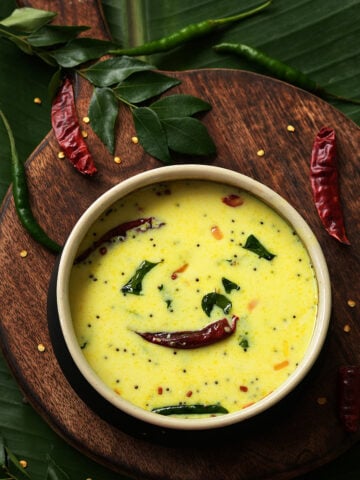
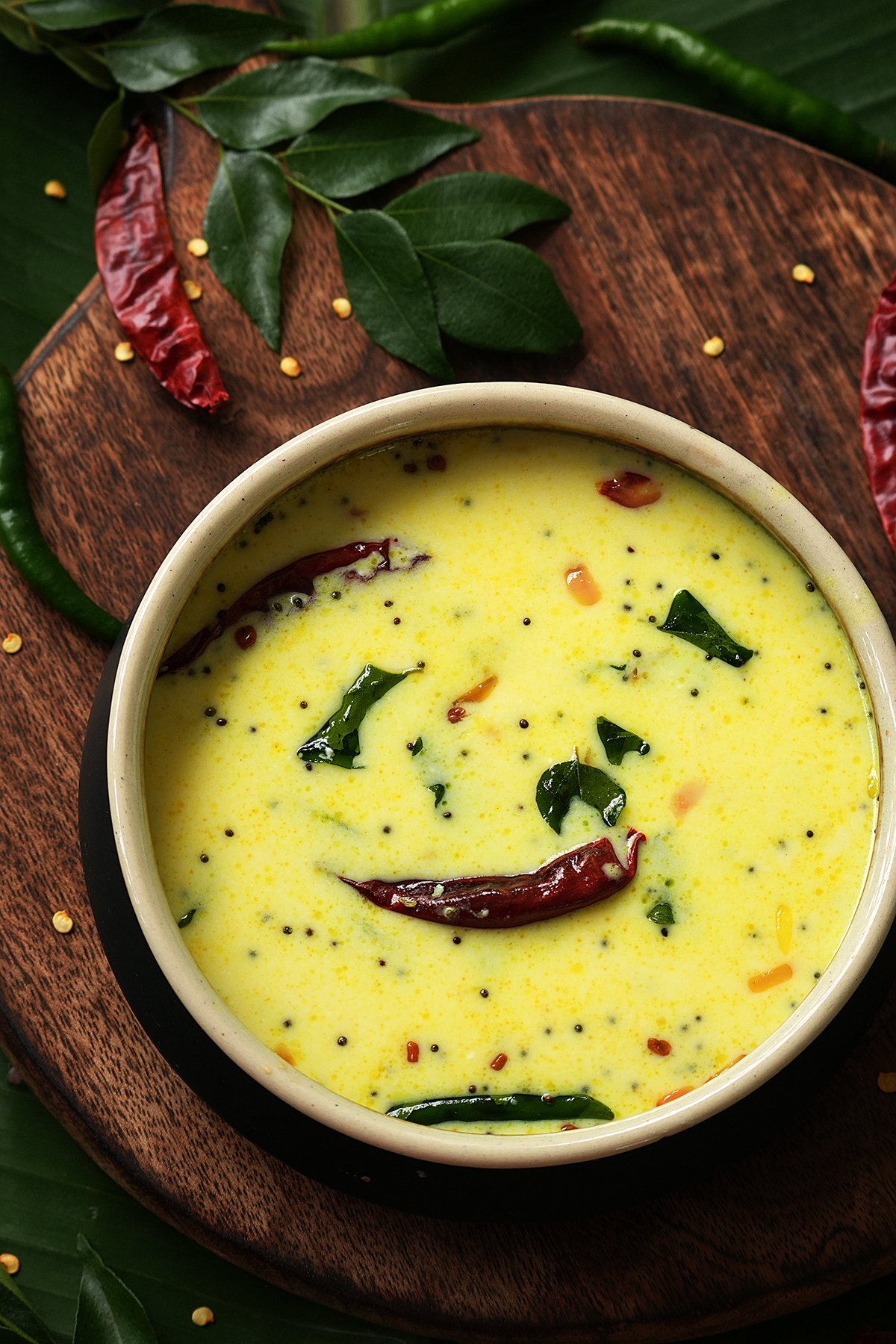
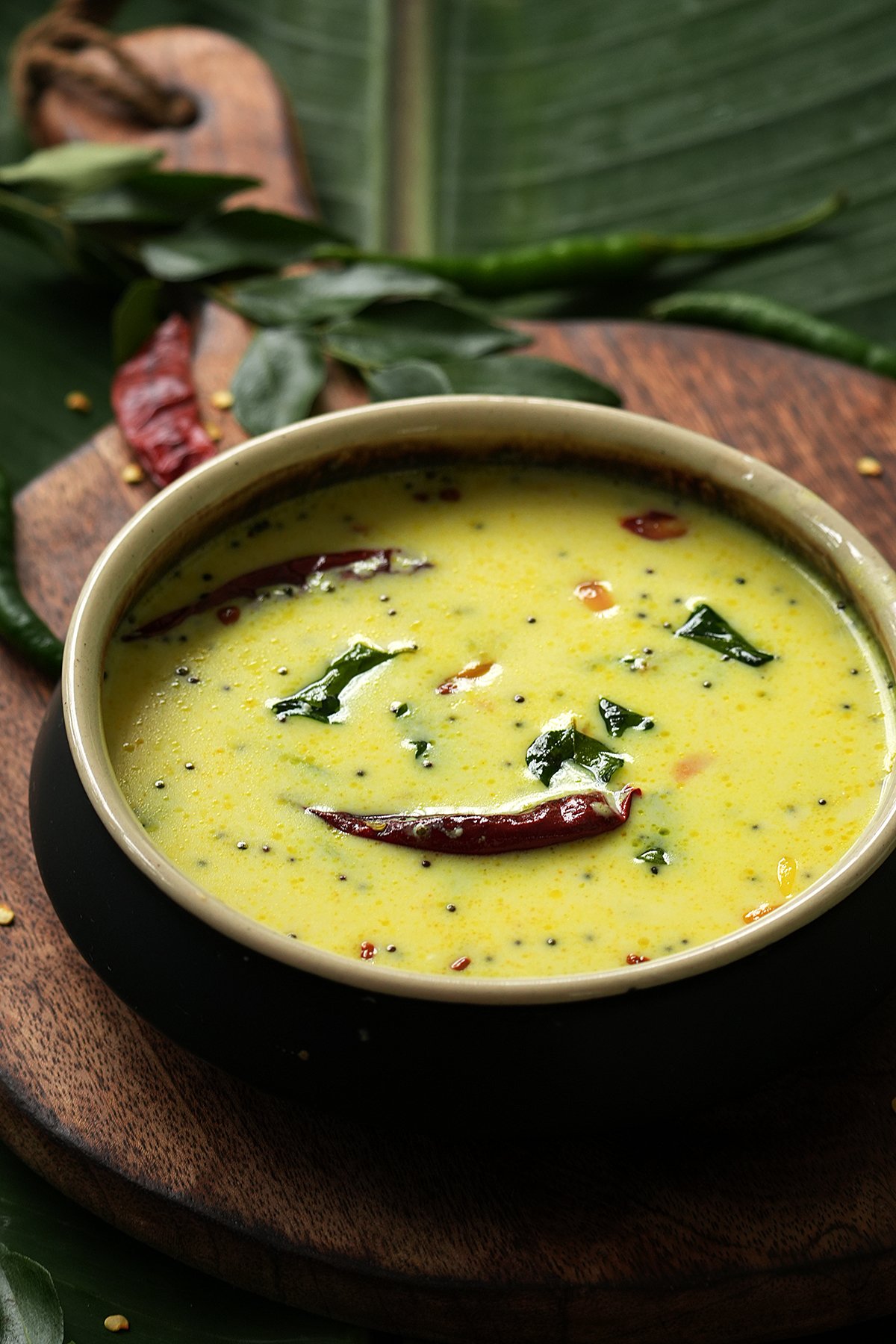
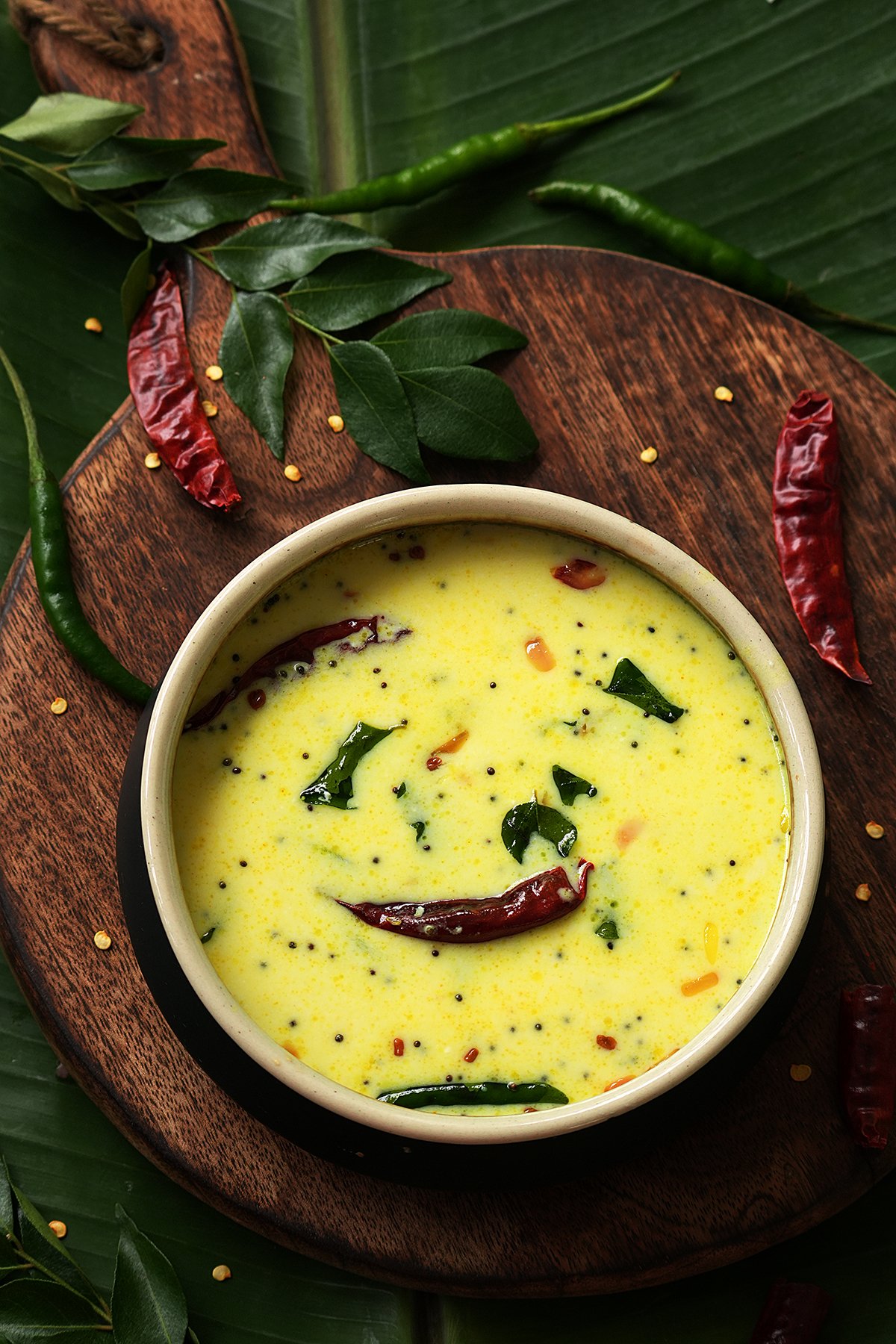
    A bowlful of kerala style moru curry on a wooden board
    [feast_advanced_jump_to]

    What is Moru Curry?

    Moru Curry is also known as Moru Kachiyathu is one of the simplest and refreshing dishes from Kerala cuisine. It is nothing but seasoned buttermilk, made with yogurt and tempered with ginger, chillies, curry leaves and shallots. Moru curry is thin, light, and easy to digest, which makes it a staple not just for Onam Sadya (a vegetarian feast) but also for everyday meals in Kerala. This tangy, refreshing and delicious moru kachiyathu is great with rice and perfect for summers.

    This is a very similar dish to our Andhra's Menthi Majjiga, where we don't use shallots and use ajwain/carom seeds along with other spices. Moru curry is one of the easiest recipes to make during festivals like Onam and Vishu, along with other yogurt-based dishes such as Mango Pulissery, Cucumber Kichadi, Avial, and Beetroot Pachadi.

    Ingredients & Substitutions:

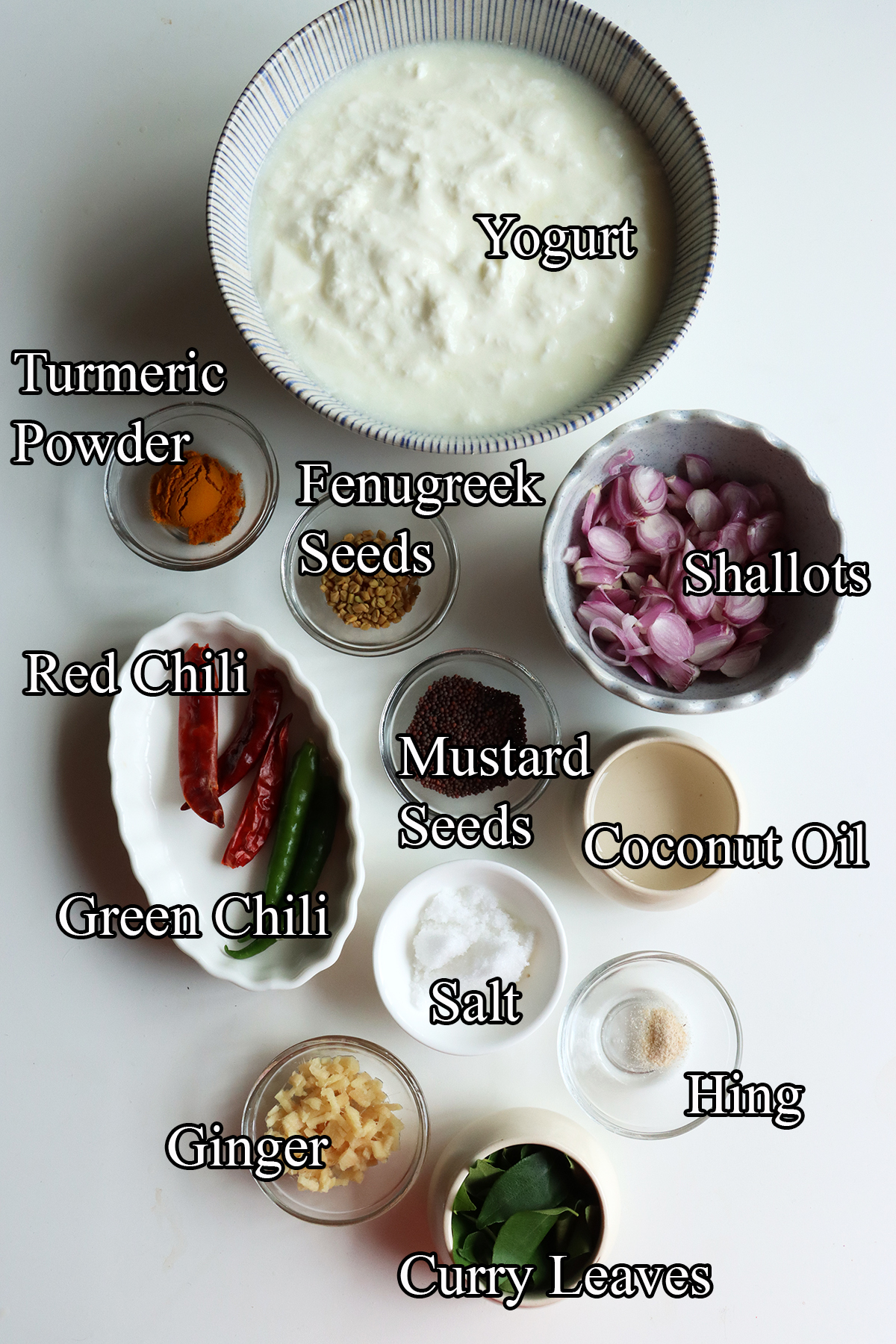
    ingredients needed to make moru curry or moru kachiyathu

    Yogurt - Yogurt is the base of moru kachiyathu. Traditionally, it is made with slightly sour yogurt / curd, which gives the curry its sourness. If you have buttermilk, you can use that instead, or just mix yogurt with some water to thin it out.

    Shallots - These tiny red onions add a lovely flavor and texture to the moru curry. If you can't find shallots, you can replace them with your regular onion. Try to use shallots for the authentic taste.

    Turmeric Powder - Adds a wonderful yellow color and mild earthy flavor.

    Chilies - You will need both green chilies and dried red chillies. You can adjust the quantity depends on your spice tolerance.

    Ginger - Adds a warm and slightly spicy flavor. Do not skip this.

    Spices - You will need mustard seeds fenugreek seeds and hing for the tempering. They add an authentic flavor and texture.

    Curry Leaves - These are essential for authentic flavor. If you can't find them, you can omit them, but the flavor will not be the same. Frozen curry leaves or dried curry leaves will also work.

    Coconut Oil - This is the traditional cooking oil for Kerala dishes. If you don't have it, you can use any neutral oil.

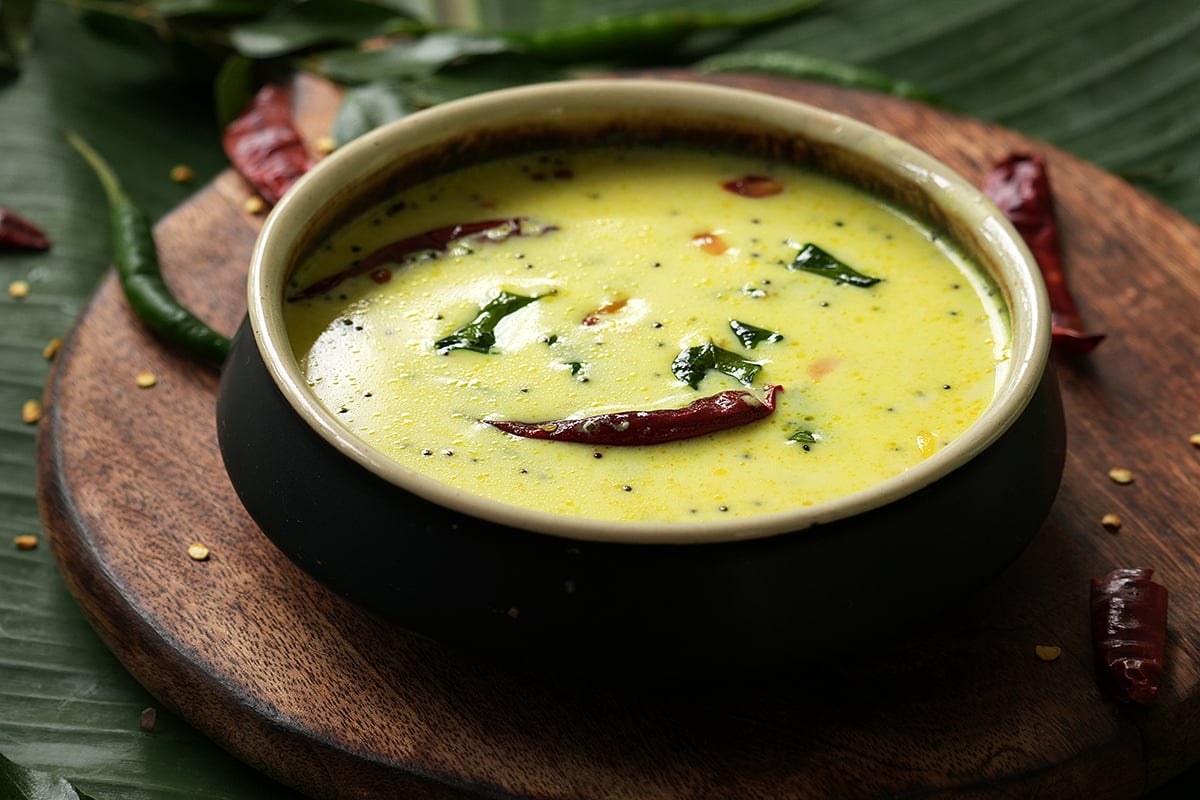
    a bowl of moru curry topped with curry leaves and red chilies

    How to make Moru Curry

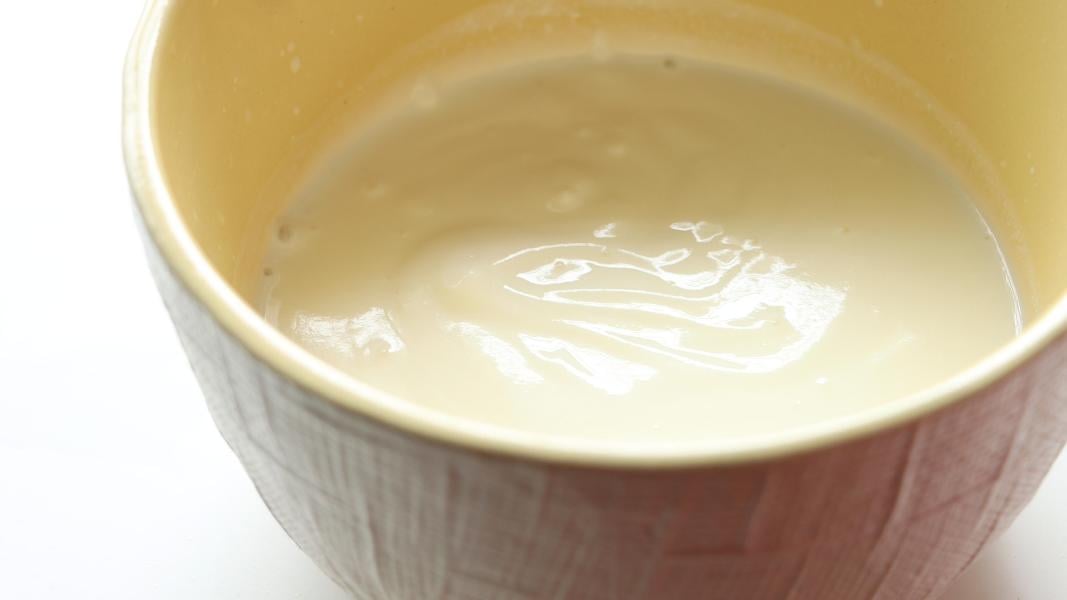
    whisked yogurt in a yellow mixing bowl

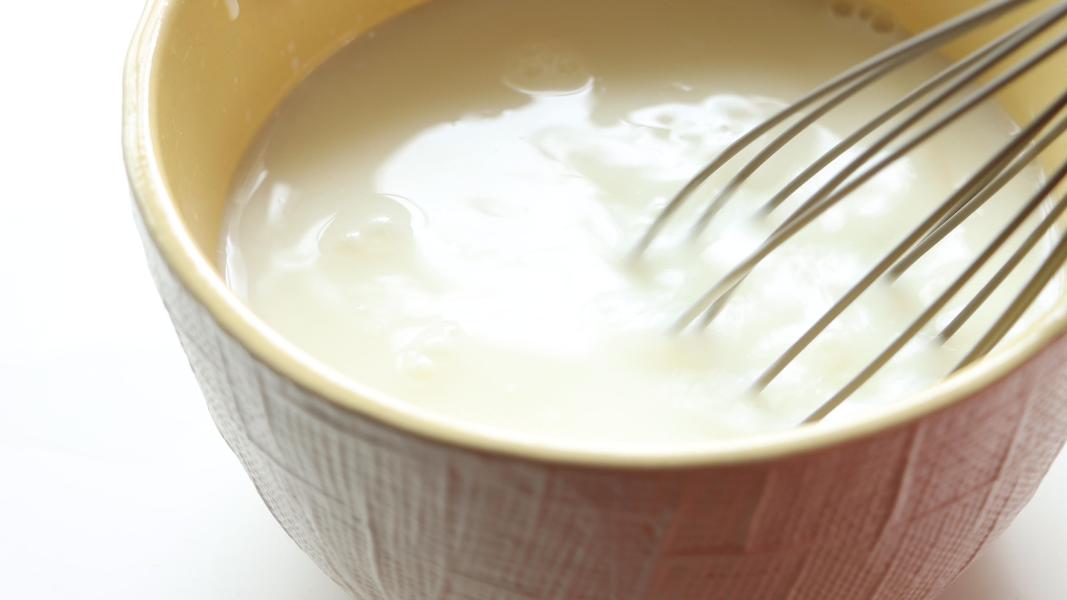
    Take 2 cups of slightly sour yogurt in a mixing bowl and whisk until smooth.

    whisking yogurt with water in a yellow mixing bowl

    Add 2 cups of water the yogurt and whisk until smooth. Keep it aside until use.

    tempering spices and herbs in a kadai

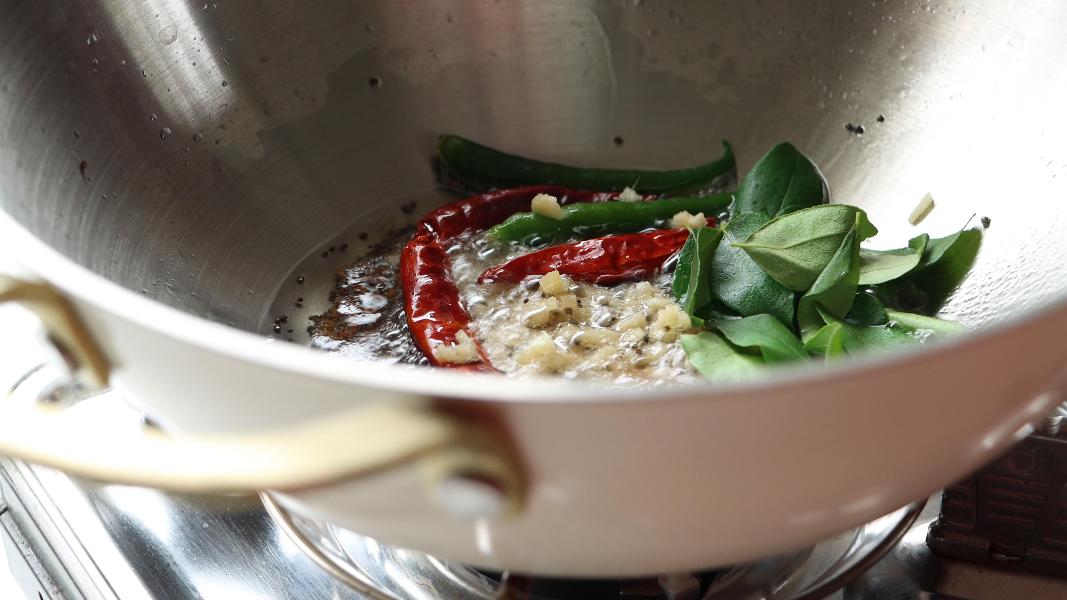
    Heat pan or kadai with coconut oil. Add mustard seeds and fenugreek seeds and let them splutter. Add hing, ginger, slit green chillies, dry red chillies and curry leaves. Give a good mix.

    added shallots to the tempered spices

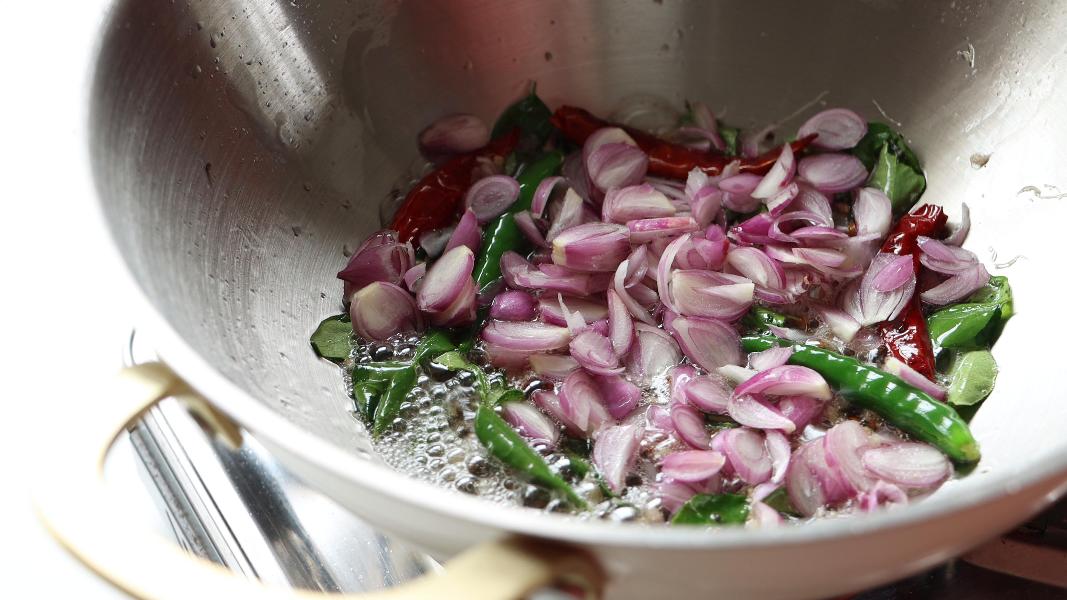
    Add peeled and sliced shallots to the tempered ingredients and saute until they are translucent.

    added turmeric powder to the roasted shallots

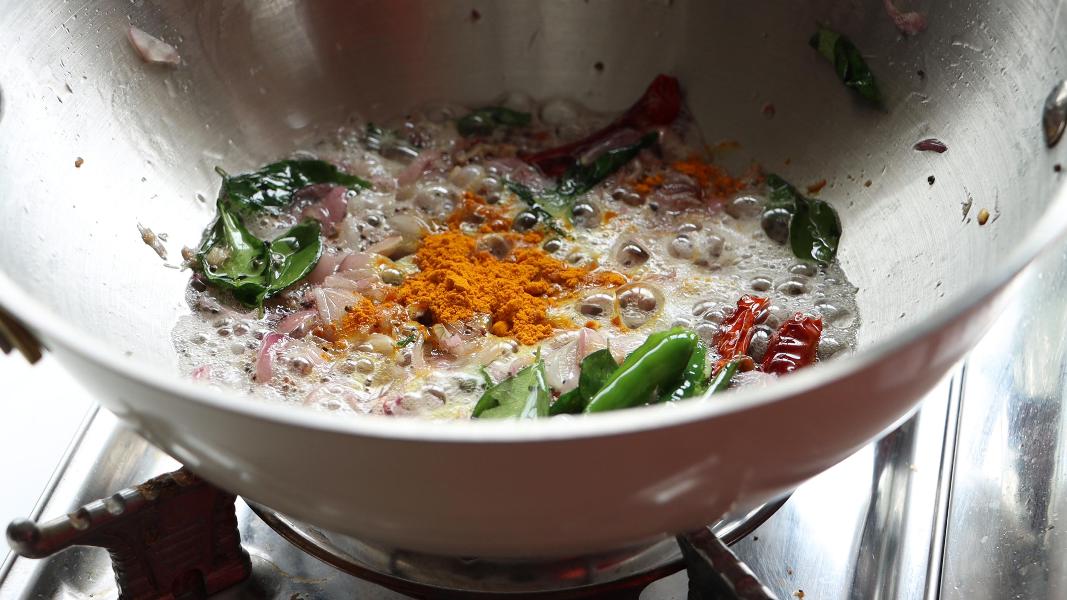
    Add turmeric powder and mix everything well.

    buttermilk is adding to the kadai

    Reduce the flame to very low and add the prepared yogurt-water mixture / buttermilk to the seasoned ingredients. Mix everything well.

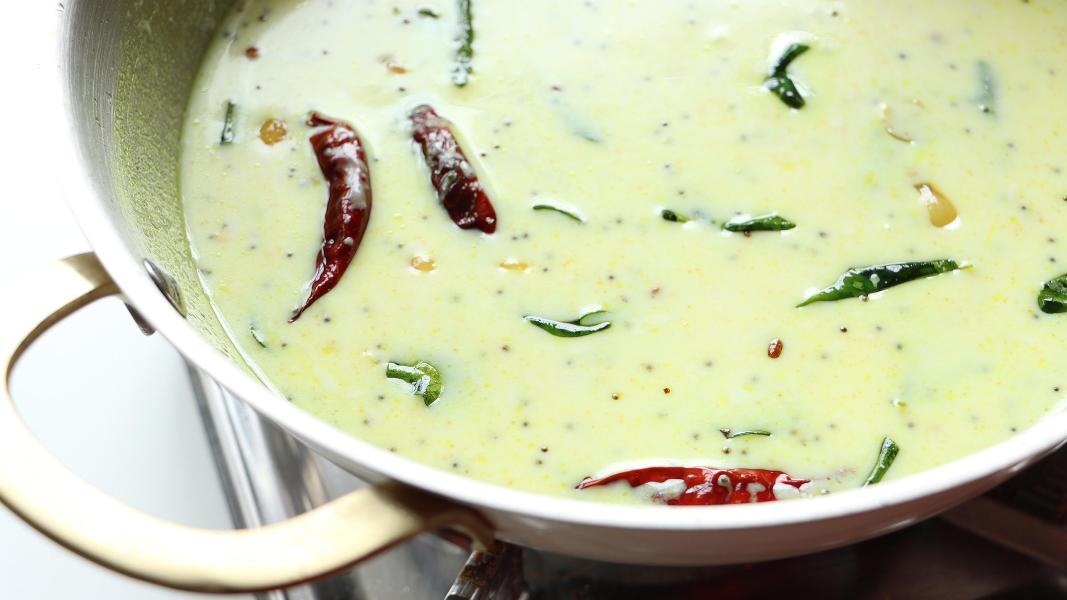
    moru curry in a kadai

    Add the required salt and mix well. Once it is warm, turn off the flame. Do not boil it.

    Tips & Notes:

    Do not skip beating yogurt with water until smooth before cooking. This helps the curry stay smooth and creamy.

    Don't boil the moru kachiyathu. Boiling will cause it to curdle. Gentle heating is the key to a smooth moru curry.

    Slightly sour curd or yogurt works best for traditional flavor.

    Some people also use chopped garlic along with ginger. You can use it if you want.

    Storage suggestions:

    Moru Kachiyathu can be stored in the refrigerator for 2 days.

    a small ceramic bowlful of moru kachiyathu

    Serving suggestions:

    The most traditional way to enjoy moru curry is with hot steamed matta rice (kerala red rice). A simple plate of rice, moru kachiyathu, and pappadam makes a great comforting meal.

    It can be served as a part of Onam Sadya. It is served along with other sadya dishes like Vazhakka Thoran, Vendakka Thoran, Kadumanga Achar, Inji Puli, and Palada Payasam.

    More Kerala Recipes:

    • kerala style instant kadumanga achar served in a glass bowl and placed on a banana leaf
      Kadumanga Achar (Kerala style Instant Mango Pickle)
    • Palada Payasam (Palada Pradhaman)
    • Inji Puli (Kerala Ginger Pickle)
    • Vazhakka Thoran - Vazhakkai Poriyal - Kerala Plantain Curry Recipe

    If you tried this Moru Curry Recipe or any other recipe on my blog please leave a 🌟 star rating and let me know how it went in the 📝 comments. Thanks for visiting my blog today!

    Print Recipe

    Moru Curry

    Moru Curry (Moru Kachiyathu) is a comforting and traditional Kerala-style seasoned buttermilk made with yogurt, spices, ginger, shallots and curry leaves. This refreshing, tangy, and delicious moru curry is a must-have in every Onam Sadya.
    Prep Time5 minutes mins
    Cook Time5 minutes mins
    Total Time10 minutes mins
    Course: Side Dish
    Cuisine: Indian, Kerala, South Indian
    Keyword: kerala sadya recipes, moru curry recipe, Onam Sadya Recipes
    Servings: 4
    Calories: 157kcal
    Author: Hari Chandana Ponnaluri

    Ingredients

    • 2 Cups Yogurt
    • 2 Cups Water
    • ⅓ Cup Sliced Shallots (14-15 shallots)
    • 2 Tablespoons Coconut Oil
    • 1 Teaspoon Mustard Seeds
    • ½ Teaspoon Fenugreek Seeds
    • A Big Pinch Hing
    • 1-2 Sprigs Curry Leaves
    • 2 Green Chilies, Slit
    • 3 Dry Red Chilies
    • 2 Teaspoons Chopped Ginger
    • ½ Teaspoon Turmeric Powder
    • Salt to taste

    Instructions

    • Take 2 cups of slightly sour yogurt in a mixing bowl and whisk until smooth.
    • Add 2 cups of water to the yogurt and whisk until smooth. Keep it aside until use.
    • Heat pan or kadai with coconut oil. Add mustard seeds and fenugreek seeds and let them splutter. Add hing, ginger, slit green chillies, dry red chillies and curry leaves. Give a good mix.
    • Add peeled and sliced shallots to the tempered ingredients and saute until they are translucent.
    • Add turmeric powder and mix everything well.
    • Reduce the flame to very low and add the prepared yogurt-water mixture / buttermilk to the seasoned ingredients. Mix everything well.
    • Add the required salt and mix well. Once it is warm, turn off the flame. Do not boil it.
    • Serve with rice

    Video

    Notes

    Do not skip beating yogurt with water until smooth before cooking. This helps the curry stay smooth and creamy.
    Don’t boil the moru curry. Boiling will cause it to curdle. Gentle heating is the key to a smooth moru curry.

    Nutrition

    Calories: 157kcal | Carbohydrates: 13g | Protein: 7g | Fat: 9g | Saturated Fat: 7g | Polyunsaturated Fat: 0.3g | Monounsaturated Fat: 1g | Cholesterol: 7mg | Sodium: 95mg | Potassium: 372mg | Fiber: 1g | Sugar: 10g | Vitamin A: 83IU | Vitamin C: 13mg | Calcium: 241mg | Iron: 1mg

    Palada Payasam (Palada Pradhaman)

    August 25, 2025

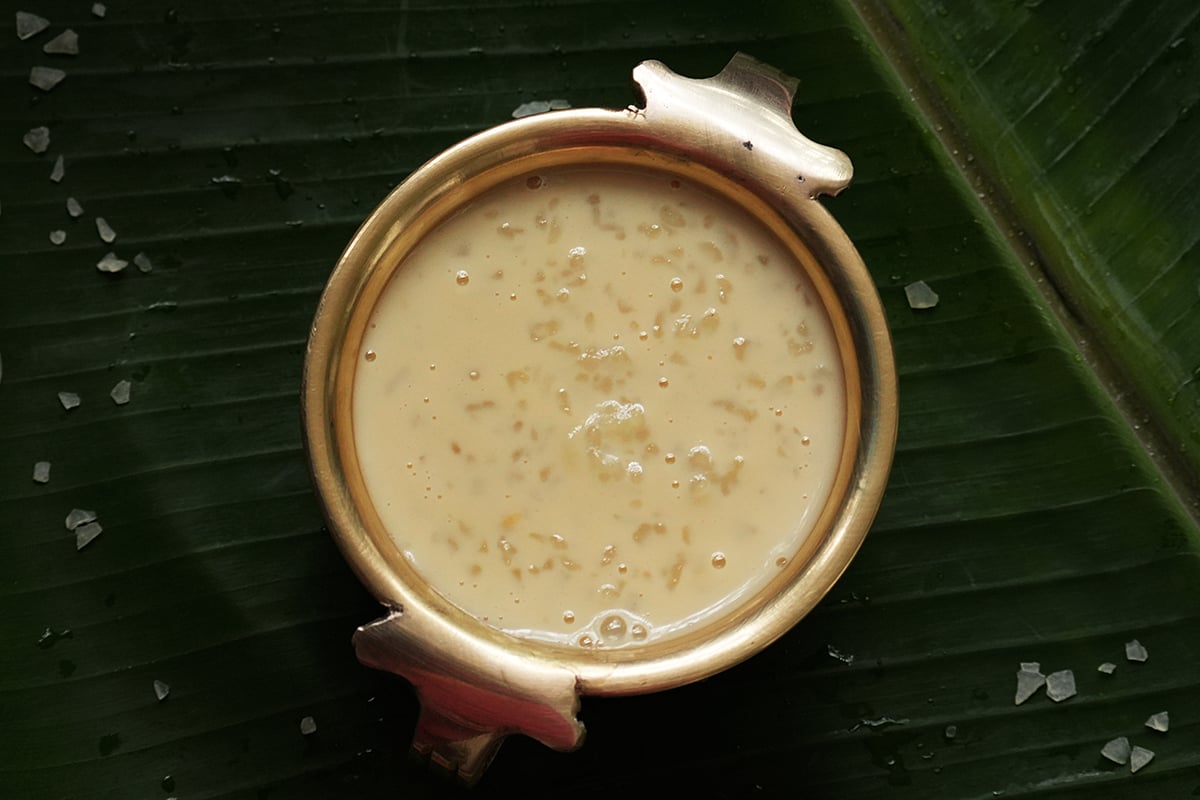
    Palada Payasam also known as Palada Pradhaman, is a classic Kerala dessert made with rice ada, milk and sugar. This payasam is slow-cooked until creamy and flavored with fresh homemade caramel. A must-have dessert in every Onam Sadya!

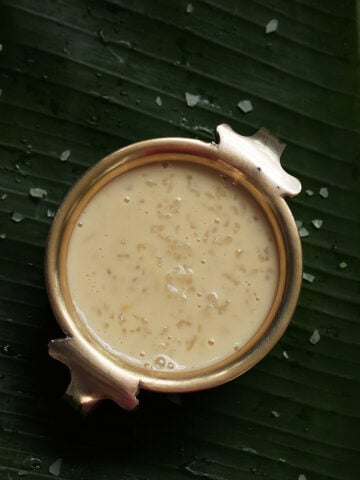
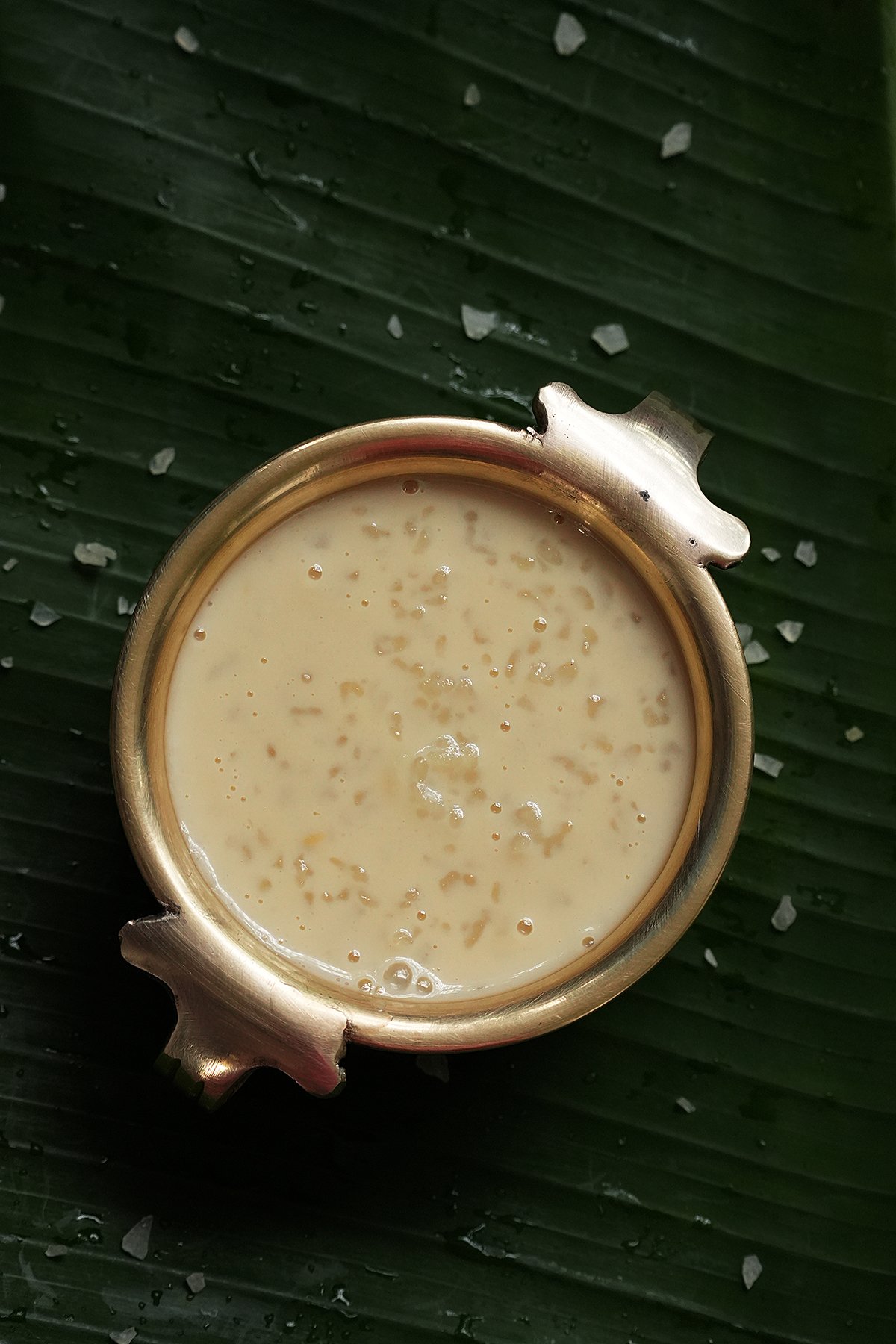
    Classic kerala ada payasam served in a small uruli (brass vessel), placed on a banana leaf
    [feast_advanced_jump_to]

    What is Palada Payasam?

    Palada Payasam, also known as Palada Pradhaman, is a classic and traditional Kerala dessert that is usually made during festivals like Vishu and Onam. Unlike other payasam or kheer recipes, palada payasam doesn't require cardamom, ghee, or nuts. This classic payasam is rich, creamy, and prepared with just three ingredients: rice ada (pasta kind of chunks made with rice flour), sugar, and milk. The payasam is slow-cooked until it turns creamy and rich, then finally finished with a touch of homemade caramel, which gives it a beautiful golden pink color and a wonderful flavor.

    In a traditional Onam Sadya, palada payasam is served along with other payasam / kheer dishes such as Ada Pradhaman, Javvarisi Payasam, and Semiya Payasam. It's no surprise that no onam sadya feels complete without this creamy, milky dessert.

    Ingredients & Substitutions

    Ingredients needed to make kerala ada payasam or ada pradhaman

    Rice Ada - These are small rice flakes or rice pasta made from rice flour. It is the main ingredient of this payasam. You can use homemade ada or store-bought ada in this recipe. You can find them in South Indian or Kerala grocery stores. Use a smaller variety of ada for the best results. There is no direct substitution for ada, but you could use broken flat rice noodles, though the taste and texture won't be the same.

    Milk - Full-fat milk is best for this recipe as it gives a rich and creamy texture. Low-fat milk would work as well.

    Sugar - Regular white sugar is used here for the payasam and to make caramel. The caramel gives palada payasam its signature light golden color and a touch of toffee-like flavor.

    Variations:

    Traditionally, palada pradhaman doesn't require any spices or nuts. However, feel free to add a little bit of cardamom powder for the flavor. If you like a bit of crunch, fry some cashews in ghee and add them to the payasam at the end.

    If you want to make it with jaggery, follow my Ada Pradhaman recipe.

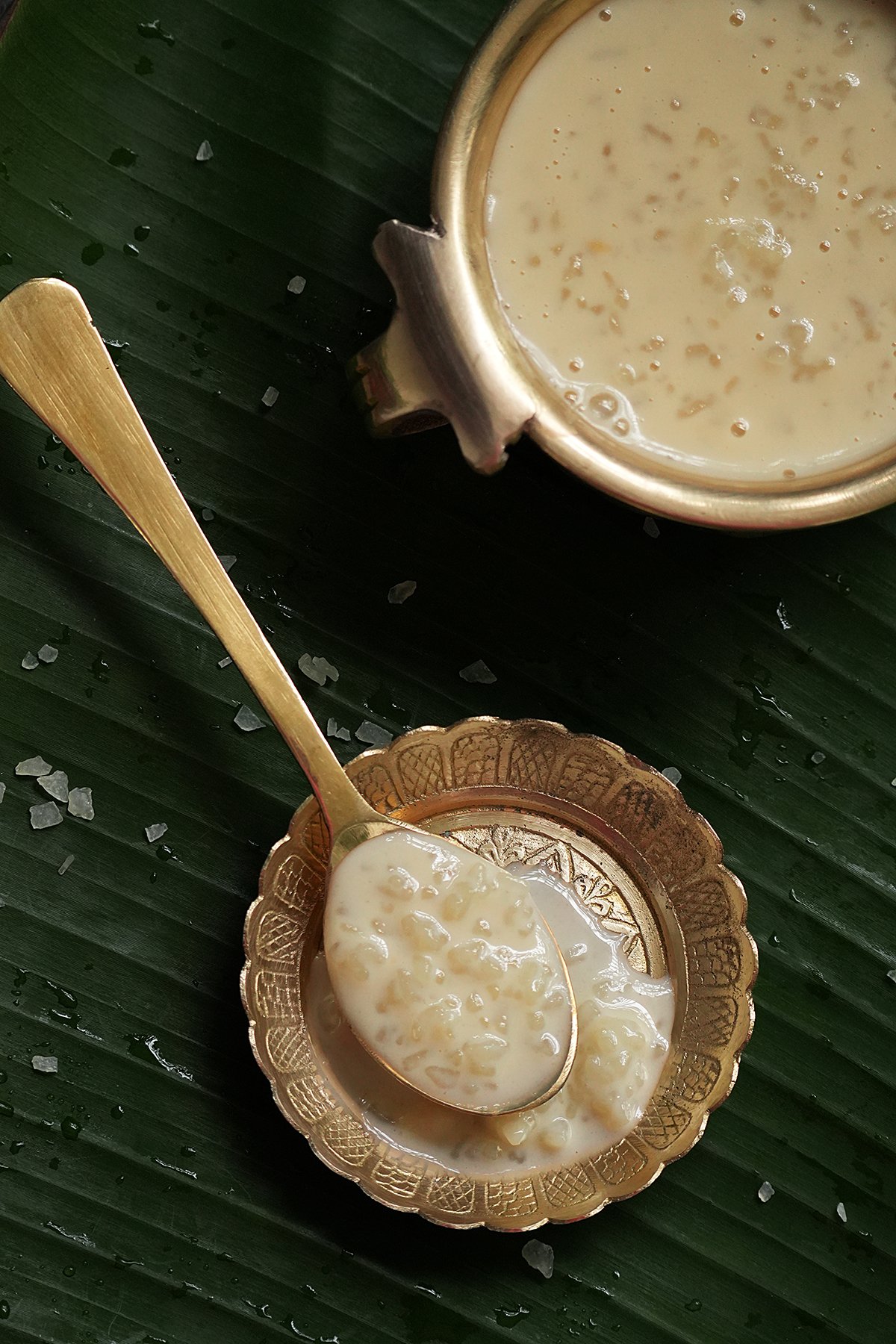
    A spoonful of kerala ada pradhaman on a small brass plate, with a side of a bowlful of ada pradhaman on a banana leaf

    How to make Palada Pradhaman

    Rinsed rice ada in a bowl on the left, soaking it in hot water on the right.

    Take ½ cup of store-bought rice ada in a bowl. Wash them with plenty of water and drain. I'd suggest following the brand instructions for the soaking time.

    Bring 2 cups of water to a boil and turn off the flame. Add washed and drained ada to the hot water. Cover it with a lid and let it sit for about 15 minutes or until it turns slightly soft but not mushy.

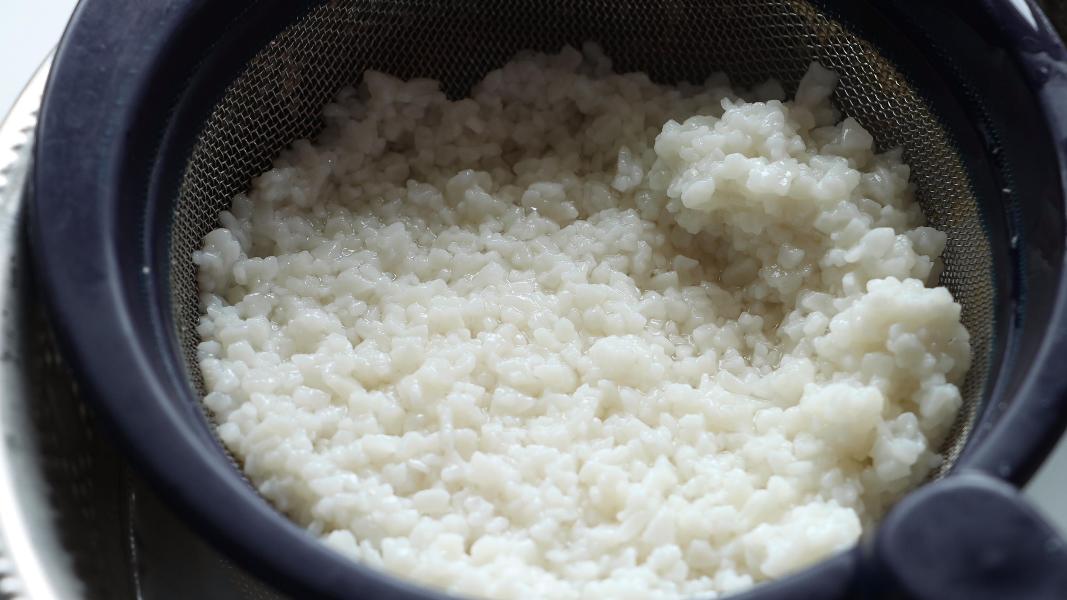
    Draining soaked ada

    Drain the soaked ada and rinse with water once or twice to get rid of starch. Keep it aside until use.

    Boiling milk in a bronze kadai and sugar is added for the sweetness

    Add 1 litre of milk to a heavy-bottomed pan or uruli (traditional brass vessel). When the milk has started heating up, add ½ cup of sugar. Mix well and cook on a medium-low flame until the milk reduces to half.

    Milk is simmering in a heavy bronze kadai

    It will take anywhere between 30-40 minutes. Do not forget to stir occasionally to prevent it from burning.

    soaked rice ada is added to the simmered and reduced milk

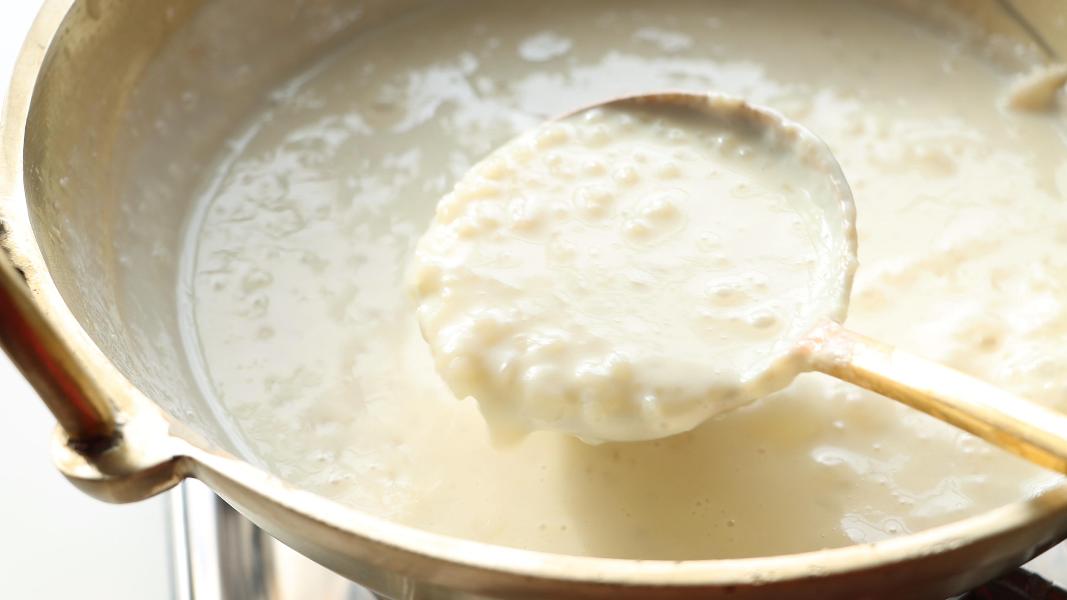
    When it is reduced to half, add the soaked ada to the reduced milk mixture. Mix everything without any lumps and continue cooking for another 10-15 minutes or until the kheer is thick.

    A ladle full of cooked palada payasam

    When it is thick and creamy, remove it from the flame.

    Melting sugar to make caramel

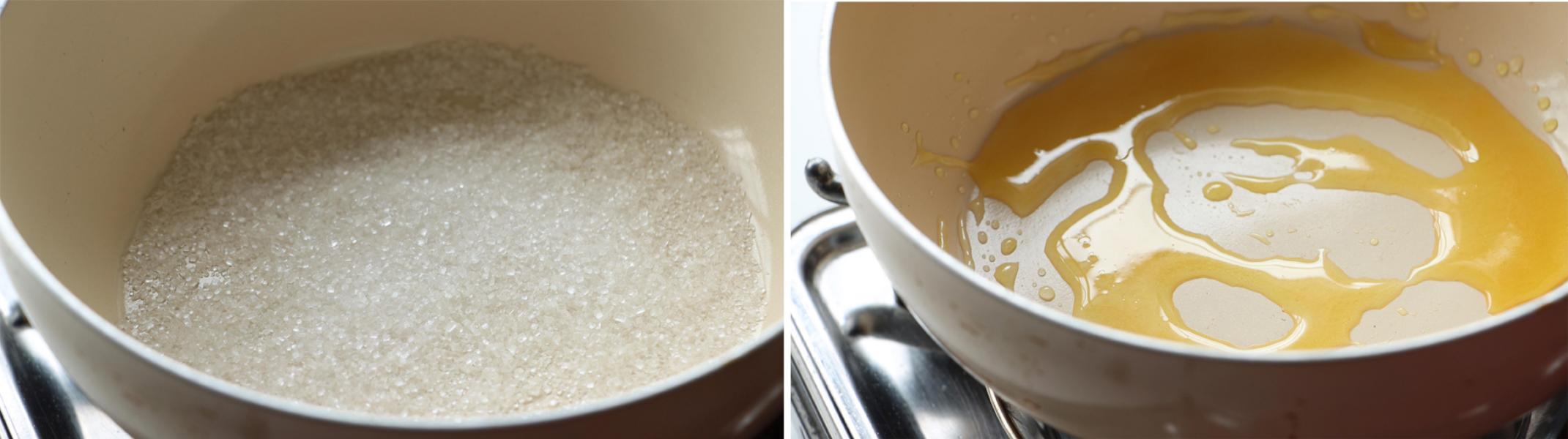
    To make the homemade caramel, heat 2 tablespoons of white sugar in a pan and let it melt. When it starts to melt, mix well using a spoon or spatula until it is smooth and golden brown.

    Freshly made caramel added to the creamy palada payasam

    Pour ¼ cup of water into the melted sugar and mix well immediately. If the caramel hardens at this stage, don't panic. Just stir gently on a low flame until it dissolves back into a smooth syrup. Pour it into the prepared palada pradhaman.

    A ladle full of prepared palada pradhaman

    Mix everything until well combined and serve warm!

    Tips & Notes:

    • If you are using store-bought ada, make sure you choose a smaller variety or break the large ada into small pieces. Do not skip the rinsing and soaking step, this softens it and removes excess starch.
    • If you are using homemade ada, skip the soaking step and add them directly to the reduced milk.
    • The secret of the best palada payasam is slow-cooking. Do not cook on a high flame. Always cook over a medium-low flame.
    • Always use a heavy-bottomed pan to cook the milk.
    • Use full-fat milk for the best taste and flavor. Low-fat milk can also be used.
    • While making the caramel, melt the sugar first, then carefully add water to it. It it hardens at this stage, don't worry. Continue stirring on a low flame until it melts back into a smooth syrup.
    • If you are making this for Sadya, do not add ghee, cardamom or nuts. It's meant to be all about ada, milk, and caramelized sugar.
    • Palada Payasam thickens more as it cools. If you are making it ahead, keep it slightly runny or add a splash of hot milk before serving to thin it out.

    Storage suggestions:

    If you have decided to keep it on the countertop, use it on the same day. It can be stored in the refrigerator for up to 2 days.

    Serving suggestions:

    Traditionally, palada payasam is served at the end of the Sadya on a banana leaf along with other payasams like Semiya Payasam and Javvarisi Payasam.

    While it is most popular for Onam and Vishu, you can also make it for any occasion, such as birthdays, diwali parties, or any special occasion.

    It can be served warm or cold. If you want to re-reheat it before serving, gently simmer it on a low flame or use a microwave.

    It tastes great with pappadam/papad.

    A little brass bowl full of kerala palada payasam placed on a banana leaf.

    More Onam Sadya Recipes:

    • kerala style instant kadumanga achar served in a glass bowl and placed on a banana leaf
      Kadumanga Achar (Kerala style Instant Mango Pickle)
    • Mathanga Thoran Recipe - Kerala Style Pumpkin Stir Fry - Onam Sadya Recipes
    • Beetroot Pachadi Recipe - Kerala Style Beetroot Yogurt Gravy - Onam Sadya Recipes
    • Vellarikka Pulissery | Onam Sadhya Recipes

    If you tried this Palada Payasam Recipe or any other recipe on my blog please leave a 🌟 star rating and let me know how it went in the 📝 comments. Thanks for visiting my blog today!

    Print Recipe

    Palada Payasam

    Palada Payasam, also known as Palada Pradhaman, is a classic Kerala dessert made with rice ada, milk and sugar. This payasam is slow-cooked until creamy and flavored with fresh homemade caramel. A must-have dessert in every Onam Sadya!
    Prep Time5 minutes mins
    Cook Time55 minutes mins
    Total Time1 hour hr
    Course: Dessert
    Cuisine: Indian, Kerala, South Indian
    Keyword: kerala sadya recipes, Onam Sadya Recipes, palada payasam recipe, palada pradhaman recipe
    Servings: 4
    Author: Hari Chandana Ponnaluri

    Ingredients

    • ½ Cup Ada
    • 2 Cups Water
    • 1 Litre Milk
    • ½ Cup Sugar
    • 2 Tablespoons Sugar for Caramel

    Instructions

    • Take ½ cup of store-bought rice ada in a bowl. Wash them with plenty of water and drain. I'd suggest following the brand instructions for the soaking time.
    • Bring 2 cups of water to a boil and turn off the flame. Add washed and drained ada to the hot water. Cover it with a lid and let it sit for about 15 minutes or until it turns slightly soft but not mushy.
    • Drain the soaked ada and rinse with water once or twice to get rid of starch. Keep it aside until use.
    • Add 1 litre of milk to a heavy-bottomed pan or uruli (traditional brass vessel). When the milk has started heating up, add ½ cup of sugar. Mix well and cook on a medium-low flame until the milk reduces to half. It will take anywhere between 30-40 minutes. Do not forget to stir occasionally to prevent it from burning.
    • When it is reduced to half, add the soaked ada to the reduced milk mixture. Mix everything without any lumps and continue cooking for another 10-15 minutes or until the kheer is thick.
    • When it is thick and creamy, remove it from the flame.
    • To make the homemade caramel, heat 2 tablespoons of white sugar in a pan and let it melt. When it starts to melt, mix well using a spoon or spatula until it is smooth and golden brown.
    • Pour ¼ cup of water into the melted sugar and mix well immediately. If the caramel hardens at this stage, don't panic. Just stir gently on a low flame until it dissolves back into a smooth syrup. Pour it into the prepared palada pradhaman.
    • Mix everything until well combined and serve warm or cold.

    Video

    Notes

    • The secret of the best palada payasam is slow-cooking. Do not cook on a high flame. Always cook over a medium-low flame.
    • Always use a heavy-bottomed pan to cook the milk.
    • Palada Payasam thickens more as it cools. If you are making it ahead, keep it slightly runny or add a splash of hot milk before serving to thin it out.
       

    Kadumanga Achar (Kerala style Instant Mango Pickle)

    August 24, 2025

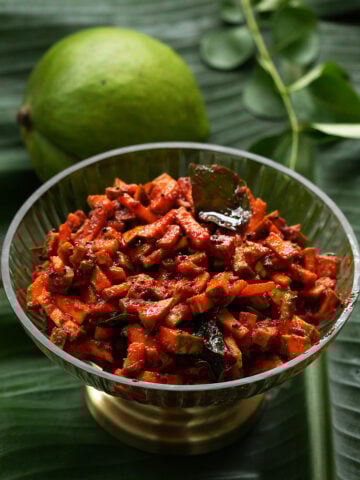
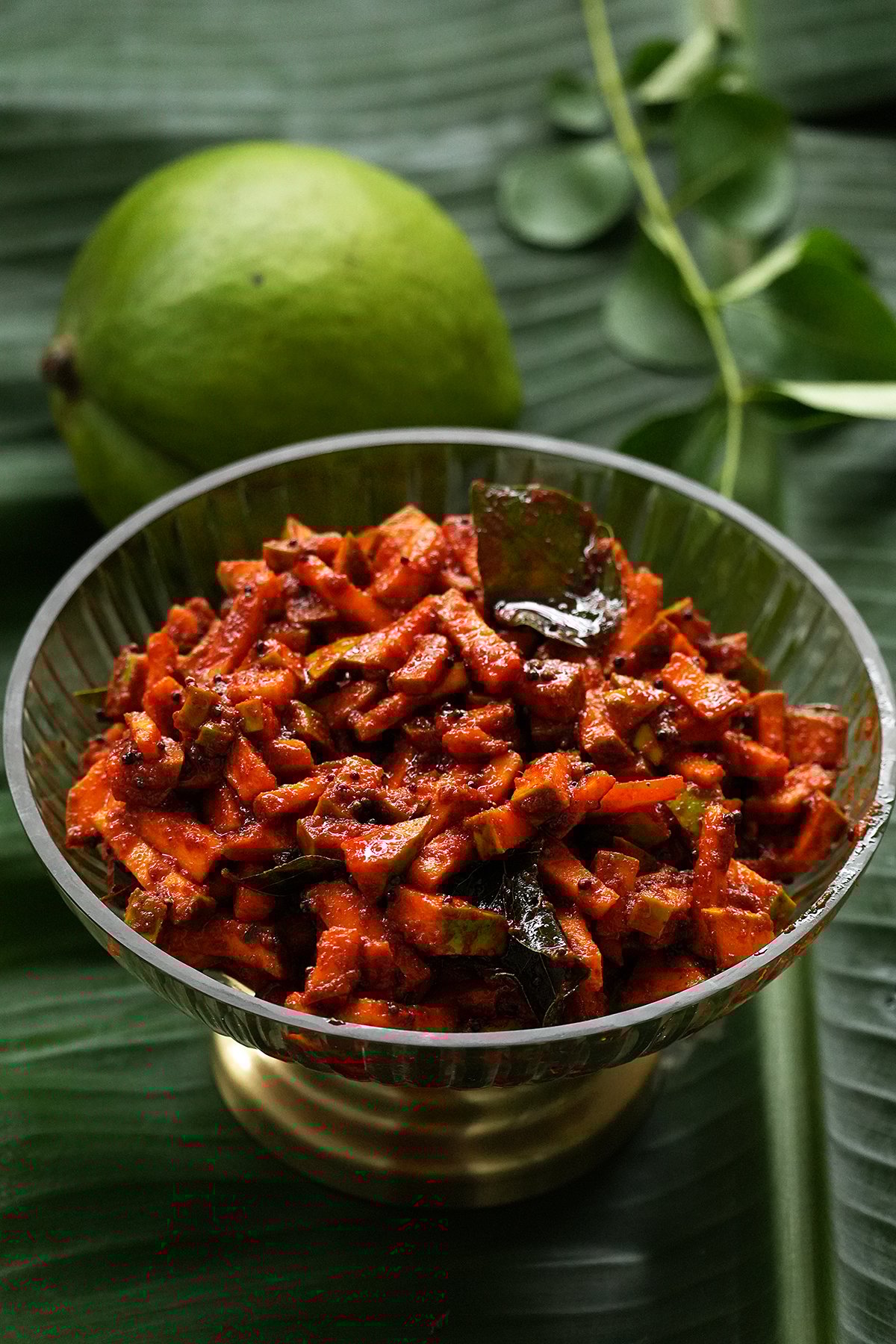
    kerala style instant kadumanga achar served in a glass bowl and placed on a banana leaf

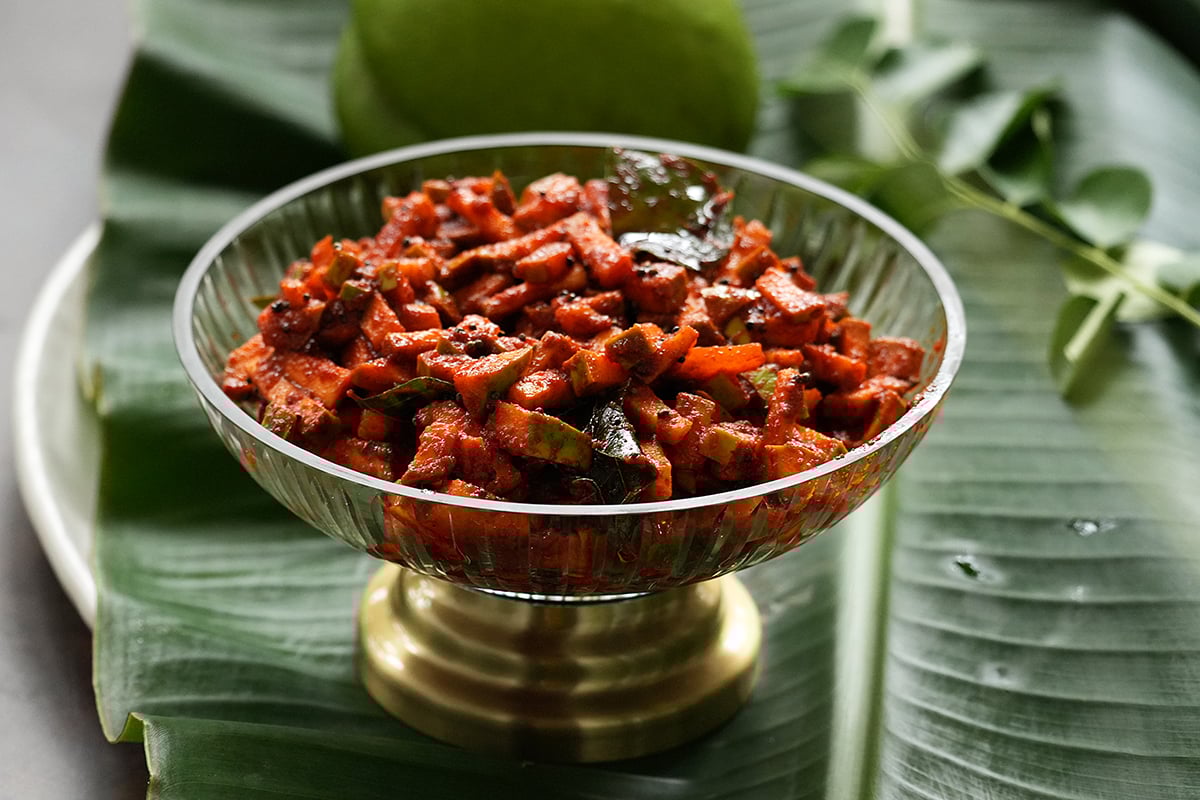
    Kadumanga Achar is a quick and easy Kerala-style instant mango pickle made with raw green mangoes, spices, and sesame oil. This pickle is bright, spicy, tangy, and a must-have in every Onam Sadya.

    kerala style instant kadumanga achar served in a glass bowl and placed on a banana leaf
    [feast_advanced_jump_to]

    What is Kadumanga Achar?

    Kadumanga Achar (also known as Manga Achar) is a traditional instant mango pickle from Kerala cuisine. This instant pickle holds a special place in every Onam Sadya (A vegetarian feast served on a banana leaf during Onam and Vishu festivals). Unlike fermented pickles, kadumanga achar is very quick and easy to make, often made a day or two before Onam.
    In most homes, no Sadya feels complete without manga achar. It is always served on the top left corner of the banana leaf, along with other pickles such as Inji Puli and lemon pickle. It is tangy, spicy, and delicious and made with just a handful of ingredients.

    It is one of the easiest and versatile pickles. While it's a must-have dish in Sadya, it's equally delicious with everyday meals like curd rice, dosa, rice, or even parathas.

    Ingredients & Substitutions

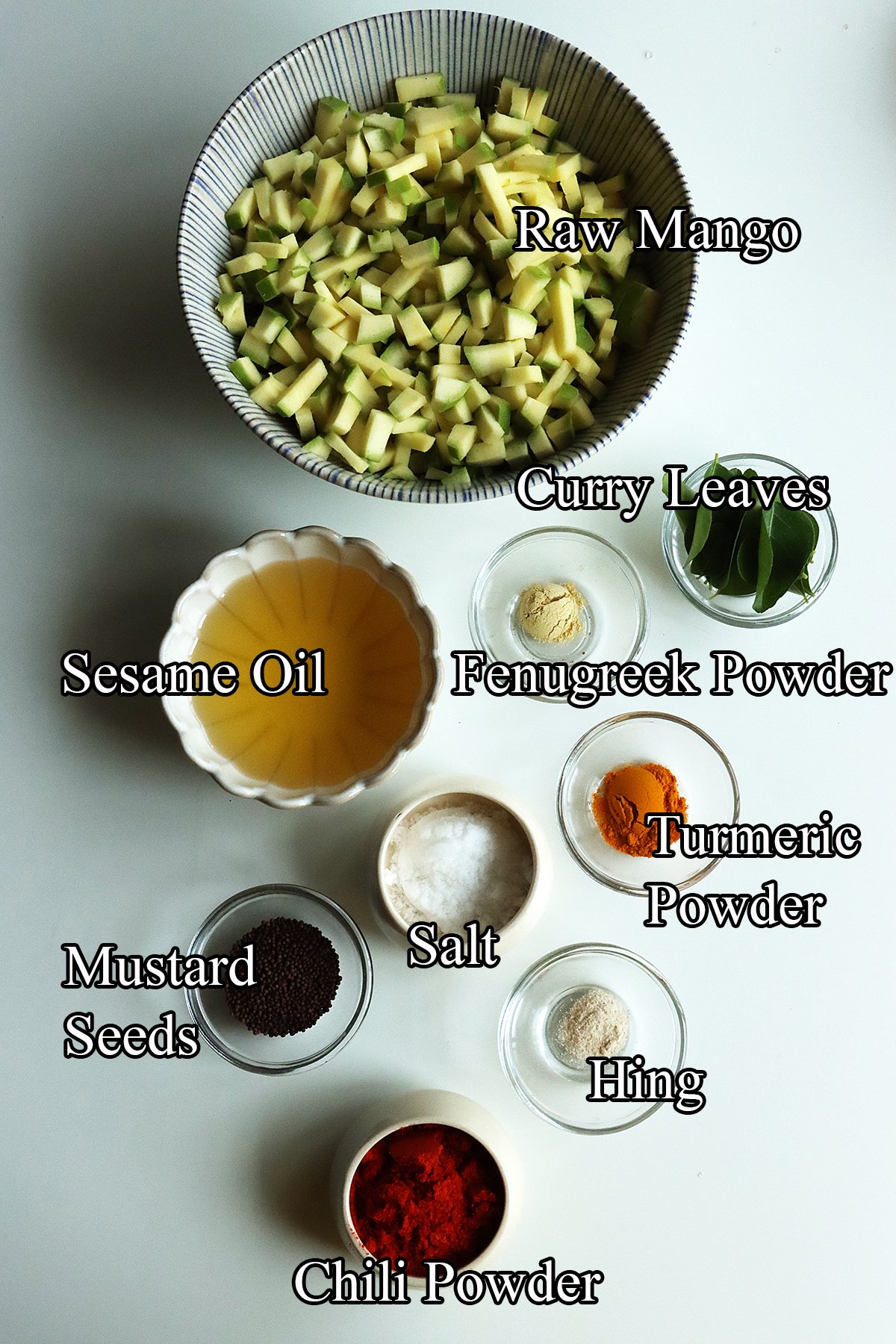
    ingredients needed to make kerala instant mango pickle for onam sadya

    Raw Mango - This is the star ingredient. Make sure you are using firm and unripe green mangoes. They should be fresh and tangy enough for the authentic taste. Do not use even slightly ripe ones, as they will turn soft and spoil fast.
    Red Chili Powder - This adds the spiciness to the pickle. I have used Kashmiri red chilli powder which adds a bright red color and medium heat. You can also use regular red chili powder for more spice. Alternatively use a mix of both for color and heat.
    Sesame Oil - It is also known as gingelly oil. Sesame oil is the traditional choice to make the mango pickle. You can swap it with sunflower oil, mustard oil or coconut oil but the flavor and taste won't be the same.
    Fenugreek Powder - Adds a subtle bitter note that balances the sourness and spiciness. Don't use more than the mentioned measurement, as too much can overpower. If you don't have fenugreek powder handy, lightly roast fenugreek seeds and grind them to a powder.
    Hing - Adds a unique earthy flavor and aids digestion. Do not skip this.

    Mustard Seeds - You will need this for tempering. They add a sharp, nutty flavor and texture.
    Curry Leaves - Fresh curry leaves give an authentic South Indian touch. Try to use dried curry leaves if you can't find the fresh ones. Do not skip.

    How to Make Instant Mango Pickle

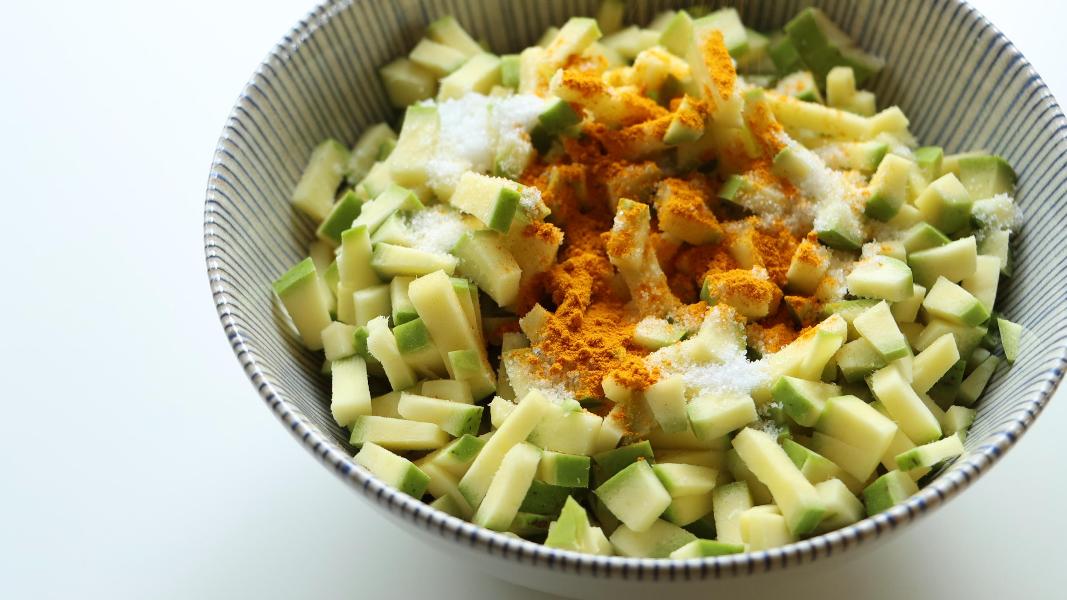
    Chopped green mangoes sprinkled with salt and turmeric powder in a mixing bowl

    Wash and pat dry the raw mangoes. Chop them into small pieces. No need to peel the mangoes.
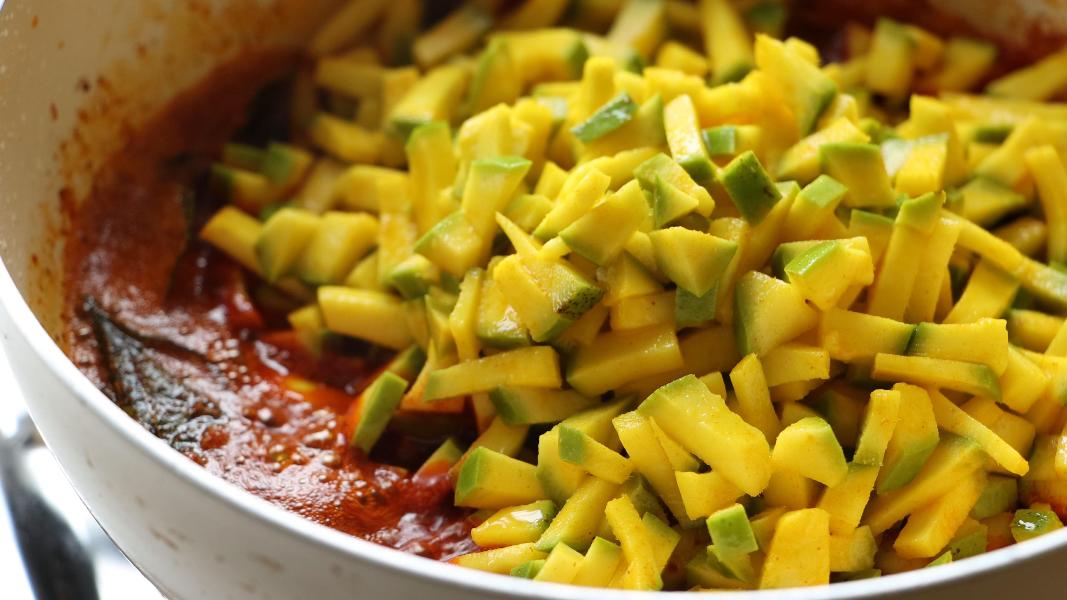
    Add the chopped green mangoes to a mixing bowl. Add required salt and turmeric powder.

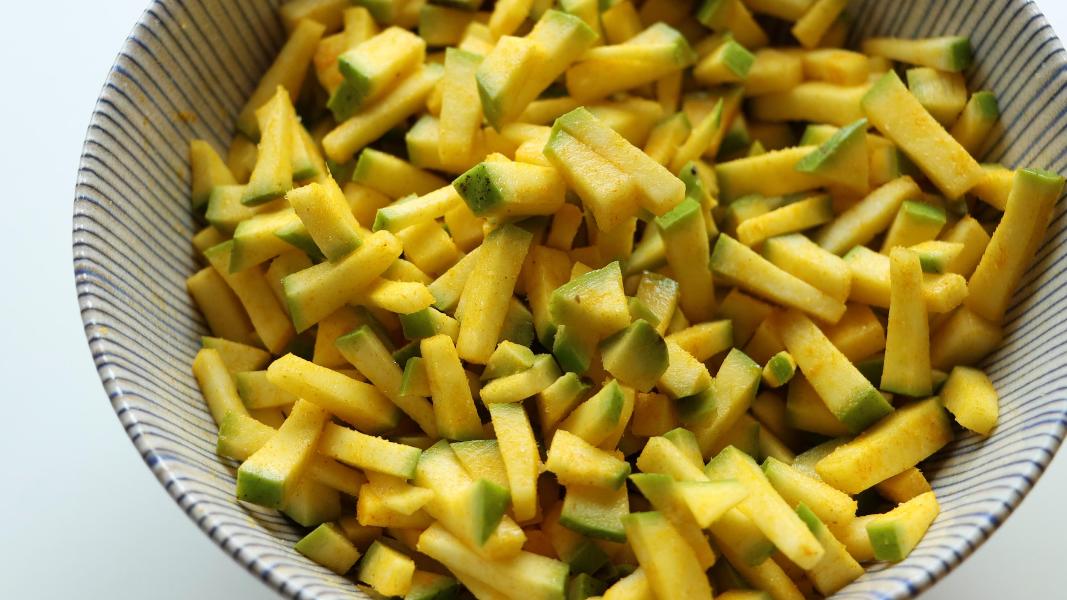
    Chopped raw mangoes are marinated with salt and turmeric powder and resting in a bowl on a countertop

    Mix everything until well combined and let it rest for at least 30 minutes.

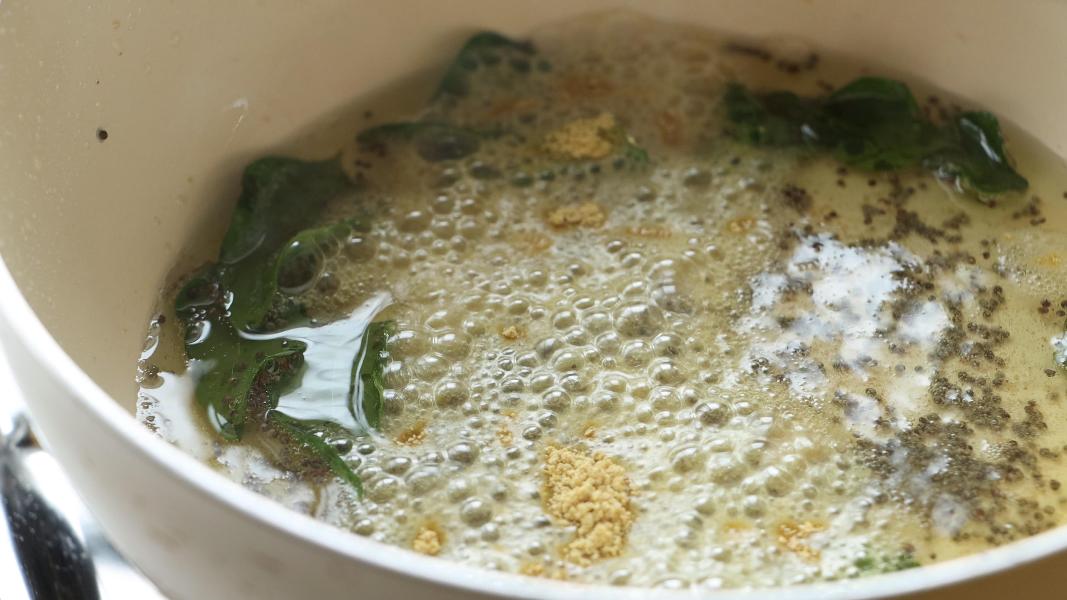
    Tempered mustard seeds, curry leaves with sesame oil in a frying pan

    Heat a pan with sesame oil and add mustard seeds. Let them splutter. Add curry leaves and hing to the pan and turn off the flame.

    Fenugreek powder and kashmiri red chilli powder added to the tempered tadka to make mango pickle

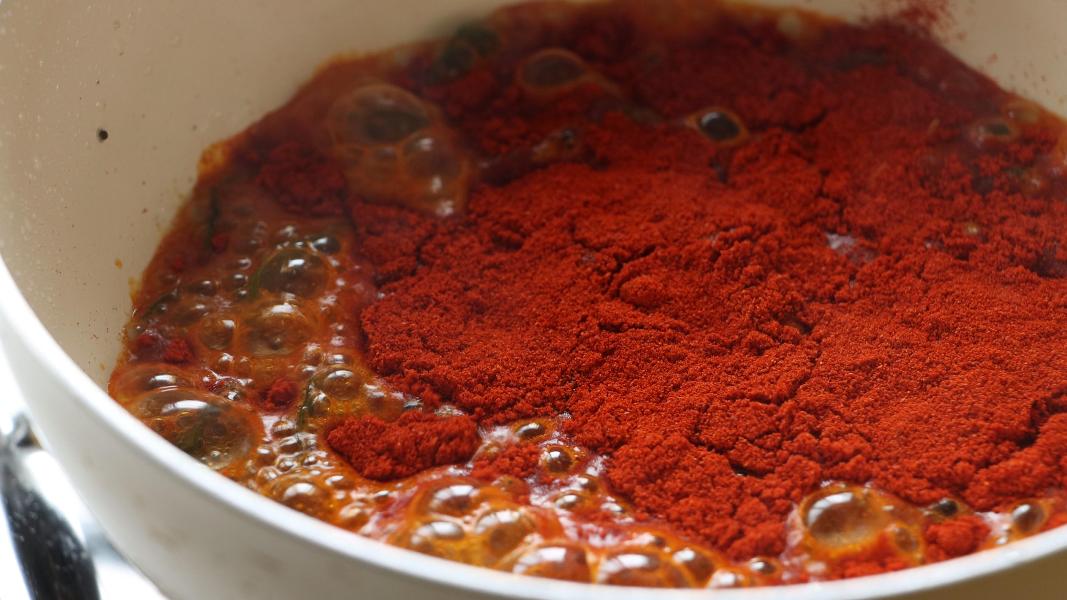
    Add fenugreek powder and red chili powder to the tempered ingredients. Make sure the flame is off.

    Marinated mango pieces added to the red chili spice mixture

    Immediately, give it a good mix. Add the marinated mango pieces to the chilli powder mixture.

    Marinated green mango pieces are coated with tempered chili powder mixture in a frying pan

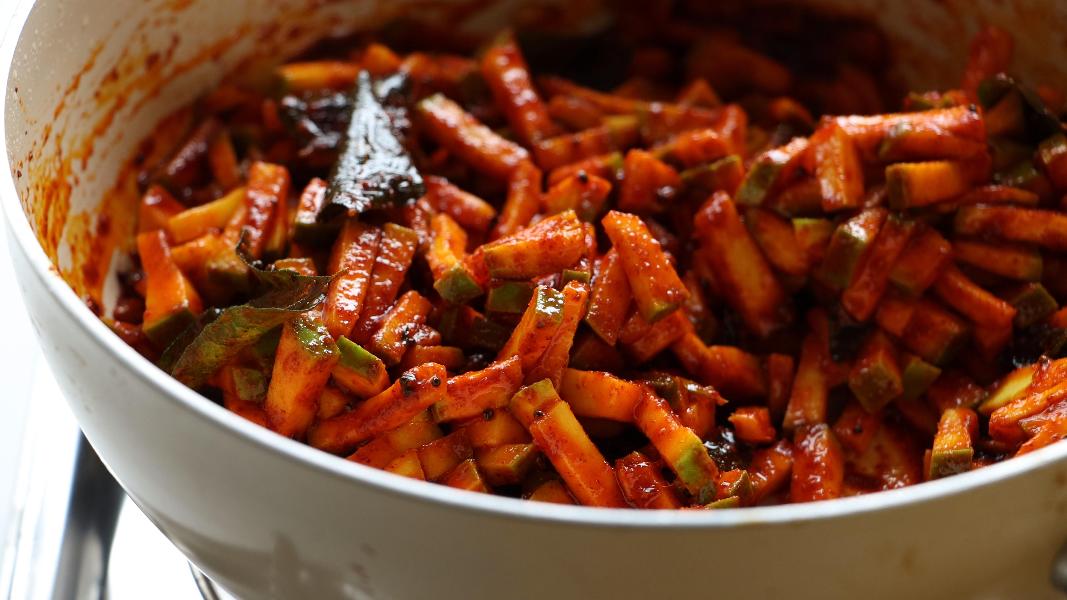
    Combine until mangoes are well coated with the spice mixture. Let it cool the mixture and transfer it to a clean jar.

    Tips & Notes:

    Always choose the right mangoes for the best taste and flavor. They need to be fresh, sour, firm and unripe with green skin. Soft or ripe ones won't give the same crunch and flavor.
    Do not peel the raw mangoes and make sure chop them into small pieces.
    Adjust the salt and red chili powder according to your preference. You can add little bit of venger or lemon juice at the end to add extra tang.
    Sesame oil makes all the difference. It will add the authentic Kerala touch and acts as a natural preservative.
    Always cool the pickle before transferring to a jar or container. Any moisture will spoil the pickle. Always use a clean and dry spoon.

    Storage suggestions:

    Always cool down the pickle before transferring to a jar. Use a clean and dry jar to prevent it from faster spoilage. Glass and ceramic jars are best for the storage.
    It stays good at the room temperature for about 3-4 days. If you want to store it for longer period of time, refrigerate for up to 2 weeks.

    Serving suggestions:

    In Kerala, no banana leaf feast feels complete without a spoonful of this instant kadumanga achar. Serve it on the banana leaf during Onam or Vishu along with other Sadya dishes like Pumpkin Thoran, Ada Pradhaman, Javvarisi Payasam, Inji Puli, and Upperi.

    This pickle is not just for festivals. It is equally good with everyday meals like Thayir Sadam, Avocado Paratha, Dosa, or Kanji. And it is perfect to pack it for road trips or train journeys.

    kerala instant mango pickle in a glass bowl on a banana leaf

    More Onam Sadya Recipes:

    • Inji Puli (Kerala Ginger Pickle)
    • Instant Pot Avial (Kerala Mixed Vegetable Curry)
    • Saggubiyyam Payasam Recipe - Javvarisi Payasam - Sabudana Kheer
    • Vellarikka Kichadi (Kerala Cucumber Kichadi)

    If you tried this Instant Mango Pickle Recipe or any other recipe on my blog please leave a 🌟 star rating and let me know how it went in the 📝 comments. Thanks for visiting my blog today!

    kerala instant mango pickle in a glass bowl on a banana leaf
    Print Recipe

    Kadumanga Achar (Kerala Style Instant Mango Pickle)

    Kadumanga Achar is a quick and easy Kerala-style instant mango pickle made with raw green mangoes, spices, and sesame oil. This pickle is bright, spicy, tangy, and a must-have in every Onam Sadya.
    Prep Time8 minutes mins
    Cook Time2 minutes mins
    Resting Time30 minutes mins
    Total Time40 minutes mins
    Course: Condiments
    Cuisine: Kerala, South Indian
    Keyword: instant mango pickle, kerala sadya recipes, Onam Sadya Recipes
    Servings: 2 Cups
    Calories: 382kcal
    Author: Hari Chandana Ponnaluri

    Ingredients

    • 2 Cups Chopped Raw Mango
    • 4 Tablespoons Sesame Oil
    • ⅛ Teaspoon Hing
    • 2 Tablespoons Kashmiri Chili Powder
    • ½ Teaspoon Turmeric Powder
    • ¼ Teaspoon Fenugreek Powder
    • 1.5 Teaspoons Salt or as needed
    • 2 Sprigs Curry Leaves
    • 1 Teaspoon Mustard Seeds

    Instructions

    • Wash and pat dry the raw mangoes. Chop them into small pieces. No need to peel the mangoes.
    • Add the chopped green mangoes to a mixing bowl. Add required salt and turmeric powder.
    • Mix everything until well combined and let it rest for at least 30 minutes.
    • Heat a pan with sesame oil and add mustard seeds. Let them splutter. Add curry leaves and hing to the pan and turn off the flame.
    • Add fenugreek powder and red chili powder to the tempered ingredients. Make sure the flame is off.
    • Immediately, give it a good mix. Add the marinated mango pieces to the chilli powder mixture.
    • Combine until mangoes are well coated with the spice mixture. Let it cool the mixture and transfer it to a clean jar.

    Video

    Notes

    Always choose the right mangoes for the best taste and flavor.
    Always cool the pickle before transferring to a jar or container. Any moisture will spoil the pickle. Always use a clean and dry spoon.

    Nutrition

    Calories: 382kcal | Carbohydrates: 30g | Protein: 3g | Fat: 30g | Saturated Fat: 4g | Polyunsaturated Fat: 13g | Monounsaturated Fat: 12g | Sodium: 1878mg | Potassium: 462mg | Fiber: 6g | Sugar: 23g | Vitamin A: 4234IU | Vitamin C: 100mg | Calcium: 61mg | Iron: 2mg

    Inji Puli (Kerala Ginger Pickle)

    August 23, 2025

    Inji Puli is a traditional Kerala condiment made with ginger, tamarind, chillies, jaggery and spices. This sweet, tangy and spicy pickle is a must-have dish on the festive feast menu. No Onam Sadya feels complete without Inji Puli.

    Traditional kerala inji puli served in a bowl placed on banana leaf
    [feast_advanced_jump_to]

    What is inji puli?

    Inji Puli (also known as Puli Inji or Inji Curry) is a traditional Kerala condiment made with fresh ginger, tamarind, jaggery, spices, and coconut oil. The name translates to Inji (ginger) and Puli (tamarind), which are the two important ingredients that give it its distinct, tangy-sweet-spicy flavor. It's not like a curry or a pickle that we usually make at our Andhra homes, it is somewhere in between. It is a thick, glossy, and delicious condiment that is packed with a wonderful flavor.

    Inji Puli is an essential part of the Kerala Sadya menu, a vegetarian feast served on banana leaves during festivals such as Onam and Vishu. Though it's served in small quantities, inji puli plays a big role in balancing the meal. It is served along with other Onam sadya dishes such as Mambazha Pulissery, Mango Rasam, Avial, Okra Thoran, Curd Rice and Parippu Curry.

    Ingredients & Substitutions:

    ingredients needed to make kerala inji puli

    Ginger - This is the star of this dish. Use fresh and tender ginger for sharp and spicy flavor. Avoid old fibrous ginger.

    Tamarind - This is another star of this dish. It adds the signature tangy, sour taste. Try to use old and black tamarind if possible for the authentic flavor. You can also use tamarind paste.

    Jaggery - Do not skip adding jaggery, it balances the sharpness of ginger and the sourness of tamarind. You can substitute it with brown sugar if you don't have jaggery handy.

    Chilies - You will need both fresh green chillies and dried red chillies here. We need to roast the finely chopped green chilies along with ginger. You can skip red chilies, they are for tempering.

    Spices - I have used turmeric powder, red chili powder, hing and mustard seeds. You can also add a little bit of roasted fenugreek powder at the end.

    Curry Leaves - They add a fresh aroma and true Kerala touch. Do not skip them.

    Oil - Coconut oil is traditionally used to make Inji curry. It gives a rich, nutty flavor and enhances aroma. You could substitute it with sesame oil (gingelly oil). Do not use neutral oils or olive oil if you want the authentic taste and flavor.

    Inji puli is ready for onam, served in a small bowl

    How to Make Inji Puli

    soaking tamarind in a pink bowl

    Measure and soak tamarind in 2 cups of hot water for about 15-30 minutes or until it is soft enough to extract the pulp.

    Wash, peel and finely chop the fresh ginger and green chillies. Keep them aside until use.

    soaked and squeezed tamarind extract in a pink bowl

    Once the tamarind is well-soaked, squeeze the tamarind pulp. Filter the tamarind water and keep it aside.

    Tempering mustard seeds, dried red chilies, curry leaves and hing in a clay pot

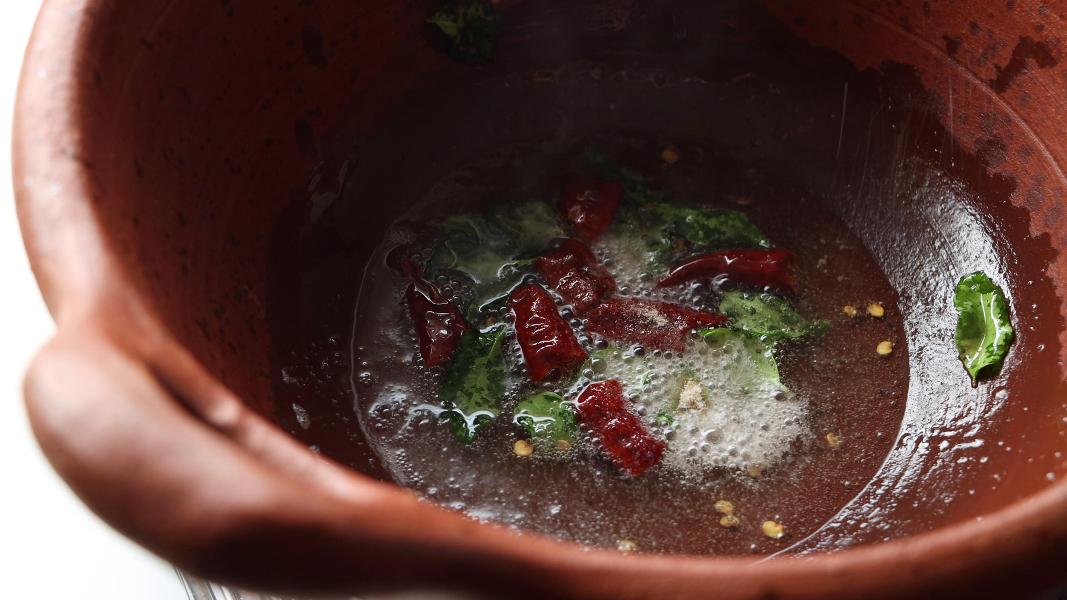
    Heat a pan or claypot with coconut oil. Add mustard seeds, broken red chillies and let them splutter. Add curry leaves and hing and give it a mix.

    finely chopped ginger and finely chopped green chilies added to a clay pot

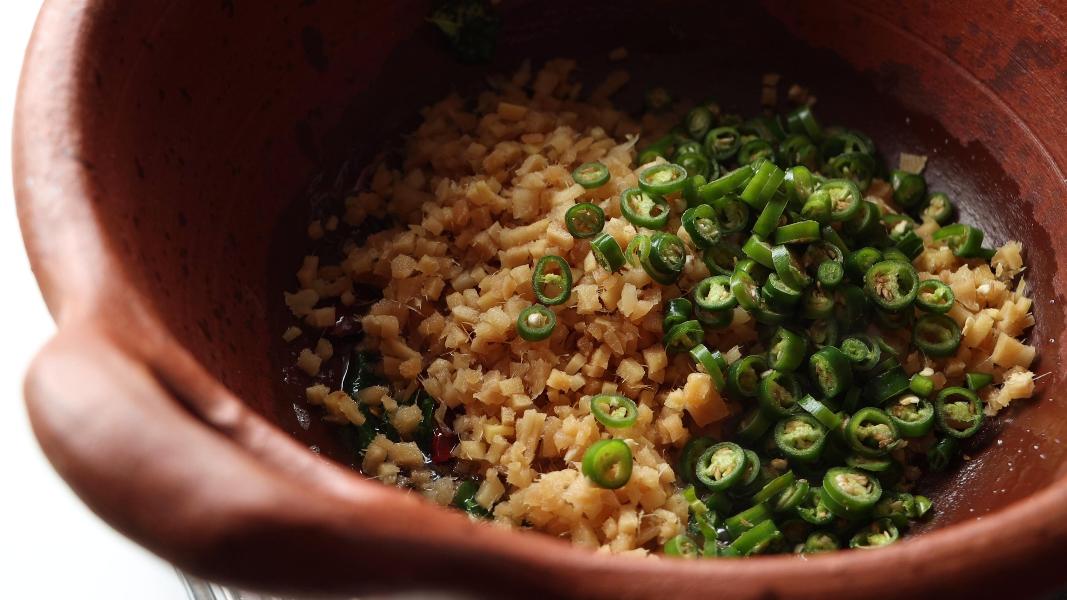
    Add the finely chopped ginger and green chillies to the seasoned ingredients and sauté well on a medium flame.

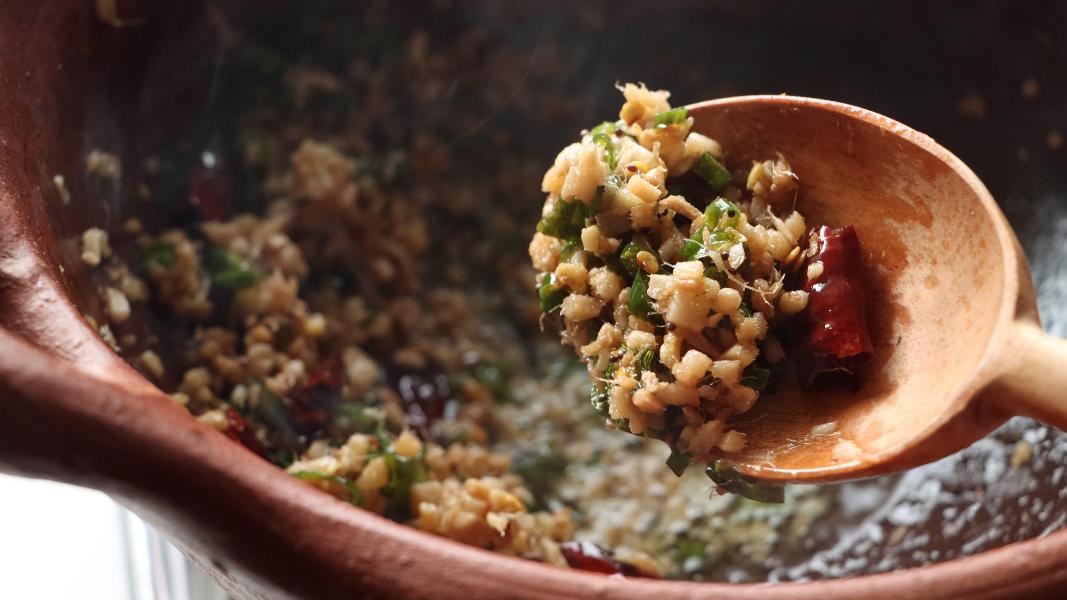
    A portion of roasted ginger and green chilies in a wooden spoon

    Keep frying the ginger occasionally until it is well roasted and golden brown color.

    poured tamarind extract into the roasted ginger along with spices

    Pour the tamarind extract into the pan. Add turmeric powder and red chilli powder and mix everything.

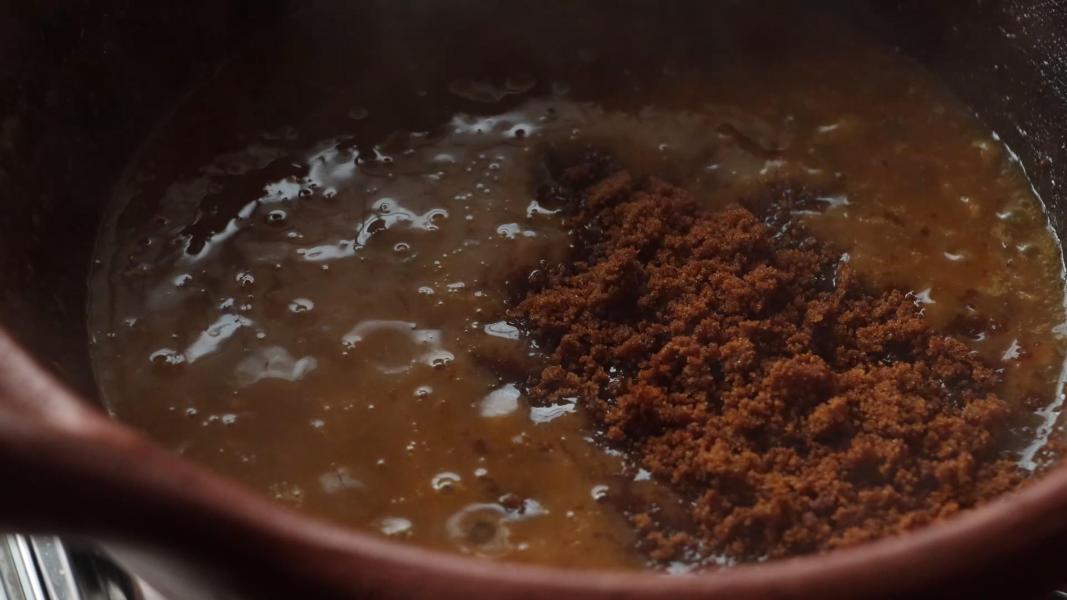
    salt and jaggery added to the clay pot

    Bring it to a boil and let it cook until the ginger tamarind mixture is thick. Now add jaggery and salt and mix well. If you are using fenugreek powder, add it at this stage.

    cooked and thickened inji puli in a clay pot

    Let it cook until the oil separates. Remove it from the flame and let it cool completely before storing it.

    Tips & Notes:

    The color of the Kerala ginger pickle depends on the color of tamarind and jaggery you are using.

    Make sure you are using fresh and tender ginger for the best results. Peel and chop ginger into very fine pieces. To speed up the chopping process, feel free to use a food processor. Since the ginger is the star ingredients, fry it until the raw smell disappears and it turns golden brown. This step is very important for the deep flavor.

    Adjust the tamarind, jaggery and chillies according to your taste.

    Do not undercook or overcook the pickle. It thickens more as it cools.

    A little bit of fenugreek powder adds a wonderful bitter note, but too much can overpower the dish. Skip it, if you are not sure.

    Avoid using iron cookware for this inji puli recipe. You can use stone cookware, clay cookware or any other cookware.

    Storage suggestions:

    Once the cooked inji curry is cooled down, transfer it to a clean jar and store it in the refrigerator. It can stay fresh for about 2-3 weeks in the fridge. If the weather is not too hot, it can stay good for about 4-5 days at room temperature.

    If you've used coconut oil, the Inji Puli will solidify after refrigeration and it is absolutely normal. Just take it out the refrigerator sometime before serving and let it come to room temperature. Alternatively, you can place the pickle jar in a bowl of warm water for a few minutes to soften it back. If you're in a hurry, microwave it for a few seconds to make it soft. The taste remains just as good.

    Always use a dry and clean spoon to prevent it from spoiling.

    Serving suggestions:

    Traditionally, puli inji is served on a banana leaf along with other sadya dishes. A small spoonful of puli inji is served at the top corner of the leaf since it acts a palate cleanser.

    It can also be served as a side dish with rice, oats idli, dosa, upma, oats pongal, vada, curd rice or beerakaya bajji to add a burst of flavor.

    a small bowl of inji puli on a banana leaf

    Make ahead for Sadya

    Since Onam Sadya requires many dishes to be prepared on the same day, inji puli is usually made a few days in advance, along with Nendran Chips and Sharkara Varatti. Doing so not only saves time on the busy festival day, but also enhances the flavor as it rests.

    More Onam Sadya Recipes:

    • Avial Recipe - Kerala Style Aviyal Recipe - How to make Avial - Onam Sadya Recipes
    • Mathanga Thoran Recipe - Kerala Style Pumpkin Stir Fry - Onam Sadya Recipes
    • Ada Pradhaman Recipe | Onam Sadhya Recipes
    • Mambazha Pulissery (Kerala Style Mango Curry)

    If you tried this Puli Inji Recipe or any other recipe on my blog please leave a 🌟 star rating and let me know how it went in the 📝 comments. Thanks for visiting my blog today!

    Print Recipe

    Inji Puli

    Inji Puli is a traditional Kerala condiment made with ginger, tamarind, chillies, jaggery and spices. This sweet, tangy and spicy pickle is a must-have dish on the festive feast menu. No Onam Sadya feels complete without Inji Puli.
    Prep Time15 minutes mins
    Cook Time20 minutes mins
    Total Time35 minutes mins
    Course: Condiments, Side Dish
    Cuisine: Kerala, South Indian
    Keyword: kerala sadya recipes, Onam Sadya Recipes, puli inji recipe
    Servings: 10
    Calories: 98kcal
    Author: Hari Chandana Ponnaluri

    Ingredients

    • 1 Cup Ginger, chopped
    • ¼ Cup Tamarind Lemon sized ball
    • 4 Tablespoons Coconut Oil
    • ½ Teaspoon Mustard Seeds
    • 2 Dried Red Chilies
    • 6 Green Chilies finely chopped
    • ¼ Cup Jaggery
    • ¼ Teaspoon Turmeric Powder
    • ½ Teaspoon Red Chili Powder

    Instructions

    • Measure and soak tamarind in 2 cups of hot water for about 15-30 minutes or until it is soft enough to extract the pulp.
    • Wash, peel and finely chop the fresh ginger and green chillies. Keep them aside until use.
    • Once the tamarind is well-soaked, squeeze the tamarind pulp. Filter the tamarind water and keep it aside.
    • Heat a pan or claypot with coconut oil. Add mustard seeds, broken red chillies and let them splutter. Add curry leaves and hing and give it a mix.
    • Add the finely chopped ginger and green chillies to the seasoned ingredients and sauté well on a medium flame.
    • Keep frying the ginger occasionally until it is well roasted and golden brown color.
    • Pour the tamarind extract into the pan. Add turmeric powder and red chilli powder and mix everything.
    • Bring it to a boil and let it cook until the ginger tamarind mixture is thick. Now add jaggery and salt and mix well. If you are using fenugreek powder, add it at this stage.
    • Let it cook until the oil separates. Remove it from the flame and let it cool completely before storing it.
    • Serve & enjoy!

    Video

    Nutrition

    Calories: 98kcal | Carbohydrates: 12g | Protein: 0.4g | Fat: 6g | Saturated Fat: 5g | Polyunsaturated Fat: 0.1g | Monounsaturated Fat: 0.4g | Sodium: 94mg | Potassium: 81mg | Fiber: 1g | Sugar: 8g | Vitamin A: 31IU | Vitamin C: 4mg | Calcium: 8mg | Iron: 0.3mg

    Nellikai Sadam (South Indian Amla Rice)

    April 13, 2025

    A bright, tangy and flavorful South Indian rice dish, this Nellikai Sadam is made with fresh amla and tempered with simple spices. It's a light yet satisfying meal that can be made in no time!

    A stone bowl of Nellikai Sadam made with fresh amla and topped with a red chili and peanuts.
    [feast_advanced_jump_to]

    What is nellikai sadam?

    Nellikai Sadam is a simple and delicious South Indian rice dish made with amla (Indian gooseberries) paste, cooked rice, and simple spices. It is tangy, bright, flavorful, and comes together in minutes. It can be a perfect dish for lunchboxes or a light meal.

    This dish is also known as Usirikaya Pulihora in Telugu and Nellikai Chitranna in Kannada. It's a quick, homestyle recipe where cooked rice is mixed with a basic seasoning and a freshly ground gooseberry paste.

    Gooseberries are rich in vitamin C, and this amla rice is a perfect way to include them in your diet when they are in season.

    Ingredients & Substitutions:

    Gooseberries - Also known as Nellikai, Amla or Usirikaya. Fresh Indian gooseberry is the star of this dish. They add a tangy flavor and are loaded with nutrients. You can also use frozen gooseberries if they are not in season.

    Rice - Any kind of long-grain white rice works here. I usually use sona masoori rice, but you can also use basmati or even leftover rice. Just make sure it's cooled and not mushy.

    Chilies - I have used both green chilies and dried red chilies. They add the perfect heat to balance the tartness of the amla. Add more or less to suit your spice level.

    Chana Dal & Urad Dal - These lentils are tempered until golden for a crunchy bite. Do not skip both. If you're missing one, it's okay to use just the other.

    Mustard Seeds - Mustard seeds are the key part of South Indian tempering. Do not skip.

    Curry Leaves - Adds a classic South Indian aroma. You can replace them with the dried curry leaves.

    Turmeric Powder - Adds a lovely golden hue and a subtle earthy flavor.

    Hing - Also known as Asafoetida. A tiny pinch goes a long way. If you don't have it, you can skip it.

    A full ingredient list with exact amounts can be found in the recipe card below.

    Variations:

    This recipe is naturally a no-onion, no-garlic version. If you want, you can sauté onion before adding the ground amla for extra flavor and crunch.

    Add a little bit of finely chopped or grated ginger to the seasoning for a different flavor variation.

    Stir in some freshly grated coconut at the end for a different taste and flavor.

    Replace rice with cooked millets or cooked quinoa for a wholesome alternative.

    For a more filling and healthy version, add some sautéed carrots, beans, or green peas.


    How to Make Nellikai Sadam

    Wash and chop the amla into pieces. Discard the seeds.

    Add them to a blender jar or mixie jar and blend it until smooth or a little coarse paste.

    Keep it aside until use.

    Heat oil in a pan and add mustard seeds, chana dal, urad dal and peanuts. Sauté until they are light golden brown.

    Add slit green chilies, dried red chilies, curry leaves and hing to the pan and give it a mix.

    Add the ground gooseberry paste and turmeric powder to the tempered ingredients.

    Keep sautéing for a minute or two and turn off the heat.

    Add 5 cups of cooled cooked rice and required salt to the pan.

    Gently mix everything until well combined. Adjust the salt and serve.

    Tips & Notes:

    • Use fresh amla for the best flavor. Frozen can also be used if fresh amla is not in season.
    • Adjust the chilies to suit your spice level.
    • Do not burn the lentils and peanuts.
    • Make sure the cooked rice is cooled before mixing it with the tempered ingredients. This prevents the rice from turning mushy. This recipe works great with leftover rice too.
    • You can grind the amla ahead of time and store it in the fridge for a day or two to save time.

    Storage suggestions:

    Nellikai rice tastes best when it's freshly made. Store any leftovers in an airtight container in the refrigerator and enjoy within 2 days. Reheat gently before serving. I don't recommend freezing it, as the texture may not hold up well after thawing.

    Serving suggestions:

    This gooseberry rice makes a comforting meal on its own. You can pair it with some papad or potato fry for a satisfying meal. You can also serve it with plain yogurt or raita. It can be served as a light breakfast, a quick lunch, or even as an evening snack.

    More Indian rice recipes:

    • Lemon Rice Recipe - Nimmakaya Pulihora Recipe - Chitranna Recipe - South Indian Recipes
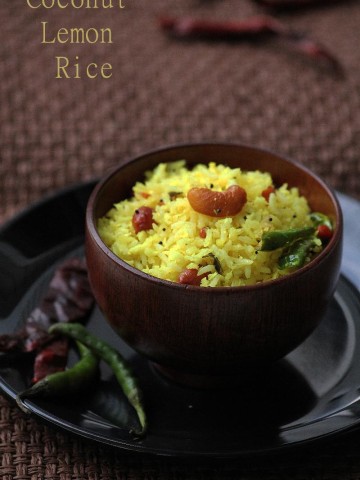
    • Nimmakaya Kobbari Pulihora Recipe - Coconut Lemon Rice Recipe - Easy Rice Recipes
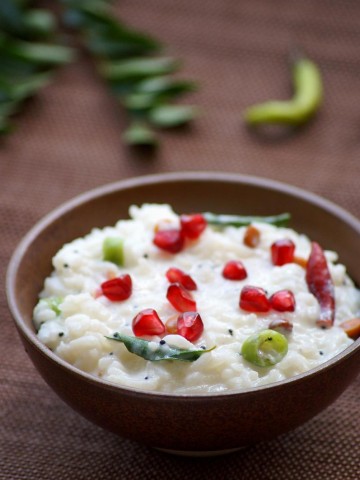
    • Daddojanam Recipe - Curd Rice Recipe - Thayir Sadam - Mosaranna
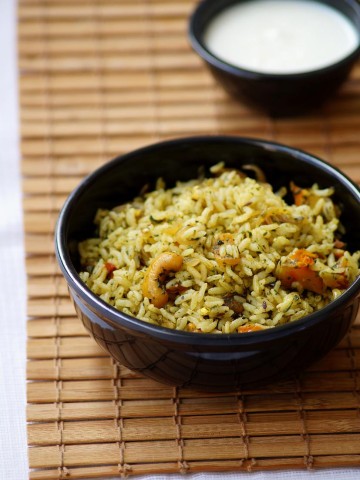
    • Pudina Rice Recipe - Andhra Style Mint Rice Recipe Video - Easy Lunch Box Recipes

    If you tried this Nellikai Sadam Recipe or any other recipe on my blog please leave a 🌟 star rating and let me know how it went in the 📝 comments. Thanks for visiting my blog today!

    Print Recipe

    Nellikai Sadam Recipe

    Nellikai Sadam - A bright, tangy and flavorful South Indian rice dish made with fresh amla and tempered with simple spices. It's a light yet satisfying meal that can be made in no time!
    Prep Time5 minutes mins
    Cook Time5 minutes mins
    Total Time10 minutes mins
    Course: Breakfast, Lunch, Main Course
    Cuisine: Indian, South Indian
    Keyword: amla rice recipe, Indian rice recipes, nellikai sadam recipe, usirikaya pulihora
    Servings: 4
    Calories: 299kcal
    Author: Hari Chandana Ponnaluri

    Ingredients

    • 1 Cup Raw Rice (5 Cups Cooked Rice)
    • 2-3 Tablespoons Oil
    • 8 Amla / Indian Gooseberry
    • 2 Tablespoons Peanuts
    • 1 Teaspoon Mustard Seeds
    • 1 Tablespoon Chana Dal
    • 1 Tablespoon Urad Dal
    • 2 Sprigs Curry Leaves
    • 3 Green Chilies
    • 3 Dried Red Chilies
    • ½ Teaspoon Turmeric Powder
    • ⅛ Teaspoon Hing / Asafoetida 
    • Salt to taste

    Instructions

    • Wash and chop the amla into pieces. Discard the seeds.
    • Add them to a blender jar or mixie jar and blend it until smooth or a little coarse paste.
    • Keep it aside until use.
    • Heat oil in a pan and add mustard seeds, chana dal, urad dal and peanuts. Sauté until they are light golden brown.
    • Add slit green chilies, dried red chilies, curry leaves and hing to the pan and give it a mix.
    • Add the ground gooseberry paste and turmeric powder to the tempered ingredients.
    • Keep sautéing for a minute or two and turn off the heat.
    • Add 5 cups of cooled cooked rice and required salt to the pan.
    • Gently mix everything until well combined. Adjust the salt and serve.

    Video

    Nutrition

    Calories: 299kcal | Carbohydrates: 45g | Protein: 6g | Fat: 10g | Saturated Fat: 1g | Polyunsaturated Fat: 1g | Monounsaturated Fat: 7g | Sodium: 118mg | Potassium: 137mg | Fiber: 3g | Sugar: 1g | Vitamin A: 50IU | Vitamin C: 36mg | Calcium: 36mg | Iron: 1mg

    Instant Pot Palak Paneer

    April 10, 2025

    Instant Pot Palak Paneer - This easy instant pot palak paneer is a quick and cozy Indian curry made with fresh spinach and soft paneer (Indian cottage cheese). It is full of flavor and ready in under 15 minutes!

    What is palak paneer?

    Palak Paneer is a classic North Indian vegetarian side dish made with paneer (Indian cottage cheese), spinach and spices. It is one of the simple and healthy Indian curries that can be made in no time with handful of ingredients. The paneer cubes are simmered in a flavorful and creamy gravy which is made with spinach, ginger, garlic, onion and garam masala. It is often served with roti, naan, or rice.

    Instant pot palak paneer is a modern twist on the classic Indian dish, prepared effortlessly using an electric pressure cooker. Using the instant pot makes it super easy. The spinach cooks quickly while locking in its fresh green color. It is so simple to whip up and perfect for a weeknight dinners.

    Ingredients & Substitutions:

    Spinach - Fresh spinach is ideal for the best palak paneer, but you can also use frozen spinach.

    Paneer - Paneer is Indian cottage cheese, you can get it from Indian stores. Homemade or store-bought works well. Do not forget to soak the paneer cubes in hot water if using store-bought. For a vegan version, tofu is a great alternative.

    Onion - Adds a sweet and savory base. You can use any type of onions.

    Ginger & Garlic - Do not skip adding ginger and garlic. I have used freshly chopped ginger and garlic in this recipe. You could also use ginger-garlic paste if that's what you have.

    Green Chili - It adds a little heat. Use any hot peppers.

    Garam Masala - It is a must. Use a good quality homemade or store-bought garam masala spice blend for the best and authentic flavor.

    Cumin Seeds - They can be replaced with ground cumin.

    Sugar - Balances the flavors. Totally optional though.

    Salt & Oil

    Serving suggestions:

    Serve it with any Indian flatbread like roti, naan, chapati, or paratha. You can also serve it hot with steamed rice, pulao, or jeera rice.

    You can also pair it with a toasted bread and pita bread.

    Storage suggestions:

    Any leftovers can be stored in the refrigerator for 3-4 days. You can also freeze for up to 2 months.

    Tips & Notes:

    Make sure you are using fresh spinach for the best results. Discard if there are any hard stems to prevent bitterness.

    Adjust the number of green chilies as per your taste preference. You can also add a little bit of red chili powder for extra spice.

    If your paneer is firm, soak it in hot water to make it soft.

    Make sure you are using fresh homemade or store-bought paneer.

    You can add some cashew cream, fresh cream or heavy cream on top to make it rich and creamy.

    You can also squeeze some lemon juice on top while serving.

    Step by step instructions:

    Cut the paneer into desired shapes and soak in hot water. Skip this step if you are using homemade paneer.

    Press the SAUTE button.

    Add oil to the inner pot of the instant pot. Add cumin seeds and saute until aromatic.

    Add slit green chili and chopped onion to the pot and saute until onions are translucent.

    Add finely chopped ginger and chopped garlic and saute for another minute.

    Add ½ cup of water to the pot and scrap the bottom well to prevent burning.

    Add washed spinach leaves, required salt and sugar. Give it a mix and close the lid.

    Press CANCEL button and press PRESSURE COOK / MANUAL button. Set the valve to the sealing position and adjust the time to 0 minutes.

    Cancel and quick release the pressure.

    Blend everything using immersion blender until smooth. Add more salt if needed and mix well.

    Add soaked paneer cubes and garam masala to the spinach gravy and mix well.

    Let it simmer on SAUTE mode for 1-2 minutes and serve hot with basmati rice, roti or naan.

    Few more Indian curry recipes:

    • Kerala Mango Curry
    • Methi Paneer Bhurji
    • Kadai Mushroom
    • Mushroom Matar Butter Masala
    • Saag Aloo
    • Shahi Paneer
    • Aloo Palak Gravy

    How to make instant pot palak paneer recipe video below:

    Print Recipe

    Instant Pot Palak Paneer

    Instant Pot Palak Paneer - This easy instant pot palak paneer is a quick and cozy Indian curry made with fresh spinach and soft paneer (Indian cottage cheese). It is full of flavor and ready in under 15 minutes!
    Prep Time5 minutes mins
    Cook Time10 minutes mins
    Total Time15 minutes mins
    Course: Curry, Side Dish
    Cuisine: Indian
    Keyword: instant pot palak paneer, instant pot recipes
    Servings: 4
    Calories: 253kcal
    Author: Hari Chandana Ponnaluri

    Ingredients

    • 200 Grams Paneer
    • 2 Tablespoons Oil
    • 1 Teaspoon Cumin Seeds
    • 1 Green Chili slit
    • ¾ Cup Chopped Onion (3 small onions)
    • 1 Tablespoon Chopped Ginger
    • 1 Tablespoon Chopped Garlic
    • ½ Cup Water
    • 340 Grams Spinach (2 bunches)
    • Salt to taste
    • 1 Teaspoon Sugar
    • 1 Teaspoon Garam Masala

    Instructions

    • Cut the paneer into desired shapes and soak in hot water. Skip this step if you are using your own paneer.
    • Press the SAUTE button.
    • Add oil to the inner pot of the instant pot. Add cumin seeds and saute until aromatic.
    • Add slit green chili and chopped onion to the pot and saute until onions are translucent.
    • Add finely chopped ginger and chopped garlic and saute for another minute.
    • Add ½ cup of water to the pot and scrap the bottom well to prevent burning.
    • Add washed spinach leaves, required salt and sugar. Give it a mix and close the lid.
    • Press CANCEL button and press PRESSURE COOK / MANUAL button. Set the valve to the sealing position and adjust the time to 0 minutes.
    • Cancel and quick release the pressure.
    • Blend everything using immersion blender until you get a smooth puree. Add more salt if needed and mix well.
    • Add soaked paneer cubes and garam masala to the spinach puree and mix well.
    • Let it simmer on SAUTE mode for 1-2 minutes and serve hot with basmati rice, roti or naan.

    Video

    Nutrition

    Calories: 253kcal | Carbohydrates: 10g | Protein: 10g | Fat: 20g | Saturated Fat: 8g | Polyunsaturated Fat: 0.4g | Monounsaturated Fat: 6g | Cholesterol: 33mg | Sodium: 122mg | Potassium: 542mg | Fiber: 3g | Sugar: 3g | Vitamin A: 7978IU | Vitamin C: 28mg | Calcium: 341mg | Iron: 3mg

    kolaczki Cookies (Polish Christmas Jam Cookies)

    December 23, 2024

    Kolaczki Cookies - A classic Polish Christmas cookies filled with fruit preserves. These tender, flaky, and delicious treats are perfect for the holiday season!

    Looking for more Christmas treats? Try my Potato Chip Cookies, Coconut Ice, and Pecan Snowball Cookies.

    What are kolaczki cookies?

    Kolaczki cookies are traditional Polish pastry-like cookies made with cream cheese, butter and fruit preserves. They are known for their tender, flaky texture and jam-filled centers. These Polish cream cheese cookies are often enjoyed during Christmas time as part of holiday cookie trays and other special occasions. You will need just a handful of simple ingredients to make these traditional polish cookies, and you can swap the fillings with different fruit preserves, poppy seed filling, almond paste or nut fillings.

    The cream cheese dough is rolled out, cut into squares, and the corners are folded over the jam filling to make a diamond shape. They are baked until edges are lightly browned and dusted with powdered sugar for sweetness and festive appearance. Kolaczki cookies are not only delicious but also a nostalgic not to traditional polish cuisine, often bringing families together to bake during the holiday season.

    Ingredients & Substitutions:

    Flour - Plain flour or all-purpose flour is the base of the cookie dough. I haven't tried with any other flour yet.

    Cream Cheese - It adds tang and tenderness to the cookies. It can be substituted with mascarpone cheese for a milder flavor.

    Butter - I have used unsalted butter. Make sure it is softened at room temperature.

    Powdered Sugar - You will need powdered sugar or icing sugar to sprinkle on the cookies. Do not skip it because we are not adding any sugar to the cream cheese dough.

    Fruit Preserves - Use any thick jam or fruit preserve. Avoid using thin or watery jams to prevent leaking. I have used cherry, strawberry, apricot and mango fruit jams in this recipe. It can be substituted with poppy seed filling, almond paste, or nut fillings.

    Salt - Omit if using salted butter.

    Serving suggestions:

    Kolaczki cookies make wonderful and delicious gifts. Pack them in a cookie tin during the festive season. These are perfect for the holiday gathering, parties and cookie exchanges.

    These can be served as a snack along with a cup of coffee or tea.

    Storage suggestions:

    They can be stored in an airtight container at room temperature for up to 3 days. If you want to store them for longer, freeze them. Once the cookies are baked and cooled, transfer them to a ziplock bag and freeze them for up to 3 months. Thaw them in the fridge overnight or at room temperature and dust with powdered sugar before serving.

    Variations:

    You can use any of your favorite fruit jams such as apricot, mango, cherry, strawberry, raspberry or mixed fruit jam.

    You can also use sweet almond paste or poppy seeds filling to fill the cookies.

    Replace jam with any chocolate spread or nutella for a chocolatey twist.

    Add a touch of cinnamon, cardamom or vanilla extract to the dough for extra flavor. You could also add a little bit of orange or lemon zest for a subtle citrus flavor.

    Tips & Notes:

    The kolaczki cookie dough should be soft and slightly sticky. Do not skip chilling the dough, it helps to retain their shape and achieve the best flaky texture. If you are not able to roll the dough, chill it for some more time.

    Roll the dough evenly to ensure even baking.

    Do not use thin or watery fruit preserve or any other fillings to avoid leakage.

    Roll out and cut the dough in small batches and keeping the rest refrigerated to maintain its firmness. It will be easy to roll when the dough is chilled.

    Seal the edges properly.

    Step by step instructions:

    Combine flour and salt in a medium bowl and set aside.

    Add softened butter and cream cheese in a large mixing bowl. Beat until well combined.

    Gradually add the flour and mix until just combined.

    You can use a hand mixer, stand mixer or spatula to make the dough.

    Form the dough into a ball.

    Wrap it in a plastic wrap and refrigerate for at least 1 hour or until easy to handle.

    Dust the surface with powdered sugar and cut the chilled dough into 2 parts. Put one part of the dough back in the refrigerator until use.

    Preheat the oven to 180 degrees C. Line a baking sheet with a parchment paper and set aside.

    Roll out the dough about ¼-inch thickness and cut into 2-inch squares.

    Arrange the dough squares on the prepared baking sheet and place a ½ teaspoon of jam in the center of each square.

    Rub a drop of water to one corner. Overlap opposite corner to seal well.

    Bake them in the preheated oven at 180 degrees for about 15 minutes or until they are lightly golden.

    Remove them from the oven and let them cool completely.
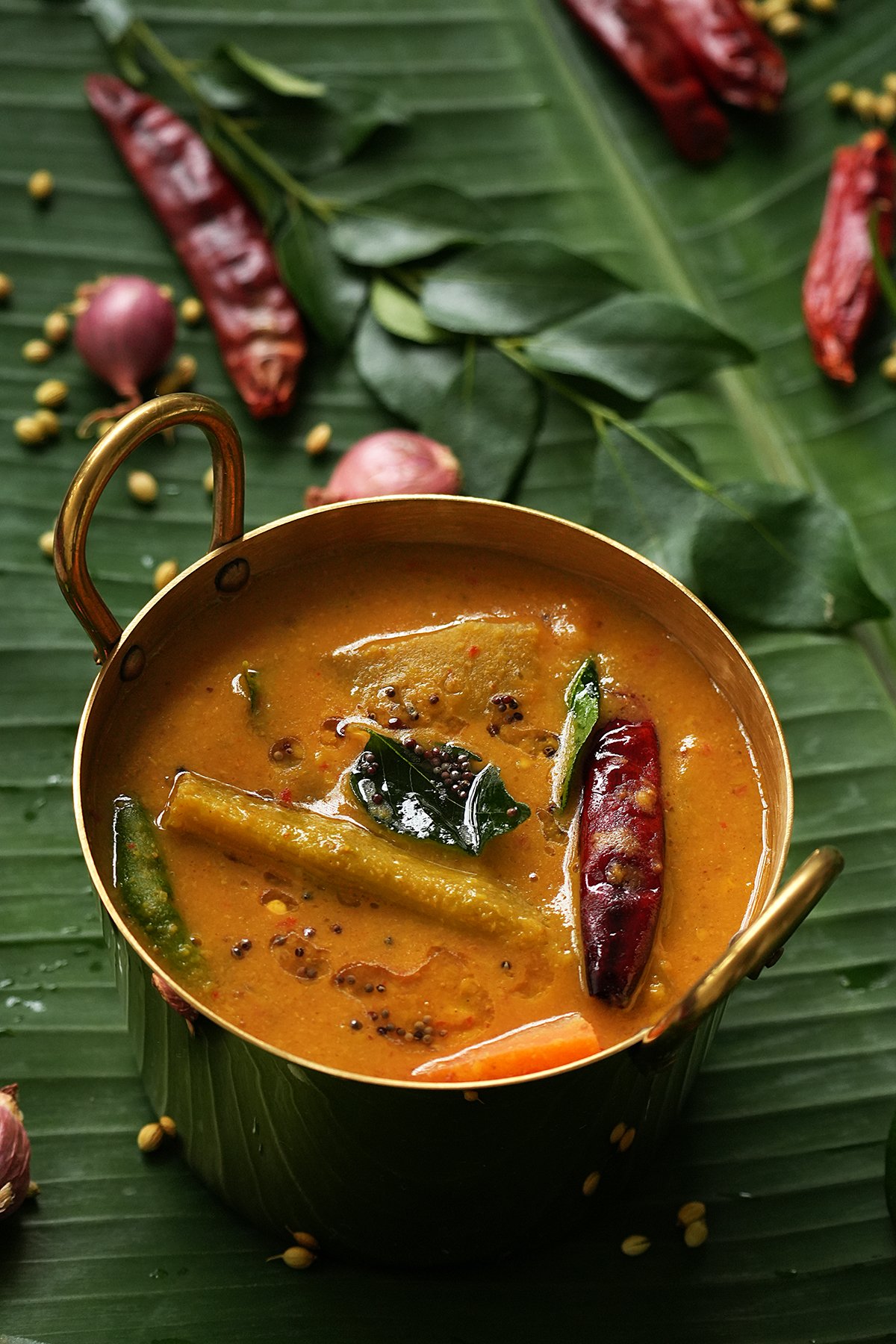
    Once cooled, dust with powdered sugar and serve.

    More Christmas recipes:

    • Honey Joys
    • Peanut Butter Blossoms
    • Potato Chip Cookies
    • Oreo Bark
    • Chocolate Covered Oreos
    • Gingerbread Snowballs
    • Lemon Meltaways
    • Biscoff Trufles
    • Swedish Chocolate
    • Buckeyes

    Polish kolaczki cookies recipe video below:

    Print Recipe

    Polish Kolaczki Cookies

    Kolaczki Cookies - A classic Polish cream cheese cookies filled with fruit preserves. These tender, flaky, and delicious treats are perfect for the holiday season!
    Prep Time30 minutes mins
    Cook Time15 minutes mins
    Chill Time1 hour hr
    Total Time1 hour hr 45 minutes mins
    Course: Cookies, Dessert
    Cuisine: International, Polish
    Keyword: kolaczki cookies
    Servings: 30 Cookies
    Calories: 83kcal
    Author: Hari Chandana Ponnaluri

    Ingredients

    • 1.5 Cups All-Purpose Flour / Plain Flour
    • ¼ Teaspoon Salt
    • ¾ Cup Unsalted Butter, softened
    • ½ Cup Cream Cheese, softened
    • ⅓ Cup Jam / Fruit Preserves or as needed
    • Powdered Sugar for Dusting

    Instructions

    • Combine flour and salt in a medium bowl and set aside.
    • Add softened butter and cream cheese in a large mixing bowl. Beat until well combined.
    • Gradually add the flour and mix until just combined.
      You can use a hand mixer, stand mixer or spatula to make the dough.
    • Form the dough into a ball.
    • Wrap it in a plastic wrap and refrigerate for at least 1 hour or until easy to handle.
    • Dust the surface with powdered sugar and cut the chilled dough into 2 parts. Put one part of the dough back in the refrigerator until use.
    • Preheat the oven to 180 degrees C. Line a baking sheet with a parchment paper and set aside.
    • Roll out the dough about ¼-inch thickness and cut into 2-inch squares.
    • Arrange the dough squares on the prepared baking sheet and place a ½ teaspoon of jam in the center of each square.
    • Rub a drop of water to one corner. Overlap opposite corner to seal well.
    • Bake them in the preheated oven at 180 degrees for about 15 minutes or until they are lightly golden.
    • Remove them from the oven and let them cool completely.
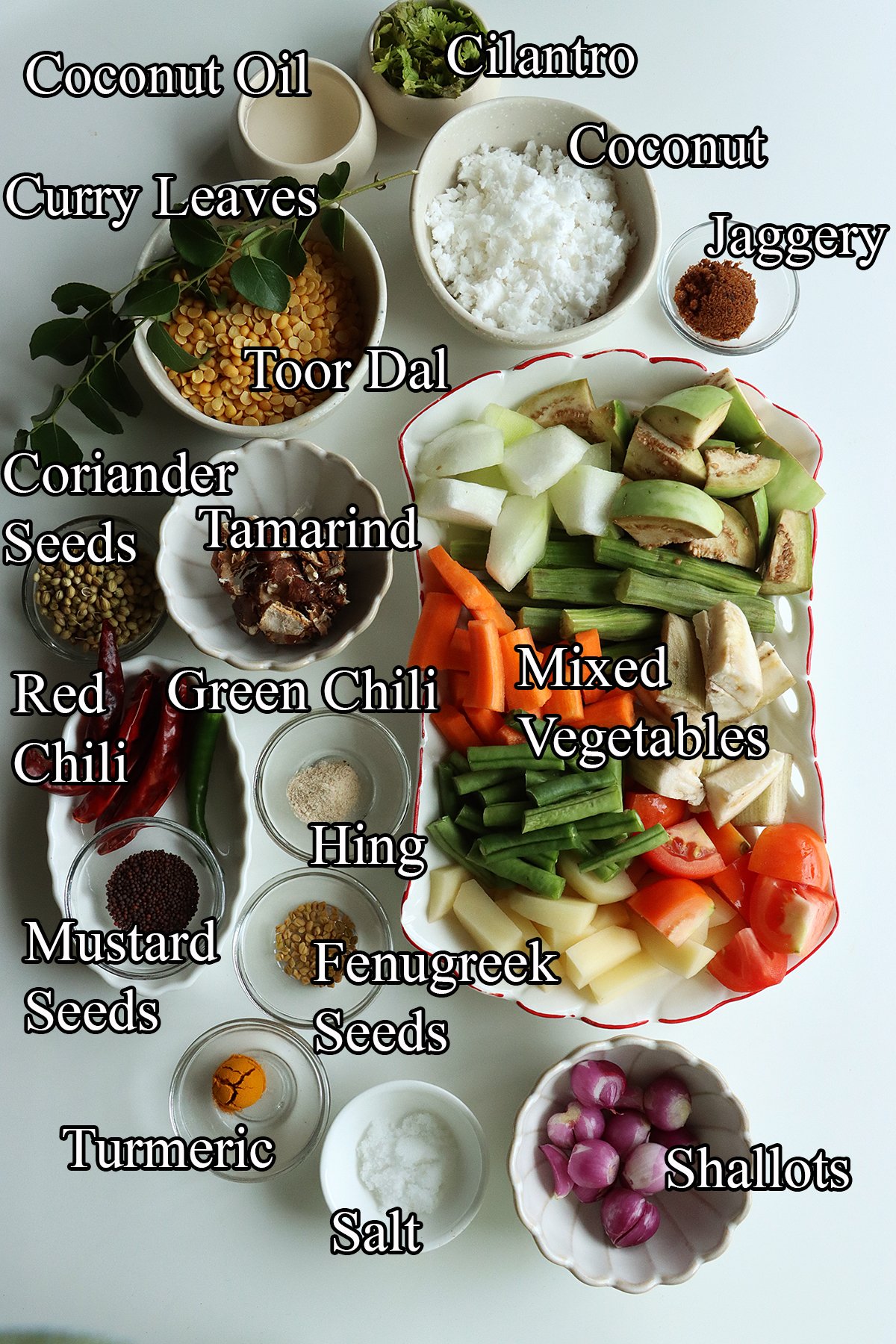
    • Once cooled, dust with powdered sugar and serve.

    Video

    Nutrition

    Calories: 83kcal | Carbohydrates: 7g | Protein: 1g | Fat: 6g | Saturated Fat: 4g | Polyunsaturated Fat: 0.3g | Monounsaturated Fat: 2g | Trans Fat: 0.2g | Cholesterol: 16mg | Sodium: 33mg | Potassium: 15mg | Fiber: 0.2g | Sugar: 1g | Vitamin A: 198IU | Vitamin C: 0.2mg | Calcium: 7mg | Iron: 0.3mg

    Honey Joys

    December 21, 2024

    Honey Joys - A classic Australian treat made with cornflakes, honey, butter, and sugar. These sweet, crunchy, and addictive treats are perfect for the holiday season. All you need are 4 ingredients and 20 minutes to make these irresistible crunchy honey joys!

    What are honey joys?

    Honey Joys, also known as Honey Crackles are a classic Australian treat made by coating cornflakes with a mixture of melted butter, sugar, and honey, then baking it in paper cases. Once they cool, they harden up into crispy, sweet treats with a golden, caramel-like flavor. These easy treats are a classic Australian kids' party treat, loved for their simple ingredients and easy preparation. These crunchy honey joys are perfect for parties, picnics, or just as a homemade gift.

    Ingredients & Substitutions:

    Cornflakes - Corn flakes are the main ingredient that gives these treats their signature crunch. Use a good quality unsweetened cornflakes for the best results.

    Sugar - Use caster sugar/superfine sugar or granulated white sugar.

    Butter -It helps the sugar and honey melt into a smooth and rich mixture. Use either salted or unsalted butter. If you looking for a dairy-free version, use vegan butter or coconut oil.

    Honey - It gives the treats their sweet, honey taste. You can replace it with maple syrup or golden syrup if you looking for vegan alternatives.

    Serving suggestions:

    These are great for gifting, parties, holiday gatherings or any special occasion.

    Serve them as snack with a glass of milk, or a hot cup of coffee or tea.

    Storage suggestions:

    Store the cooled honey joys in an airtight container at room temperature in a cool, dry place for up to a week. I do not recommend freezing.

    Variations:

    Drizzle melted chocolate over the top of the baked honey joys for a chocolatey twist. Dark or milk chocolate works well. Let the chocolate harden before serving for a decadent treat. You could also try adding chocolate chips to the mixture.

    You can add some chopped nuts like almonds, cashews, pistachios or walnuts to the cornflakes mixture for extra crunch and richness.

    You can also add some dried fruit like cranberries or sultanas to the mixture. This adds a chewy, fruity texture that contrasts well with the crunchy cornflakes.

    Try adding a handful of desiccated coconut for a tropical twist.

    Sprinkle rainbow sprinkles or holiday sprinkles on top to add a festive touch. You can also top them with M&M for extra sweetness and texture.

    Add few drops of food coloring to match the festive theme.

    Tips & Notes:

    Make sure you are using fresh and high-quality ingredients for the best flavor and crunch. Avoid using stale or soggy cornflakes, as they won't hold up well once covered in the butter mixture.

    Melt butter, sugar and honey over the medium flame. Overheating the mixture can make it caramelize too quickly, which makes them hard. Melt the ingredients together until it is frothy or bubbling.

    Use a heat-resistant mixing bowl.

    Be careful not to crush the cornflake while mixing them with the butter mixture. Stir gently to coat every flake evenly with the glaze.

    Quickly fill the cupcake liners when the cornflake mixture is hot.

    Do not overbake them. Overbaking can cause them to become too hard. Bake them for around 10 minutes. They will harden as they cool.

    Step by step instructions:

    Preheat the oven to 150 degrees C. Line a muffin pan with paper liners and keep it ready.

    Add 4 cups of cornflakes to a heat-resistant bowl and keep it aside until use.

    Combine butter, sugar, and honey in a saucepan.

    Mix well over a medium flame.

    Melt the butter mixture until it is frothy and starts to bubbling.

    Remove the glaze from the heat and pour it over the cornflakes. Gently mix everything until they are well coated with melted butter mixture.

    Quickly fill the muffin liners with the coated cornflakes.

    Bake them in the preheated oven at 150 degrees C for about 10 minutes.

    Let them cool completely and serve!

    More sweet treat recipes:

    • Christmas Popcorn
    • Peanut Butter Blossom Cookies
    • Sugar Plums
    • Chocolate Nonpareils
    • Biscoff Truffles
    • Oreo Bark
    • Peppermint Fudge
    • Double Chocolate Snowball Cookies

    Recipe adapted from Kellogg's

    Easy honey joys recipe video below:

    Print Recipe

    Honey Joys

    Honey Joys - A classic Australian treat made with cornflakes, honey, butter, and sugar. These sweet, crunchy, and addictive treats are perfect for the holiday season. All you need are 4 ingredients and 20 minutes to make these irresistible crunchy honey joys!
    Prep Time5 minutes mins
    Cook Time15 minutes mins
    Total Time20 minutes mins
    Course: Cookies, Snack
    Cuisine: Australian, International
    Keyword: honey joys recipe
    Servings: 12
    Calories: 114kcal
    Author: Hari Chandana Ponnaluri

    Ingredients

    • 4 Cups Cornflakes
    • 90 Grams Unsalted Butter ⅓ Cup + 2 Tablespoons
    • ⅓ Cup Sugar 80 Grams
    • 1 Tablespoon Honey

    Instructions

    • Preheat the oven to 150 degrees C. Line a muffin pan with paper liners and keep it ready.
    • Add 4 cups of cornflakes to a heat-resistant bowl and keep it aside until use.
    • Combine butter, sugar, and honey in a saucepan. Mix well over a medium flame.
    • Melt the butter mixture until it is frothy and starts to bubbling.
    • Remove the glaze from the heat and pour it over the cornflakes. Gently mix everything until they are well coated with melted butter mixture.
    • Quickly fill the muffin liners with the coated cornflakes.
    • Bake them in the preheated oven at 150 degrees C for about 10 minutes.
    • Let them cool completely and serve!

    Video

    Nutrition

    Calories: 114kcal | Carbohydrates: 15g | Protein: 1g | Fat: 6g | Saturated Fat: 4g | Polyunsaturated Fat: 0.2g | Monounsaturated Fat: 2g | Trans Fat: 0.2g | Cholesterol: 16mg | Sodium: 69mg | Potassium: 19mg | Fiber: 0.3g | Sugar: 8g | Vitamin A: 354IU | Vitamin C: 2mg | Calcium: 2mg | Iron: 3mg

    Peanut Butter Blossom Cookies

    December 20, 2024

    Peanut Butter Blossom Cookies - Soft, chewy, delicious, and classic peanut butter cookies topped with a rich Hershey chocolate kiss. They're the perfect addition to your cookie trays!

    What are peanut butter blossom cookies?

    Peanut Butter Blossom Cookies are a classic Christmas cookie made with creamy peanut butter, brown sugar, and Hershey's kisses. These are soft, sweet, chewy and nutty with the creamy richness of milk chocolate kisses. A simple peanut butter cookie dough is rolled into balls, coated in sugar for a mild crunch, and baked to perfection. Then the warm cookies are topped with a Hershey's kiss. These peanut buttery cookies are a favorite recipe that brings joys to the holiday season.

    Whether you call them peanut butter blossoms, or peanut butter kiss cookies, these classic cookies are a must-have for any cookie exchange or holiday gathering.

    Ingredients & Substitutions:

    Flour - I have used plain flour or all-purpose flour as a base of the cookies. You can try replacing it with whole wheat flour.

    Peanut Butter - It is the key ingredient to make the best peanut buttery cookies. It adds the signature flavor and soft texture. Use natural peanut butter for the best results. Make sure it's well-stirred to a avoid an oily dough. Do not use crunchy peanut butter.

    Butter - I used unsalted one. Make sure it is softened at room temperature. Use a plant-based butter for a dairy-free version.

    Chocolate Kisses - These are highlight of peanut blossoms. Use either milk chocolate kisses or dark chocolate kisses, they will melt slightly in the cookie for a gooey and rich topping. You could also replace them with mini peanut butter cups for a fun twist.

    Light Brown Sugar - Adds moisture and a rich, caramel-like flavor to the cookies. It can be replaced with dark brown sugar for a deeper molasses flavor, though it will darken the cookies slightly.

    Granulated Sugar - Adds sweetness and light crunch when the dough balls are rolled in sugar.

    Milk - The original recipe calls for 1 egg and 2 tablespoons of milk, I have substituted egg with milk. If you are using regular egg or vegan egg, use 1 egg and 2 tablespoons of milk.

    Vanilla - It enhances the overall flavor of the cookie.

    Baking Soda - Helps the cookies rise and creates a soft texture. Make sure it is fresh.

    Salt - Skip if you are using salted butter.

    Serving suggestions:

    These are a popular choice for cookie recipes during the festive season. These chewy cookies are perfect for parties, gifting, potlucks, or as part of a cookie exchange. They can also be served as a snack along with a cup of coffee or tea.

    Storage suggestions:

    Once the chocolate kiss candy is set store the cookies in an airtight container for up to 5 days at room temperature. They can be frozen for up to 3 months.

    Variations:

    Use different types of chocolate kiss candies such as dark chocolate, caramel-filled, or peppermint kiss for a unique variation. You can also replace it with a miniature peanut butter cup to enhance the peanut butter flavor.

    Add a little bit of cocoa powder to the dough for a chocolate-peanut variation.

    Roll the cookie dough balls in colored sugar before baking for a festive look.

    Tips & Notes:

    Make sure you are using fresh and high-quality ingredients for the best flavor and taste.

    The original recipe calls for 1 egg and 2 tablespoons of milk, I have substituted egg with milk. If you are using regular egg or vegan egg, use 1 egg and 2 tablespoons of milk.

    Use a cookie scoop to make even-sized dough balls for consistent baking.

    Press the Hershey kiss in the the center of each cookie while cookies are still warm. The residual heat will slightly melt the base of the candy, helping it stick without losing shape. You can try chilling the kisses for sometime before pressing to prevent excess melting.

    Step by step instructions:

    In a medium bowl, combine flour, salt and baking soda and mix well. Keep it aside until use.

    Line a baking sheet with a parchment paper and keep it aside.

    In a bowl of stand mixer or large mixing bowl, combine softened butter and peanut butter.

    Beat until using a whisk or hand mixer until smooth and creamy. Add brown and white sugars to the creamed butter mixture. Beat until well combined.
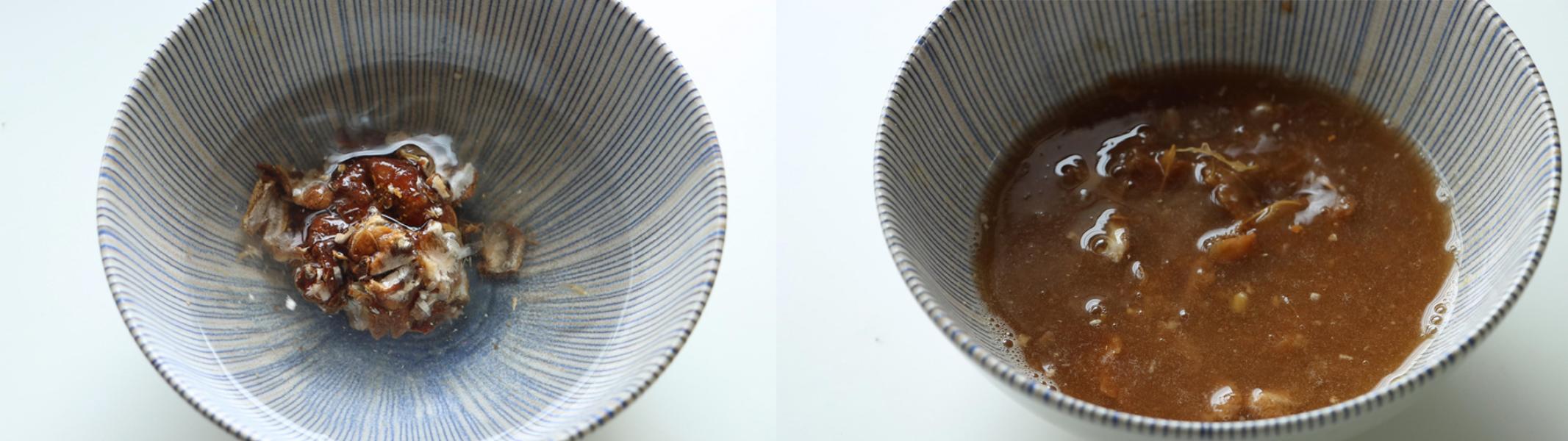
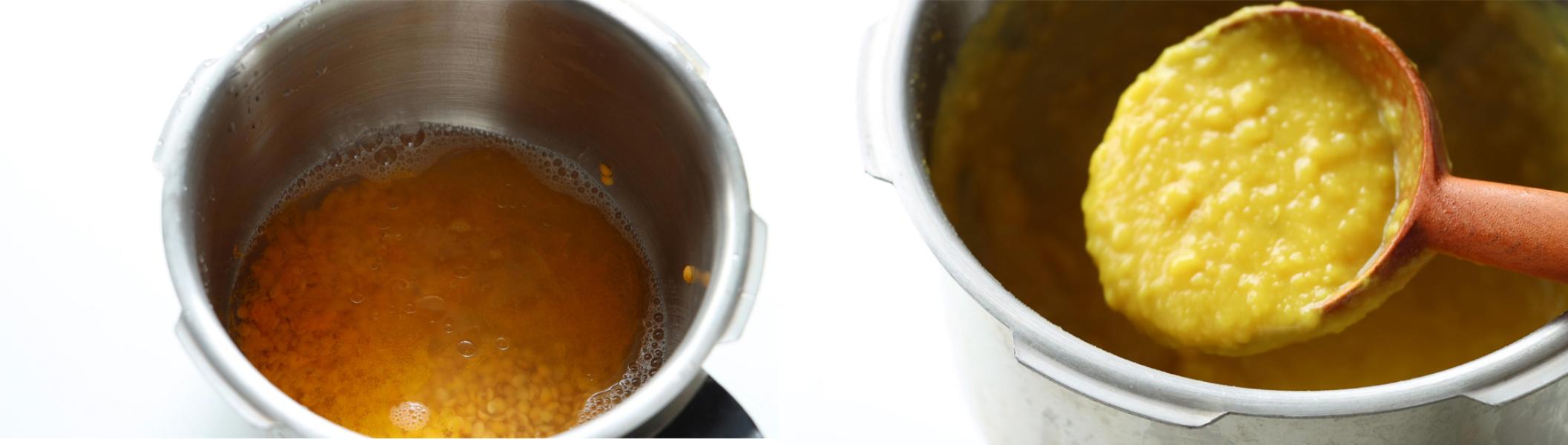
    Add vanilla extract and milk and mix well.

    Add the dry ingredients little by little to the wet ingredients mix until dough forms. Occasionally scrape the sides of the bowl using a spatula.

    Add little more flour if you feel the dough is too sticky.
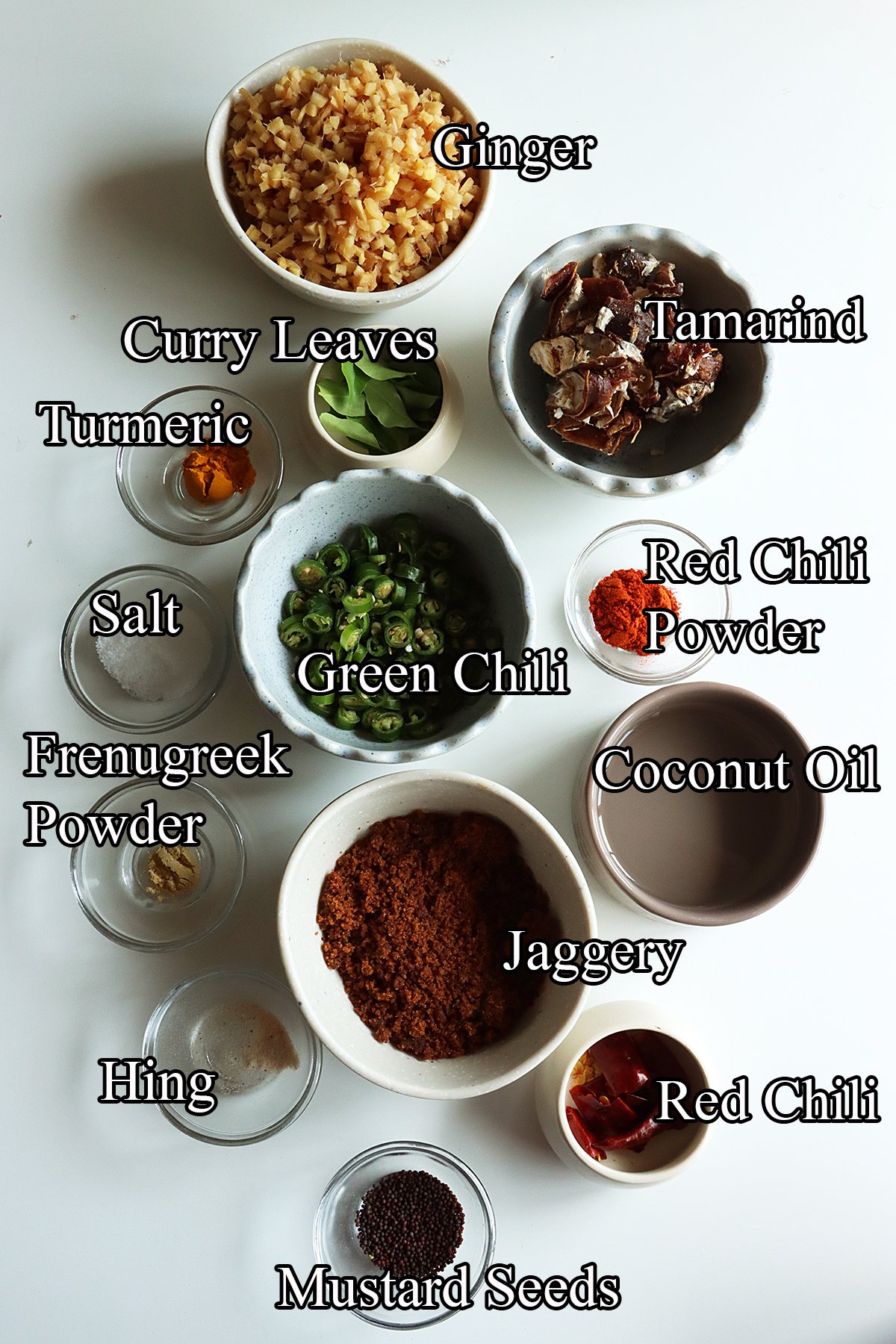
    Shape dough into 1-inch balls.

    Roll the balls well in sugar.

    Arrange them on the prepared baking sheet spacing 2 inches apart. Bake them in the pre-heated oven at 180C (350F) for about 10-12 minutes or until set but still soft.

    Once they are baked, remove them from the oven and let them cool down for 2-3 minutes. While they are still warm, press a Hershey's Kiss into the center of each cookie. Allow chocolate to set and store in an airtight container.

    More Christmas recipes:

    • Christmas Popcorn
    • Molasses Crinkles
    • Santa's Whiskers
    • Cranberry Orange Snowballs
    • Pretzel Wreaths
    • Castagnelle

    Recipe adapted from Hersheyland

    How to make peanut butter blossoms recipe video below:

    Print Recipe
    5 from 1 vote

    Peanut Butter Blossom Cookies

    Peanut Butter Blossom Cookies - Soft, chewy, delicious, and classic peanut butter cookies topped with a rich Hershey chocolate kiss. They're the perfect addition to your cookie trays!
    Prep Time20 minutes mins
    Cook Time10 minutes mins
    Total Time30 minutes mins
    Course: Baking, Cookies, Dessert
    Cuisine: American, International
    Keyword: Christmas Cookies, peanut butter blossom cookies
    Servings: 32 Cookies
    Calories: 124kcal
    Author: Hari Chandana Ponnaluri

    Ingredients

    • ½ Cup Unsalted Butter, softened
    • ¾ Cup Peanut Butter
    • ⅓ Cup White Sugar (Extra for rolling)
    • ⅓ Cup Light Brown Sugar
    • 1 Teaspoon Vanilla Extract
    • 6 Tablespoons Milk
    • 1.5 Cups All Purpose Flour / Plain Flour
    • ¼ Teaspoon Salt
    • 1 Teaspoon Baking Soda
    • 32 Chocolate Kisses

    Instructions

    • In a medium bowl, combine flour, salt and baking soda and mix well. Keep it aside until use.
    • Line a baking sheet with a parchment paper and keep it aside.
    • Line a baking sheet with a parchment paper and keep it aside.
    • In a bowl of stand mixer or large mixing bowl, combine softened butter and peanut butter.
    • Beat until using a whisk or hand mixer until smooth and creamy. Add brown and white sugars to the creamed butter mixture. Beat until well combined.
    • Add vanilla extract and milk and mix well.
    • Add the dry ingredients little by little to the wet ingredients mix until dough forms. Occasionally scrape the sides of the bowl using a spatula.
    • Add little more flour if you feel the dough is too sticky.
    • Shape dough into 1-inch balls.
    • Roll the balls well in sugar.
    • Arrange them on the prepared baking sheet spacing 2 inches apart. Bake them in the pre-heated oven at 180C (350F) for about 10-12 minutes or until set but still soft.
    • Once they are baked, remove them from the oven and let them cool down for 2-3 minutes. While they are still warm, press a Hershey's Kiss into the center of each cookie. Allow chocolate to set and store in an airtight container.

    Video

    Nutrition

    Calories: 124kcal | Carbohydrates: 13g | Protein: 2g | Fat: 7g | Saturated Fat: 3g | Polyunsaturated Fat: 1g | Monounsaturated Fat: 2g | Trans Fat: 0.1g | Cholesterol: 9mg | Sodium: 85mg | Potassium: 48mg | Fiber: 1g | Sugar: 8g | Vitamin A: 92IU | Vitamin C: 0.01mg | Calcium: 19mg | Iron: 0.4mg
    • « Go to Previous Page
    • Page 1
    • Page 2
    • Page 3
    • Page 4
    • Interim pages omitted …
    • Page 93
    • Go to Next Page »

    Primary Sidebar

    Welcome!

    I’m Hari Chandana Ponnaluri, the creator, recipe developer, and photographer of Blend with Spices, a food blog where I share flavorful, approachable, and authentic vegetarian recipes from India and beyond..

    More about me

    Popular Recipes

    • Cranberry Orange Snowball Cookies
    • Chocolate Crinkle Cookies (Eggless)
    • kolaczki Cookies (Polish Christmas Jam Cookies)
    • Sugar Plums
    • Peppermint Kiss Cookies
    • Potato Chip Cookies

    Indian Festival Recipes

    • Moru Curry (Kerala Moru Kachiyathu)
    • Nellikai Sadam (South Indian Amla Rice)
    • Mawa Modak
    • Upma Kozhukattai
    • Thandai Sheera
    • Instant Pot Sweet Pongal
    See more Festival Recipes →

    Footer

    About

    • Privacy Policy

    Don’t Miss A Recipe!

    Subscribe to our mailing list

    Contact

    • Contact

    Copyright © 2020 Blend with Spices