
• Skip to main content
  • Skip to primary sidebar

Blend with Spices logo

menu icon
go to homepage
  • Home
  • About Me
  • Recipe Index
  • Festival Recipes
  • Eggless Baking
    • Facebook
    • Instagram
    • Pinterest
    • Twitter
    • YouTube
  • search icon
    Homepage link
    • Home
    • About Me
    • Recipe Index
    • Festival Recipes
    • Eggless Baking
    • Facebook
    • Instagram
    • Pinterest
    • Twitter
    • YouTube
  • ×
    Home » Recipes

    Chekkalu Recipe - How to Make Andhra Pappu Chekkalu Recipe {Video}

    Chekkalu Recipe - How to Make Andhra Pappu Chekkalu Recipe {Video}

    August 4, 2014

    Chekkalu Recipe - A super crunchy, delicious and traditional Andhra snack using rice flour.
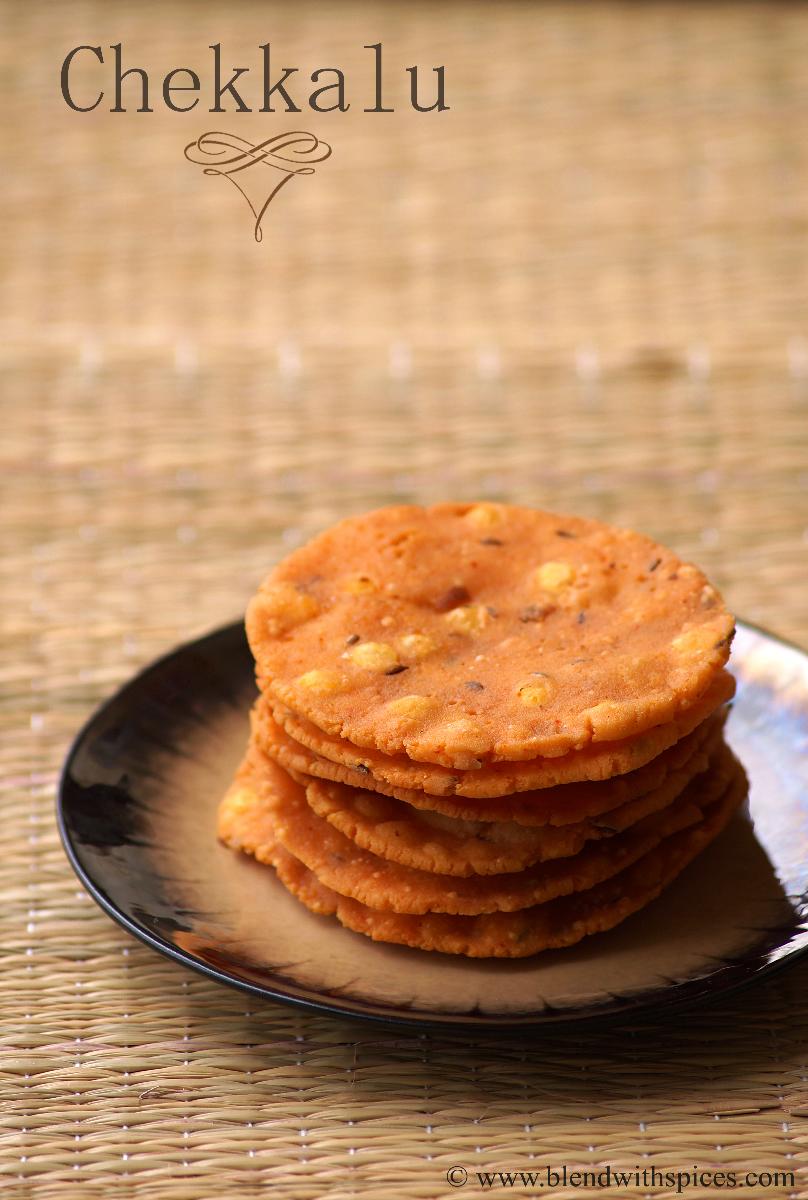
    traditional Andhra chekkalu arranged on a plate

    What are Chekkalu?

    Chekkalu or Pappu Chekkalu are South Indian style savory crackers made with rice flour, chana dal and spices . Massively popular among the kids and adults alike due to their crunchy nature and rich texture, these deep-fried crackers are traditionally made during festivals such as Krishnastami, Deepavali, Sankranti and Ugadi. Though these are native to Andhra Pradesh, one can find them in various forms across South India. Though there is a slight difference in the making of such snacks across states, they are very similar to Thattai in Tamilnadu and Nippattu in Karnakata.

    What are the variations of Chekkalu?

    Who doesn't love customized food? Chekkalu can easily be custom-prepared by substituting channa dal with peanuts or sesame seeds and substituting red chilli powder with green chilli paste.

    Can I use Store-Bought Rice Flour?

    Absolutely Yes! You can use fine store-bought rice four.

    How long Chekkalu are good for?

    They stay fresh for about 3 weeks if you store in an airtight container. No need to store in the refrigerator.


    Few tips to Make the Best Chekkalu at home:

    • Make sure you use the fine rice flour to prepare the chekkalu.
    • Do not skip adding hot oil to the flour while making the dough, it will make them crispy.
    • The dough should be smooth and non-sticky.
    • Always cover the prepared dough to prevent it from drying.
    • Make sure you flatten the dough evenly to make a thin round disc.
    • The flame should neither be too high nor too low while frying.
    • If oil is too hot, chekkalu won't be crunchy.
    • If the oil is not hot enough, chekkalu will absorb so much oil.
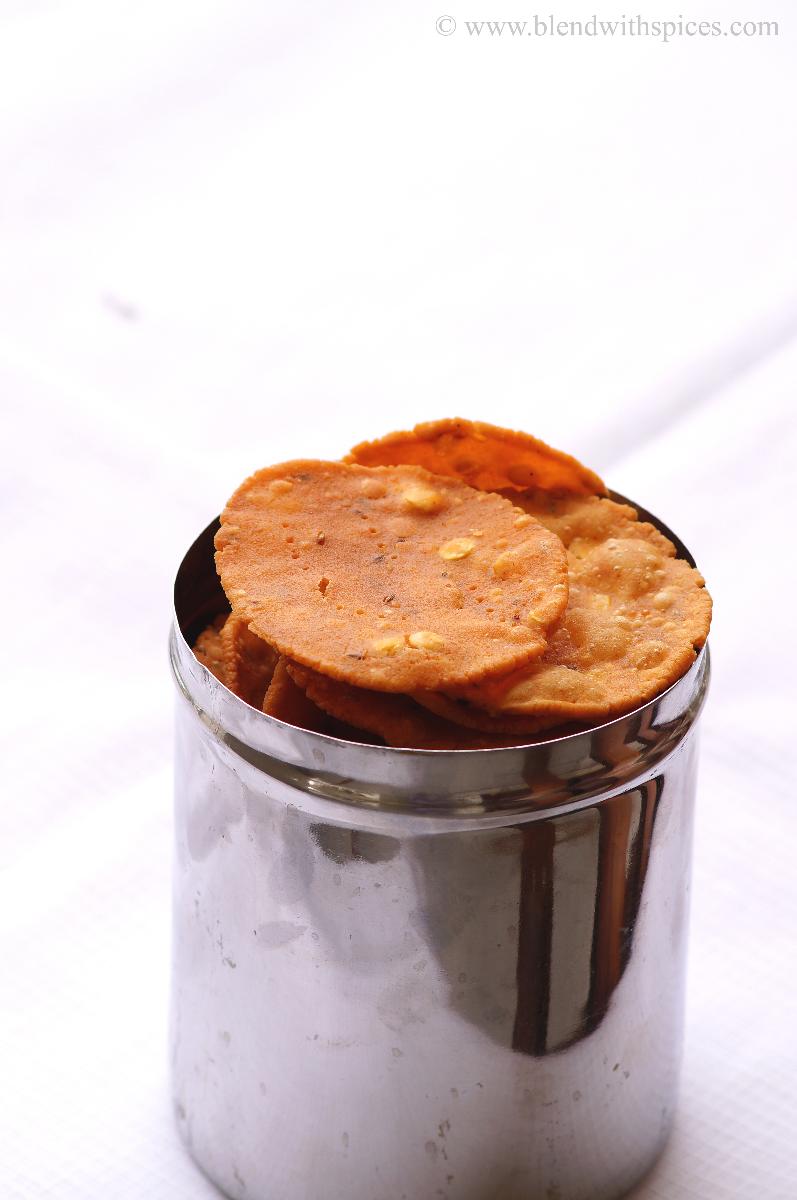
    Traditional Andhra snack chekkalu

    Few More Andhra Recipes on the blog:

    • Sorakaya Vadalu
    • Pesara Garelu
    • Kobbari Kova Kajjikayalu
    • Chegodilu
    • Pala Munjalu
    • Senaga Pappu Payasam
    • Jeedipappu Pakam
    • Pappula Podi
    • Sunnundalu

    How to Make Chekkalu Recipe Video below:
    Print Recipe

    Chekkalu – A Classic Andhra Snack Recipe

    How to Make Chekkalu Recipe - A traditional Andhra savory crackers made with rice flour, lentils and spices.
    Prep Time25 minutes mins
    Cook Time30 minutes mins
    Total Time55 minutes mins
    Course: Snack
    Cuisine: Andhra, South Indian
    Keyword: authentic, Indian Food, Snacks
    Servings: 27 Crackers
    Calories: 63kcal
    Author: Hari Chandana Ponnaluri

    Ingredients

    • 2 cups Rice Flour
    • 2 tablespoon Chana Dal
    • 1 teaspoon Red Chilli Powder or as needed
    • 1 teaspoon Cumin Seeds
    • ⅛ teaspoon Hing
    • Salt to taste
    • Oil for deep frying

    Instructions

    • Soak the chana dal in water for an hour and drain. Keep it aside.
    • Combine the rice flour, salt, red chilli powder and hing in a mixing bowl. Mix everything until well combined.
    • Add 2 tablespoons of hot oil to the flour and combine well.
    • Add the soaked chana dal and mix.
    • Add water (approx. 1 cup) little by little to make a smooth dough.
    • The dough should be soft and non sticky. Keep covered.
    • Divide the dough into 25 – 27 equal sized balls. Keep covered.
    • Heat oil in a pan for deep frying the chekkalu.
    • Grease your palm with little oil and place a dough ball on a greased plastic sheet.
    • Flatten the dough ball evenly with your fingers till it is thin.
    • Prick them with a fork to prevent puffing up.
    • Once the oil is hot, keep the flame in medium.
    • Carefully take the flattened dough off the plastic sheet and drop in hot oil.
    • Deep fry them over medium flame until they are golden brown.
    • Drain them on paper towels.
    • Repeat the same process with the rest off the dough balls.
    • Let them cool completely and store in an airtight container.

    Video

    Youtube video

    Nutrition

    Calories: 63kcal | Carbohydrates: 9g | Fat: 2g | Sodium: 1mg | Potassium: 15mg | Vitamin A: 30IU | Calcium: 2mg | Iron: 0.1mg

    Andhra Chekkalu Recipe with Step by Step Photos:

    • Start the process with soaking 2 tablespoons of chana dal for an hour.
    • Drain and keep it aside.

    rice flour and spices are combining together

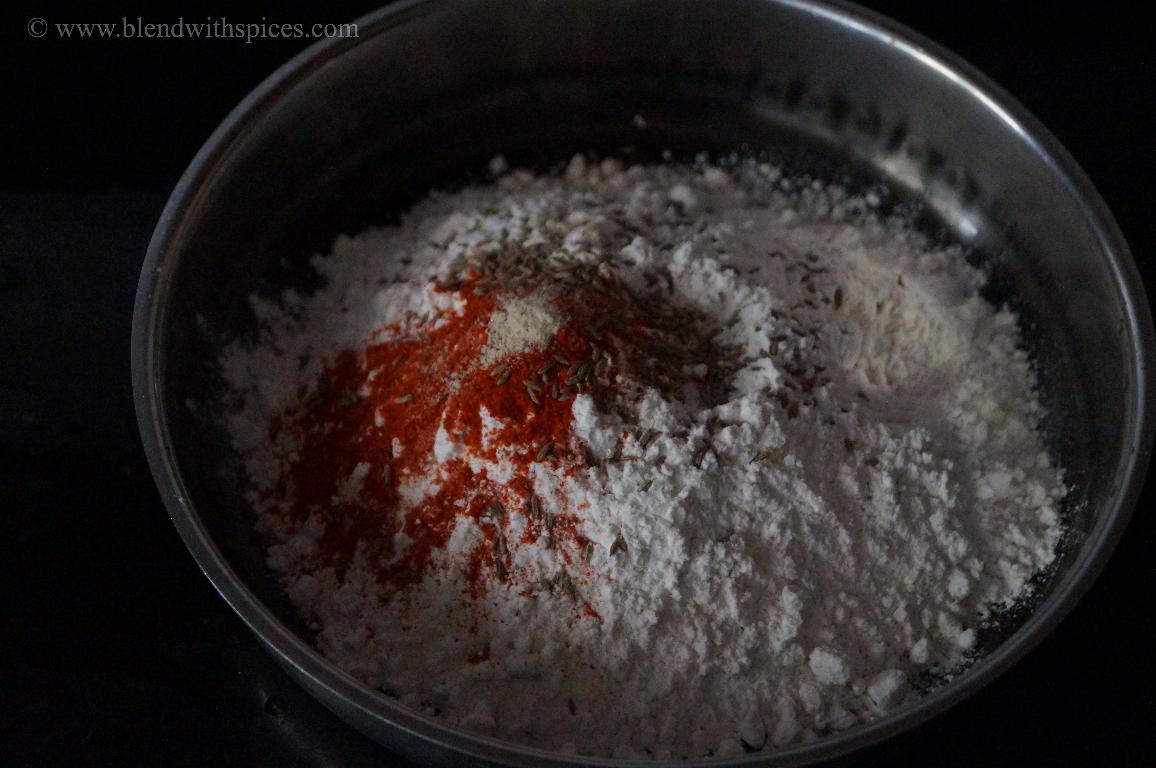
    • In a mixing bowl, add the rice flour, salt, red chilli powder, hing and cumin seeds. Mix everything until well combined. If you want to replace the red chili powder with green chilli paste, add it at this stage.
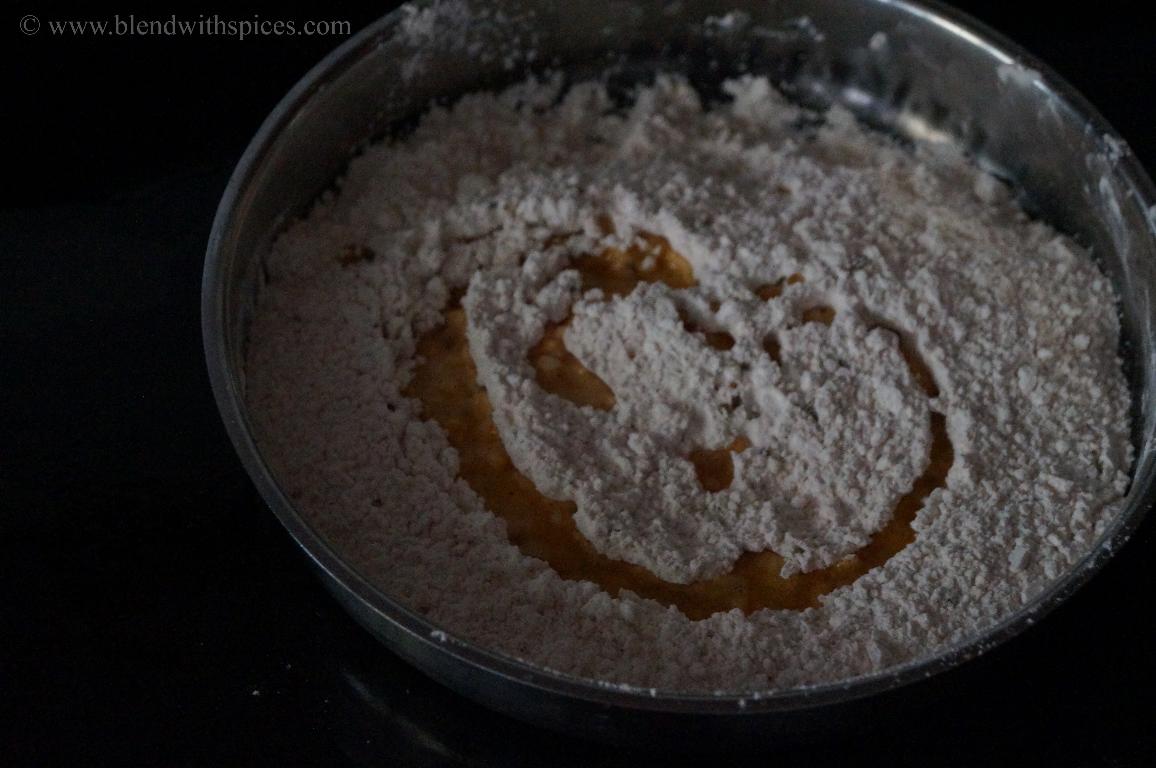
    hot oil is added to the spiced rice flour mixture to prepare the dough

    • Now add two tablespoons of hot oil to the flour mixture and combine together well.
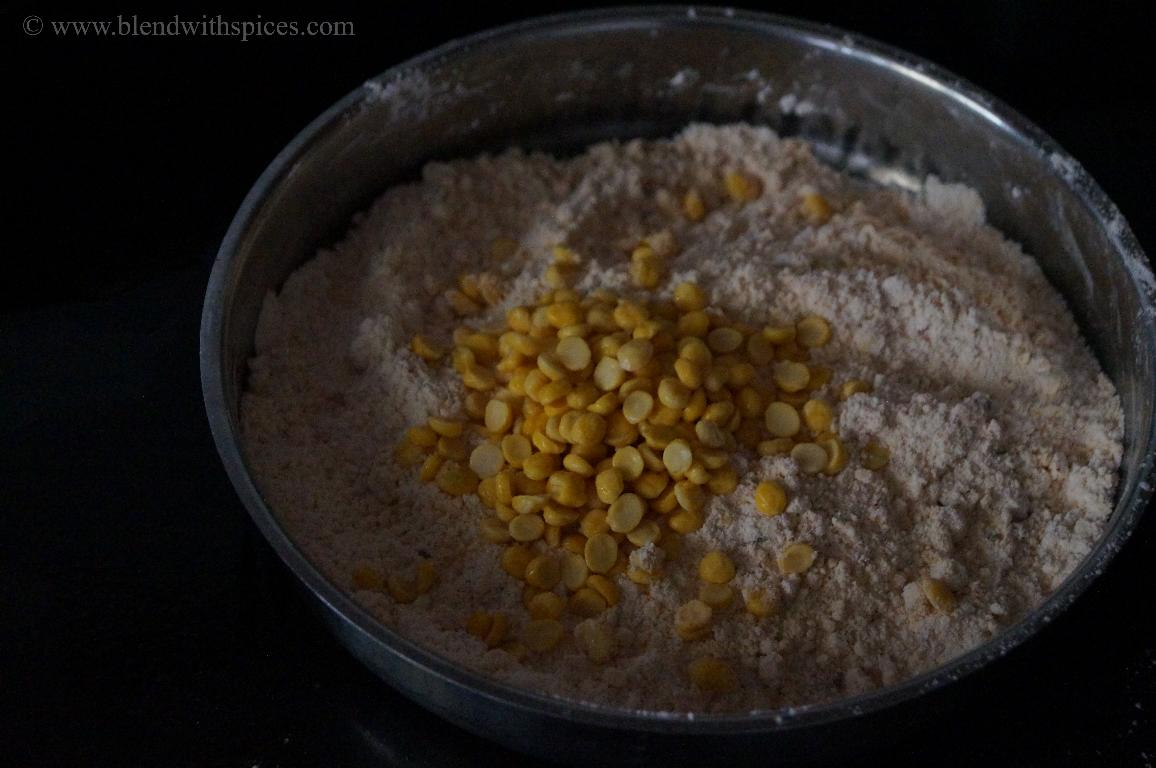
    soaked chana dal is added to the rice flour

    • Now add the soaked and drained chana dal to the flour mixture and combine.
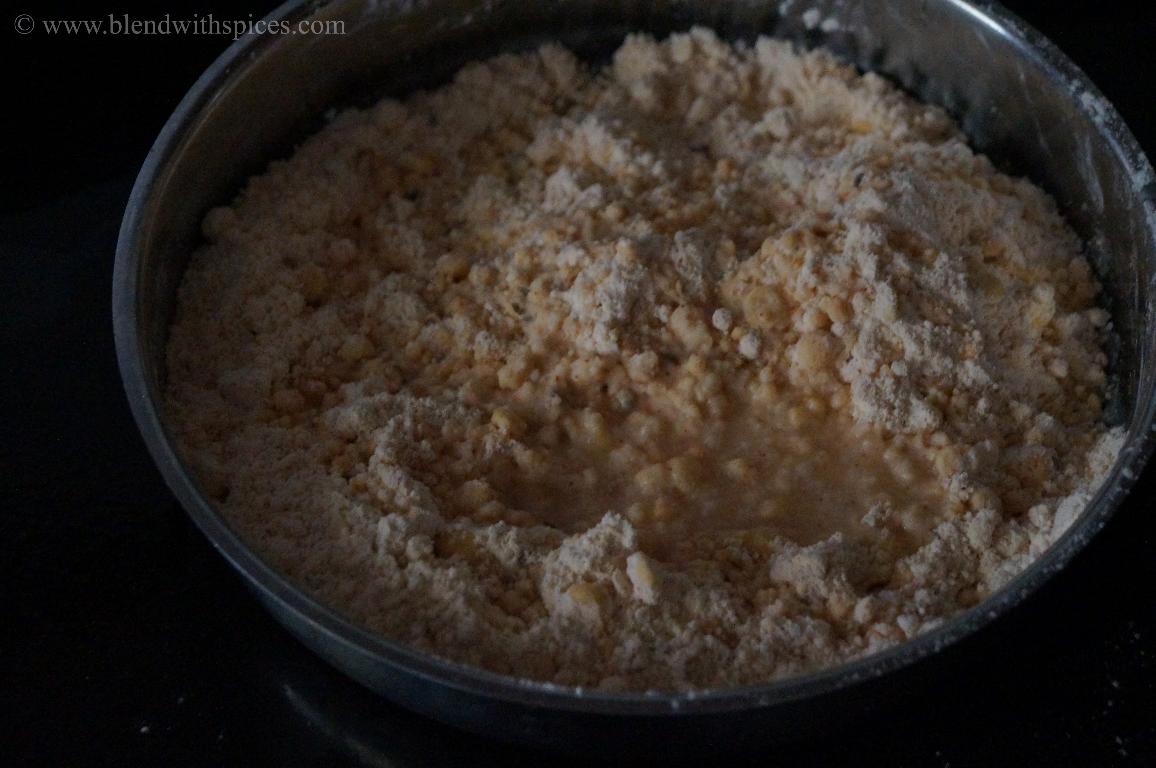
    making of pappu chekkalu

    • Sprinkle water(approx. 1 cup) little by little and knead to make a smooth dough.
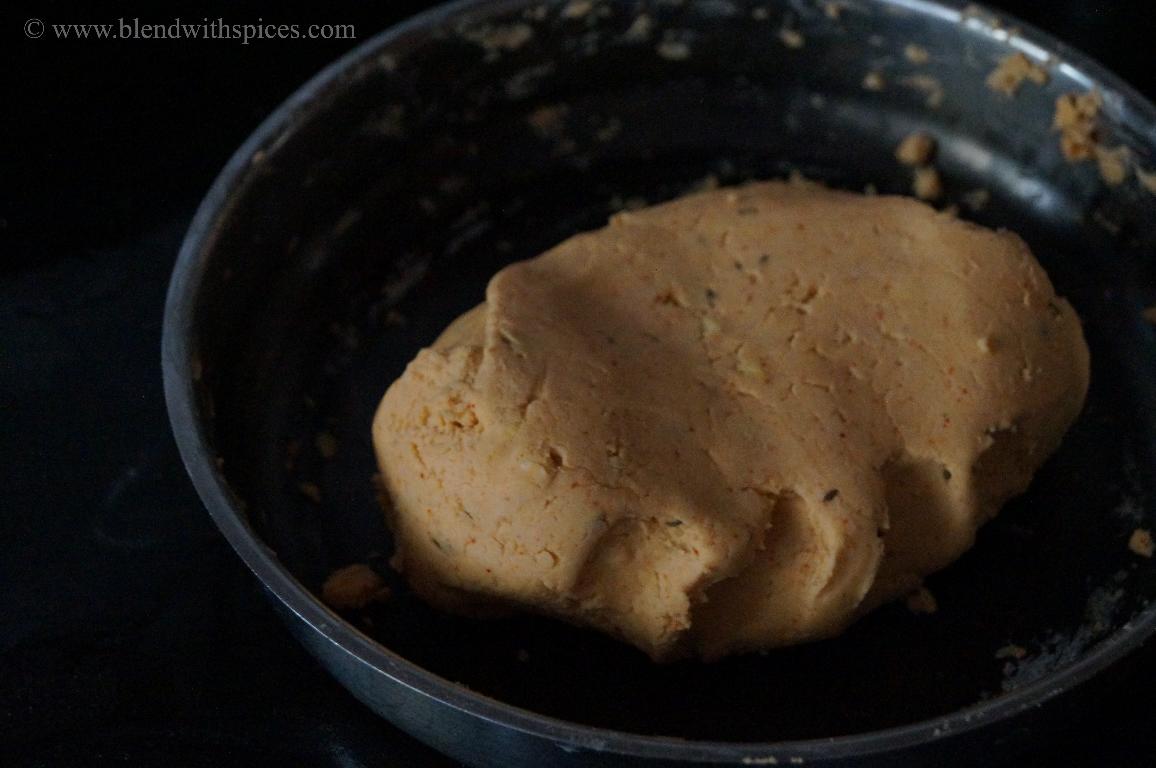
    rice flour dough is ready to make Andhra chekkalu

    • The dough should be soft, smooth and non-sticky.
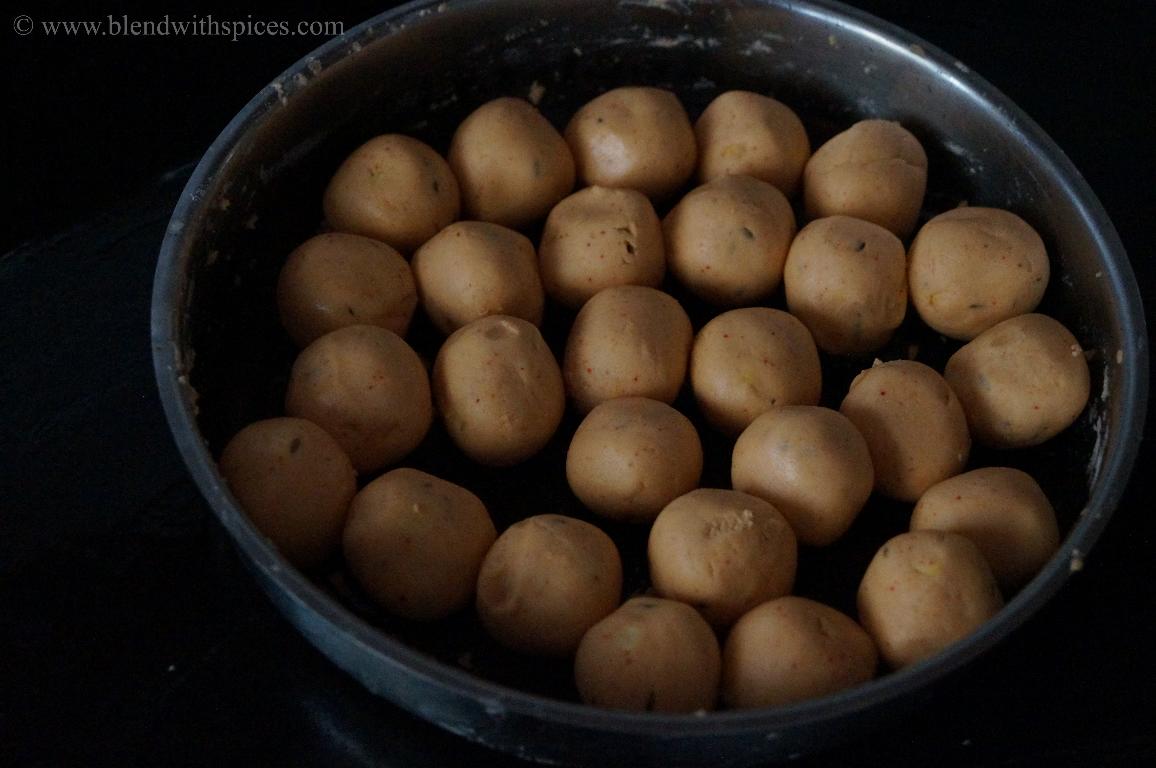
    making of a Andhra snack

    • Divide the dough into 25-27 round balls. Keep them covered to prevent them from frying.
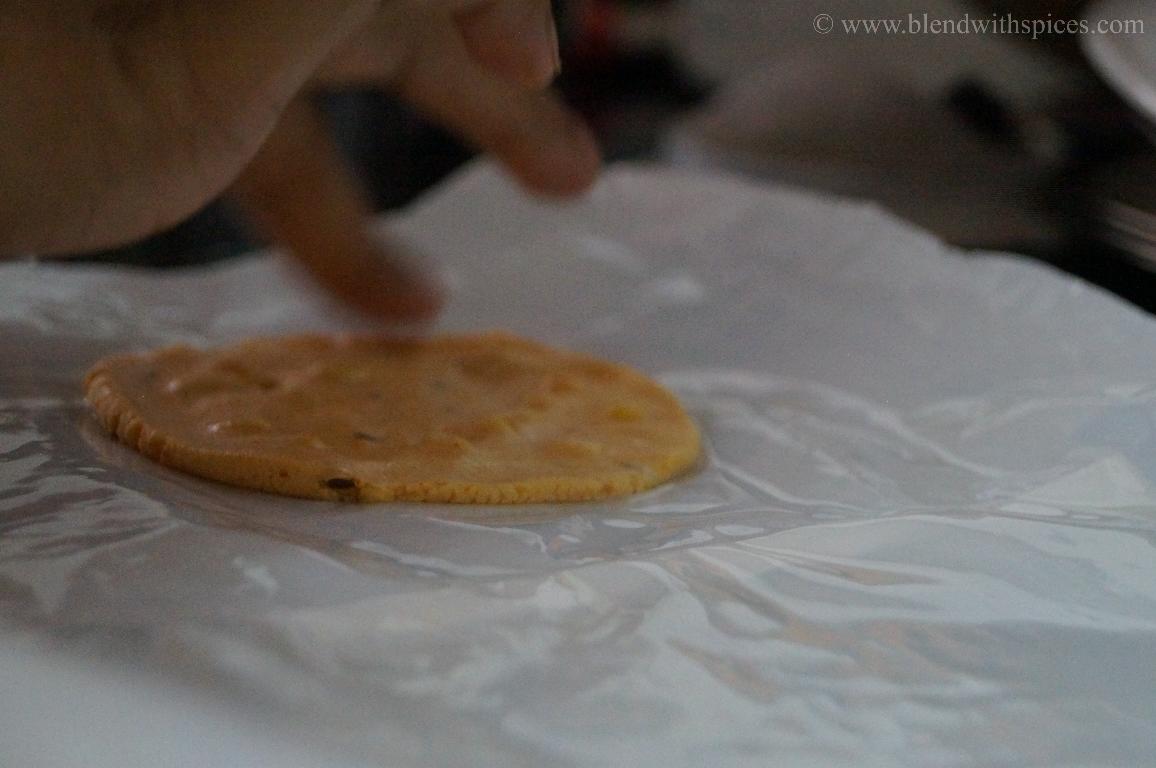
    flattening the chekkalu dough into a round disc

    • Heat oil in a pan for deep frying the chekkalu.
    • Grease your palm with little oil and place a dough ball on a greased plastic sheet.
    • Flatten the dough ball evenly with your fingers till it is thin.
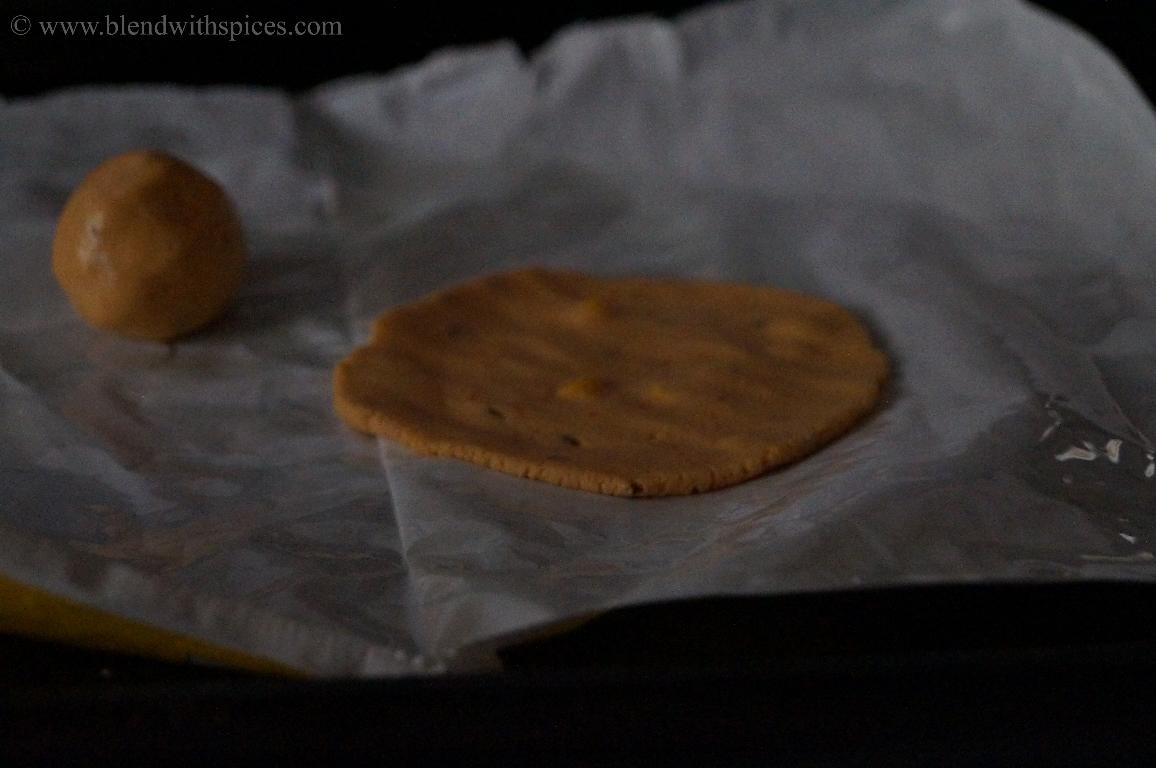
    making of chekkalu recipe

    • Prick the flattened dough discs with a fork to prevent puffing up.
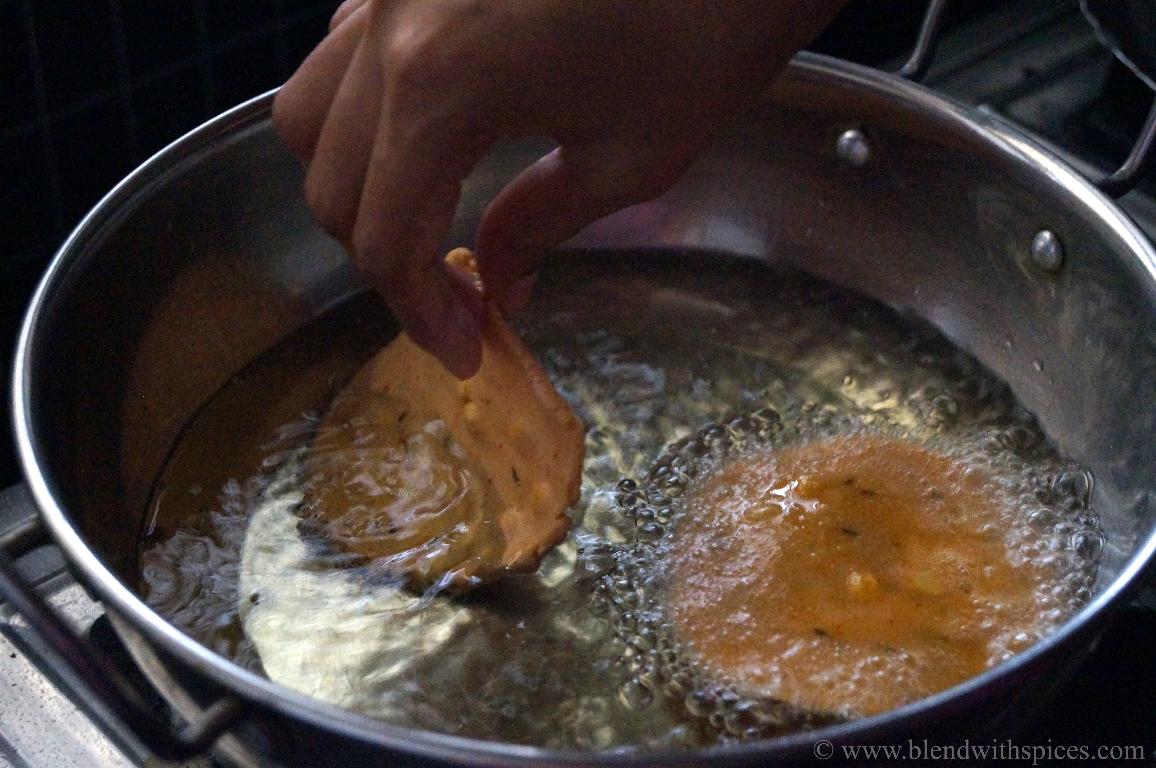
    frying the chekkalu in hot oil

    • Once the oil is hot, keep the flame in medium.
    • Carefully take the flattened dough off the plastic sheet and drop in hot oil.
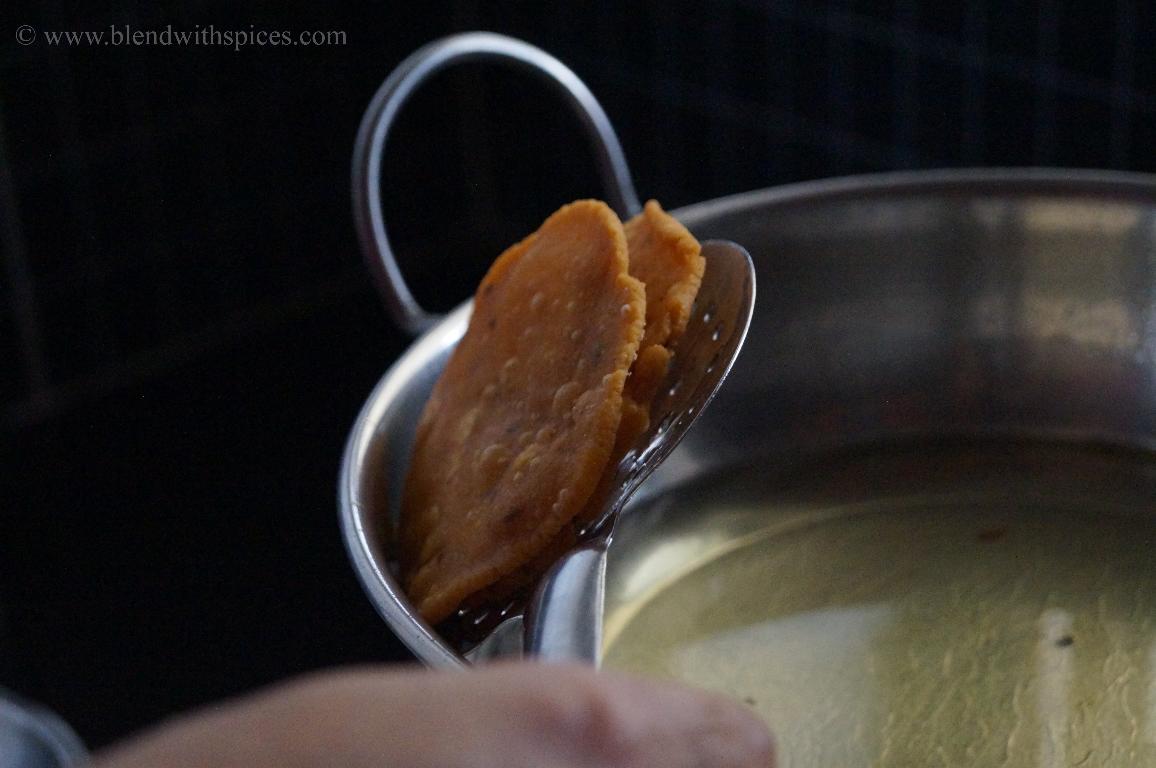
    making of pappu chekkalu

    • Deep fry them over medium flame until they are golden brown.
    • Drain them on paper towels.
    • Repeat the same process with the rest of the dough balls.
    • Let them cool completely and store in an airtight container.
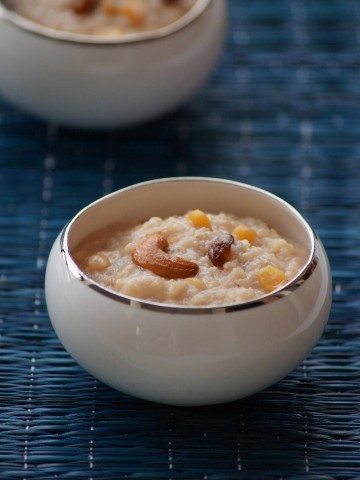


    Godhuma Rava Pongali Recipe - Wheat Rava Jaggery Pongal - Varalakshmi Vratham Naivedyam Recipes

    July 31, 2014

    whear rava sweet pongal, godhuma pongali recipe, varalakshmi prasadam, indian desserts, godhumai sweet pongal, wheat rava jaggery pongali

    If you are looking for more Naivedyam recipes then do check Poornam Boorelu, Bobbatlu, Panchamrutham, bellam Pongali, Paramannam, Rava Pulihora, Daddojanam, Javvarisi Payasam, Ava Pettina Pulihora, Rava Appalu, Pala Munjalu and Kobbari Payasam.

    And here's a full list of Varalakshmi Vratham naivedyam Recipes.

    Print Recipe

    Andhra Style Wheat Rava Sweet Pongal Recipe

    Prep Time5 minutes mins
    Cook Time20 minutes mins
    Total Time25 minutes mins
    Course: Dessert
    Cuisine: Andhra, South Indian
    Servings: 5
    Author: Hari Chandana Ponnaluri

    Ingredients

    • 1 cup Wheat Rava / Cracked Wheat
    • 1.5 cups Jaggery powdered
    • ¼ cup Chana Dal
    • 3 cups Water
    • 1 to 1 ¼ cups Milk boiled
    • ½ teaspoon Cardamom Powder
    • 1 tablespoon Dry Coconut Slices
    • Cashews and Raisins as needed
    • 3 tablespoon Ghee

    Instructions

    • Wash the chana dal and wheat rava and pressure cook it with 3 cups of water for 3 – 4 whistles.
    • Turn off the flame and wait until the pressure gets released by itself.
    • Add the milk and cardamom powder to the cooked wheat rava and combine. Let it simmer for 3 – 4 minutes.
    • Remove from the flame and the powdered jaggery.
    • Mix well and cover it with a lid. Mix again after two minutes.
    • Mix again until jaggery melts.
    • Heat ghee in a pan. Fry the coconut slices, cashews and raisins to golden brown color.
    • Pour this over the wheat rava mixture and mix until well combined.
    • Serve warm or cold.

    You might also like to check these Recipes:

    • Khoya Til Laddu
    • Kova Kajjikayalu
    • Diwali Recipes
    • Ava Pettina Daddojanam
    • Miriyam Pulihora
    • Beetroot Pachadi
    • Sweet Undrallu
    • Kudumulu

    Maida Chegodilu Recipe - Traditional Andhra Snack Recipe

    July 30, 2014

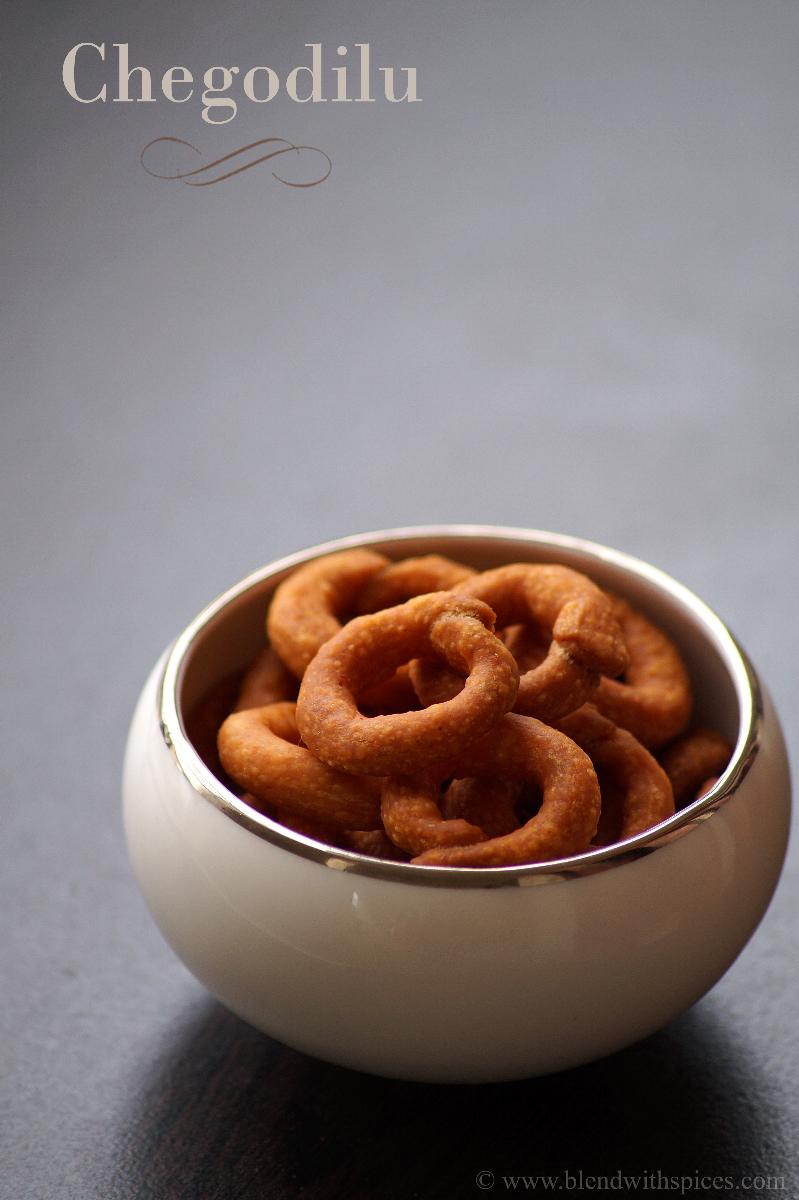
    Maida Chegodilu Recipe - Crunchy and yummy small deep-fried savory rings. A traditional Andhra snack for teatime. 

    deep fried, golden browned andhra snack served in a small white bowl

    What are Chegodilu?

    Chegodilu or Chakodilu are crunchy and fried savory deep-fried small rings from Andhra Pradesh, India. They are a famous hot snack and traditionally made with rice flour, but can also be made using maida or plain flour. These are also known as Ring Murukku in some parts of India and people made them during festivals such as Diwali and Gokulastami or Krishnastami. If you want to make chegodi with rice flour, you will need to cook the dough. Here is how to make chegodilu with rice flour.

    How long can I store Ring Murukku?

    These are one of the dry snacks that can be prepared and stored for a long time. They can stay fresh for 3 weeks in an airtight container.
    Are these vegan?

    The answer is YES!

    Serving Suggestions:

    Serve them as a snack with a cup of coffee. It can also be served on special occasions or festivals.

    Tips to Make the Best Maida Chegodilu:

    • Soak the lentils for at least 30 minutes before preparing the dough.
    • The dough should be firm and smooth.
    • Keep the dough covered to prevent it from drying.
    • Make sure you roll the dough evenly to while shaping to ensure even cooking.
    • The oil shouldn't be smoking hot. Always fry them over a medium-low flame to make them crunchy.
    • Do not overcrowd the pan. Deep fry in batches.

    If you are looking for Indian snack ideas then check the below recipes:

    Few More Indian Snack Recipes:

    • Sakinalu
    • Aloo Bhujia
    • Gathiya
    • Kara Sev
    • Peanut Murukku
    • Oven Roasted Cashews
    • Putnala Janthikalu
    • Garlic Karasev
    • Banana Chips

    How to Make Maida Chekodilu Recipe below:

    Print Recipe

    Maida Chagodilu Recipe

    How to make Chegodilu recipe. Crispy, delicious and deep-fried savory rings from Andhra Pradesh.
    Prep Time40 minutes mins
    Cook Time15 minutes mins
    Total Time55 minutes mins
    Course: Snack
    Cuisine: Andhra, Indian
    Keyword: andhra recipes, authentic, diwali snack recipes, snacks for tea time, Traditional
    Servings: 4
    Calories: 310kcal
    Author: Hari Chandana Ponnaluri

    Ingredients

    • 1 cup All-Purpose Flour / Maida
    • 1 tablespoon Moong Dal
    • 2 tablespoon Oil
    • 1 teaspoon Red Chilli Powder or as needed
    • ½ teaspoon Cumin Seeds
    • A pinch of Baking Soda / Cooking Soda
    • Salt to taste
    • ¼ cup Oil for deep frying

    Instructions

    • Soak the moong dal in water for 30 – 40 minutes. Drain and set aside.
    • Combine the flour, salt. baking soda, red chilli powder and cumin seeds in a mixing bowl.
    • Add the warm oil to the flour and mix everything.
    • Add the soaked moong dal and combine it.
    • Make a firm dough by adding water little by little.
    • Cover and set aside for 1 hour.
    • To make the chegodis, pinch a marble-sized ball of the dough and roll between your palms to form a little thick rope.
    • Join the ends together and make a ring.
    • Cover them with a lid to prevent drying.
    • Heat oil in a pan for deep frying the chegodis.
    • When the oil is hot, slowly drop the prepared rings one by one.
    • Deep fry them on a low-medium flame until crisp and golden brown color.
    • Drain them on paper towels and let them cool completely.
    • Store in an airtight container and serve.

    Nutrition

    Calories: 310kcal | Carbohydrates: 26g | Protein: 4g | Fat: 21g | Saturated Fat: 2g | Sodium: 10mg | Potassium: 84mg | Fiber: 2g | Sugar: 1g | Vitamin A: 148IU | Calcium: 9mg | Iron: 2mg

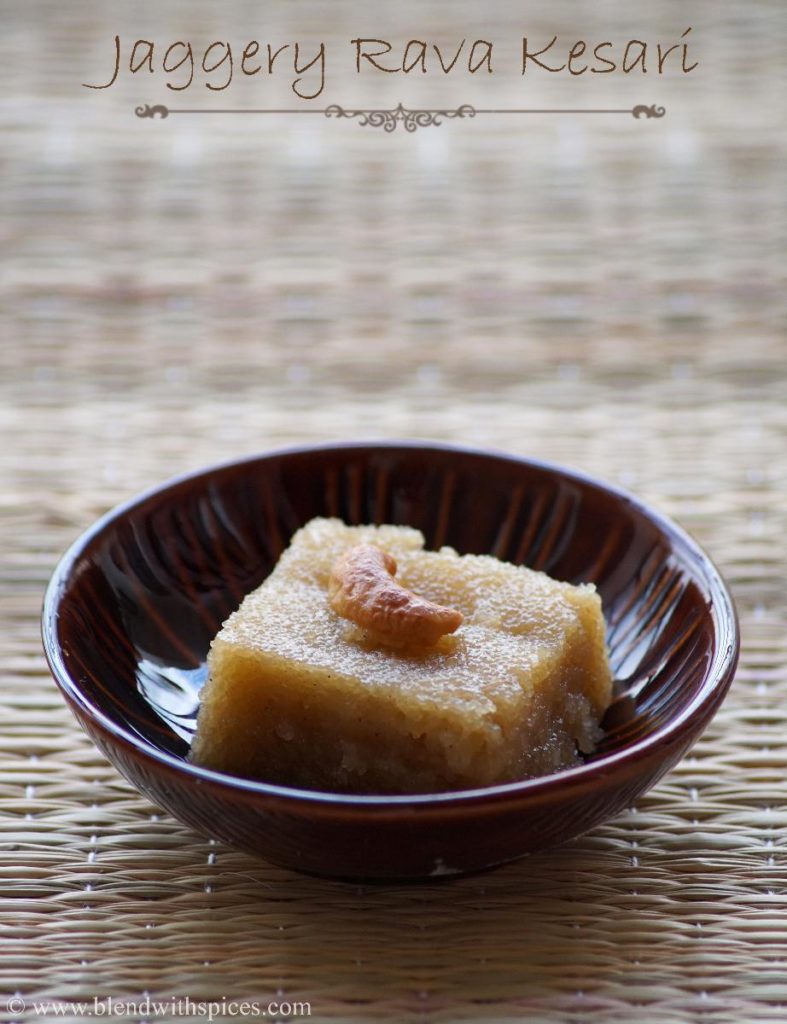
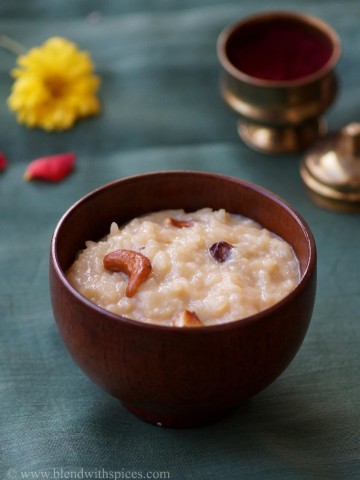
    Bellam Rava Kesari Recipe - Sooji Gur Ka Halwa - Semolina Jaggery Pudding - Step by Step Recipe - Varalakshmi Vratham Recipes

    July 29, 2014

    If you are looking for more halwa recipes then do check Pineapple Kesari, Rava Kesari, Singhara Halwa, Banana Sheera, Sweet Potato Halwa, Jaggery Kasi Halwa, Milk Rava Kesari, Besan Ka Halwa and Pumpkin Halwa.

    Here's a complete list of Varalakshmi Vratham Recipes.

    Print Recipe

    Jaggery Rava Kesari Recipe

    Prep Time5 minutes mins
    Cook Time10 minutes mins
    Total Time15 minutes mins
    Course: Dessert
    Cuisine: South Indian
    Servings: 4
    Author: Hari Chandana Ponnaluri

    Ingredients

    • ½ cup Semolina
    • 1.5 cups Water
    • ¾ cup Powdered Jaggery
    • ¼ cup Melted Ghee
    • ¼ teaspoon Cardamom Powder
    • 1 tablespoon Cashews
    • 1 teaspoon Raisins

    Instructions

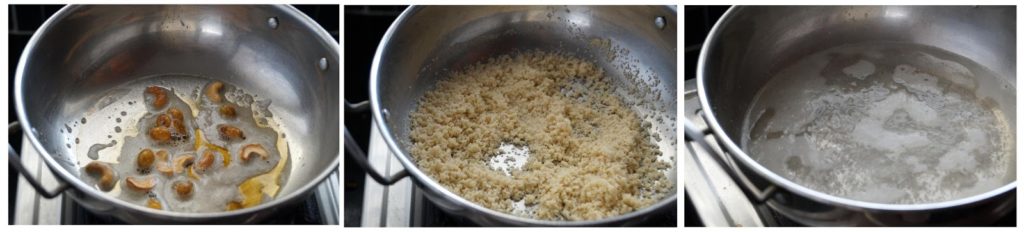
    • Heat two tablespoons of ghee in a pan.
    • Add and fry the cashews until golden color. Add the raisins and fry until they plump up.
    • Keep them aside.
    • In the same pan, add the semolina and roast on a low flame until light golden color.
    • Transfer the semolina to a plate and set aside.
    • Bring water to a boil.
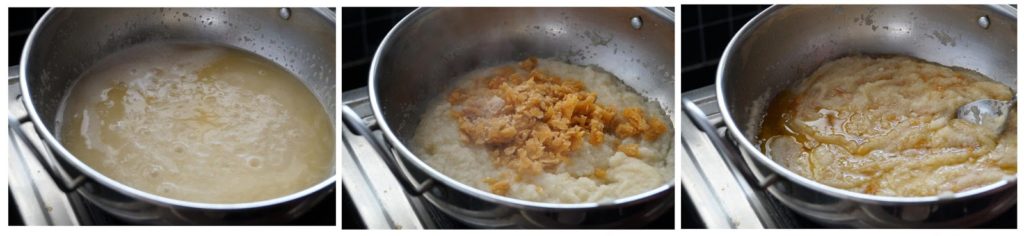
    • Add the roasted semolina little by little, stirring continuously to avoid lumps.
    • Cover it with a lid and let it cook on a low flame for a few minutes or until the semolina gets cooked.
    • Add the jaggery and mix it well.
    • Add the remaining ghee and mix well.
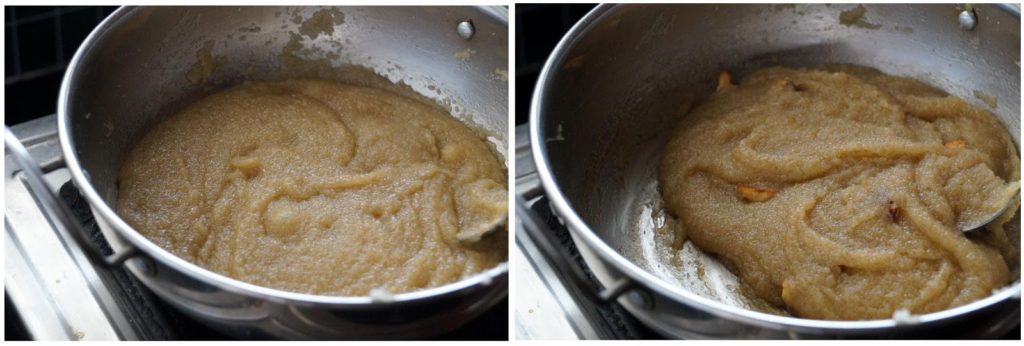
    • Let the jaggery dissolves completely.
    • Keep stirring for a few minutes or until the mixture thickens and forms as a mass.
    • Add the fried cashews and raisins and combine.
    • Turn off the flame and serve warm or cold.

    Instructions:

    • Heat two tablespoons of ghee in a pan.
    • Add and fry the cashews until golden color. Add the raisins and fry until they plump up.
    • Keep them aside.
    • In the same pan, add the semolina and roast on a low flame until light golden color.
    • Transfer the semolina to a plate and set aside.
    • Bring water to a boil.
    • Add the roasted semolina little by little, stirring continuously to avoid lumps.
    • Cover it with a lid and let it cook on a low flame for a few minutes or until the semolina gets cooked.
    • Add the jaggery and mix it well.
    • Add the remaining ghee and mix well.
    • Let the jaggery dissolves completely.
    • Keep stirring for a few minutes or until the mixture thickens and forms as a mass.
    • Add the fried cashews and raisins and combine.
    • Turn off the flame and serve warm or cold.

    You might also like to check these recipes:

    • Gokulashtami Recipes
    • Rakhi Recipes
    • Tambittu
    • Semiya Payasam
    • Chekkalu
    • Condensed Milk Rava Laddu
    • Aloo Bhujia
    • Sweet Poha
    • Poornalu
    • Keerai Sambar


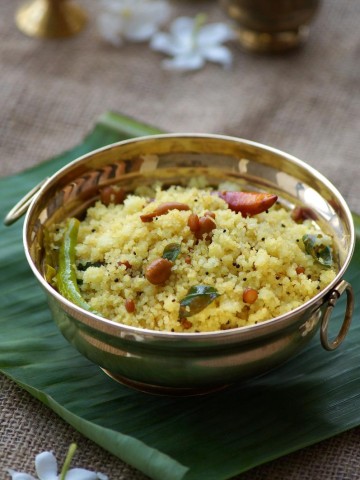
    Semiya Pulihora

    July 26, 2014

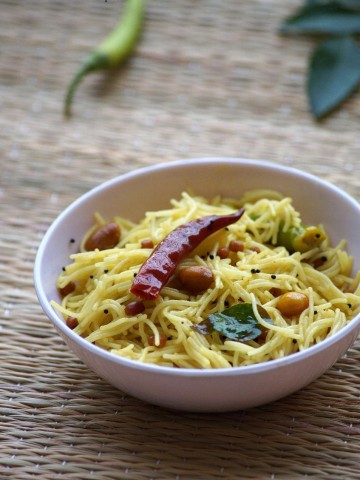
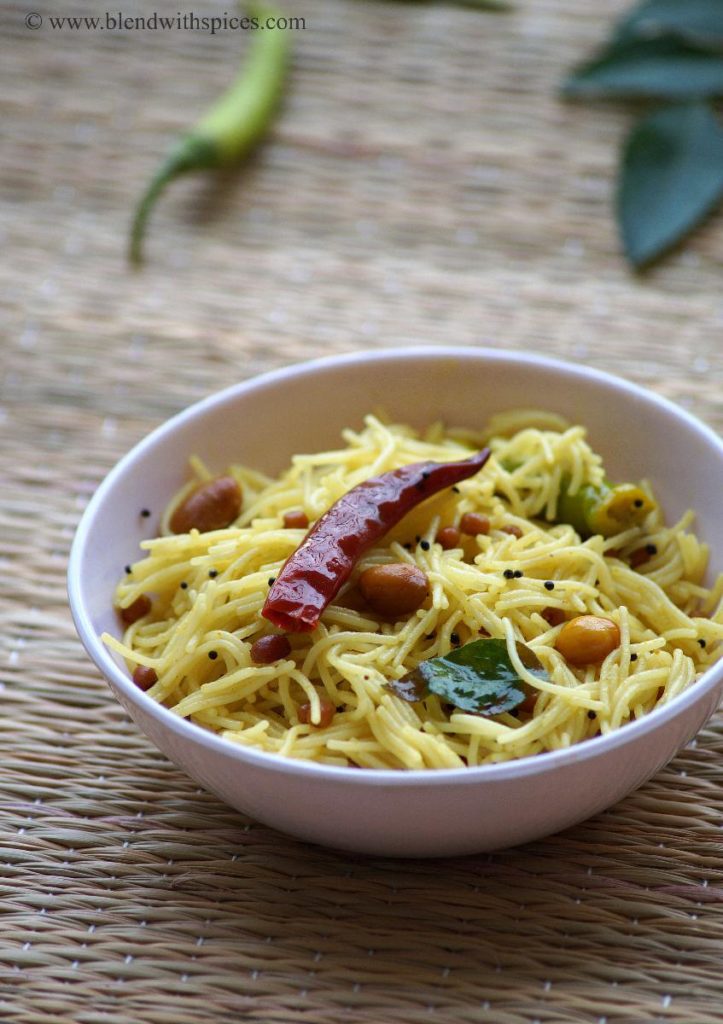
    Semiya Pulihora - A tangy and flavorful South Indian dish made with vermicelli (semiya), tamarind, curry leaves and spices. Perfect for festive occasions or a simple comfort meal.

    What is semiya pulihora?

    Semiya Pulihora is a simple and delicious Andhra (South India) dish made with cooked semiya (vermicelli), tamarind, spices, peanuts, chilies and peanuts. It's a twist on the traditional Andhra Pulihora (Tamarind Rice) and often prepared as a quick breakfast or during festivals. You will need to cook vermicelli and then mix it with tempered tangy tamarind sauce.

    Ingredients & Substitutions:

    Semiya - Also known as vermicelli. It is the main ingredient. It can be substituted with cooked rice, thin rice noodles or sevai.

    Tamarind - It adds the signature tangy flavor to the dish. You will need to soak the tamarind to extract ga pulp, or use a store-bought tamarind pulp as a quicker alternative.

    Chilies - I have used both green chilies and dried red chilies. Use more or less as per your taste preference.

    Mustard Seeds - It is a must for tempering. Unfortunately, there is no substitute.

    Chana Dal & Urad Dal - Adds a wonderful crunch.

    Peanuts - Adds a crunchy texture. It can be replaced with cashews. You can also use both peanuts and cashews if you want.

    Curry Leaves - Adds authentic South Indian aroma to the dish. Fresh curry leaves are ideal, but dried curry leaves can also be used.

    Hing - It is also known as Asafoetida. Adds a unique savory flavor.

    Turmeric Powder - Adds a bright color and earthy flavor. There is no substitute but it can be skipped if unavailable.

    Oil - Use sesame oil for nutty flavor. Peanut oil, sunflower oil or coconut oil can also be used.

    Salt

    Serving suggestions:

    Serve it as a breakfast, snack or simple meal. You can serve it with a side of plain yogurt.

    Storage suggestions:

    It can be stored at room temperature for a day. Store any leftovers in the refrigerator for up to 2 days. Reheat before serving.

    Tips & Notes:

    Do not overcook vermicelli. Drain water immediately and spread on a plate to cool completely. You can also wash the cooked vermicelli with cold water to stop cooking.

    Adjust the tamarind pulp according to your taste.

    Do not burn the tempering ingredients.

    You can cook the tamarind mixture before hand and store in the refrigerator. Mix it with the cooked semiya before serving.

    More South Indian recipes:

    • Radish Chutney
    • Aratikaya Vepudu
    • Mango Sambar
    • Tomato Rice
    • Semiya Pineapple Kesari
    • Ragi Vermicelli Upma
    • Andhra Pulihora
    • Lemon Rice

    How to make vermicelli pulihora recipe below:

    Print Recipe

    Semiya Pulihora

    Semiya Pulihora - A tangy and flavorful South Indian dish made with vermicelli (semiya), tamarind, curry leaves and spices. Perfect for festive occasions or a simple comfort meal.
    Prep Time5 minutes mins
    Cook Time15 minutes mins
    Total Time20 minutes mins
    Course: Breakfast
    Cuisine: Andhra, South Indian
    Keyword: semiya pulihora recipe, Semiya Recipes
    Servings: 2
    Calories: 598kcal
    Author: Hari Chandana Ponnaluri

    Ingredients

    • 1 Cup Vermicelli (Semiya)
    • Gooseberry sized Tamarind (approx. ½ tbsp)
    • 2 Green Chilies, slit (or as needed)
    • 2 Dried Red Chilies
    • ¾ Teaspoon Mustard Seeds
    • ½ Tablespoon Chana Dal
    • ½ Tablespoon Urad Dal
    • 1.5 Tablespoons Peanuts
    • 1 Sprig Curry Leaves
    • ⅛ Teaspoon Hing
    • ¼ Teaspoon Turmeric Powder
    • 1.5-2 Tablespoon Oil
    • Salt to taste

    Instructions

    • Soak the tamarind in water for sometime. Squeeze the extract out of it and set aside. 
    • Bring 3 cups of water to a boil. Add the vermicelli and let it cook for 4 minutes or until soft.
    • When the vermicelli is cooked, turn off the flame and strain.
    • Rise the cooked vermicelli with cold water and strain the water completely. 
    • Spread the vermicelli on a wide plate and set aside to cool.
    • Heat oil in a pan. Add the mustard seeds, chana dal, urad dal and peanuts and fry them until golden brown color.
    • Add the slit green chillies, red chillies, curry leaves and hing and saute for a few seconds.
    • Then add turmeric powder and tamarind extract to it.
    • Cook the mixture until the oil separates.
    • Add salt and mix. Turn off the flame.
    • Combine the cooked vermicelli with the tamarind mixture, mix well, and serve.

    Notes

    Do not overcook the vermicelli.
    Adjust the tamarind and chilies as per your taste preferences.

    Nutrition

    Calories: 598kcal | Carbohydrates: 104g | Protein: 8g | Fat: 16g | Saturated Fat: 2g | Polyunsaturated Fat: 2g | Monounsaturated Fat: 11g | Sodium: 219mg | Potassium: 137mg | Fiber: 4g | Sugar: 0.1g | Vitamin A: 50IU | Vitamin C: 20mg | Calcium: 47mg | Iron: 2mg

    Poornam Boorelu (Poornalu)

    July 25, 2014

    Poornam Boorelu are classic Andhra-style fried sweet dumplings with a soft lentil-jaggery filling. A traditional festival sweet that is popular during festivals and celebrations.

    Enjoy making Andhra festive sweets? Try my Bobbatlu, Senagapappu Payasam, Bellam Paramannam and Rava Appalu.

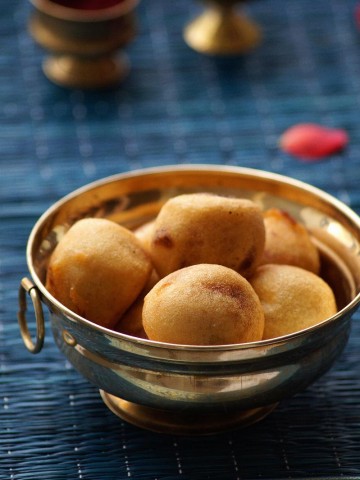
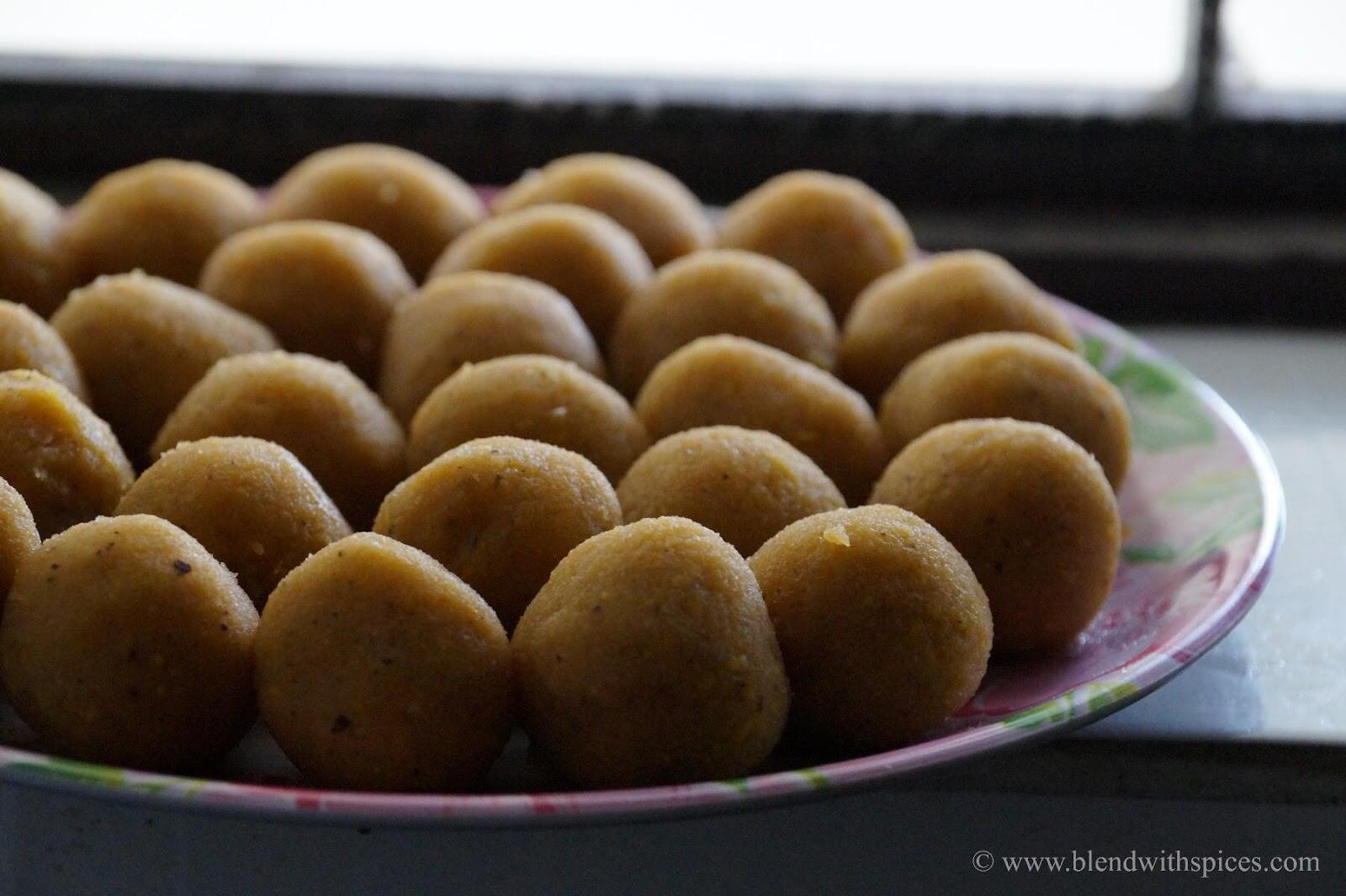
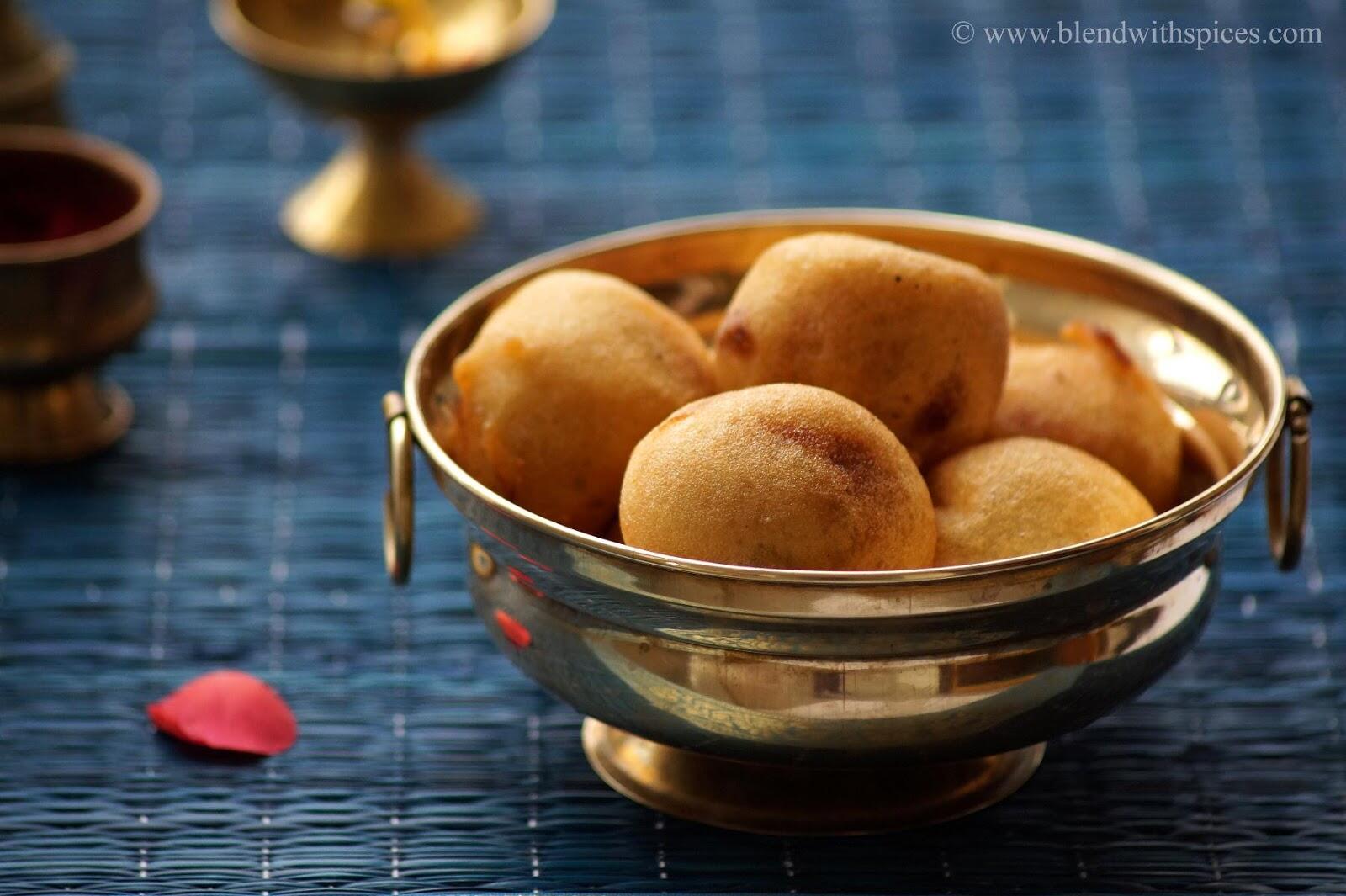
    Poornam boorelu (suzhiyam), a traditional South Indian sweet made with lentils and jaggery filling, served in a brass bowl.

    Quick Look: Poornam Boorelu Recipe

    • Prep Time: 15 Minutes
    • Cook Time: 45 Minutes
    • Total Time: 60 Minutes
    • Servings: 30
    • Difficulty: Moderate, ideal for festive celebrations.
    • Dietary info: Vegetarian, egg-free.

    SUMMARIZE & SAVE THIS CONTENT ON

    ChatGPT
    Google AI
    Perplexity
    Grok
    Add as a Google Trusted Source
    [feast_advanced_jump_to]

    What are Poornam Boorelu?

    Poornam Boorelu or Poornalu are traditional sweet dumplings popular in Andhra Pradesh and Telangana. These are made with a soft sweet lentil filling covered in a rice and urad dal batter, then deep fried until golden and crisp.

    These are known by different names across South India. In Andhra, Telangana and Rayalaseema, they are called Poornam Boorelu, Poornalu or Sugeelu. Similar versions are known as Suzhiyan, Seeyam, Sugiyan, Sukkinunde, Sukrunde, Sugunde, or Susiyam in Tamil Nadu, Karnataka and Kerala. While the idea of making this classic sweet is similar, the filling and outer layer batter can vary from region to region and even from one home to another.

    Poornalu are very popular during festivals like Varalakshmi Vratham, Sankranti, Ugadi, Diwali and other special occasions. These are part of festive meals, wedding meals and family celebrations in many Telugu households.

    The filling is usually made with cooked chana dal and jaggery, flavored with a little bit of ground cardamom. Some people prepare them using only chana dal, while others also add coconut. In this version, freshly grated coconut is mixed into the stuffing along with chana dal. The coconut adds a little texture and extra flavor to the stuffing. This is more of a personal choice.

    The outer coating is made by soaking rice and urad dal and grinding them into a medium-thick batter. This batter coats the sweet lentil filling and forms the crisp layer outside once fried in oil. The combination of the crisp outer layer and soft sweet filling inside is what makes poornam boorelu or suzhiyam so satisfying to eat.

    Why you'll love this recipe:

    • The filling is soft, sweet, aromatic and rich in protein.
    • The coconut adds extra texture and flavor.
    • A traditional festive sweet that feels homemade and authentic.
    • Can be prepped ahead and fried fresh before serving.
    • Perfect for family gatherings, festive meals, and celebrations.
    Poornalu (suzhiyam), a traditional Andhra sweet made with lentils and jaggery filling, served in a brass bowl.

    Ingredients & Substitutions

    For the batter

    Urad Dal & Raw Rice - I have used a 1:2 ratio of urad dal and raw rice in this recipe. The crispiness will depend on the amount of rice you use. If you want to make them with less rice, feel free to use a 1:1 ratio of urad dal and rice. It still tastes good.

    Use whole or split urad dal without skin. I have used sona masoori rice in this recipe. Avoid sticky rice varieties as they can change the texture of the batter.

    For the filling

    Chana Dal - Also known as split bengal gram. This is the base of the sweet filling. It gives a creamy texture and body to the poornam (filling). There is another variety of traditional poornalu using moong dal filling. We call them Pesara Poornalu. If you want to replace chana dal, you can follow my Pesara Pooralu Recipe. The cooking process of moong dal poornam is different from chana dal poornam though. You can also skip chana dal entirely and make Kobbari Poornam Boorelu with only coconut-jaggery filling.

    Coconut - I love adding coconut to boorelu. It adds texture and richness to the filling.

    Jaggery - Adds sweetness and gives the traditional flavor to the filling.

    Cardamom - Adds a lovely and authentic flavor. Try to use freshly ground cardamom powder if possible.

    Oil - Any neutral-flavored oil is suitable for deep frying the boorelu.

    A full ingredient list with exact amounts can be found in the recipe card below.

    Variations

    You can find many variations of poornam boorelu across South India, and even within Andhra households.

    Most of the traditional versions use only chana dal and jaggery, while others add fresh coconut for extra texture and flavor. This recipe uses coconut, but you can skip it.

    Some versions are made with moong dal for a smoother and lighter filling. Check my Pesara Boorelu Recipe for moong dal variation.

    If you find this recipe complicated or are looking for a simpler variation, try my Pala Munjalu.

    If you do not have time to soak urad dal and rice, you can make a simple batter by mixing wheat flour and rice flour with water.

    Instead of using cardamom, add a tiny pinch of edible camphor (pacha karpoornam) for a different and temple-style prasadam flavor.

    How to Make Poornalu

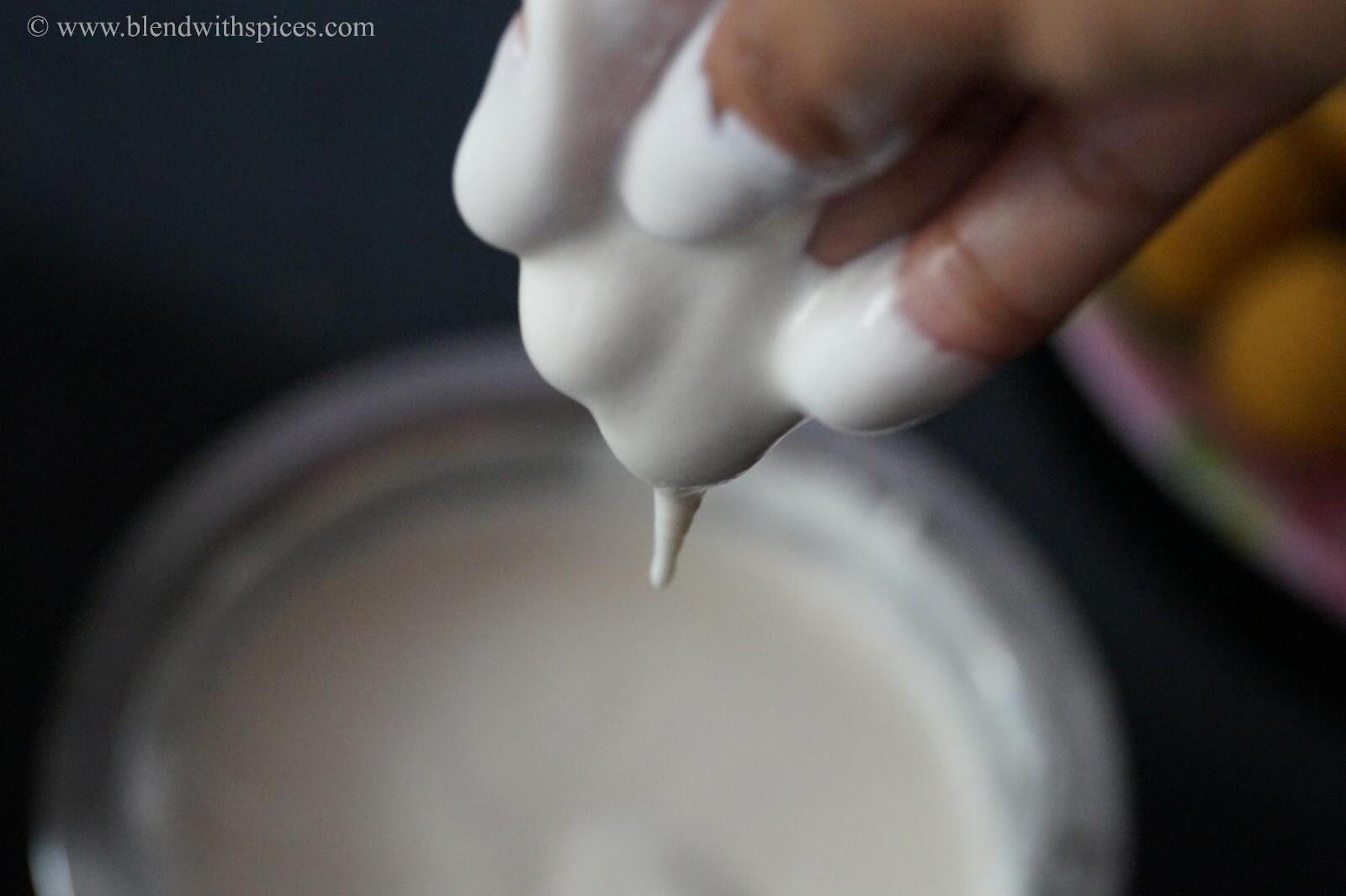
    Checking the consistency of the boorelu batter by letting it drip from hand.

    Wash the rice and urad dal thoroughly and soak them for at least 6 hours or overnight.

    Once they are soaked, drain the water and grind the soaked rice and urad dal into a smooth batter by adding little water as needed.

    The batter consistency should be thick, similar to thick dosa batter. Add a pinch of salt and mix well. Keep it aside.

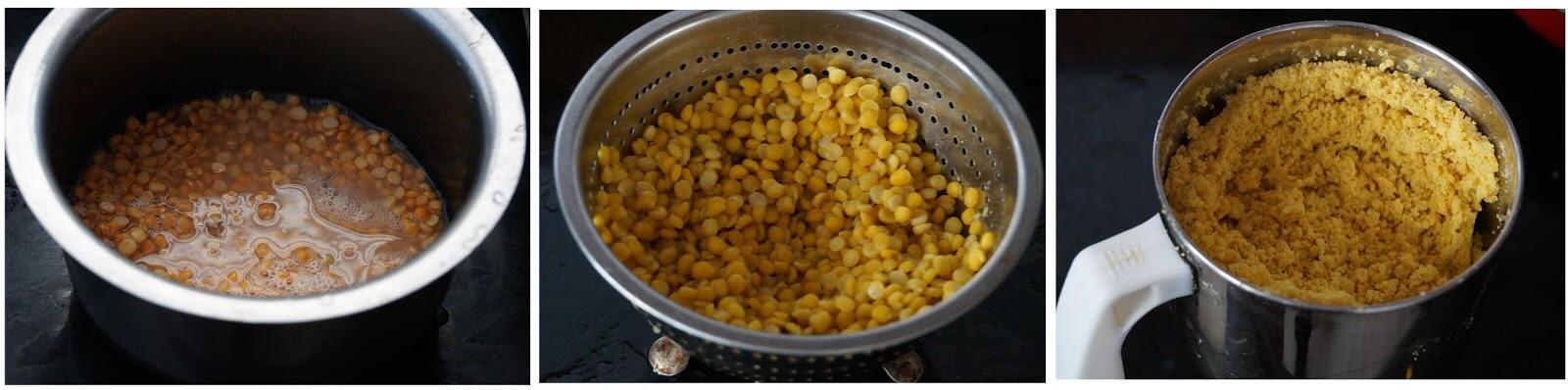
    Soaking chana dal, draining it, and grinding it into a coarse mixture for poornam boorelu filling.

    Wash the chana dal and pressure cook for 3 whistles with just enough water to cover the lentils. The dal should be cooked but still hold its shape.

    Drain all the water completely and let the dal cool.

    Grind the cooked chana dal into a coarse powder and keep it aside.

    Making the jaggery syrup to prepare the sweet filling for poornam boorelu.

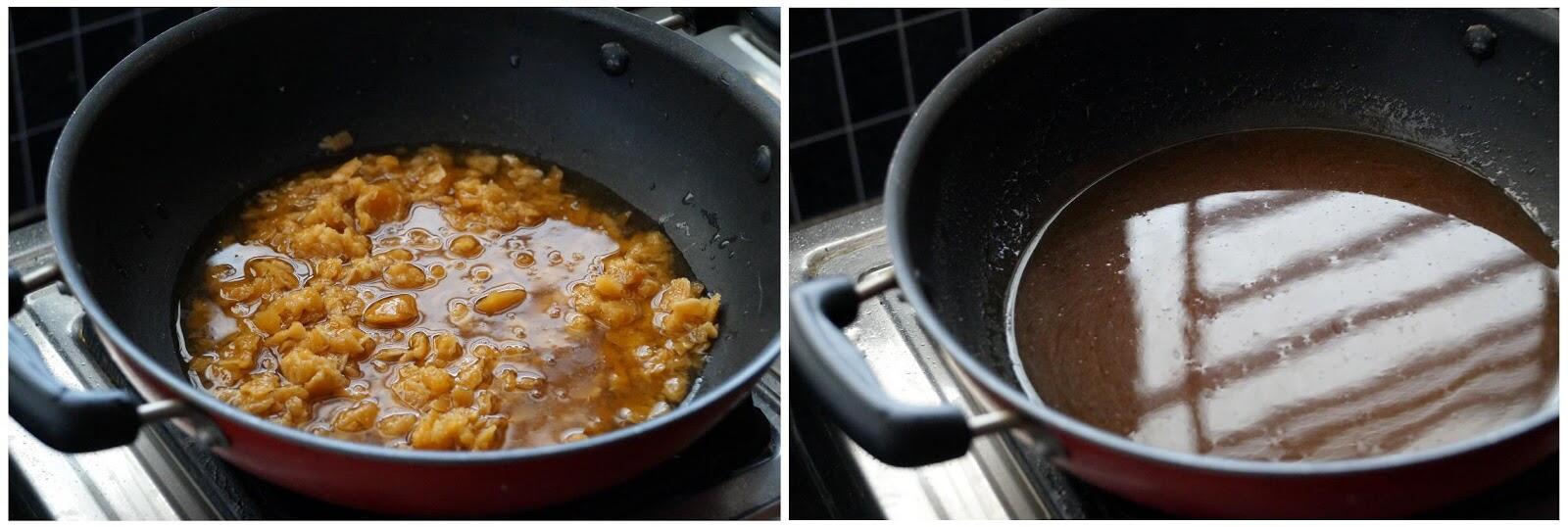
    Add jaggery and a little water to a pan. Heat until the jaggery dissolves completely. Strain the jaggery water at this stage if there are any impurities.

    Ground chana dal and freshly grated coconut mixed together to make the sweet filling for poornam boorelu.

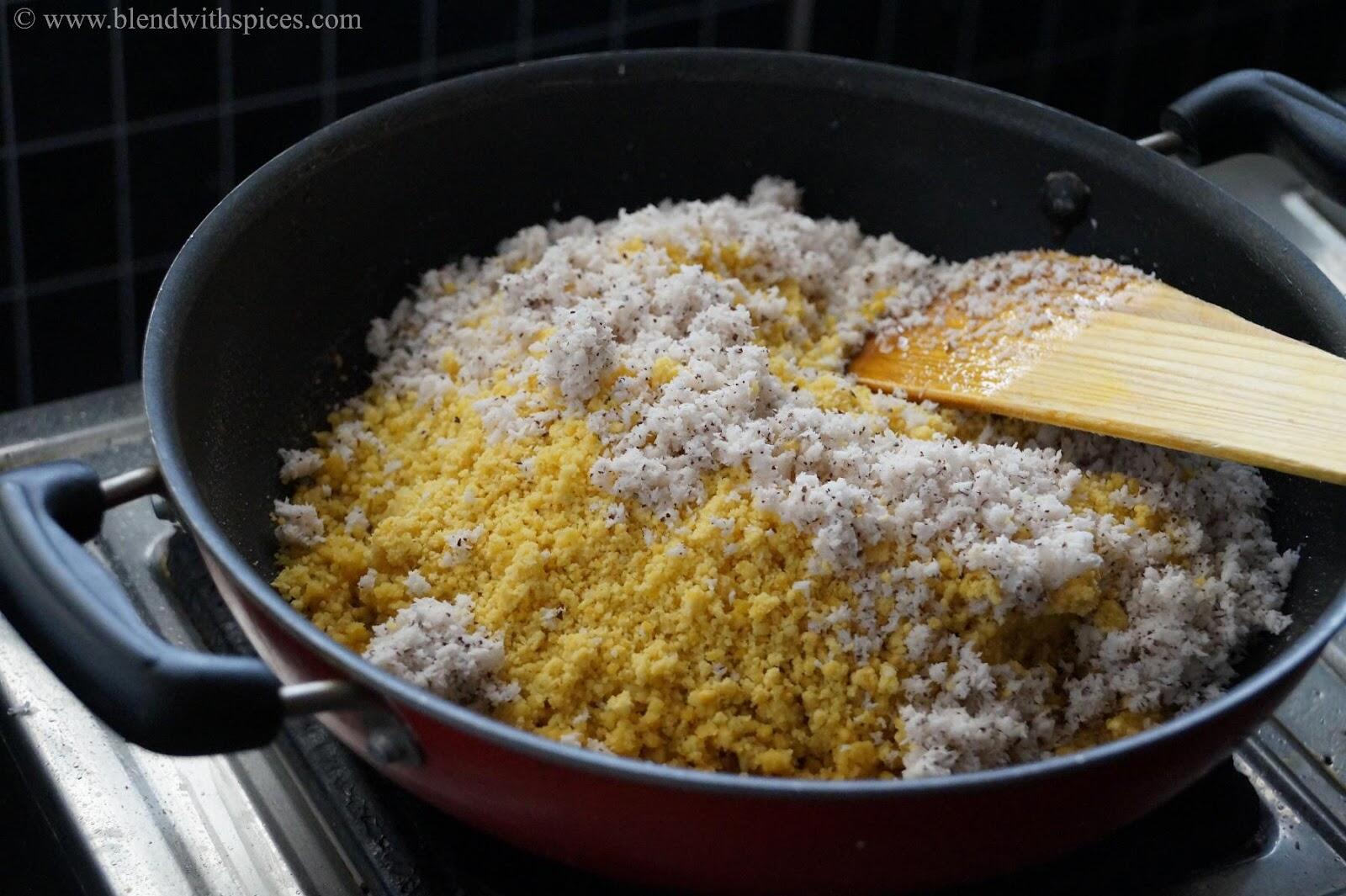
    Add the ground chana dal, grated coconut and cardamom powder to the jaggery water.

    Chana dal, jaggery, and coconut mixture cooked until it forms a thick filling for poornalu.

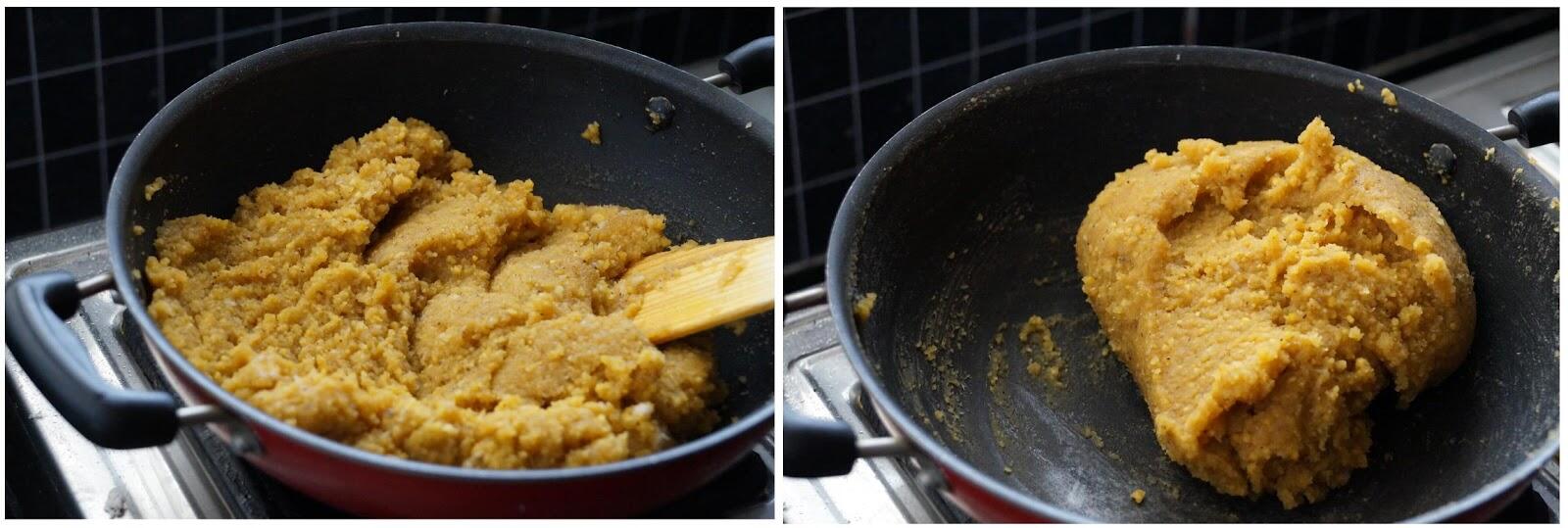
    Mix continuously until everything combines and the mixture thickens into a soft dough-like consistency.

    Sweet poornam mixture made with chana dal, jaggery, and coconut, ready to be rolled into balls.

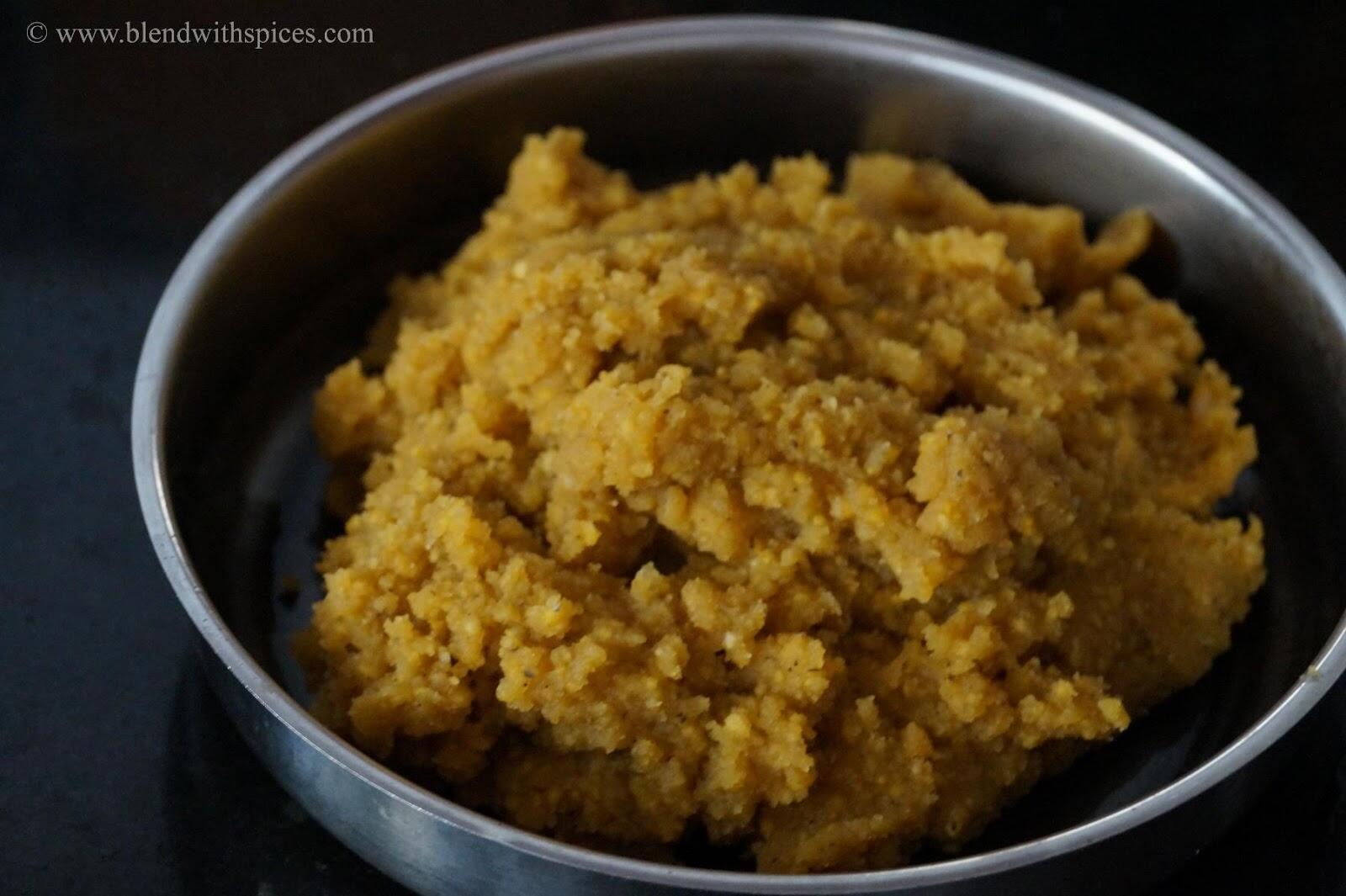
    Remove it from the flame and let it cool completely.

    Sweet chana dal and jaggery filling shaped into small balls for making poornam boorelu.

    Divide the cooled dal-jaggery mixture into 28-30 small round balls and keep them ready.

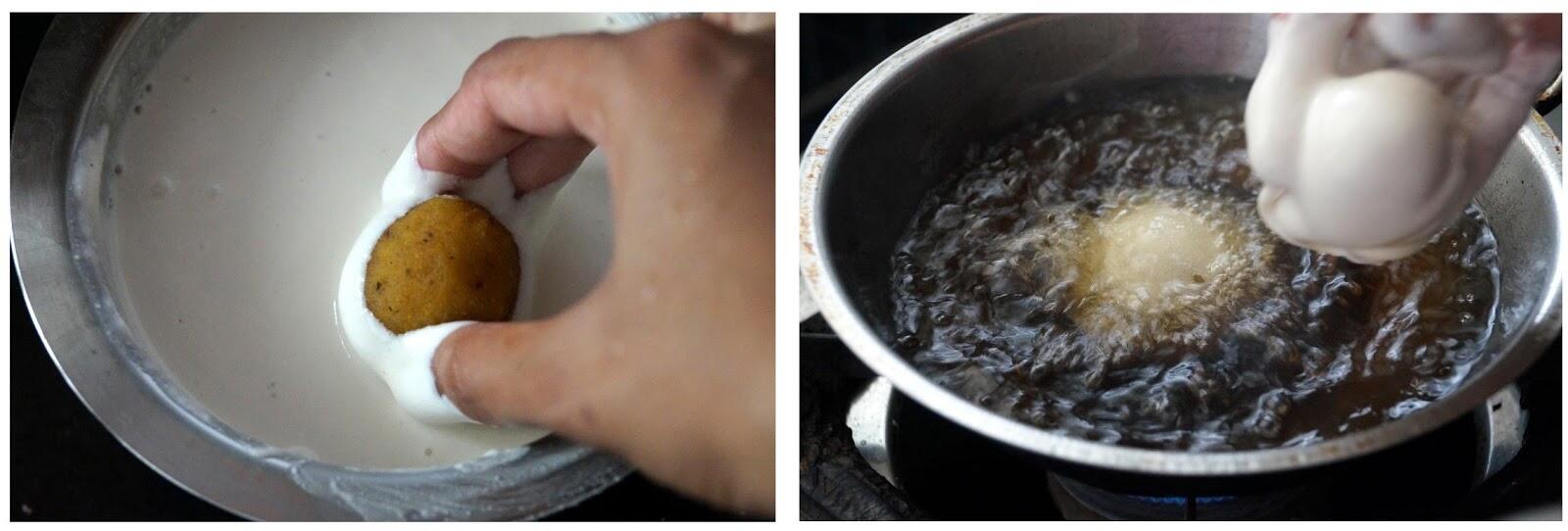
    Poornam filling dipped in urad dal batter and deep fried until golden brown to make boorelu.

    Heat enough oil for deep frying over a medium flame.

    Dip each prepared stuffing ball into the prepared batter and coat evenly on all sides.

    Carefully drop them into the hot oil and fry until golden brown and crisp.

    Remove and drain on paper towels. Serve!

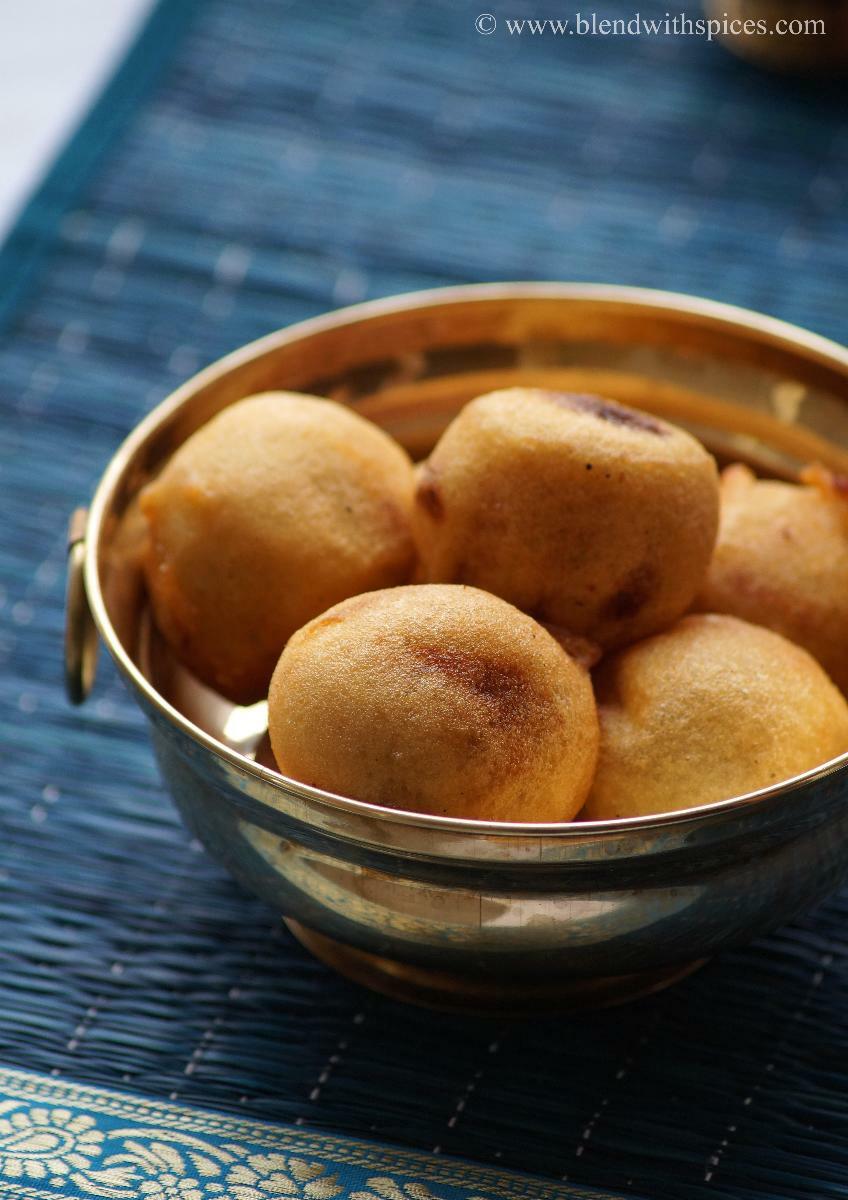
    Traditional Andhra poornam boorelu or poornalu are serving in a brass bowl.

    Tips & Notes:

    • Use fresh and high-quality ingredients for the best taste and flavor.
    • The batter consistency is very important to make the best poornalu. The batter should be thick enough to coat the stuffing ball properly to prevent any leakage. If it is too thin, the boorelu may break or absorb excess oil while frying.
    • Do not overcook the chana dal. The dal should be cooked until soft but still hold its shape. The mushy dal can make the filling too loose.
    • Make sure to drain the cooked dal completely. Any excess moisture in the filling can cause the boorelu to crack and leak while frying.
    • If you feel the poornam filling mixture is not thick enough, cook until it comes together like a soft dough.
    • Always fry on medium flame. Very hot oil can brown the outside too quickly and low heat can make them absorb oil.
    • Do not overcrowd the pan. Fry in batches for even cooking and a better shape.
    • Do not cover the fried boorelu while still hot, as the outer layer can become soft.

    Serving suggestions

    Poornam boorelu taste best when they are served hot or warm when the outer layer is slightly crisp and the filling is soft. You can also serve them at room temperature.

    Traditionally, these are served with a dollop of ghee. Make a small hole using your finger and pour a little bit of melted ghee into it for the best and most authentic flavor.

    These are commonly served during festivals like Varalakshmi Vratham, Ugadi, Makar Sankranti, Dasara and Ganesh Chaturthi. Poornam boore is a must for special occasions and wedding celebrations as part of a traditional Andhra meal along with other traditional Andhra desserts like Semiya Payasam, Saggubiyam Payasam, and Bellam Pongali.

    They pair well with evening tea or coffee.

    Storage suggestions

    Store them in an airtight container for up to a day at room temperature.

    For longer storage, refrigerate them for 2 days and reheat before serving.

    You can reheat them in an air fryer, microwave or oven before serving.

    FAQs

    Are boorelu vegan?

    They are vegan if not using ghee when serving.

    Why are boorelu breaking while frying?

    This usually happens if the filling has excess moisture or if the batter is too thin. Make sure the batter completely covers the stuffing ball before dropping it into the hot oil to fry.

    Why are they absorbing too much oil?

    Thin batter or low oil temperature can cause this. Fry on medium heat and avoid watery batter.

    Can I make the filling ahead of time?

    Yes, the filling can be made in advance and refrigerated. Bring it to room temperature before frying. You can also freeze the stuffing balls in the freezer for up to 3 months. Thaw them before frying.

    Can I skip coconut?

    Absolutely! Many traditional versions use only chana dal and jaggery.

    Why is my filling mixture too soft to shape?

    The jaggery and chana dal mixture may need more cooking time. If you are not able to shape the mixture into balls, cook it for a few more minutes.

    How do I know if the batter has the right consistency?

    The batter should be thick enough to coat the stuffing balls evenly without dripping off too quickly. If it is too thin, the coating will not form properly while frying. To check the consistency, dip a spoon or finger into the batter and it should coat the spoon nicely and evenly.

    Why is my stuffing dry and crumbly?

    This usually happens when the mixture is overcooked or contains too little jaggery. The filling should be moist enough to hold together when rolled into balls.

    Can I use frozen coconut?

    Absolutely! Thaw the frozen coconut before using.

    Why is the filling coming out while frying?

    Any excess moisture in the filling or batter can cause the boorelu to crack and leak while frying.

    Can I use brown sugar instead of jaggery?

    Jaggery gives the traditional flavor and taste. Brown sugar can work in an emergency, but the taste will be different.

    More Traditional Andhra Recipes

    • Mamidikaya Pulihora - Mangai Sadam - Raw Mango Rice Recipe {Video}
    • Rava Pulihora Recipe - Pindi Pulihora with Tamarind - Step by Step Recipe - Traditional Ugadi Festival Recipes
    • Rava Appalu Recipe ~ Navaratri Special Recipes ~ Naivedyam Recipes
    • Bellam Paramannam Recipe ~ Sankranthi Naivedyam Recipes

    If you tried this Poornam Boorelu Recipe or any other recipe on my blog please leave a 🌟 star rating and let me know how it went in the 📝 comments. Thanks for visiting my blog today!

    Print Recipe

    Poornam Boorelu (Poornalu)

    Poornam Boorelu are classic Andhra-style fried sweet dumplings with a soft lentil-jaggery filling. A traditional festival sweet that is popular during festivals and celebrations.
    Prep Time15 minutes mins
    Cook Time45 minutes mins
    Total Time1 hour hr
    Course: Dessert, Snack
    Cuisine: Andhra, South Indian
    Keyword: andhra recipes, authentic, poonalu recipe, poornam boorelu recipe
    Servings: 30
    Calories: 158kcal
    Author: Hari Chandana Ponnaluri

    Ingredients

    • ½ Cup Urad Dal
    • 1 Cup Raw Rice
    • 1.5 Cups Chana Dal
    • 2 Cups Jaggery
    • ½ Cup Grated Fresh Coconut
    • ½ Teaspoon Cardamom Powder
    • A Pinch of Salt
    • Oil for Deep Frying

    Instructions

    • Wash the rice and urad dal thoroughly and soak them for at least 6 hours or overnight.
    • Once they are soaked, drain the water and grind the soaked rice and urad dal into a smooth batter by adding little water as needed.
    • The batter consistency should be thick, similar to thick dosa batter. Add a pinch of salt and mix well. Keep it aside.
    • Wash the chana dal and pressure cook for 3 whistles with just enough water to cover the lentils. The dal should be cooked but still hold its shape.
    • Drain all the water completely and let the dal cool.
    • Grind the cooked chana dal into a coarse powder and keep it aside.
    • Add jaggery and a little water to a pan. Heat until the jaggery dissolves completely. Strain the jaggery water at this stage if there are any impurities.
    • Add the ground chana dal, grated coconut and cardamom powder to the jaggery water.
    • Mix continuously until everything combines and the mixture thickens into a soft dough-like consistency.
    • Remove it from the flame and let it cool completely.
    • Divide the cooled dal-jaggery mixture into 28-30 small round balls and keep them ready.
    • Heat enough oil for deep frying over a medium flame.
    • Dip each prepared stuffing ball into the prepared batter and coat evenly on all sides.
    • Carefully drop them into the hot oil and fry until golden brown and crisp.
    • Remove and drain on paper towels. Serve!

    Notes

    • The batter consistency is very important to make the best poornalu. The batter should be thick enough to coat the stuffing ball properly to prevent any leakage. If it is too thin, the boorelu may break or absorb excess oil while frying.
    • Do not overcook the chana dal. The dal should be cooked until soft but still hold its shape. The mushy dal can make the filling too loose.
    • Make sure to drain the cooked dal completely. Any excess moisture in the filling can cause the boorelu to crack and leak while frying.
    • If you feel the poornam filling mixture is not thick enough, cook until it comes together like a soft dough.
    • Do not cover the fried boorelu while still hot, as the outer layer can become soft.
       

    Nutrition

    Calories: 158kcal | Carbohydrates: 26g | Protein: 3g | Fat: 5g | Saturated Fat: 1g | Polyunsaturated Fat: 0.2g | Monounsaturated Fat: 3g | Sodium: 4mg | Potassium: 83mg | Fiber: 1g | Sugar: 14g | Vitamin A: 28IU | Vitamin C: 0.5mg | Calcium: 26mg | Iron: 1mg

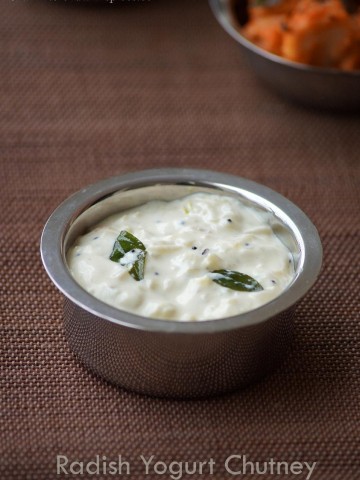
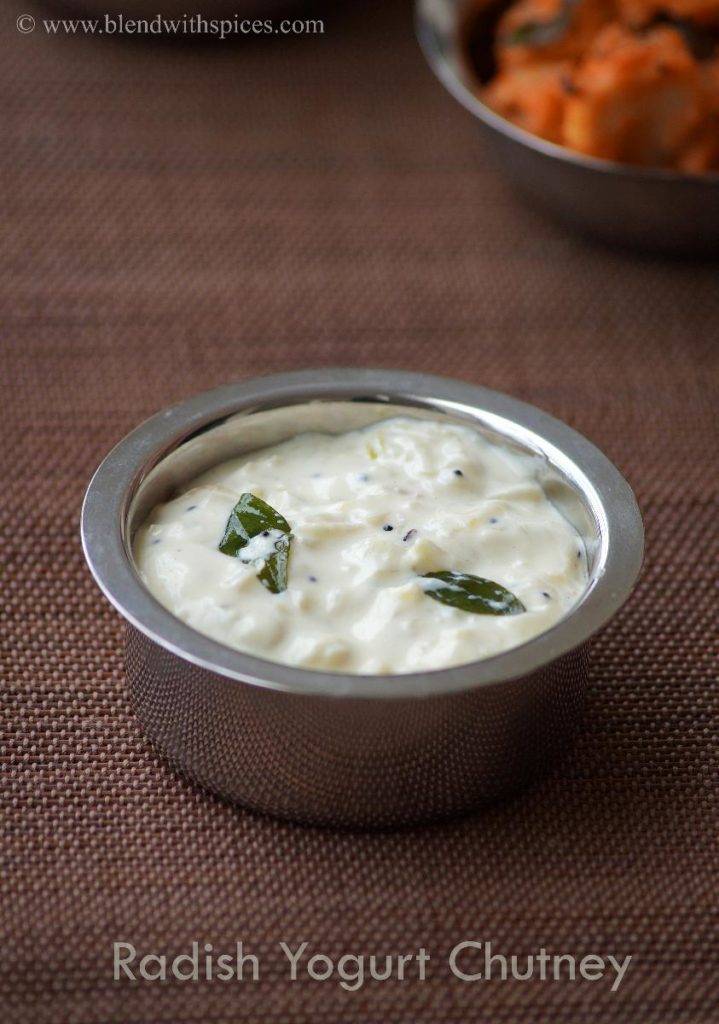
    Mullangi Perugu Pachadi Recipe - Radish Yougurt Chutney Recipe

    July 22, 2014

    Ingredients:

    • 1 cup Grated Radish
    • 1.5 cup Yogurt
    • 1 teaspoon Grated Ginger
    • 1 - 2 teaspoon Green Chillies, finely chopped
    • ½ teaspoon Mustard Seeds
    • ¼ teaspoon Chana Dal
    • ¼ teaspoon Urad Dal
    • ¼ teaspoon Cumin Seeds
    • 1 Dried Red Chilli
    • 1 Sprig Curry Leaves
    • A big pinch of Turmeric Powder
    • Salt to taste
    • 1 tablespoon Oil

    Instructions:

    1. Heat a tablespoon of oil in a pan. Add the mustard seeds, chana dal, urad dal and cumin seeds and let them splutter. 
    2. Then add the finely chopped green chillies and grated ginger and fry for a few seconds.
    3. Now add the curry leaves and broken red chilli and saute for another few seconds.
    4. Add the grated radish and turmeric powder and saute for 5 minutes or till the raw smell goes off.
    5. Cover the pan with a lid and let it cook for about 5 minutes or until soft. Sprinkle little water if required.
    6. Remove from the flame and let it cool completely.
    7. Combine the sauteed ingredients, yogurt and salt in a mixing bowl and mix everything until well combined.
    8. Serve with rice or roti.

    Lemon Tea Recipe - How to make Lemon Tea Recipe - Nimbu Chai Recipe Video

    July 21, 2014

    lemon tea recipe, how to make lemon tea, nimbu tea, lemon chai, how to make sulaimani tea
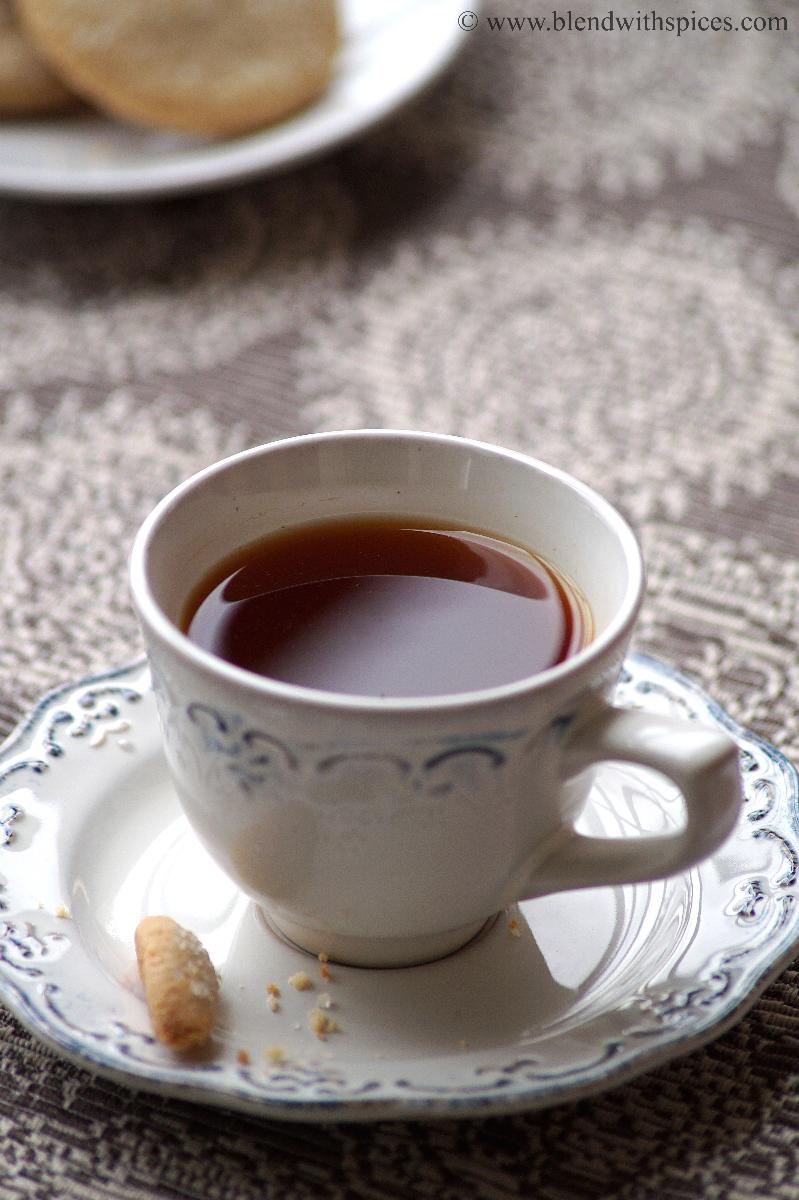
     Lemon Tea Recipe - An easy, simple, delicious and refreshing tea with lemon and tea powder.

    lemon tea recipe, how to make lemon tea, nimbu tea, lemon chai, how to make sulaimani tea

    Lemon Tea is a super easy and refreshing hot beverage with a very few ingredients. All you need is some water, tea powder, sweetener and lemon juice to prepare this easy lemon chai or nimbu chai.

    Few More Beverage Recipes on the blog:

    1. Iced Lemon Tea with Sabja
    2. Iced Lemon Tea
    3. Indian Ginger Tea
    4. Watermelon Rooh Afza Juice
    5. Shikanji
    6. Mango Kesar Lassi

    How to Make Lemon Tea Recipe:

    If you like this recipe, please consider rating it in the comment section.

    lemon tea recipe, how to make lemon tea, nimbu tea, lemon chai, how to make sulaimani tea
    Print Recipe
    5 from 2 votes

    Indian Lemon Tea Recipe

    How to Make Lemon Tea Recipe with Video. An easy, healthy and refreshing tea with lemon.
    Cook Time5 minutes mins
    Total Time5 minutes mins
    Course: Drinks
    Cuisine: Indian
    Servings: 4
    Calories: 24kcal
    Author: Hari Chandana Ponnaluri

    Ingredients

    • 2 cups Water
    • 1 tablespoon Tea Powder
    • 1 tablespoon Lemon Juice
    • 2 tablespoon Sugar or as needed

    Instructions

    • In a saucepan, add water and bring it to a boil. 
    • Add the black tea powder and let it simmer for a minute.
    • Turn off the flame and add the sugar and lemon juice to it and mix it well until the sugar dissolves completely.
    • Strain the tea through the strainer into a bowl.
    • Pour the tea into cups and serve hot.

    Notes

    You can use honey instead of sugar.
    Adjust the lemon juice according to your taste.
     

    Nutrition

    Calories: 24kcal | Carbohydrates: 6g | Sodium: 6mg | Sugar: 6g | Vitamin C: 1.5mg | Calcium: 4mg

    How to Make Lemon Tea Recipe with Video:

    Youtube video

    how to make nimbu tea, nimbu chai recipe, how to make lemon tea at home, recipe for lemon tea, lemon chai

    You might also like to check these recipes:

    • Falooda
    • Mango Kulfi
    • Cinnamon Vanilla Ice Cream
    • Eggless Cardamom Cupcakes
    • Gulkand
    • Methi Paratha
    • Gujarati Panki
    • Kanchipuram
    • Sweet Potato Podi Curry

    Mullangi Palli Pachadi Recipe - Radish Peanut Chutney Recipe for Idli Dosa - Indian Chutney Recipes

    July 17, 2014

    verusenagapappu mullangi pachadi, peanut radish chutney for idli dosa, chutney recipes, how to make radish peanut chutney, radish recipes
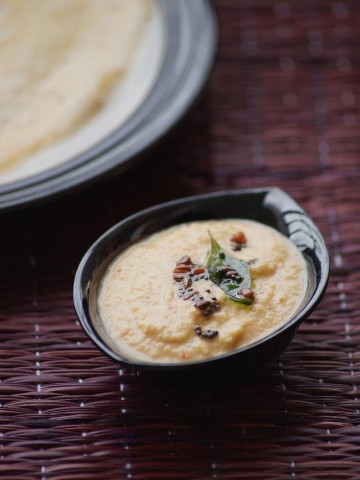
    Radish Peanut Chutney is a healthy and delicious South Indian style chutney that goes well with any breakfast dish such as idli, dosa, upma, vada or pongal. Peanut Chutney is a traditional South Indian chutney variety and we can make a lot of variations. I have added some sauteed radish to the classic chutney recipe to this super delicious side dish. The good part is you can make this chutney without coconut.

    Few More Peanut Chutney Varieties:

    • Carrot Peanut Chutney
    • Kobbari Palli Pachadi
    • Palli Kothimeera Pachadi
    • Peanut Mint Chutney
    • Peanut Onion Chutney
    • Palli Tomato Pachadi

    Print Recipe

    Radish Peanut Chutney Recipe

    How to Make Radish Peanut Chutney Recipe. Healthy and delicious South Indian chutney recipe for idli and dosa.
    Prep Time5 minutes mins
    Cook Time20 minutes mins
    Total Time25 minutes mins
    Course: Side Dish
    Cuisine: Indian, South Indian
    Keyword: Chutney Recipes, South Indian Food
    Servings: 3
    Calories: 198kcal
    Author: Hari Chandana Ponnaluri

    Ingredients

    • 1 cup Grated Radish
    • ½ cup Peanuts
    • 1 inch piece of Tamarind
    • 2 -3 Dried Red Chillies
    • Salt to taste
    • A pinch of Turmeric Powder
    • 2 -3 tsp Oil

    To Temper:

    • 1.5 teaspoon Oil
    • ¼ teaspoon Mustard Seeds
    • ¼ teaspoon Chana Dal
    • ¼ teaspoon Urad Dal
    • ¼ teaspoon Cumin Seeds
    • A pinch of Hing
    • A few Curry Leaves

    Instructions

    • Heat a pan on a low – medium flame, add and roast the peanuts till they turn brown. Let them cool completely.
    • Remove the skin of the peanuts completely and set aside.
    • Heat oil in a pan, add the red chillies and fry for a few seconds. Remove from the pan and set aside.
    • In the same pan, add the grated radish and turmeric.
    • Saute on a low – medium flame for 5 minutes or till the raw smell goes off.
    • Cover with a lid and cook for another 5 minutes or until soft. Sprinkle little water if needed.
    • Turn off the flame. Add the tamarind to the cooked radish and keep it aside to cool.
    • Grind the roasted chillies and peanuts to a powder.
    • Add the sauteed radish and salt and grind everything.
    • Add water and grind to a smooth paste.
    • Transfer the chutney to a bowl.
    • Heat oil in a pan for seasoning. Add the mustard seeds, chana dal, urad dal and cumin seeds and let them splutter.
    • When the seeds stop popping, add the hing and curry leaves and turn off the flame.
    • Pour it over the chutney and combine well.
    • Serve with idli, dosa, pongal or upma.

    Nutrition

    Calories: 198kcal | Carbohydrates: 6g | Protein: 6g | Fat: 17g | Saturated Fat: 2g | Sodium: 14mg | Potassium: 268mg | Fiber: 3g | Sugar: 1g | Vitamin A: 90IU | Vitamin C: 8.5mg | Calcium: 36mg | Iron: 1.2mg

    You might also like to check these recipes:

    • Peanut Chaat
    • Cinnamon Peanut Butter
    • Radish Moong Dal Sambar
    • Peanut Sundal
    • Kanchipuram Upma
    • Vegetable Ragi Semiya Upma
    • Dondakaya Pulusu
    • Chikkudu Ginjala Pulusu
    • Mango Kulfi

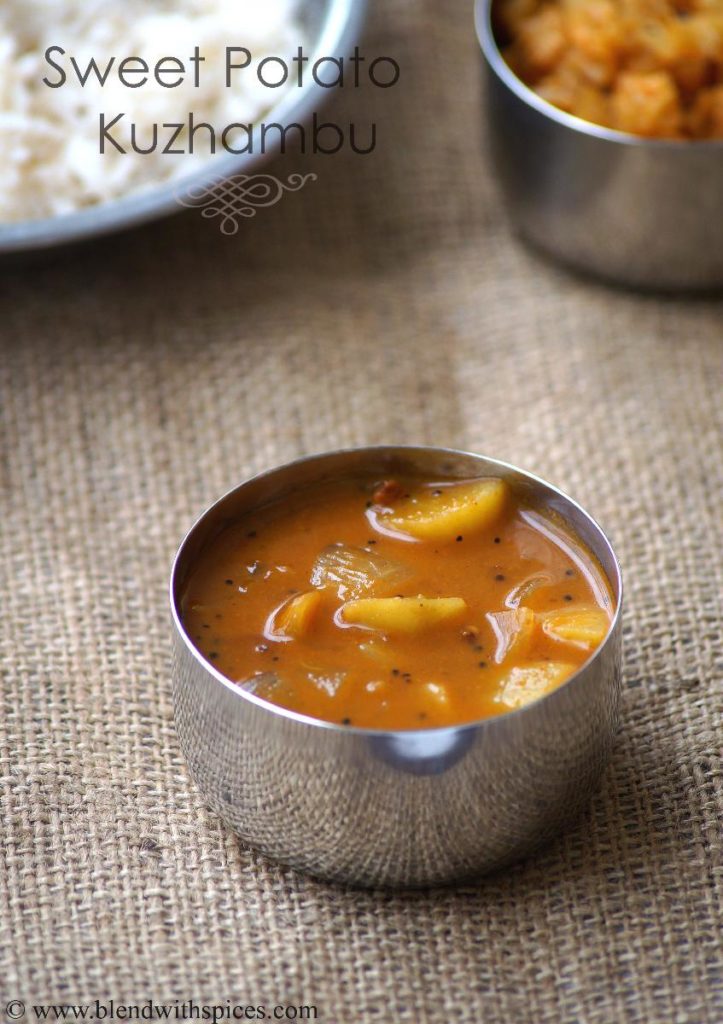
    Sweet Potato Kuzhambu Recipe - Sakkaravalli Kizhangu Kulambu Recipe - Tamil Recipes

    June 23, 2014

    If you are looking for similar recipes then do check Keerai Sambar, Dondakaya Pulusu, Ash Gourd Pindi Miriyam, Mango Pulusu, Kathirikai Rasavangi, Ponnaganti Majjiga Pulusu, Kakarakaya Pulusu and Vellarikka Pulissery and Gongura Pulusu Kura.

    Print Recipe

    Sweet Potato Kulambu / Tamilnadu Style Sweet Potato Tamarind Gravy

    Prep Time10 minutes mins
    Cook Time15 minutes mins
    Total Time25 minutes mins
    Course: Side Dish
    Cuisine: South Indian
    Servings: 4
    Author: Hari Chandana Ponnaluri

    Ingredients

    • 1 cup Sweet Potato, peeled & chopped
    • ½ cup Onion, chopped
    • 4 teaspoon Sambar Powder
    • 1 – 2 tsp Jaggery
    • Small lemon sized Tamarind (approx. 1 tbsp)
    • ½ teaspoon Mustard Seeds
    • ½ teaspoon Fenugreek Seeds
    • 1 teaspoon Chana Dal
    • ⅛ teaspoon Hing
    • A few Curry Leaves
    • A pinch Turmeric Powder
    • Salt to taste
    • 1 tablespoon Oil

    Instructions

    • Soak the tamarind in water for 10 -15 minutes. Squeeze the extract from tamarind and set aside. Discard the pulp.
    • Heat oil in a vessel and add the mustard seeds and chana dal. Once they start to splutter, add the fenugreek seeds, curry leaves and hing and saute for a couple of seconds.
    • Add the chopped onions and fry until they are transparent.
    • Add the chopped sweet potatoes and turmeric to it and saute for a minute.
    • Add the sambar powder, 2 cups of tamarind extract, jaggery and salt.
    • Dilute the rice flour in little water and add it to the sweet potato mixture.
    • Cover it with a lid and let it cook on a medium flame until the pieces are soft.
    • When the gravy thickens, remove it from the flame.
    • Serve hot with rice.

    You might also like to check these recipes:

    • Aratikaya Palakura Koora
    • Palak Sev
    • Gutti Vankaya Kobbari Karam 
    • Sweet Potato Podi Curry 
    • Sweet Potato Halwa 
    • Sweet Potato Chaat 
    • Eggless Banana Cake 
    • Mohanthal 
    • Bellam Paramannam 


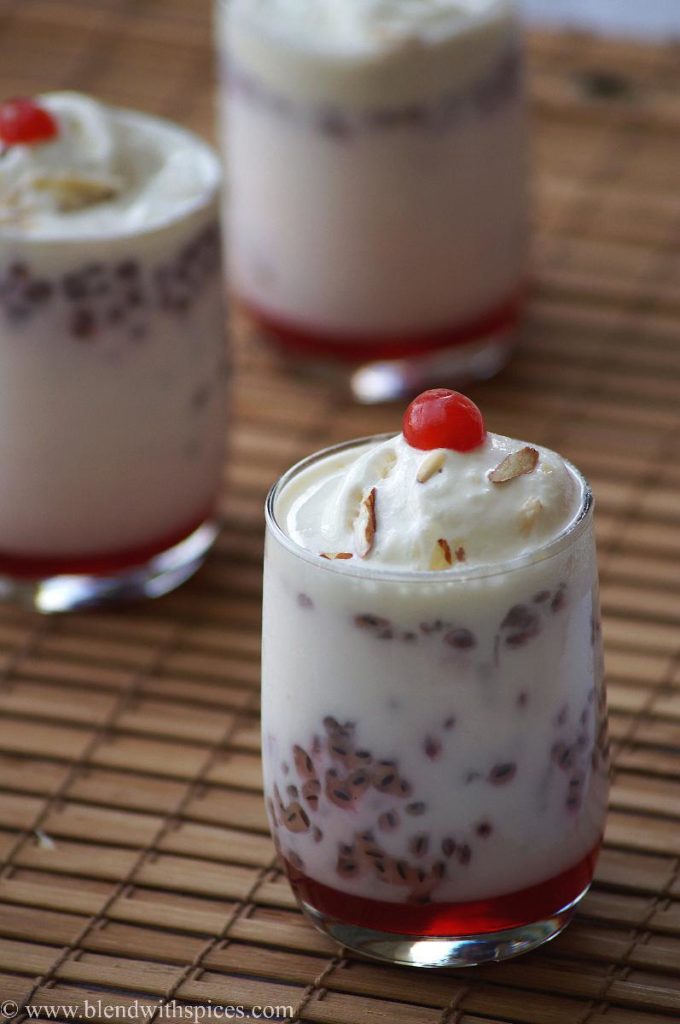
    Falooda Recipe - How to make Falooda at home - Falooda Ice Cream Recipe

    June 18, 2014

    falooda recipe, how to make falooda recipe, recipe for falooda, falooda ice cream

    If you are looking for similar recipes then do check Mango Kesar Lassi, Gulkand Lassi, Vanilla Cinnamon Ice Cream, Mango Kulfi, Rooh afza lemonade, Banana Rooh afza milkshake and Sweet Lassi.
     

    Falooda Recipe with Ice Cream
     
    Prep Time: 25 mins    |  Cook time: 5 mins    |  Serves: 2 - 3 
    Author: Hari Chandana P 
    Cuisine: Indian 
    Recipe type: Dessert 


    Ingredients:

    • 2 cups Milk, boiled
    • 4.5 tablespoon Rose Syrup / Rooh Afza
    • 3 - 4 tablespoon Vermicelli / Falooda Sev
    • 1 teaspoon Tukmaria Seeds / Falooda Seeds / Sabja Seeds / Sweet Basil Seeds
    • 1.5 tablespoon Sugar
    • 3 Scoops of Vanilla Ice Cream
    • Almonds for garnish
    how to prepare falooda, falooda recipe, indian falooda, recipe of falooda, falooda ice cream recipe

    Instructions:

    • Add sugar to the milk and mix until the sugar dissolves completely. Place it in the refrigerator and leave it there until chilled.
    • Soak the basil seeds in one cup of water for 15 minutes.
    • Once they swell, drain any excess water and keep it aside.
    • Cook the vermicelli with enough water until soft and cooked.
    • Switch off the flame and drain. Rinse the cooked vermicelli with cold water and drain.
    • Let it cool completely.
    • If you are using falooda sev, prepare it according to package directions.
    how to make falooda with ice cream, falooda recipe with ice cream, how to prepare falooda, mumbai street food
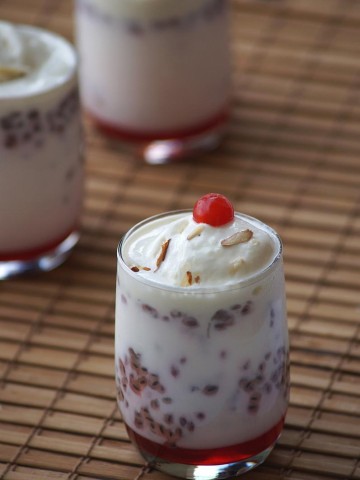
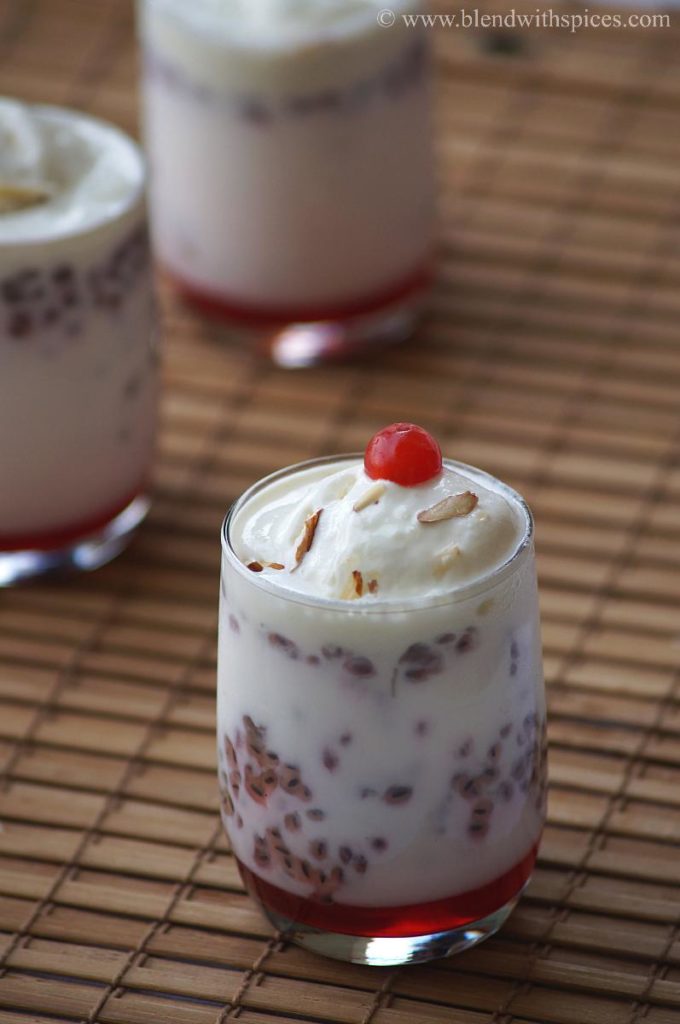
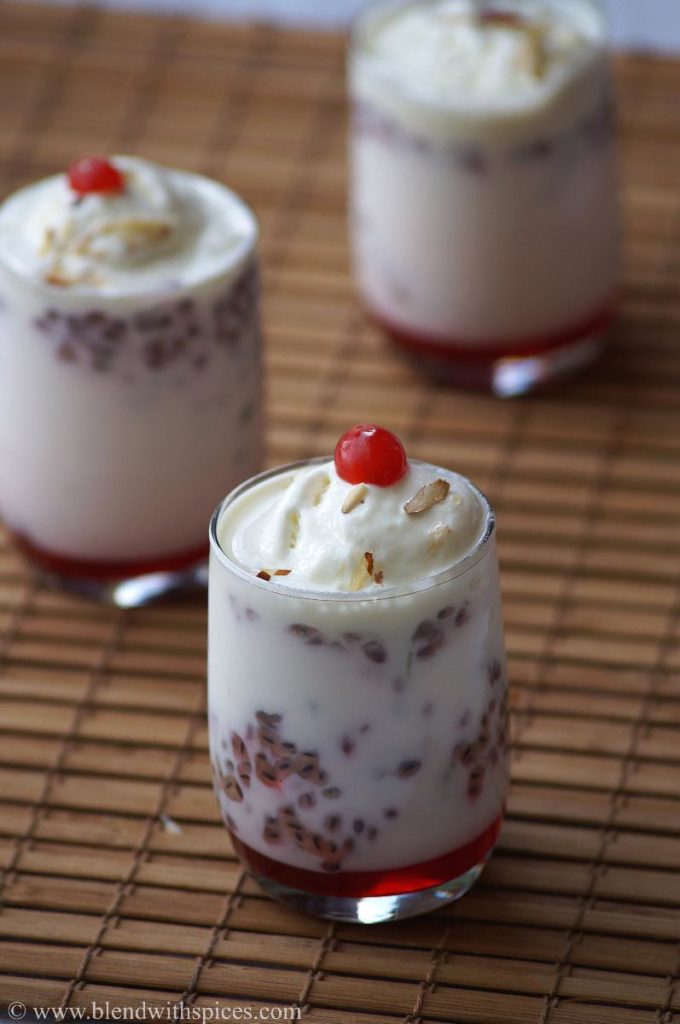
    • Place 1.5 tablespoon of rose syrup in a glass.
    • Then add 1.5 or 2 tablespoon of soaked basil seeds.
    • Then add 1.5 tablespoon of cooked vermicelli.
    • Now pour ¾ cup of chilled milk slowly over it.
    • Then top with a scoop of ice cream.
    • Garnish with chopped almonds and cherries.


    You might also like to check these recipes:

    • Shikanji
    • Eggless Strawberry Custard Cake
    • Nuvvula Appalu 
    • Gulab Jamun 
    • Pesara Garelu 
    • Chikkudu Ginjala Pulusu 
    • Vermicelli Payasam 
    • Green Tea 
    • Rava Vada 
    • Peanut Kozhukattai

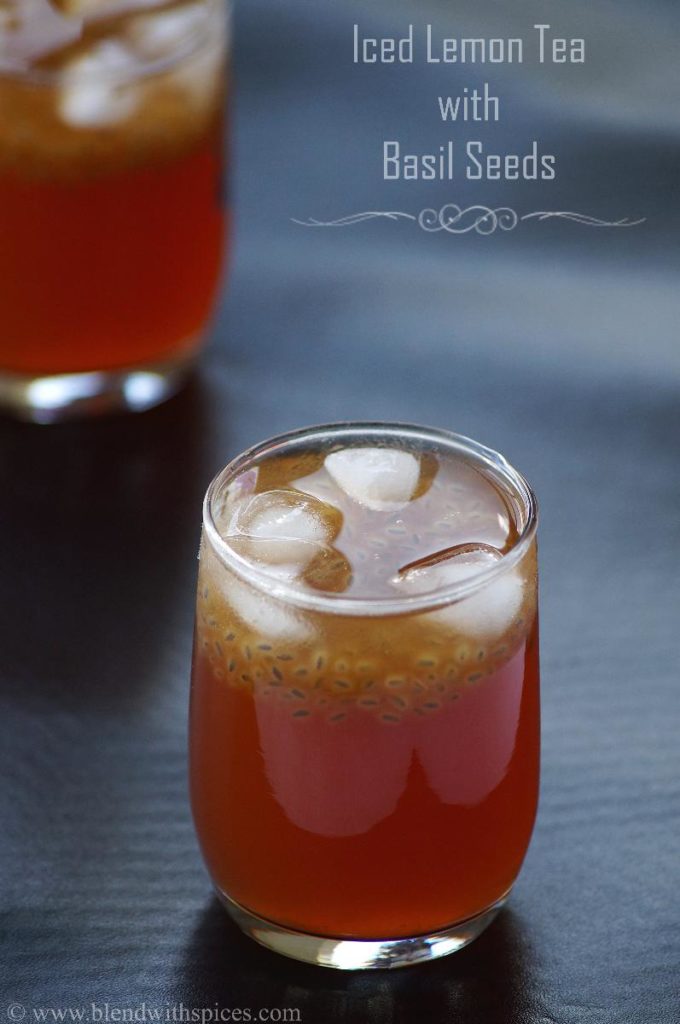
    Iced Lemon Tea with Basil Seeds - Sabja Seeds Recipes - Iced Tea Recipes

    June 16, 2014

    sabja seeds recipe, iced lemon tea recipe, iced lemon tea with sabja seeds, sabja recipes

    Ingredients:

    • 3.5 cups Water
    • 3 teaspoon Tea Powder
    • 3 tablespoon Lemon Juice
    • 3 tablespoon Sugar or as needed
    • ½ teaspoon Basil Seeds / Sabja Seeds
    • Ice Cubes

    Instructions:

    1. Soak the basil seeds in ½ cup of water for 10 minutes. 
    2. In a sauce pan, bring 3 cups of water to boil.
    3. Add the tea powder to the boiling water and let it boil for 1 - 2 minutes.
    4. Remove from the heat and strain the water through the strainer into a bowl.
    5. Then add the sugar and lemon juice to it and mix well.
    6. Let it cool down and keep it in the fridge.
    7. Once the tea is cooled, remove it from the refrigerator.
    8. Add the soaked basil seeds and combine.
    9. Pour the tea into glasses.
    10. Add ice cubes and serve.
    • « Go to Previous Page
    • Page 1
    • Interim pages omitted …
    • Page 32
    • Page 33
    • Page 34
    • Page 35
    • Page 36
    • Interim pages omitted …
    • Page 93
    • Go to Next Page »

    Primary Sidebar

    Welcome!

    I’m Hari Chandana Ponnaluri, the creator, recipe developer, and photographer of Blend with Spices, a food blog where I share flavorful, approachable, and authentic vegetarian recipes from India and beyond..

    More about me

    Popular Recipes

    • Cranberry Orange Snowball Cookies
    • Chocolate Crinkle Cookies (Eggless)
    • kolaczki Cookies (Polish Christmas Jam Cookies)
    • Sugar Plums
    • Peppermint Kiss Cookies
    • Potato Chip Cookies

    Indian Festival Recipes

    • Moru Curry (Kerala Moru Kachiyathu)
    • Palada Payasam (Palada Pradhaman)
    • Nellikai Sadam (South Indian Amla Rice)
    • Instant Pot Avial (Kerala Mixed Vegetable Curry)
    • Mawa Modak
    • Upma Kozhukattai
    See more Festival Recipes →

    Footer

    About

    • Privacy Policy

    Don’t Miss A Recipe!

    Subscribe to our mailing list

    Contact

    • Contact

    Copyright © 2020 Blend with Spices